How to Buy and Authenticate Engagement Ring Estate Jewelry
Master the step-by-step process of evaluating engagement ring estate jewelry. Learn to spot era-specific hallmarks and verify gems.

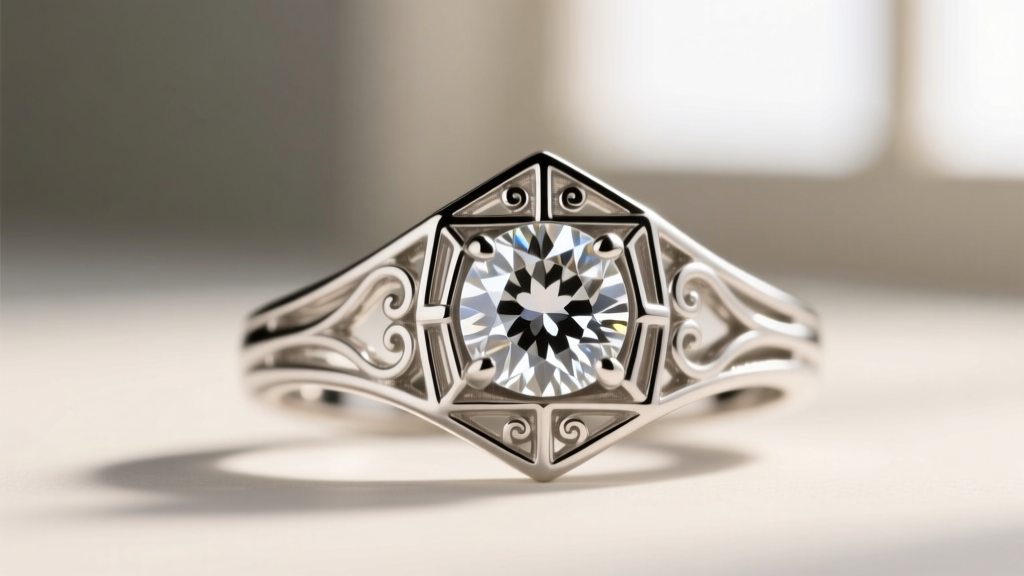
The Allure and Risk of Estate Engagement Rings
In the 2026 market, the demand for sustainable, historically significant jewelry has reached an all-time high. Collectors and brides alike are bypassing mass-produced modern designs in favor of engagement ring estate jewelry. However, the term 'estate' simply means the piece is previously owned; it does not guarantee authenticity, structural integrity, or historical accuracy. Whether you are browsing a high-end auction house, a specialized vintage dealer, or an online marketplace, knowing how to properly evaluate an antique or vintage ring is critical. This step-by-step guide will equip you with the gemological and structural knowledge required to authenticate, evaluate, and confidently purchase estate engagement rings.
Step 1: Decode the Era and Hallmarks
The first step in evaluating engagement ring estate jewelry is identifying its historical era and verifying its metal purity through hallmarks. According to the Federal Trade Commission (FTC) Jewelry Guides, a piece must be at least 100 years old to be legally marketed as 'antique,' while 'vintage' typically refers to pieces between 20 and 99 years old.
Visual Cues by Era
- Victorian (1837–1901): Characterized by rose-cut diamonds, yellow and rose gold mountings, and nature-inspired motifs like serpents and floral clusters.
- Edwardian (1901–1915): The introduction of platinum allowed for intricate, lace-like filigree work, milgrain edging, and delicate garland motifs.
- Art Deco (1920–1935): Defined by bold geometric shapes, high-contrast color blocking (e.g., diamonds paired with black onyx or calibré-cut sapphires), and architectural symmetry.
- Retro (1935–1950): Due to WWII platinum restrictions, this era features chunky, oversized yellow and rose gold designs with large, dramatic center stones.
Reading the Hallmarks
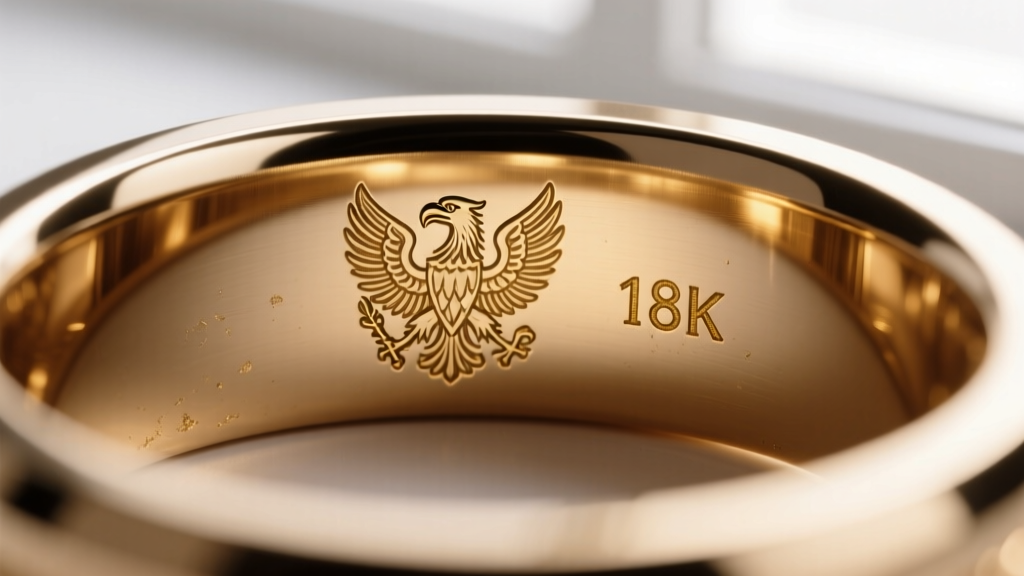
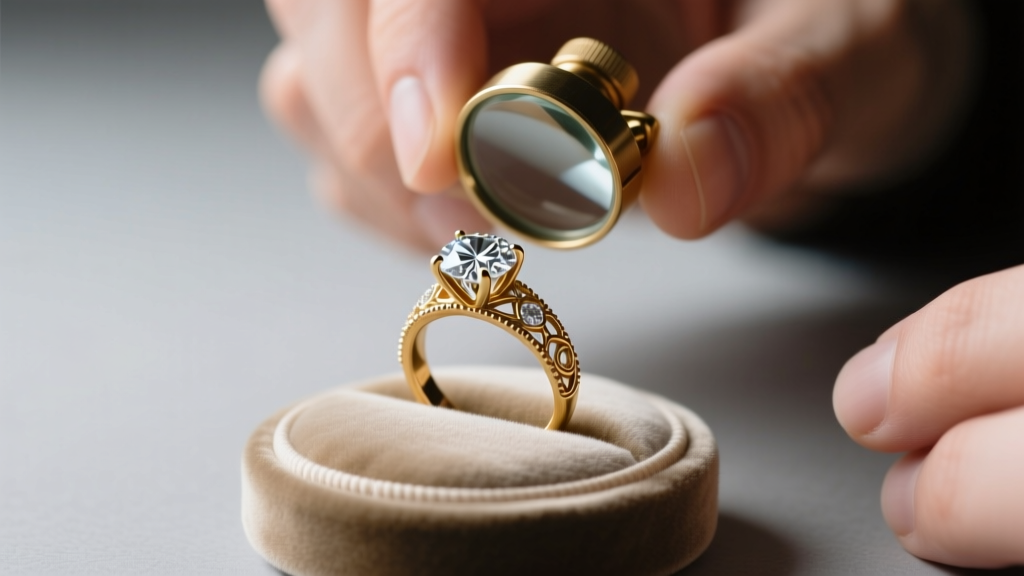
Always inspect the inner shank of the ring with a 10x loupe. A French 'Eagle Head' indicates 18k gold, while a 'Dog Head' denotes French platinum. British pieces will feature assay marks, such as the Leopard’s Head for London. If a ring claimed to be from 1910 features a laser-inscribed GIA report number or a modern 'PT950' stamp, it is either a reproduction or has been heavily altered.
Step 2: Inspect the Mounting and Prong Integrity
A beautiful diamond is worthless if the estate mounting fails to secure it. When examining engagement ring estate jewelry, pay close attention to the shank thickness and prong wear. A ring worn daily for 80 years will naturally experience metal loss at the base of the shank due to friction against the wearer's adjacent fingers.
Platinum vs. White Gold Wear Patterns
Platinum is highly durable and displaces rather than flakes away when scratched, developing a soft patina over time. However, platinum prongs can bend outward if caught on clothing. Conversely, early 20th-century white gold (often alloyed with nickel or palladium) becomes brittle over decades. If you notice white gold prongs that are completely flat or paper-thin, the ring will require immediate re-tipping. In 2026, a complete prong rebuild on an intricate Edwardian setting can cost between $350 and $800, which must be factored into your negotiation.
Step 3: Gemstone Verification and Cut Analysis
Modern round brilliant diamonds are cut for maximum light return, but antique diamonds were cut by hand to retain carat weight and sparkle in low-light, candlelit environments. The Gemological Institute of America (GIA) evaluates antique diamonds differently, prioritizing historical preservation over modern cut grades.
Identifying Antique Diamond Cuts
| Cut Type | Era | Table Size | Culet | Visual Characteristics |
|---|---|---|---|---|
| Old Mine Cut | Georgian / Victorian | Small (43-47%) | Large / Open | Cushion-like shape, high crown, chunky facets, visible culet. |
| Old European Cut | Edwardian / Art Deco | Small (38-45%) | Medium / Open | Round shape, very high crown, small table, 'blocky' scintillation. |
| Transitional Cut | 1930s / 1940s | Medium (46-50%) | Small | Bridge between OEC and Modern Brilliant; larger table, lower crown. |
Pro Tip: Always carry a UV flashlight. Many antique diamonds exhibit strong blue fluorescence, which was historically prized to make lower-color (J-M) diamonds appear whiter in daylight. Additionally, use a thermal or moissanite tester; early synthetic moissanite entered the market in the late 1990s and is sometimes fraudulently swapped into antique mountings.
Step 4: Sizing and Reshanking Realities
Finding the perfect engagement ring estate jewelry piece in your exact finger size is rare. However, sizing an antique ring is not as simple as cutting the shank and adding metal. Rings with continuous filigree, engraved milgrain patterns, or eternity-style diamond bands cannot be traditionally sized without destroying the pattern or compromising the structural integrity of the stone settings.
Alternative Sizing Methods
If the ring is too large, ask a master jeweler to install sizing beads (two small metal domes soldered to the inner shank) or a horseshoe sizer. These methods reduce the effective ring size by up to a full size without requiring the shank to be cut, thereby preserving the ring's historical hallmark and structural continuity. If the shank is paper-thin at the base, you will need a 'half-reshank,' where the bottom half of the ring is replaced with new, period-appropriate metal. This typically costs $400 to $700 but ensures the ring will survive another century of wear.
Step 5: Negotiating and Finalizing the Purchase
When pricing engagement ring estate jewelry, you must separate the intrinsic melt value of the materials from the historical and artistic premium. According to the American Gem Society (AGS), provenance and maker's marks drastically alter valuation.
The Provenance Premium
A signed piece from a historic house like Cartier, Boucheron, or Tiffany & Co. will command a 30% to 50% premium over an unsigned piece of identical gemological quality. Always request a secondary authentication if a dealer claims a piece is signed but the hallmark is obscured or worn. Furthermore, ensure the sale includes a modern insurance appraisal that reflects the retail replacement value of the antique piece, not just the raw material weight, as replicating 1920s hand-carved filigree is prohibitively expensive today.
Expert Insight: Never purchase high-value estate jewelry without a conditional return policy tied to an independent gemological appraisal. Have the ring evaluated by a Certified Gemologist Appraiser (CGA) who specializes in antique jewelry to verify that no modern synthetic stones have been swapped into the historical mounting.
Conclusion
Purchasing engagement ring estate jewelry is a rewarding pursuit that connects you to the artistry and history of the past. By meticulously decoding hallmarks, understanding the structural nuances of antique metals, and recognizing the unique light performance of historical diamond cuts, you can confidently navigate the vintage market. Armed with this step-by-step framework, you are ready to secure a genuine, structurally sound masterpiece that will endure for generations to come.


