Safe Intimate Piercing Jewelry: The Ultimate Material Guide
Discover the safest metals for intimate piercing jewelry. Compare implant-grade titanium, niobium, and gold to prevent irritation and ensure healing.

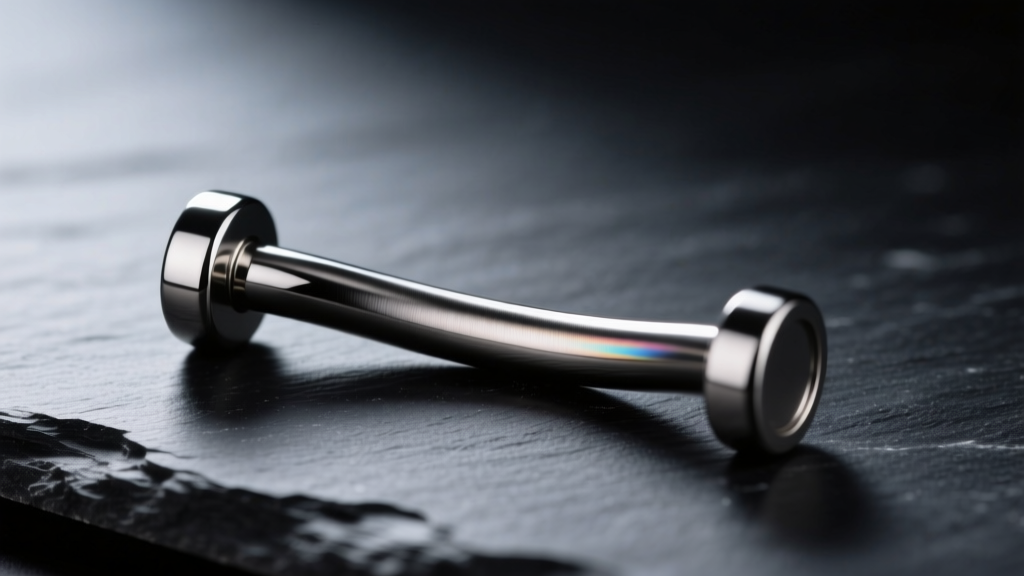
When selecting intimate piercing jewelry, the aesthetic appeal of a piece is entirely secondary to its metallurgical composition. The biological environments of nipple and genital piercings are uniquely demanding. These areas experience high friction, constant moisture, mucosal tissue contact, and significant temperature fluctuations. In 2026, professional piercing standards have evolved to strictly dictate which metals are safe for long-term wear in these sensitive zones. This guide breaks down the exact material properties, ASTM standards, and failure modes you need to know before purchasing your next piece.
The Biological Challenge of Intimate Environments
Unlike earlobes, intimate fistulas (the tunnel of healed tissue) are highly vascular and prone to micro-trauma. The presence of apocrine sweat glands in the areolar and genital regions creates a slightly acidic, moisture-rich environment. If your jewelry contains reactive alloys, this moisture acts as an electrolyte, accelerating galvanic corrosion and leaching toxic ions—most notably nickel—directly into the bloodstream. According to the Association of Professional Piercers (APP), only specific, highly polished, biocompatible metals should be used for initial healing and long-term wear in these areas.
Implant-Grade Titanium: The Undisputed Champion
Implant-grade titanium is the absolute gold standard for intimate piercing jewelry. However, not all titanium is created equal. You must look for specific certifications: ASTM F-136 (for wrought titanium alloy) or ASTM F-1295 (for cast titanium alloy). These standards guarantee a specific composition: Titanium-6Aluminum-4Vanadium (Ti-6Al-4V) ELI (Extra Low Interstitial) with an extremely low interstitial element count.
The Passivation Layer and Surface Finish
Titanium's biocompatibility relies on a microscopic passivation layer of chromium oxide that forms instantly when exposed to oxygen. This layer prevents the metal from reacting with bodily fluids. Furthermore, high-end brands like NeoMetal and Industrial Strength machine their titanium to a mirror finish, achieving a surface roughness (Ra) of less than 0.2 µm. This microscopic smoothness prevents bacterial biofilm from anchoring to the jewelry, a critical factor for preventing infections in high-friction genital and nipple piercings.
Niobium: The Hypoallergenic Ring Specialist
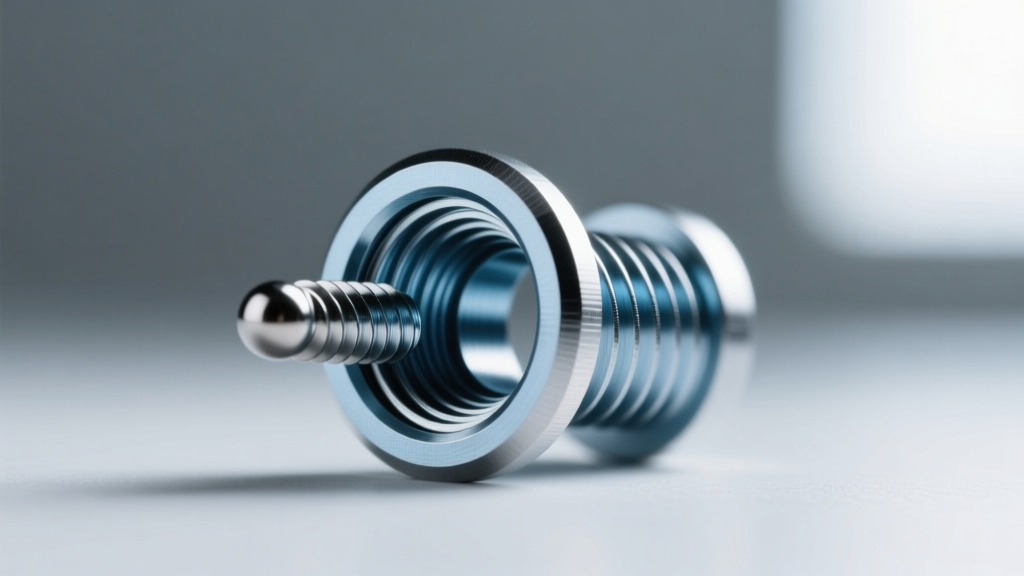
Niobium (Element 41) is a highly reactive, ductile transition metal that is universally accepted for intimate piercings. Unlike titanium, niobium is used in its pure, unalloyed state. Because it contains zero nickel and zero alloys, it is exceptionally hypoallergenic. The Mayo Clinic frequently recommends niobium for patients with severe contact dermatitis and metal sensitivities.
Limitations and Anodization
While niobium is incredibly safe, it is significantly softer than titanium. This means it is rarely used for threaded barbells, as the threads can easily strip or cross-thread. Instead, niobium excels in the form of Captive Bead Rings (CBRs) and seamless rings for nipple shields or genital rings. Additionally, niobium can be anodized using an electrical current to create a vibrant, permanent oxide layer in colors ranging from deep purples to gold, without the use of toxic dyes or paints.
Solid Gold: Navigating Karats and Alloy Dangers
Gold is a classic choice for luxury intimate piercing jewelry, but it requires strict vetting. Pure 24k gold is too soft; it will scratch easily, creating microscopic grooves that harbor anaerobic bacteria. Conversely, 10k or 12k gold contains too much alloy, often including nickel or copper, which can cause severe irritation or green discoloration in moist environments.
The Rule: Only 14k or 18k solid gold should be worn in intimate piercings. Furthermore, the alloy mixture must be strictly nickel-free. On the Vickers hardness scale, 14k gold (roughly 140-150 HV) offers the durability needed for genital wear where impact occurs, while 18k gold (around 120 HV) is better suited for nipple jewelry. White gold is particularly risky unless it is alloyed with palladium rather than nickel. Always purchase from reputable manufacturers who provide metallurgical assay certificates proving their gold is nickel-free and cadmium-free.
Dangerous Metals: What to Keep Away From Your Body
To protect your intimate piercings, you must actively avoid the following materials, regardless of marketing claims:
- 316L Surgical Steel: The term "surgical" is a marketing misnomer. 316L contains 8-10% nickel. While fine for surgical tools that are removed immediately, it is entirely unsafe for long-term implantation in a healing fistula.
- Sterling Silver: Silver oxidizes and tarnishes when exposed to the sulfur compounds in human sweat. In a healing nipple or genital piercing, this can lead to argyria—a permanent blue-gray staining of the tissue.
- Acrylic and BioFlex: These plastics are porous, meaning they trap bacteria. They also degrade when exposed to body heat and UV light, leaching toxic monomers directly into the bloodstream.
Comprehensive Material Comparison Matrix
| Material | Standard / Purity | Nickel Content | Best Intimate Use Case | Relative Cost |
|---|---|---|---|---|
| Titanium | ASTM F-136 / F-1295 | 0% | Barbells, Threadless Ends, Shields | $$ |
| Niobium | 99.9% Pure (Unalloyed) | 0% | Captive Bead Rings, Seamless Rings | $$ |
| Solid Gold | 14k or 18k (Nickel-Free) | 0% (if alloyed correctly) | Luxury Barbells, Decorative Ends | $$$$ |
| Surgical Steel | 316LVM | 8-10% | NEVER USE | $ |
Threading, Gauges, and Finish: The Hidden Variables
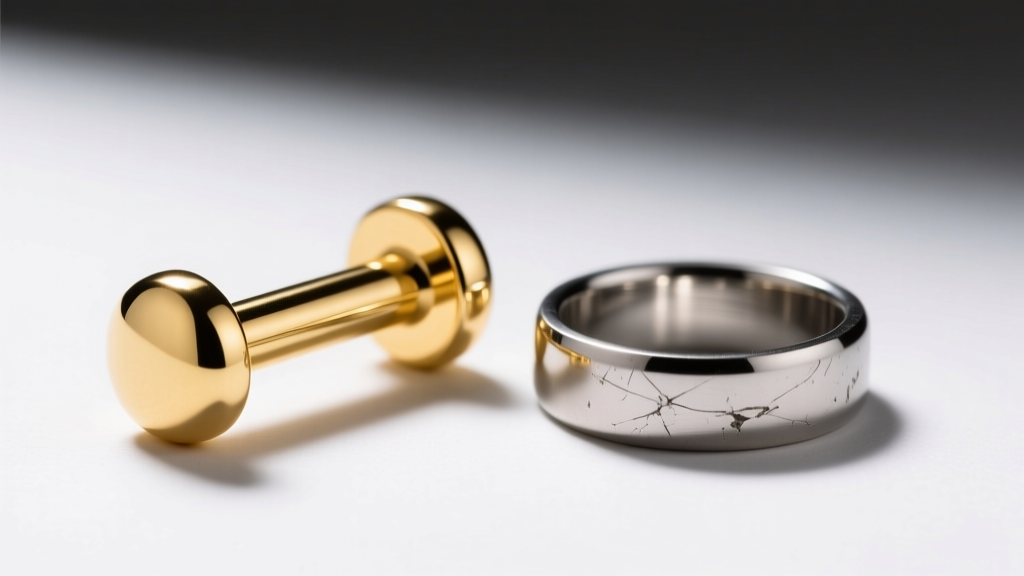
Even if you choose the perfect metal, poor manufacturing will ruin your piercing. For any threaded intimate piercing jewelry, you must exclusively choose internally threaded or threadless (press-fit) designs. Externally threaded jewelry features screw threads on the post itself. Forcing these sharp, machined threads through a delicate nipple or genital fistula causes micro-tearing, scarring, and introduces surface bacteria deep into the tissue.
Threadless jewelry, pioneered by brands like NeoMetal, uses a slight bend in the insertion pin to create tension against the inside of the shaft. This provides a secure hold without any threads, offering the smoothest possible insertion and the lowest profile for high-friction intimate areas. Additionally, gauge sizing is critical. Nipples are typically pierced at 14g (1.6mm) or 12g (2.0mm) to prevent the "cheese-cutter effect" where thin jewelry migrates through the tissue. Genital piercings like the Prince Albert or Christina often require 10g (2.4mm) or 8g (3.2mm) for structural stability.
Final Recommendations for Safe Upgrades
When upgrading your intimate piercing jewelry, always prioritize the metallurgical integrity of the piece over ornate designs. Stick to ASTM F-136 titanium, pure niobium, or verified 14k/18k nickel-free gold. Ensure the surface finish is mirror-smooth, and never compromise on internal threading or threadless mechanisms. By respecting the biological demands of these sensitive areas, you ensure a comfortable, healthy, and beautiful result that lasts a lifetime.


