Beginner's Guide to Styling a 14k Gold Medallion Necklace
Discover how to choose, style, and care for your first 14k gold medallion necklace. Learn about chain pairings, sizing, and everyday wear.

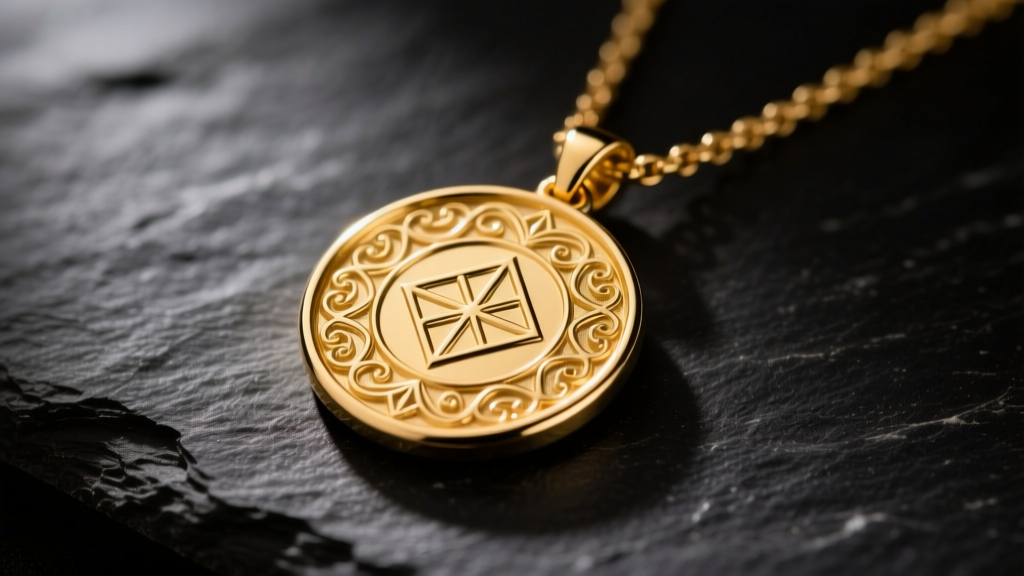
The Appeal of the 14k Gold Medallion Necklace
If you are stepping into the world of fine jewelry, a 14k gold medallion necklace is arguably the most versatile and enduring investment you can make. As we navigate the jewelry landscape in 2026, the shift away from hyper-minimalism toward substantial, meaningful, and personalized pieces has made the classic medallion a staple in everyday wardrobes. But for a beginner, the sheer number of options—ranging from coin-sized pendants to intricate zodiac discs—can be overwhelming. This guide breaks down the exact metallurgy, structural mechanics, and styling frameworks you need to confidently select and wear your first medallion necklace.
Understanding the Metallurgy: Why 14k is the Sweet Spot
Before purchasing, it is crucial to understand what '14k' actually means. Pure gold (24k) is incredibly soft and malleable; a solid 24k medallion would bend and scratch within days of daily wear. To solve this, jewelers alloy pure gold with metals like copper, silver, and zinc. According to the Gemological Institute of America (GIA), 14k gold consists of exactly 58.5% pure gold and 41.5% alloy metals. This specific ratio provides the perfect balance of rich yellow color and high tensile strength.
| Karat | Gold Purity | Durability | Best Use Case |
|---|---|---|---|
| 10k | 41.7% | Very High | Budget-friendly, high-impact rings |
| 14k | 58.5% | High | Everyday medallions and chains |
| 18k | 75.0% | Moderate | Special occasion pieces, rich color |
| 24k | 99.9% | Very Low | Investment bullion, not for daily wear |
For a medallion necklace that will survive gym sessions, showers, and sleeping, 14k is the undisputed champion. The copper and silver alloys not only protect the piece from warping but also give it a beautiful, warm luster that doesn't easily fade.
Selecting the Perfect Chain: The Structural Backbone
The most common beginner mistake is pairing a heavy medallion with a delicate chain, leading to inevitable breakage. The chain is the structural backbone of your necklace, and its thickness (measured in millimeters) must correlate with the weight of your medallion.
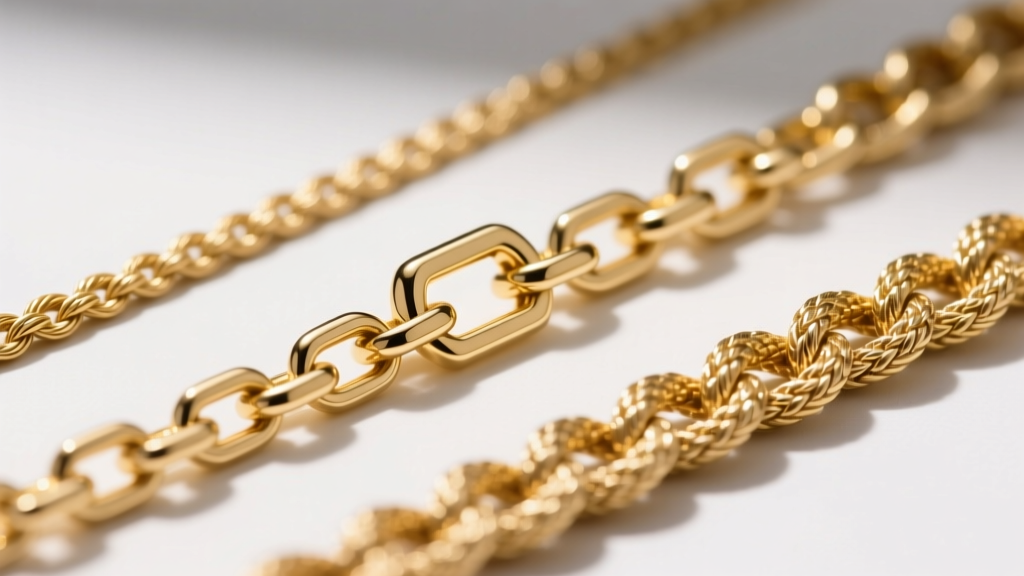
Chain Style and Thickness Guide
- Lightweight Medallions (10mm - 15mm, under 2 grams): Pair with a 1.2mm to 1.5mm Cable or Snake chain. These offer a delicate, minimalist look that won't overpower a small pendant.
- Medium Medallions (16mm - 22mm, 2 to 5 grams): Opt for a 2.0mm to 2.5mm Box or Figaro chain. Box chains are exceptionally strong due to their interlocking square links, making them highly resistant to snapping.
- Heavy Medallions (25mm+, over 5 grams): You need a 3.0mm to 4.5mm Rope or Cuban chain. The twisted links of a Rope chain provide immense structural integrity and a beautiful light-catching texture that complements a large, bold medallion.
Pro-Tip on Bails: The 'bail' is the loop that connects the medallion to the chain. Always inspect the bail. A soldered ring bail (where the loop is a solid, soldered circle) is infinitely more secure than a pinch bail (which relies on tension and can pry open over time).
Proportions and Sizing: Visualizing the Medallion
When shopping online, millimeter measurements can be difficult to visualize. To ensure you get the exact scale you want, use common coins as a physical reference point when measuring with a ruler:
- 12mm - 15mm: Roughly the size of a dime. Ideal for subtle, close-to-the-neck choker styles or as the top layer in a stacked look.
- 18mm - 20mm: Approximately the size of a US nickel or a standard penny. This is the 'Goldilocks' zone for most beginners—large enough to make a statement, but small enough for conservative office environments.
- 25mm - 30mm: The size of a quarter or half-dollar. These are bold, vintage-inspired statement pieces that sit beautifully on the outside of a t-shirt or turtleneck.
The Art of Layering Your Medallion
Layering is where a 14k gold medallion necklace truly shines, but it requires a strict adherence to spacing to avoid a tangled, cluttered mess. The golden rule of layering is the Two-Inch Drop.
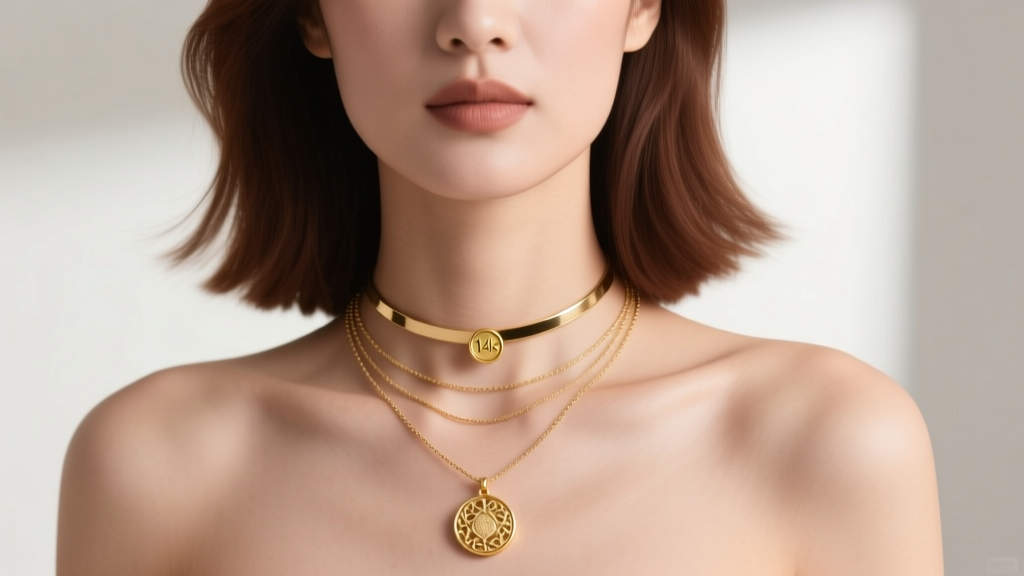
If your first chain (perhaps a simple gold hoop or tiny gemstone pendant) sits at 16 inches (choker length), your 14k gold medallion necklace should sit at 18 inches (princess length). If you add a third chain, it should be 20 inches. This precise spacing ensures that the medallions and clasps do not rub against one another, which prevents micro-scratches and gold wear.
When mixing textures, pair a smooth, polished medallion with a textured chain (like a Rope or Wheat chain), or pair a heavily engraved, vintage-style medallion with a sleek, high-polish Box chain. Contrast in texture elevates the entire stack from 'basic' to 'curated'.
Real-World Troubleshooting and Care
Even the most durable 14k gold requires basic maintenance. Over time, lotions, oils, and environmental dust will accumulate in the crevices of your medallion's engravings, dulling its shine.
How to Safely Clean Your Medallion
Avoid commercial jewelry dips and ultrasonic cleaners, especially if your medallion features any enamel work or soft gemstones like turquoise or opal. Instead, use the industry-standard gentle method:
- Mix warm water with a few drops of mild dish soap (like Dawn) in a ceramic bowl.
- Let the necklace soak for 10-15 minutes to loosen oils.
- Gently scrub the medallion and chain links with a soft-bristled baby toothbrush.
- Rinse thoroughly under lukewarm water and pat dry with a microfiber cloth.
The Jump Ring Failure Mode
According to the Federal Trade Commission's Jewelry Guides, manufacturers must ensure structural integrity, but wear and tear is inevitable. The most common point of failure on any medallion necklace is the 'jump ring'—the small split ring connecting the bail to the chain. Over years of wear, this ring can slowly twist open. Make it a habit to gently tug on the jump ring every six months. If you feel it shifting or see a gap, take it to a local jeweler for a quick, inexpensive laser soldering before you lose your medallion.
Pricing Expectations: What Should You Pay?
When shopping for a solid 14k gold medallion necklace, price is dictated almost entirely by the gram weight of the gold and the complexity of the craftsmanship. Be highly suspicious of 'gold' medallions priced under $150; these are almost certainly gold-plated brass or gold vermeil, which will eventually tarnish and wear away to reveal the base metal beneath.
- Entry-Level Solid 14k (1.5g - 3g): $250 - $450. Expect smaller diameters (12mm-15mm) on lightweight cable chains.
- Mid-Range Solid 14k (4g - 8g): $500 - $900. This bracket includes standard 20mm medallions on durable box chains, often featuring detailed zodiac or floral engravings.
- Heavyweight / Artisan Solid 14k (10g+): $1,100 - $2,500+. These are substantial, heirloom-quality pieces with deep relief carving, often paired with heavy rope chains.
By understanding the metallurgy, prioritizing structural chain pairings, and committing to simple maintenance, your 14k gold medallion necklace will transition from a simple purchase to a lifelong signature piece.


