What The Affair of the Diamond Necklace Teaches About Jewelry Care
Discover how the infamous Affair of the Diamond Necklace informs modern high jewelry care, cleaning protocols, and antique diamond maintenance.

The Scandal That Redefined High Jewelry Value
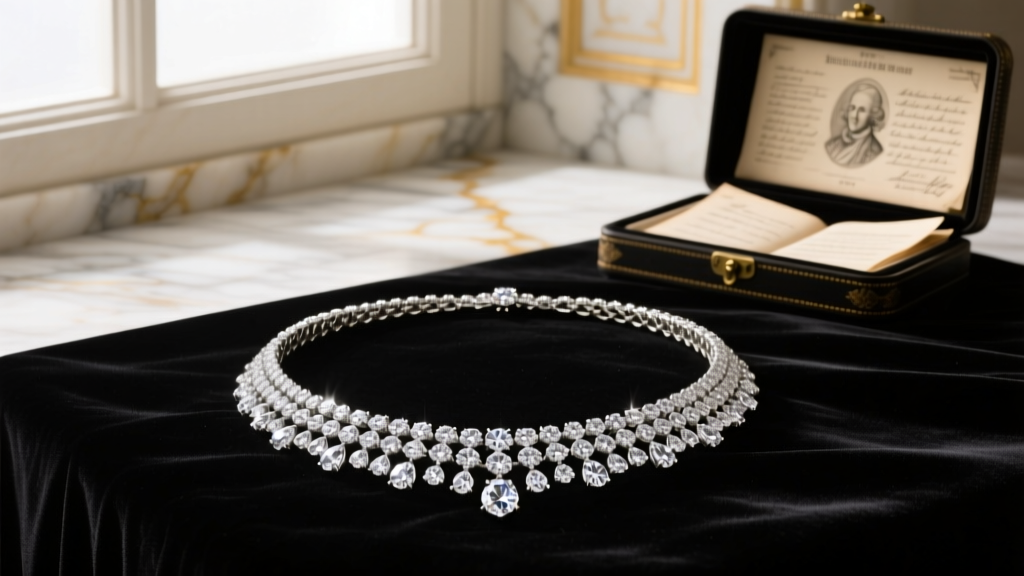
When historians discuss the affair of the diamond necklace, they are usually dissecting the 1785 political scandal that tarnished Marie Antoinette’s reputation and accelerated the French Revolution. However, for gemologists and high jewelry conservators, the physical object at the center of the intrigue—a staggering 2,800-carat multi-strand festoon designed by court jewelers Boehmer and Bassange—represents a masterclass in 18th-century lapidary arts. Today, owning, insuring, or maintaining antique diamond necklaces of this caliber requires a meticulous understanding of historical metallurgy and archaic gem-setting techniques.
The original necklace was a marvel of its time, featuring intricate silver-topped gold settings, closed-back collets, and early brilliant-cut diamonds. While modern 2026 jewelry manufacturing relies on platinum and laser-welded open-back prongs, the care protocols for historical masterpieces remain highly specialized. Applying modern ultrasonic cleaning methods to an 18th-century diamond collar will not just damage the piece; it will irreversibly destroy its historical integrity and market value. Here is what the construction of history's most infamous necklace teaches us about the rigorous demands of high jewelry maintenance.
Silver-Topped Gold: The Tarnish Paradox
Before the widespread commercial use of platinum in the late 19th and early 20th centuries, jewelers faced a distinct challenge: gold is yellow, which dulls the visual brilliance of colorless diamonds, but silver, while white, tarnishes rapidly and stains the skin. The solution, heavily utilized in the Boehmer-Bassange masterpiece, was silver-topped gold. A thin layer of silver was fused over a structural gold base.
The Cleaning Danger
If you inherit or acquire an antique diamond necklace featuring silver-topped gold, never use commercial silver dips or thiourea-based chemical polishes. These harsh chemicals are designed to strip silver sulfide (tarnish) but will aggressively eat away at the microscopic silver layer, eventually exposing the yellow gold beneath and ruining the antique patina. According to conservation guidelines from the Victoria & Albert Museum, antique silver-topped pieces should only be cleaned using a mild, phosphate-free surfactant and a soft baby toothbrush, carefully avoiding aggressive friction on the silver surfaces.
Closed-Back Settings and the Moisture Threat
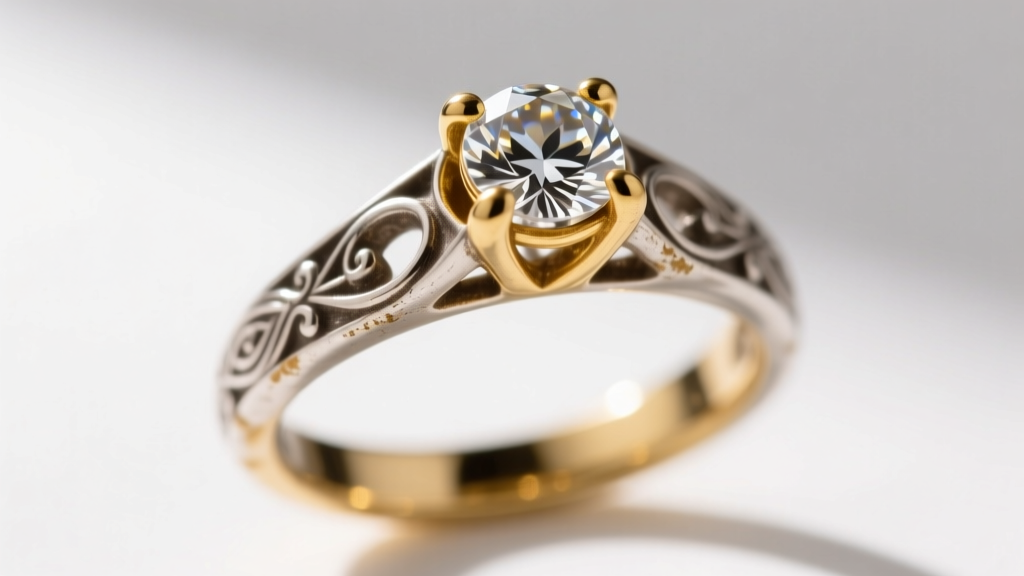
Many of the diamonds in historical festoon necklaces were rose cuts or early mine cuts. Because these early lapidary cuts lacked the precise pavilion angles required to reflect light internally, jewelers backed them with highly polished silver foil and sealed them in closed-back metal collets to act as mirrors.
This creates a massive vulnerability in modern care routines. The Gemological Institute of America (GIA) strictly warns against using ultrasonic or steam cleaners on any jewelry with closed-back settings or fracture-filled stones. In a multi-strand necklace, capillary action can easily pull water or chemical solvents into the tiny seams of a closed-back collet. Once trapped, the moisture oxidizes the silver foil backing. The foil turns black, effectively killing the diamond's brilliance from the inside out. The only safe way to clean these stones is with a barely damp, lint-free microfiber cloth, gently wiping the crown of the stone without letting liquid pool near the bezel.
Structural Integrity: Wire Fatigue in Multi-Strand Festoons
The necklace at the heart of the scandal was a heavy, multi-tiered festoon design. In any multi-strand necklace, the top links and the central clasp bear an disproportionate amount of kinetic stress and tensile weight. Over decades of wear, the metal in these links undergoes work hardening and eventual wire fatigue.
- Annual Microscopic Inspections: High-carat antique necklaces require annual X-ray or stereo-microscope inspections to check for micro-fractures in the link solder joints.
- Laser Welding vs. Torch Soldering: If a link fails, traditional torch soldering introduces widespread heat that can melt the delicate silver foil backings or shatter heat-sensitive antique diamonds. Modern conservators use precision laser welding to repair links without transferring thermal energy to the surrounding stones.
- Clasp Upgrades: While purists prefer to keep original 18th-century C-clasps or early barrel clasps, they are notoriously insecure. A common conservation compromise is adding a modern, discreet 18k gold safety chain to prevent catastrophic loss if the primary antique clasp fails.

Maintenance Matrix: Antique vs. Modern Diamond Necklaces
Understanding the divergence between historical techniques and 2026 manufacturing standards is critical for proper care. The table below outlines the specific maintenance protocols required for each era of high jewelry construction.
| Feature | 18th/19th Century Antique | Modern 2026 Construction | Care & Cleaning Protocol |
|---|---|---|---|
| Metal Base | Silver-topped gold | Platinum or 18k White Gold | Antique: Mild soap, no chemicals. Modern: Ultrasonic safe. |
| Stone Setting | Closed-back collets with foil | Open-back prong or bezel | Antique: Dry wipe only. Modern: Steam and ultrasonic safe. |
| Link Soldering | Lead-based or early silver solders | Laser-welded platinum joints | Antique: Avoid heat, laser repair only. Modern: Torch safe. |
| Storage Needs | Acid-free, low humidity, archival | Standard anti-tarnish pouches | Antique: Silica gel required to protect foil backings. |
Archival Storage: Protecting Provenance and Polish
A necklace with the historical weight of the affair of the diamond necklace is not merely an accessory; it is a portable museum artifact. Storing such a piece in a standard velvet-lined wooden box can be disastrous. Many older wooden jewelry boxes are finished with acidic lacquers or lined with PVC-based synthetic velvets that off-gas sulfur and chlorides, accelerating the tarnishing of silver-topped gold and degrading the structural integrity of silk threading.
The 2026 Archival Standard
For high-value antique necklaces, storage must mimic museum conservation environments. The piece should be laid flat—never hung, as gravity will stress the antique links—in an acid-free, lignin-free archival box lined with unbleached cotton. To protect the closed-back foil settings from ambient humidity, a small packet of indicating silica gel should be placed in the outer chamber of the box, maintaining a relative humidity (RH) of exactly 40-45%. By treating your high jewelry with the same reverence and scientific precision as a historical artifact, you ensure its brilliance survives for the next century.