How to Choose a Real 4 Leaf Clover Necklace: A Guide
Discover how to identify a real 4 leaf clover necklace, from preserved botanical charms to authentic gemstone motifs, with expert buying tips.

The Great Clover Confusion: Botanical vs. Motif
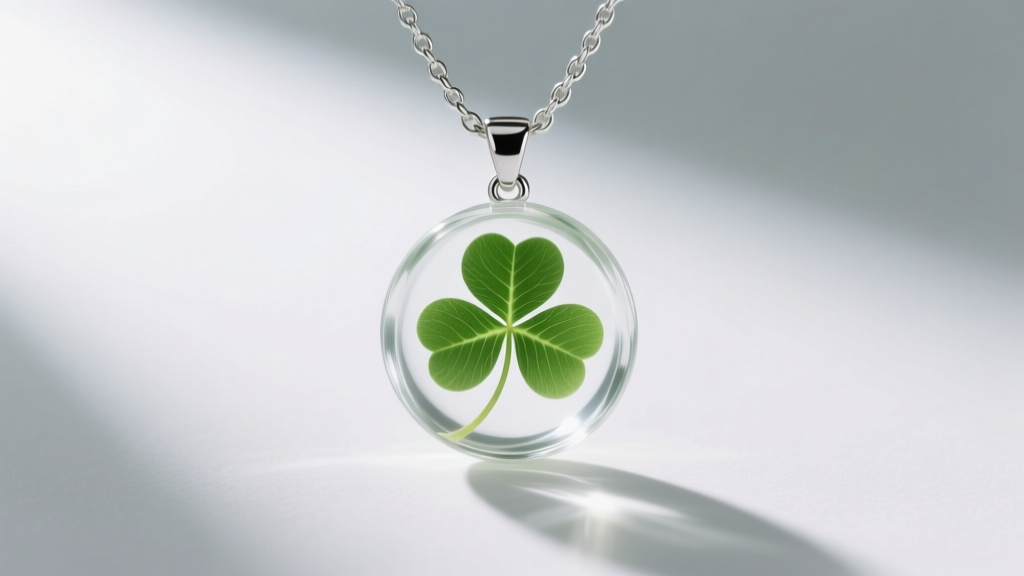
When beginners begin searching for a real 4 leaf clover necklace, they usually encounter a massive point of confusion. The market is split into two entirely different categories of "real." The first category consists of authentic botanical specimens—actual Trifolium repens (white clover) plants that have been preserved and encased in jewelry. The second category comprises fine jewelry motifs, where the four-leaf clover shape is carved from genuine gemstones like malachite, jade, or onyx, often inspired by iconic luxury designs.
Understanding the difference between these two categories is the first step to making an informed purchase. A preserved botanical clover is a literal piece of nature, prized for its organic asymmetry and sentimental value. A gemstone clover motif, on the other hand, is a structural piece of fine jewelry valued for its material worth, lapidary craftsmanship, and durability. This guide will break down the exact specifications, pricing, and authentication markers for both types so you know exactly what you are buying.
Type 1: Authentic Preserved Botanical Clovers
Finding a genuine preserved clover requires looking past mass-produced stamped metal pendants. A true botanical necklace uses a real plant that has been carefully treated to prevent decay. The quality of a botanical pendant is entirely dependent on the preservation method and the encasement material used by the jeweler.
Preservation Methods: Freeze-Dried vs. Air-Dried
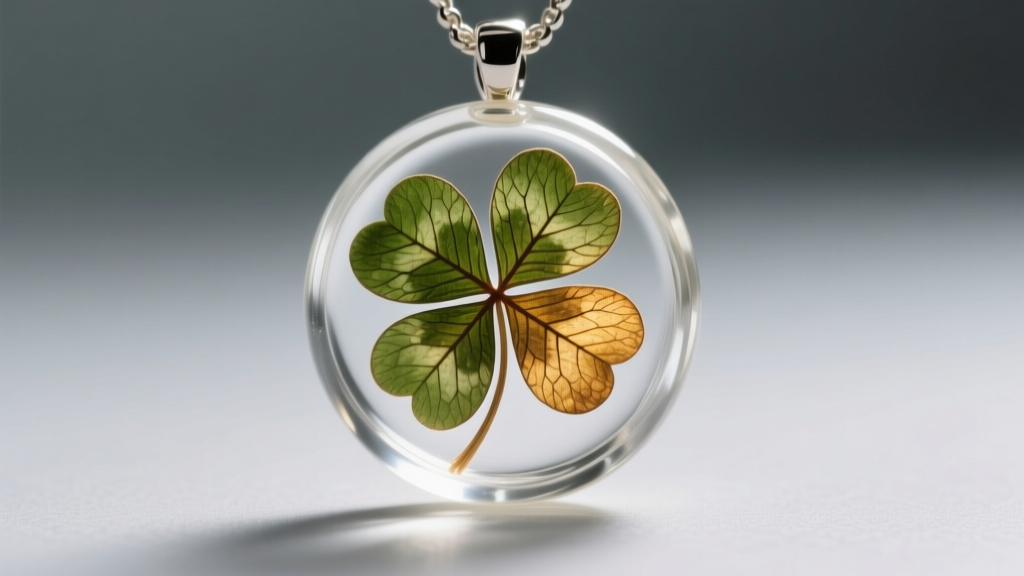
The highest quality botanical clovers are freeze-dried (lyophilized). This process removes moisture while maintaining the cellular structure and natural green chlorophyll of the leaf. Air-dried clovers, which are cheaper to produce, almost always turn brown, brittle, and shrink significantly, resulting in a dull, autumnal pendant. If a seller claims a clover is "naturally air-dried" but it remains vibrant green, it has likely been painted or chemically dyed—a major red flag for authenticity.
Encasement: Epoxy Resin vs. UV Resin vs. Glass
Once preserved, the clover must be sealed away from oxygen and moisture. According to jewelry fabrication standards detailed by suppliers like Rio Grande, two-part jewelry-grade epoxy resin is the gold standard for botanical encasement. Epoxy resin has a refractive index of approximately 1.50, which closely mimics water, giving the leaf a vibrant, "wet" look without the risk of rotting. Conversely, cheap UV-cured resins often shrink during the curing process, pulling away from the leaf edges and creating a cloudy "halo" effect. Blown glass vials are also used, but they lack the optical clarity of high-grade epoxy and are highly prone to shattering upon impact.
Type 2: Fine Jewelry Clover Motifs (Gemstones)
If you are looking for a permanent, heirloom-quality piece, you are likely in the market for a gemstone clover motif. The most common stones used for these designs are malachite, jade, onyx, and mother-of-pearl. However, the market is flooded with synthetic imitations and dyed stones masquerading as high-end gems.
Authenticating Malachite and Jade
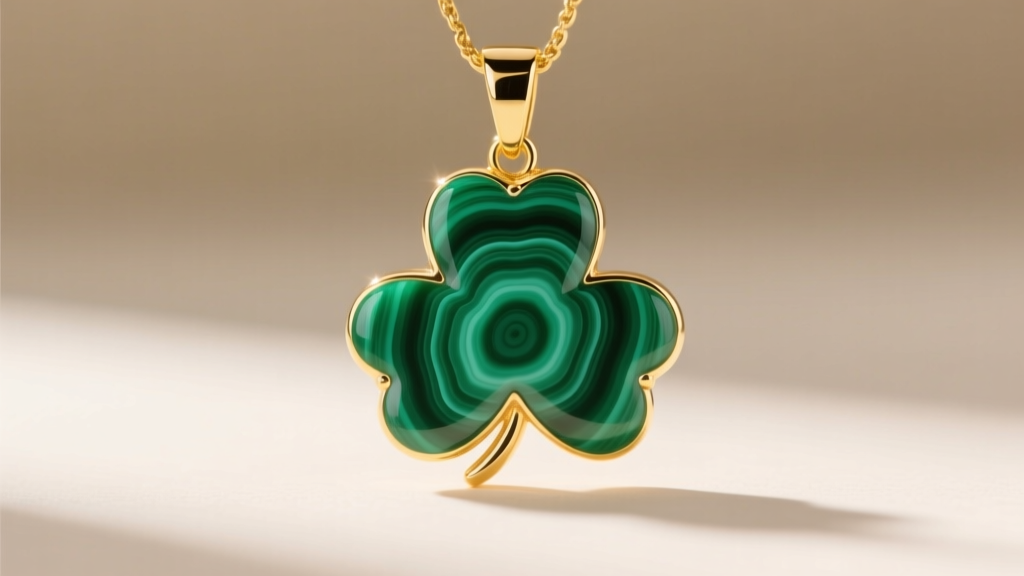
Malachite is a copper carbonate hydroxide mineral known for its striking green banding. According to the Gemological Institute of America (GIA), genuine malachite will always feature concentric rings, sharp color zoning, and a slightly waxy luster. It is also relatively soft, ranking 3.5 to 4.0 on the Mohs hardness scale. Fakes are typically made from dyed howlite, glass, or enamel. Glass fakes will feel unnaturally cold to the touch and may contain perfectly round air bubbles, which never occur in natural malachite.
Jade (specifically jadeite) is much harder, ranking 6.5 to 7.0 on the Mohs scale. The GIA's jade identification guide notes that natural jadeite possesses a fibrous, interlocking crystalline structure that gives it a distinct "greasy" luster. Dyed quartz or serpentine are common substitutes. A real jade clover pendant will exhibit slight color variations and internal inclusions, whereas dyed fakes often show dye pooling in the microscopic surface fractures.
Material & Authenticity Comparison Chart
Use this quick-reference table to evaluate the clover necklace you are considering purchasing.
| Material Type | Authenticity Markers | Common Fakes | Average Price Range |
|---|---|---|---|
| Preserved Botanical | Micro-veins, organic asymmetry, slight color fading over time | Stamped metal, painted resin, laser-cut plastic | $35 - $120 |
| Natural Malachite | Concentric banding, waxy luster, Mohs 3.5-4.0 | Dyed howlite, painted glass, enamel | $150 - $800 |
| Natural Jadeite | Fibrous structure, greasy luster, Mohs 6.5-7.0 | Dyed serpentine, dyed quartz, Aventurine | $300 - $2,500+ |
| Black Onyx | Deep uniform black, vitreous luster, Mohs 7.0 | Dyed agate, black glass, black epoxy | $100 - $600 |
Hardware and Chain Pairings for Clover Pendants
A common failure mode in beginner-level clover necklaces is the hardware. The pendant bail (the loop that connects the clover to the chain) takes the brunt of the mechanical stress. Avoid pendants where the bail is simply glued to the back of the resin or stone. Always look for a soldered jump ring or a mechanically wrapped wire bail that physically grips the pendant.
For chain pairings, the weight of the clover dictates the gauge. A standard 15mm to 18mm gemstone clover pendant weighs between 4 and 8 grams. To support this without the chain kinking, opt for a 0.9mm to 1.2mm box chain or cable chain. Box chains are highly recommended for gemstone motifs because their square links distribute weight evenly and resist tangling. Avoid hollow rope chains, as the clover's edges can easily catch and dent the hollow links.
Red Flags: How to Avoid Fake Clover Jewelry
Expert Insight: Nature is rarely perfect. If you are buying a preserved botanical clover, the four leaves should exhibit slight variations in size and asymmetrical vein patterns. If the clover looks mathematically perfect with identical leaves, it is a mold-cast fake. Similarly, if a malachite pendant has perfectly uniform, straight stripes rather than organic, swirling bands, it is likely dyed agate or plastic.
Care and Maintenance for Longevity
The care requirements for a real 4 leaf clover necklace depend entirely on its composition. Mismanaging the cleaning process is the fastest way to destroy these pieces.
- Botanical Resin Pendants: Never clean epoxy resin with rubbing alcohol, acetone, or commercial jewelry dips. These solvents will chemically cloud the resin and degrade the surface polish. Clean only with a damp microfiber cloth and mild dish soap. Store away from direct, prolonged UV sunlight to prevent the resin from yellowing and the leaf from fading.
- Malachite Pendants: Malachite is highly porous and sensitive to acids. Never use ultrasonic cleaners, steamers, or harsh chemicals, as they will strip the stone's natural polish and cause severe pitting. Wipe gently with a dry, soft cloth after wearing to remove skin oils.
- Jade and Onyx Pendants: These harder stones can tolerate mild soap and warm water. Use a soft-bristled baby toothbrush to gently clean the crevices where the gold or silver bezel meets the stone. Ensure the piece is completely dry before storing to prevent the metal setting from oxidizing.
Final Verdict for Beginners
Choosing the right piece comes down to your personal intent. If you want a deeply personal, sentimental talisman that carries the literal energy of nature, invest in a freeze-dried botanical clover encased in high-grade epoxy resin from an independent artisan. If you are seeking a durable, luxurious accessory that can be worn daily and passed down as an heirloom, focus your budget on a solid 14k or 18k gold setting featuring genuine, untreated malachite or jadeite. By scrutinizing the preservation methods, verifying gemological markers, and ensuring the hardware is properly soldered, you can confidently purchase a clover necklace that is genuinely real in every sense of the word.


