How to Authenticate and Style a Paul Flato Belt Necklace
Discover how to authenticate, value, and style a vintage Paul Flato belt necklace. Expert tips on hallmarks, gemstones, and 1930s jewelry care.

The Legacy of the Paul Flato Belt Necklace
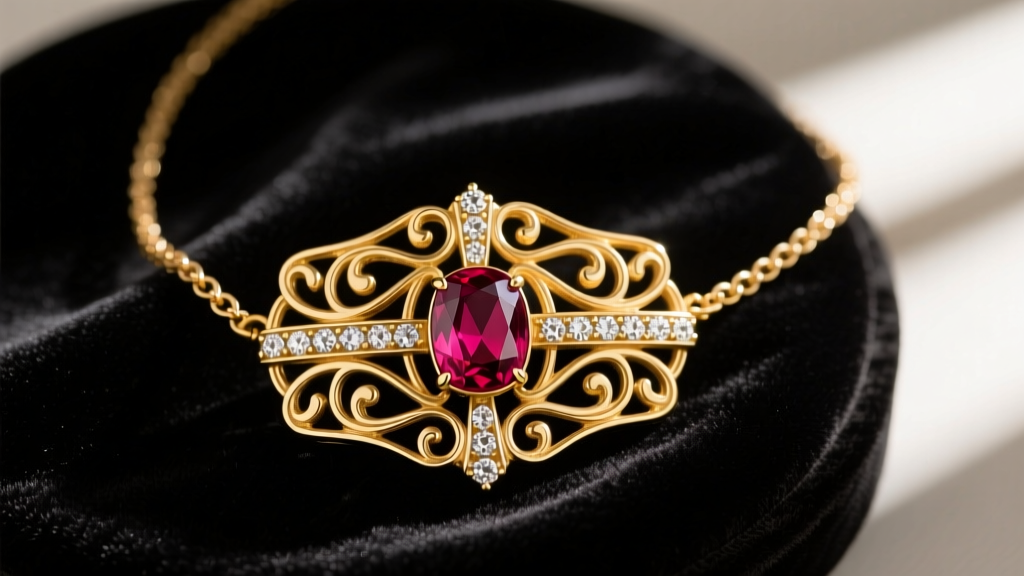
When discussing the pantheon of legendary American jewelers, Paul Flato (1900–1999) stands in a league of his own. Operating primarily in the 1930s and 1940s, Flato was known as the 'Jeweler to the Stars,' crafting bold, sculptural, and often whimsical pieces for Hollywood elite like Marlene Dietrich and Greta Garbo. Among his most coveted and recognizable designs is the paul flato belt necklace—a masterclass in translating tailored, industrial-chic menswear motifs into high jewelry. Featuring interlocking gold links that mimic a leather belt, complete with a stylized buckle often encrusted with cabochon rubies and old-cut diamonds, this piece is a holy grail for vintage collectors.
However, the secondary market for 1930s American high jewelry is fraught with reproductions, 'Frankenstein' pieces (altered by later jewelers), and misattributions. Whether you are an archivist, a collector, or a stylist working with heritage pieces, understanding how to authenticate, evaluate, and style this specific masterpiece is critical. This step-by-step guide provides the gemological and historical framework needed to navigate the complexities of Flato's belt motif collars.
Step 1: Authenticating Hallmarks and Articulation Mechanics
The first step in verifying a Paul Flato belt necklace is examining the maker's marks and the mechanical engineering of the links. Flato's workshop was renowned for its impeccable articulation; a genuine piece will drape over the clavicle with the fluidity of silk, despite being forged from heavy gold.
Locating the Maker's Mark
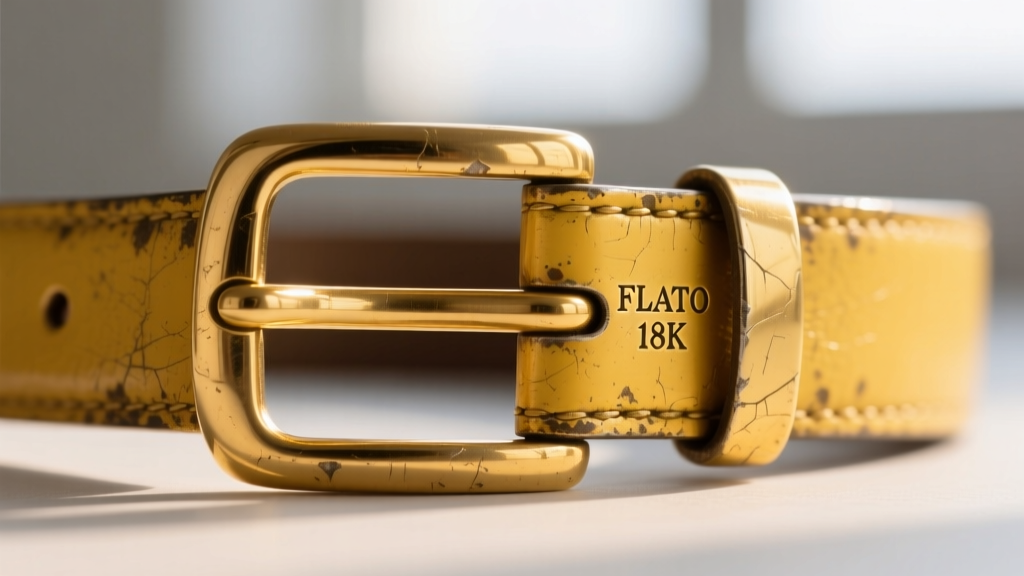
Authentic Flato pieces are typically stamped with a distinct, serifed FLATO hallmark. On a belt necklace, this stamp is usually hidden on the underside of the buckle clasp or on the final link near the box clasp. You should also look for the metal purity mark, most commonly 18K or 14K, and occasionally a patent number or inventory mark. According to the Sotheby's Jewelry Archives, Flato's hallmarks from the late 1930s were struck with deep, clean dies. Blurry, shallow, or laser-etched stamps are immediate red flags indicating a later reproduction or a cast copy.
Testing the Articulation
The 'belt' links on a genuine Flato necklace are not simply looped jump rings. They are often engineered with hidden hinges or custom-milled interlocking channels. Run the necklace through your hands; it should fold inward on itself smoothly but resist twisting laterally. If the links feel stiff, grind against one another, or show excessive lateral play, the piece may have suffered structural damage or unauthorized repairs.
Step 2: Evaluating Gemstones and Metallurgy
Flato favored a specific palette and gemstone cutting style that reflects the Art Deco-to-Retro transition period. Evaluating the stones is just as important as checking the gold.
- The Gold: Flato predominantly used 18k yellow gold for his belt motifs, often employing a Florentine or matte brushed finish on the 'leather' portions of the belt to contrast with high-polish buckles. The gold weight is substantial; a genuine collar necklace will often weigh between 85 and 140 grams.
- The Rubies: The buckle and belt loops are frequently accented with calibré-cut or cabochon rubies. In the 1930s, these were typically Burmese or Ceylonese sapphires/rubies. Under magnification, look for natural inclusions (like rutile silk). Beware of modern lead-glass-filled rubies, which are sometimes used in careless restorations. The Gemological Institute of America (GIA) strongly advises against purchasing vintage pieces with fracture-filled stones, as they severely diminish the archival value.
- The Diamonds: Accent diamonds will almost never be modern round brilliants. Expect to see Old European cuts, transitional cuts, or single-cut melee diamonds with smaller tables and higher crowns, which emit a warmer, more candlelight-friendly sparkle.
Step 3: Valuation and Market Realities
The market for signed 1930s American high jewelry has surged, driven by collectors who view these pieces as wearable sculpture. The value of a Paul Flato belt necklace depends heavily on its condition, provenance, and originality.
| Condition Grade | Originality & Provenance | Estimated Auction Value (USD) |
|---|---|---|
| Mint / Excellent | 100% original stones, documented Hollywood provenance | $85,000 – $150,000+ |
| Very Good | Original hallmarks, minor clasp wear, no replaced stones | $45,000 – $75,000 |
| Good / Fair | Replaced melee diamonds, polished links, missing patent stamp | $15,000 – $35,000 |
| Altered | Shortened length, modern solder work, filled rubies | $8,000 – $12,000 (Scrap/Melt + Stone Value) |
Expert Insight: Never allow a local jeweler to polish a vintage Flato piece. Over-polishing destroys the original Florentine textures and softens the crisp edges of the belt links, instantly dropping the piece into the 'Good/Fair' valuation tier.
Step 4: Styling the Belt Motif for Modern Wardrobes
Styling a statement piece from the 1930s requires a delicate balance between honoring its vintage roots and integrating it into a contemporary wardrobe. The belt necklace sits high on the collarbone, functioning almost as a metallic collar or choker.

Neckline Pairings
Because the belt motif is visually heavy and highly detailed, it requires a 'canvas' that allows it to breathe. Deep V-necks and scoop necks in solid, dark colors (like navy silk, black crepe, or emerald velvet) provide the highest contrast, making the yellow gold and red rubies pop. Avoid busy patterns, lace, or ruffled collars, which will compete with the intricate gold work of the buckle.
The Rule of Isolation
When wearing a Paul Flato belt necklace, the golden rule is isolation. Do not attempt to layer it with delicate chains or pendant necklaces. The structural complexity of the belt links will easily tangle with and scratch softer, thinner chains. Let the Flato piece serve as the sole focal point of your neckline, pairing it only with complementary vintage gold clip-back earrings or a bold cocktail ring.
Step 5: Archival Care and Preservation
Preserving a museum-quality piece of jewelry requires abandoning modern, aggressive cleaning habits. The patina that develops in the crevices of the belt links is historically significant and adds depth to the sculptural elements of the design.
- Cleaning Protocol: Never use ultrasonic cleaners. The high-frequency vibrations can fracture old-cut diamonds with existing feather inclusions and shake loose the delicate calibré-cut rubies from their bezel or channel settings. Instead, use a soft baby toothbrush, lukewarm water, and a drop of mild, phosphate-free dish soap to gently lift oils from the gold.
- Storage Mechanics: Do not hang the necklace on a standard jewelry hook. The weight of the gold will eventually pull the hidden hinges out of alignment, causing the 'belt' to stretch and warp. Store the necklace flat in an acid-free, archival-quality tissue box, fully unclasped to relieve tension on the box clasp mechanism.
- Annual Inspections: Have a specialist in antique jewelry inspect the prongs and hinge pins every 12 months. The friction of the interlocking gold links can slowly wear down the internal pins over decades of use.
Owning and wearing a Paul Flato belt necklace is an exercise in preserving American jewelry history. By rigorously authenticating the hallmarks, respecting the original gemological choices, and styling the piece with intentional restraint, you ensure that this 1930s masterpiece continues to command the room for generations to come.


