Ballet Slipper Necklace Buying Guide: What to Look For
Discover how to choose the perfect ballet slipper necklace. Learn about metal grades, enamel quality, chain types, and pricing in our expert buying guide.

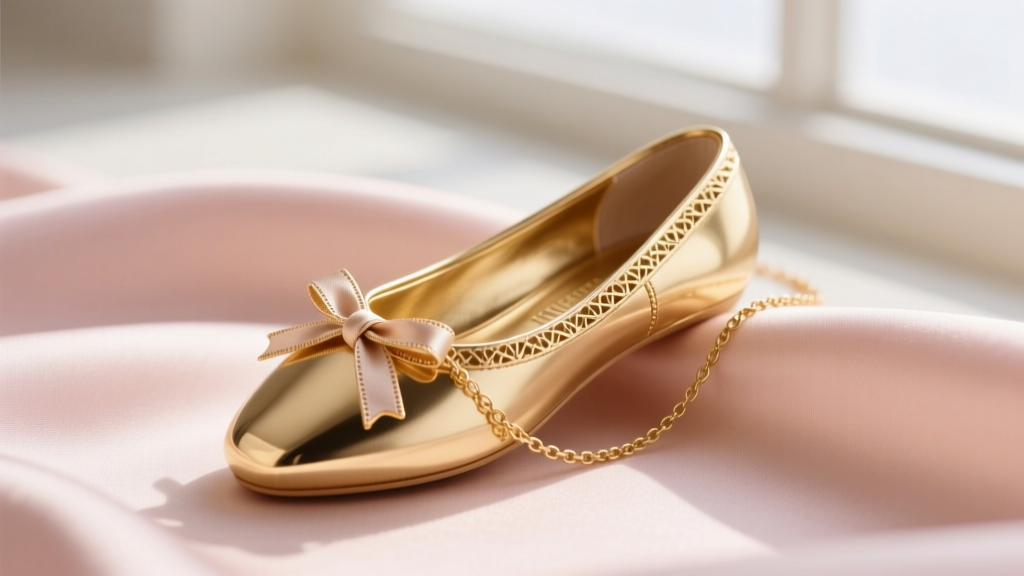
The Enduring Appeal of the Ballet Slipper Charm
What began as a niche gift for dancers and a fleeting social media trend has firmly cemented itself into the modern fine jewelry lexicon. By 2026, the ballet slipper necklace is no longer just a symbol of 'balletcore' aesthetics; it is recognized as a timeless emblem of grace, discipline, and artistry. Whether you are purchasing a coming-of-age gift for a young dancer, treating yourself to a piece that reflects your passion for the arts, or simply looking for a uniquely feminine pendant, navigating the market requires a discerning eye.
Not all dance-inspired jewelry is created equal. The market is currently saturated with everything from $20 mass-produced alloy trinkets to $2,000 solid gold heirlooms. This comprehensive buying guide will break down the exact metallurgical standards, enamel techniques, and structural engineering details you need to evaluate before investing in a high-quality ballet slipper necklace.
Material Breakdown: Solid Gold vs. Vermeil vs. Sterling Silver
The foundation of any fine jewelry piece is its base metal. When evaluating a ballet slipper necklace, you will primarily encounter three categories. Understanding the legal and practical distinctions between them is crucial for assessing long-term value and skin sensitivity.
Sterling Silver (925)
Sterling silver is an alloy containing 92.5% pure silver and 7.5% copper or other metals for strength. It is an excellent, hypoallergenic choice for everyday wear. However, silver is prone to tarnishing when exposed to sulfur in the air and the natural oils in your skin. If you opt for a silver ballet slipper, ensure it features a rhodium plating finish, which acts as a temporary barrier against oxidation and provides a bright, white-gold-like luster.
Gold Vermeil vs. Standard Gold Plating
Many buyers confuse standard gold plating with gold vermeil. According to the Federal Trade Commission's Jewelry Guides, for a piece to be legally marketed as 'vermeil' in the United States, it must have a sterling silver base and be plated with gold that is at least 10k fineness, with a minimum thickness of 2.5 microns. Standard plated jewelry often uses a brass or copper base with a microscopic 0.5-micron flash of gold that will wear off within months. Premium jewelers in 2026 are increasingly pushing vermeil thickness to 3.0 or even 4.0 microns to ensure the gold layer survives years of daily friction against the collarbone.
Solid 14k and 18k Gold
For an heirloom-quality ballet slipper necklace, solid gold is the ultimate standard. The Gemological Institute of America (GIA) notes that 14k gold (58.5% pure gold) offers the ideal balance of rich color and structural durability, making it highly resistant to bending or warping. 18k gold (75% pure gold) offers a deeper, more saturated yellow hue but is slightly softer. For a charm with delicate, protruding wire ribbons, 14k gold is generally the superior engineering choice to prevent the ribbons from snagging and bending out of shape.
| Metal Type | Base Material | Plating / Purity | Expected Lifespan | Avg. Price Range |
|---|---|---|---|---|
| Sterling Silver | 92.5% Silver | Often Rhodium Plated | Lifetime (with polishing) | $60 - $150 |
| Gold Vermeil | 925 Sterling Silver | 2.5+ Microns of 14k/18k | 2 to 5 Years (daily wear) | $120 - $300 |
| Solid 14k Gold | 58.5% Pure Gold | Solid Alloy | Lifetime / Heirloom | $450 - $900+ |
Enamel vs. Pavé vs. Solid Metal: Choosing the Charm Finish
The visual impact of a ballet slipper pendant relies heavily on its surface finish. While solid metal offers a minimalist, vintage look, enamel provides the iconic pastel pinks, whites, and blacks associated with traditional pointe shoes.
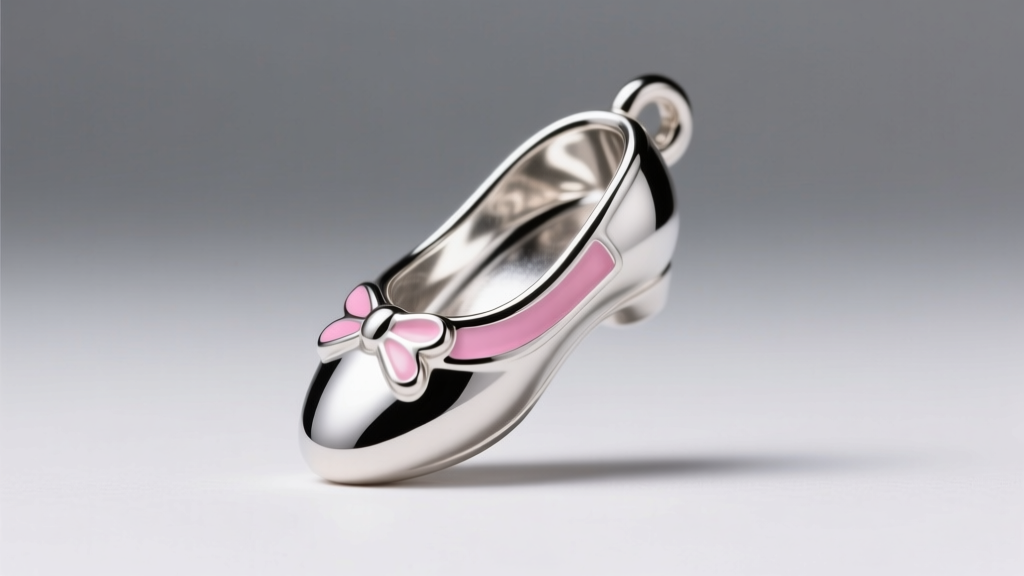
The Vitreous vs. Cold Enamel Debate
This is where many buyers are inadvertently misled. There are two entirely different methods for applying color to jewelry:
- Vitreous (Hot) Enamel: This is a centuries-old technique where finely ground glass powder is packed into metal cells and fired in a kiln at temperatures exceeding 1,400°F. The result is a permanent, glass-like finish that will never yellow, fade, or shrink. It is highly durable and scratch-resistant.
- Cold Enamel (Epoxy Resin):strong> Common in mass-market and entry-level jewelry, cold enamel is essentially a two-part colored epoxy resin that is painted into the metal recesses and left to air-cure. Over time, UV exposure causes cold enamel to yellow, and temperature fluctuations can cause the resin to shrink and pull away from the metal bezel.
Expert Tip: Always check the product specifications for the term 'vitreous,' 'kiln-fired,' or 'guilloché.' If the listing simply says 'enamel' on a piece priced under $100, it is almost certainly cold resin.
Gemstone Pavé Alternatives
For those who prefer brilliance over color, some high-end designers craft ballet slippers entirely out of micro-pavé diamonds or pink sapphires. When buying pavé, look for 'micro-prong' settings rather than 'bead-set' or 'flush-set' stones, as prongs allow more light to enter the underside of the gemstones, maximizing the sparkle of the tiny 1mm to 1.5mm diamonds used in novelty charms.
Selecting the Right Chain and Length for Dance-Inspired Pendants
The chain is not merely a delivery mechanism for the pendant; it dictates the overall aesthetic and functional security of the necklace. Ballet slipper charms often feature delicate, looping wire ribbons at the ankle. Pairing these with the wrong chain can lead to constant snagging and eventual damage to the charm.
Chain Styles to Embrace and Avoid
- Box Chains (Recommended): With their smooth, square, interlocking links, box chains glide effortlessly through the bail of the pendant. They are highly resistant to kinking and will not catch on the slipper's wire ribbons.
- Cable Chains (Recommended): A classic, simple oval-link chain. Ensure the gauge is between 1.0mm and 1.5mm. Anything thicker will visually overpower a dainty slipper charm; anything thinner risks snapping under tension.
- Rope and Herringbone Chains (Avoid): The twisted, textured surface of a rope chain or the flat, overlapping scales of a herringbone chain act like velcro to the delicate wire loops of a ballet slipper charm. They will snag, bend the charm, and eventually fray the chain links.
The Bail and Orientation Problem
One of the most common structural failures in novelty pendants is improper orientation. When a ballet slipper is attached via a simple soldered jump ring on its side, gravity and body movement will constantly flip the shoe upside down or sideways. When shopping, look for a 'fixed bail' or a 'hidden bail' integrated into the top of the slipper's ribbon or ankle cuff. A fixed bail restricts the pendant's rotation, ensuring the shoe always rests parallel to the floor, perfectly mimicking a dancer's pointed foot.
Sizing the Charm: Dainty vs. Statement Proportions
Ballet slipper charms generally fall into three distinct size categories, each serving a different styling purpose. Measuring the charm's height (excluding the bail) is critical for visualizing the piece on the body.
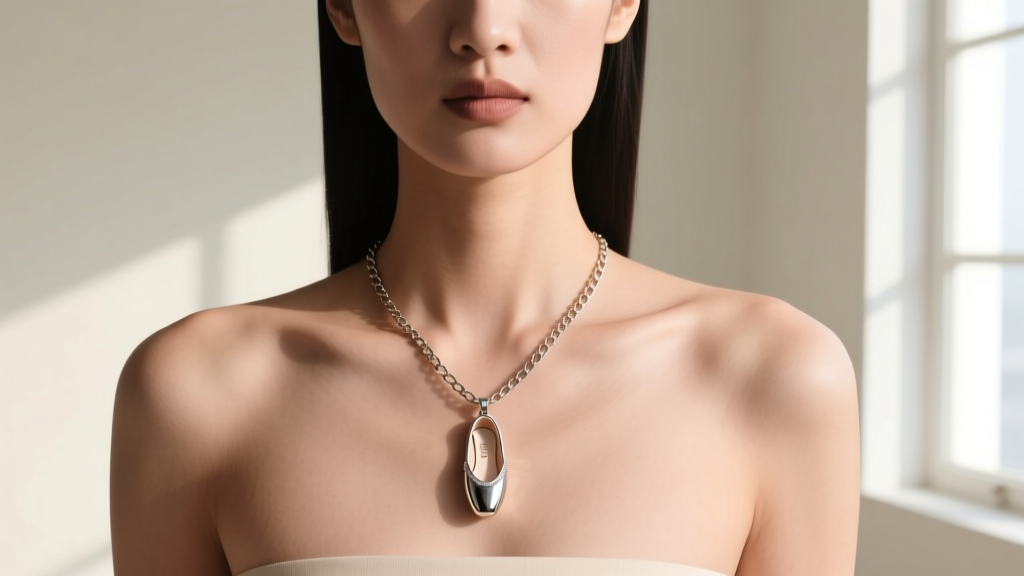
- Micro / Dainty (8mm - 12mm): Ideal for layering with other necklaces, such as a simple gold initial pendant or a pearl choker. This size offers a subtle, 'if you know, you know' nod to dance culture without dominating the neckline.
- Standard / Classic (15mm - 20mm): The most versatile size. It is large enough to be appreciated as a standalone piece on an 18-inch princess chain, yet small enough to be worn daily in a professional or academic environment.
- Statement / Vintage (25mm+): Often found in vintage estate jewelry or high-fashion editorial pieces. These larger slips are heavier and require a thicker chain (1.8mm+) to support the weight without the chain pulling awkwardly against the back of the neck.
Hallmarks, Clasps, and Quality Control Checkpoints
Before finalizing your purchase, perform a virtual or physical quality control check. A high-quality ballet slipper necklace will exhibit the following hallmarks of expert craftsmanship:
Always inspect the clasp mechanism. For dainty chains under 1.5mm, a lobster claw clasp is vastly superior to a spring ring clasp. The internal spring mechanism of a lobster clasp is more robust, and the larger lever makes it significantly easier to fasten without the help of a second person.
Furthermore, verify the metal hallmarks. A legitimate piece will be stamped with '925' for silver, or '14k' / '585' for gold, usually located on a small metal tag near the clasp or subtly stamped on the flat back of the ballet slipper charm itself. If the piece features gemstones, request a loupe video from the seller to ensure the pavé stones are uniform in color and securely seated in their prongs.
Final Verdict: Caring for Your Investment
To maintain the pristine condition of your ballet slipper necklace, proper care is non-negotiable. Never use ultrasonic cleaners or harsh chemical dips on enameled jewelry, as the high-frequency vibrations can shatter vitreous enamel and strip cold resin entirely. Instead, clean the piece using a few drops of mild dish soap, warm water, and an extra-soft baby toothbrush, gently brushing around the ribbon details. Dry thoroughly with a microfiber cloth. By prioritizing vitreous enamel, solid metals or heavy vermeil, and structurally sound fixed bails, you will secure a ballet slipper necklace that remains as timeless and enduring as the art of dance itself.


