Amber Necklace Teething Benefits: Material Properties & Safety Facts
Discover the science behind amber necklace teething benefits, Baltic succinic acid properties, and crucial safety facts for parents.

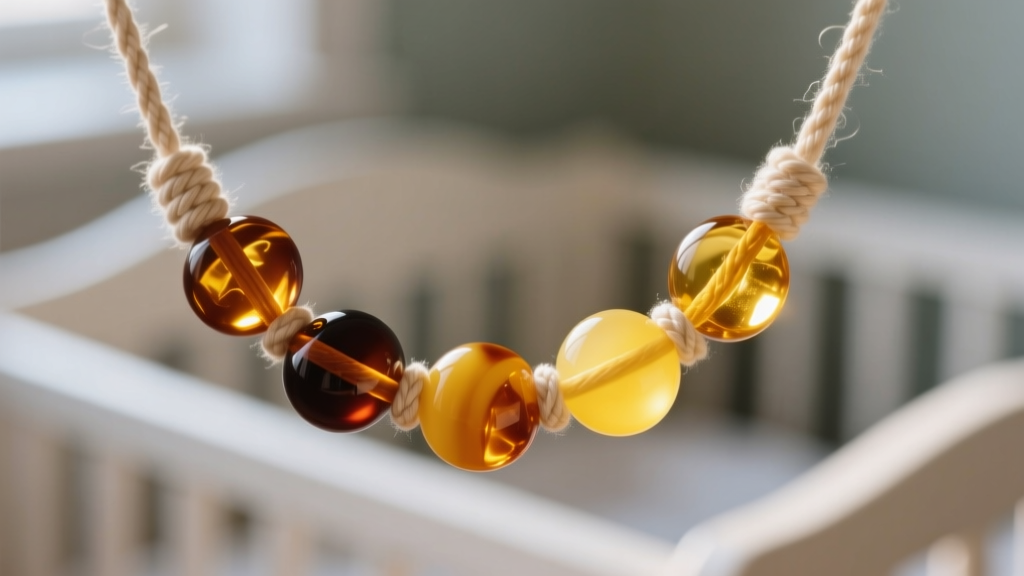
For generations, parents have sought natural remedies to soothe the discomfort of infant teething. Among the most popular and heavily debated of these remedies is Baltic amber jewelry. A quick search for amber necklace teething benefits will yield thousands of anecdotal claims praising the material's ability to reduce inflammation, ease gum pain, and promote better sleep. However, as jewelry material scientists and gemologists, we must separate historical lore from verifiable chemical properties, while critically addressing the severe safety warnings issued by modern pediatric authorities.
In this comprehensive guide, we analyze the geological makeup of Baltic amber, the physical reality of its claimed analgesic properties, and how it compares to modern teething materials. We will also cover essential gemological authentication tests to ensure you are not purchasing synthetic imitations.
The Geological and Chemical Profile of Baltic Amber
Unlike gemstones mined from the earth's crust, amber is an organic gemstone. Genuine Baltic amber originated approximately 44 million years ago during the Eocene epoch. It is the fossilized resin of the extinct conifer Pinus succinifera, which once blanketed the forests of Northern Europe. Over millions of years, heat, pressure, and oxygen deprivation polymerized the sticky resin into the durable material we recognize today.
From a chemical standpoint, Baltic amber is unique among global amber deposits due to its high concentration of succinic acid (butanedioic acid, C4H6O4). While Copal or Dominican amber contains negligible amounts, genuine Baltic amber typically contains between 3% and 8% succinic acid by weight. Succinic acid is a naturally occurring compound found in the human body, playing a vital role in the Krebs cycle (cellular energy production). Historically, it was isolated and used in European apothecaries as an anti-inflammatory and analgesic agent.
'Baltic amber is distinguished from other ambers by the presence of succinic acid, which gives it a unique chemical fingerprint and historical significance in early medicine.' — Gemological Institute of America (GIA)
Analyzing the Claimed Amber Necklace Teething Benefits
The primary theory behind amber necklace teething benefits hinges on thermodynamics and transdermal absorption. Proponents claim that when the amber beads rest against a baby's warm skin, the body heat causes the stone to release microscopic amounts of succinic acid, which is then absorbed into the bloodstream to provide systemic pain relief.
The Material Science Reality: Melting Points vs. Body Heat
When we apply material science to this claim, the physics do not support the transdermal absorption theory. Human body temperature rests around 37°C (98.6°F). Baltic amber, however, is a highly stable, cross-linked polymer. It does not begin to soften until it reaches approximately 150°C (302°F), and it will not melt or release volatile oils until it exceeds 200°C (392°F).
Therefore, a baby's body heat is physically incapable of breaking down the amber's polymer matrix to release succinic acid. Furthermore, succinic acid is not highly lipophilic (fat-soluble), meaning it does not easily pass through the skin's lipid barrier without a chemical carrier or solvent. While the material contains beneficial compounds, the delivery mechanism of a solid, polished bead necklace is scientifically inert.
Material Comparison: Amber vs. Modern Teething Alternatives
When evaluating materials for infant oral contact, we must consider Mohs hardness, porosity, bacterial retention, and structural integrity. Below is a material comparison chart contrasting Baltic Amber with modern, pediatrician-approved alternatives.
| Material Property | Baltic Amber (Polished) | Food-Grade Silicone | Untreated Beech Wood |
|---|---|---|---|
| Mohs Hardness | 2.0 - 2.5 (Very Soft) | N/A (Elastomer, Shore A 40-60) | 3.0 - 4.0 (Moderate) |
| Porosity | Non-porous (when polished) | Non-porous | Micro-porous |
| Bacterial Retention | Low | Very Low (Dishwasher safe) | Moderate (Requires oiling) |
| Choking Hazard Risk | High (Bead detachment) | Low (Solid single-piece mold) | Moderate (Splintering risk) |
| Active Compounds | Succinic Acid (3-8%) | None (Inert) | None (Inert) |
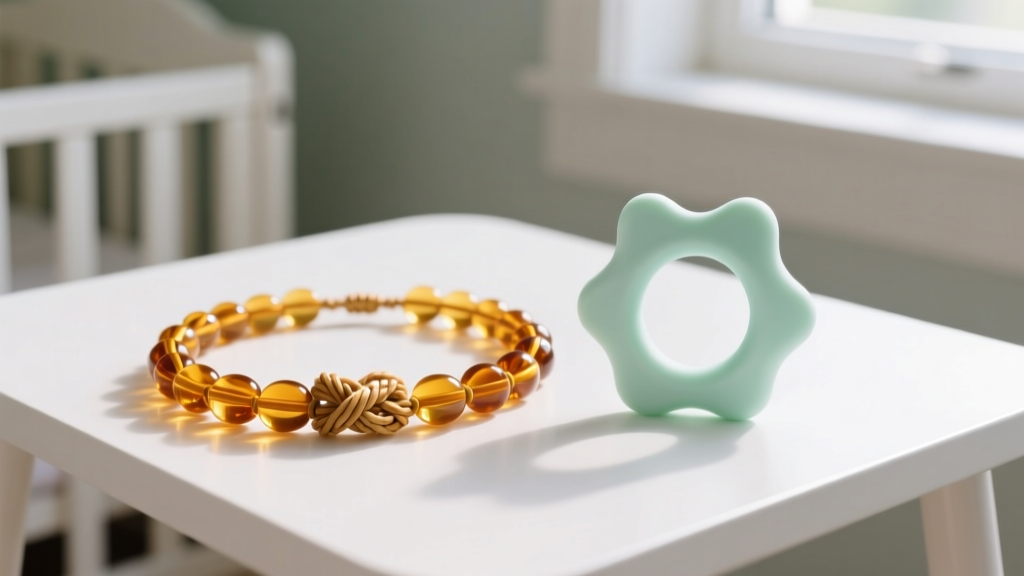
As the table illustrates, while amber possesses unique chemical compounds, its structural vulnerability (a Mohs hardness of just 2.0 means it can be scratched by a copper coin or a baby's emerging incisor) makes it less ideal for direct chewing compared to solid, single-piece platinum-cured silicone.
Crucial Safety Standards and Pediatric Warnings
No discussion of amber jewelry for infants is complete without addressing the severe safety risks. Major medical organizations, including the American Academy of Pediatrics (AAP) and the U.S. Food and Drug Administration (FDA), strongly advise against the use of any teething necklaces.
The FDA explicitly warns that teething necklaces present two primary, life-threatening hazards:
- Strangulation: If the necklace catches on a crib rail, playpen, or piece of clothing, it can compress the infant's airway. Infants lack the motor skills and neck strength to free themselves from a tangled cord.
- Choking and Aspiration: If the cotton or nylon cord snaps, the 4mm to 6mm amber beads become immediate aspiration hazards. A bead lodged in the trachea can cause fatal asphyxiation.
How Authentic Amber Jewelry is Constructed for Safety
If parents choose to use amber jewelry despite these warnings, or opt to use it as an anklet (which carries its own entanglement risks), understanding the construction of high-quality, safety-focused amber jewelry is vital. Mass-produced, cheap imitations often use continuous stringing. Genuine safety-grade amber necklaces feature:
- Individual Knotting: Every single bead must be separated by a hand-tied knot. If the cord breaks, only one 5mm bead is released, rather than the entire strand.
- Barrel or Pop Clasps: Metal lobster clasps are dangerous because they do not yield under tension. Safety necklaces use threaded plastic barrel clasps or magnetic pop-clasps designed to break away at roughly 2 to 3 pounds of tension.
- Bead Sizing: Beads should be small (4.5mm - 5.5mm) and smoothly polished to prevent mucosal irritation, but large enough that they cannot easily pass through the airway if aspirated (though any aspiration is a medical emergency).
Harmless Ways to Utilize Amber's Properties
For parents who appreciate the history, warmth, and aesthetic beauty of Baltic amber but want to adhere to AAP safety guidelines, there are alternative ways to keep the material near the child without the strangulation risk:
- The Amber Pouch Method: Place a few raw, unpolished amber chips inside a tightly sewn, heavy-cotton muslin pouch. Tuck the pouch securely inside the baby's mattress cover or pin it to the outside of their clothing where it cannot be reached or pulled.
- Parental Wear: The parent wears a robust amber necklace or bracelet. When holding or nursing the baby, the child can safely touch and feel the warm, smooth beads under strict, direct supervision, providing sensory distraction from gum pain.
- Keepsake Storage: Purchase a high-quality, certified Baltic amber necklace and store it in a velvet keepsake box, gifting it to the child on their 18th birthday as a family heirloom rather than an infant accessory.
How to Authenticate Genuine Baltic Amber
The market is flooded with counterfeit amber made from Copal (young, un-polymerized resin), glass, or plastics like Bakelite and celluloid. If you are purchasing amber for its specific material properties, you must verify its authenticity using non-destructive gemological tests.
1. The Saltwater Buoyancy Test
Genuine Baltic amber has a specific gravity of 1.05 to 1.10, meaning it is only slightly denser than fresh water. If you mix 1 part table salt to 7 parts warm water, genuine amber will float to the surface, while glass and most plastics will sink. (Note: Copal will also float, so this test only rules out glass/plastic).
2. The UV Fluorescence Test
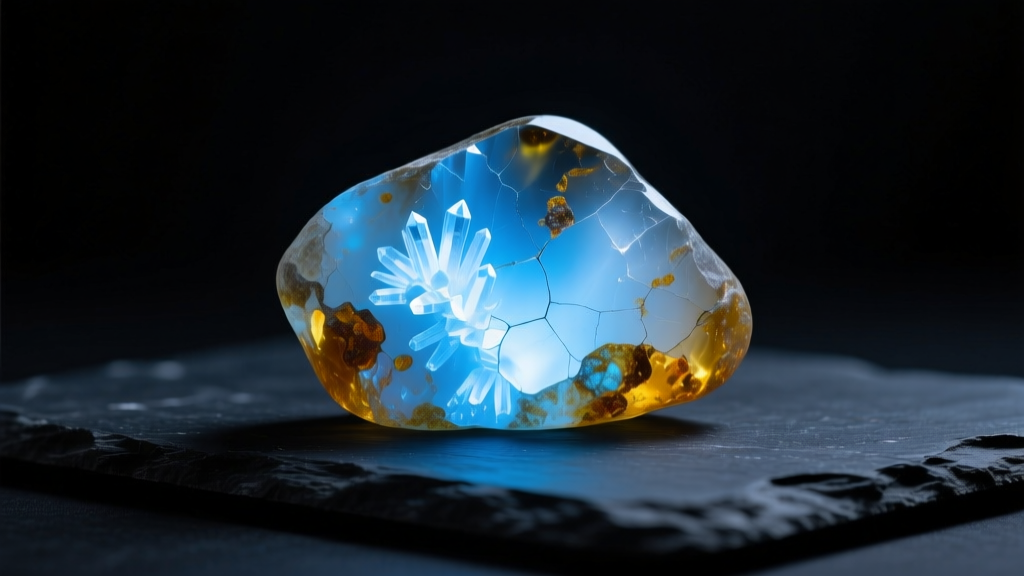
When exposed to ultraviolet (UV) light, genuine Baltic amber exhibits a distinct, bright blue-white or pale green fluorescence. Copal glows a milky white, while plastic imitations show no fluorescence or a dull, artificial glow.
3. The Electrostatic Test
Rub the amber bead vigorously against a piece of untreated wool or cotton for 30 seconds. Genuine amber will develop a strong negative static charge and will easily pick up small pieces of tissue paper or dust. Plastics may generate a weak charge, but glass will not hold a static charge at all.
Final Thoughts on Material Selection
While the search for amber necklace teething benefits is driven by a parent's natural desire to provide holistic, chemical-free relief, the material science and pediatric safety data tell a complex story. Baltic amber is a magnificent, historically significant organic gemstone with a unique chemical profile. However, its physical inability to release succinic acid at human body temperature, combined with the severe mechanical hazards of beaded necklaces, makes it a poor choice for infant oral care. By understanding the true properties of amber and prioritizing structurally sound, single-piece silicone alternatives for chewing, parents can make informed, safe, and scientifically grounded decisions for their children's comfort.


