Is Your Bead Pendant Necklace Worth It? 2026 Value Guide
Discover how to evaluate a bead pendant necklace in 2026. Learn pricing tiers, material grades, and hardware red flags to ensure you get true value.

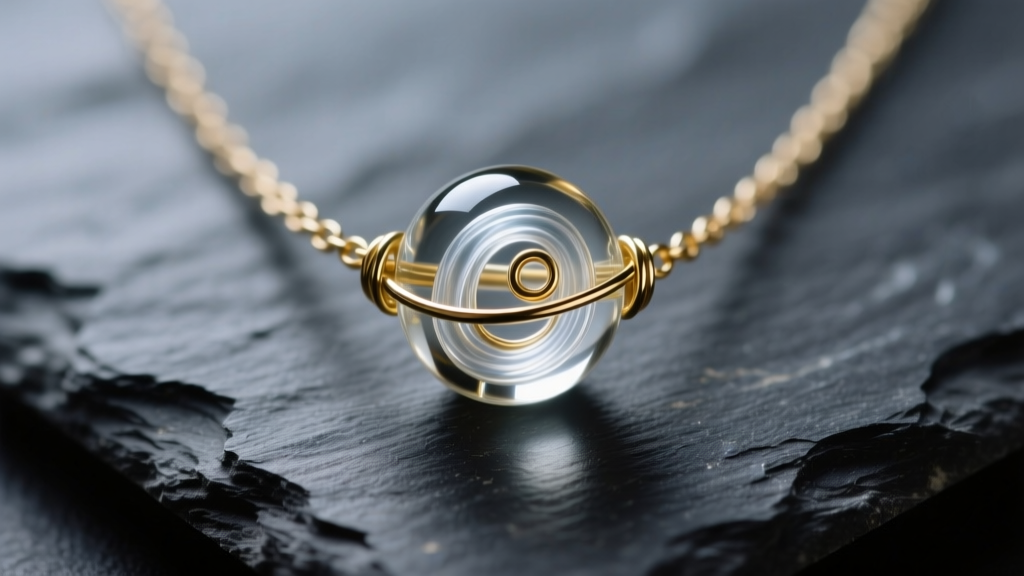
The market for a bead pendant necklace has expanded dramatically, blurring the lines between mass-produced fashion accessories and high-end artisan jewelry. As we navigate the 2026 jewelry landscape, consumers are increasingly faced with opaque pricing structures. A beautifully strung bead on a delicate chain can retail for $15 at a fast-fashion outlet or $450 at an independent jeweler's studio. But what actually justifies the price tag?
Assessing the true value of a bead pendant necklace requires looking far beyond the aesthetic appeal of the central bead. It demands a critical evaluation of material provenance, gemstone treatments, structural hardware, and metal integrity. This comprehensive guide will equip you with the expert frameworks needed to audit your jewelry box and make informed purchasing decisions, ensuring you never overpay for inferior craftsmanship again.
The Anatomy of a Bead Pendant Necklace's Price Tag
When evaluating value, jewelers break a pendant necklace down into three core cost centers: the bead itself, the findings (bails, jump rings, and clasps), and the chain. In the lower end of the market, brands often utilize a high-quality focal bead to distract from severely compromised hardware and base-metal chains. Conversely, true artisan value is distributed evenly across all components.
For example, a genuine lampwork glass bead might cost an artisan three hours to craft and kiln-anneal, justifying a higher price point. However, if that same bead is hung from a flash-plated brass chain using a glued-on pinch bail, the overall structural value of the necklace plummets. The glue will degrade, the plating will flake, and the piece will fail within months. Understanding this triad of value is the first step in becoming a savvy buyer.
Material Tiers: From Mass-Produced to Artisan
The central bead is the primary driver of cost, but materials are frequently misrepresented. Here is how the market segments bead materials and what you should expect to pay in 2026.
| Material Category | Expected Price Range | Value Indicators | Common Deceptions |
|---|---|---|---|
| Pressed Glass / Acrylic | $10 - $35 | Uniformity, lightweight, vibrant dye lots | Sold as "hand-blown" or "crystal" |
| Semi-Precious Gemstone | $40 - $120 | Natural inclusions, cool-to-the-touch, heavy specific gravity | Dyed howlite sold as turquoise; heat-treated low-grade quartz |
| Artisan Lampwork Glass | $85 - $250+ | Kiln-annealed, internal 3D ribbons, signed by the artist | Mass-produced Chinese glass beads marketed as "Murano style" |
| Organic (Pearl, Coral, Amber) | $60 - $300+ | Luster depth, natural asymmetry, warm thermal conductivity | Plastic composites coated in pearlescent paint |
When shopping for gemstone beads, treatment disclosure is paramount. According to the Gemological Institute of America (GIA), stabilization and dyeing are common practices for porous stones like turquoise. A natural, untreated spiderweb turquoise bead commands a massive premium over a stabilized or dyed howlite imitation. Always demand a treatment disclosure from the seller.
Hardware & Findings: The Hidden Value Indicators
If the bead is the star of the show, the hardware is the stage rigging. A failure in the findings means losing your valuable pendant. The method by which the bead is attached to the chain is the single greatest indicator of a jeweler's commitment to longevity.
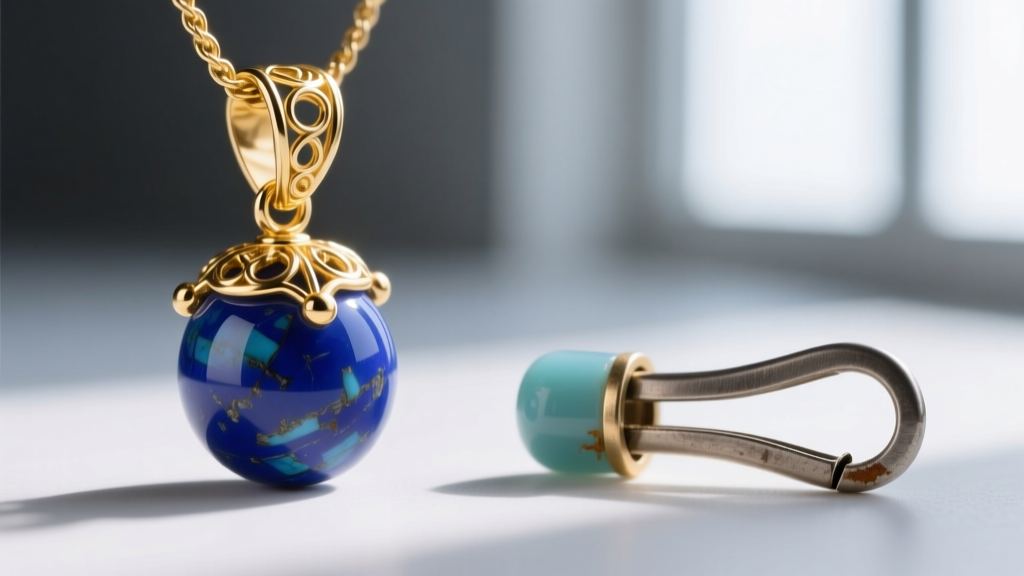
The Bail: Glued vs. Wire-Wrapped vs. Soldered
The bail is the loop that connects the bead to the chain. In budget jewelry, manufacturers use pinch bails secured with industrial adhesives. While this keeps labor costs low, adhesives become brittle over time, especially when exposed to skin oils, perfumes, and temperature fluctuations. If a bead weighs more than 15 grams, a glued bail is a structural liability.
High-value bead pendant necklaces utilize either wire-wrapping or soldered metal caps. Wire-wrapping, typically done with 20-gauge or 22-gauge dead-soft wire, physically secures the bead by passing through its drill hole and wrapping around the top. Soldered bails involve a metal cap adhered to the bead with jeweler's epoxy and reinforced with a mechanical pin inserted into the drill hole, then soldered closed. Both methods ensure the bead cannot detach under normal tensile stress.
Chain Quality and Clasp Mechanics
The chain must support the pendant's weight without stretching or snapping. Budget chains are often unsoldered cable chains; if the pendant catches on a sweater, the unsoldered links will simply pull apart. Premium necklaces utilize soldered rolo or box chains, which distribute weight evenly and resist deformation.
Furthermore, metal purity dictates longevity. The Federal Trade Commission (FTC) strictly regulates gold terminology. A "gold-plated" chain may have a microscopic layer of gold (as thin as 0.15 microns) that will rub off in weeks. For genuine value, look for Gold-Filled (1/20 14k) or Heavy Gold Vermeil (minimum 2.5 microns of gold over a sterling silver core). Additionally, always check the clasp: a robust lobster clasp with a heavy-duty internal tension spring is vastly superior to the fragile, easily bent spring-ring clasps found on budget pieces.
Red Flags: When You Are Overpaying
Even armed with material knowledge, deceptive marketing can trick the untrained eye. Use these professional troubleshooting tests to verify the authenticity and value of a bead pendant necklace before finalizing your purchase.
The Acetone Test for Dyed Beads: "If you suspect a semi-precious bead is dyed, lightly dab a cotton swab in pure acetone (nail polish remover) and rub an inconspicuous area of the bead, such as the rim of the drill hole. If the swab picks up color, the bead has been superficially dyed and holds significantly less intrinsic value than a naturally colored stone." — Master Gemologist Appraiser Notes, 2025
- The Temperature Test: Genuine glass and gemstone beads feel distinctly cool to the touch and take several seconds to warm up against your skin. Plastic, resin, and acrylic beads will feel room-temperature or warm almost instantly due to their thermal insulating properties.
- The Drill Hole Inspection: Examine the hole where the wire passes through. High-end gemstone beads are diamond-drilled, leaving clean, sharp edges. Cheap, mass-produced beads are often laser-drilled or punched, leaving jagged, melted, or chipped edges that will eventually fray and snap your wire wrapping.
- The Light Test for Glass: Hold a glass bead up to a strong light source. Artisan lampwork glass will reveal internal depth, tiny suspended bubbles, and complex 3D ribbon structures. Pressed factory glass will look flat, uniform, and entirely opaque or solidly translucent without internal architecture.
The 2026 Value Assessment Checklist
Before investing in a premium bead pendant necklace, run it through this rapid assessment framework to ensure the asking price aligns with the physical reality of the piece.
- Verify the Metal Stamp: Look for "14/20 GF" (Gold-Filled), "925" (Sterling Silver), or "14k". Avoid unmarked chains, which are almost certainly base metals like brass or nickel-silver that will cause skin discoloration.
- Audit the Bail Connection: Gently tug the bail away from the bead. If there is any visible glue residue, or if the bail shifts independently of the bead's core, it is a glued pinch bail. Factor the cost of a professional jeweler replacing the bail into your budget.
- Assess the Chain Links: Use a jeweler's loupe to inspect a single link on the chain. Is the seam soldered shut? If it is an open, unsoldered link, the chain is not rated for heavy pendants.
- Demand Provenance: For beads priced over $100, the seller should be able to provide the origin of the material (e.g., "Sleeping Beauty Turquoise from Arizona" or "Borosilicate glass lampworked in Oregon"). Vague descriptions like "natural stone" are a hallmark of drop-shipped, low-value inventory.
Final Verdict: Budgeting for Bead Pendants
A bead pendant necklace can be a profound expression of personal style and a lasting wardrobe staple, but only if the construction matches the aesthetic promise. In 2026, the true value of these pieces lies in the intersection of ethical material sourcing, structural hardware integrity, and transparent artisan craftsmanship. By shifting your focus from the mere visual appeal of the bead to the engineering of the entire assembly, you transform from a passive consumer into an informed collector. Pay for the soldered links, the wire-wrapped bails, and the untreated stones—and your necklace will easily outlast the fleeting trends of the season.


