How to Style Your First Black Gothic Cross Necklace
Discover how to choose, style, and care for your first black gothic cross necklace. Expert tips on metals, chain lengths, and dark aesthetic styling.

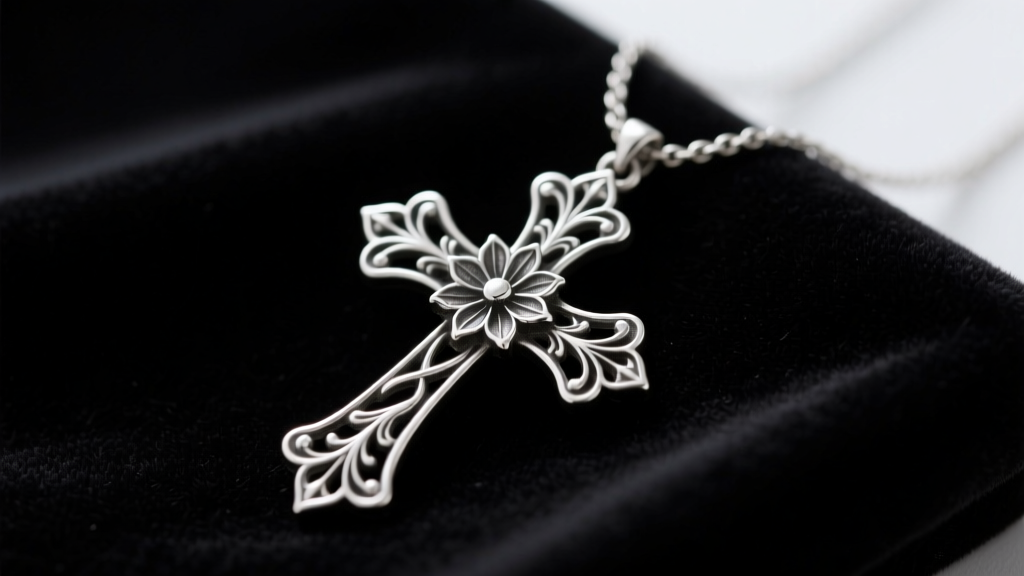
Embracing the Dark Aesthetic: A Beginner’s Guide
The black gothic cross necklace is more than just a piece of jewelry; it is a cornerstone of alternative fashion, blending historical symbolism with modern edge. Whether you are drawn to the romanticism of Victorian mourning jewelry or the aggressive silhouettes of modern street-goth, choosing your first piece requires navigating a maze of materials, sizes, and chain styles. Many beginners make the mistake of buying cheap, plated jewelry that fades within weeks. This guide breaks down the exact metallurgy, proportions, and styling frameworks you need to invest in a piece that lasts.
Decoding the 'Black': Metallurgy and Finishes
Not all black jewelry is created equal. The dark hue in a high-quality black gothic cross necklace is achieved through specific chemical and physical processes. Understanding these will save you from premature fading and skin irritation.
Oxidized 925 Sterling Silver
The traditional method for blackening silver involves chemical oxidation. Jewelers use a compound called 'liver of sulfur' to accelerate tarnishing, turning the silver black. The piece is then lightly polished, leaving the black patina in the deep crevices and filigree while the high points shine. This creates a stunning, high-contrast antique look. Expect to pay between $80 and $250 for solid oxidized silver.
PVD Black Stainless Steel
For a more modern, indestructible option, look for 316L surgical stainless steel treated with PVD (Physical Vapor Deposition). PVD bonds a microscopic layer of black titanium or carbon to the metal in a vacuum chamber. Unlike paint or electroplating, PVD will not chip or flake, making it ideal for daily wear. Prices typically range from $30 to $90.
| Material | Finish Type | Durability | Price Range | Best For |
|---|---|---|---|---|
| 925 Silver | Liver of Sulfur Oxidation | Medium (Patina shifts over time) | $80 - $250+ | Heirloom pieces, intricate filigree |
| 316L Steel | PVD Black Coating | Extremely High (Scratch resistant) | $30 - $90 | Daily wear, showering, streetwear |
| Brass/Bronze | E-Coating (Electrophoretic) | Low to Medium (Can chip) | $15 - $40 | Budget-friendly, occasional wear |
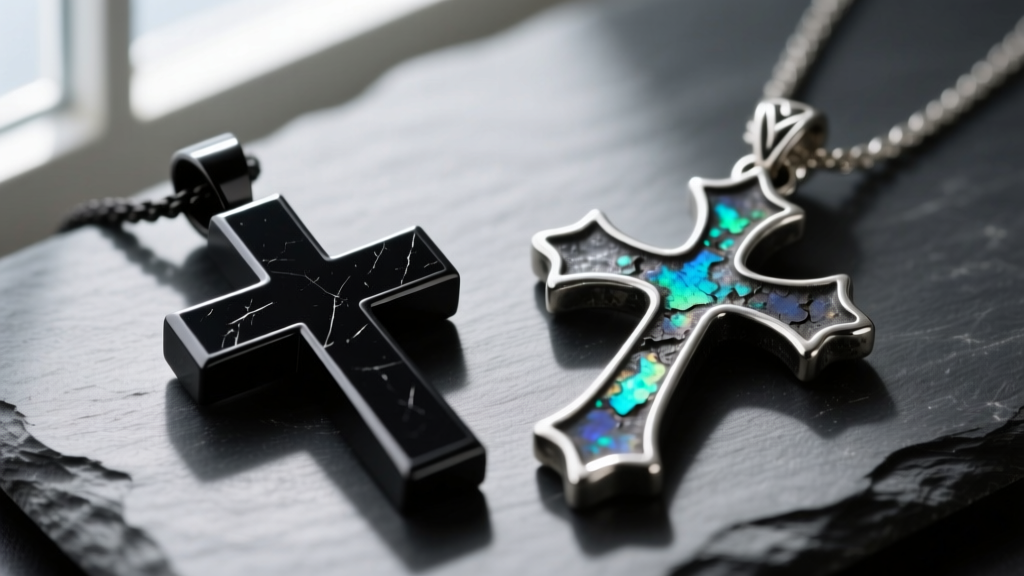
Silhouettes and Proportions: Finding Your Drop
The visual weight of your cross pendant dictates how it layers and what necklines it complements. Gothic crosses generally fall into three distinct silhouette categories:
- The Classic Latin Cross: Clean, sharp lines with a longer vertical beam. A 1.5-inch to 2-inch drop is perfect for a subtle, everyday look.
- The Ornate Filigree Cross: Featuring floral motifs, gargoyles, or bat wings. These are visually heavy and require a larger drop (2.5 to 3.5 inches) to avoid looking cluttered.
- The Dagger or Sword Cross: Blending a cross with a blade silhouette. This elongated shape (often 3+ inches) draws the eye downward, creating a slimming effect on the torso.
Chain Selection: Gauges and Links
A common beginner mistake is pairing a heavy, solid-metal gothic cross with a flimsy 1mm cable chain. This not only looks disproportionate but risks the chain snapping under the pendant's weight. For a proper gothic aesthetic, you need structural integrity.
Recommended Chain Styles
Curb and Cuban Links: Flat, interlocking links that sit flush against the skin. A 3mm to 5mm blackened Cuban link provides an aggressive, streetwear-ready foundation for a heavy cross.
Rope Chains: Twisted links that mimic a rope. A 2.5mm oxidized silver rope chain catches the light beautifully in its twists, adding texture without overwhelming the pendant.
Figaro Chains: Featuring a pattern of three small links followed by one long link. This adds a vintage, Victorian feel that pairs exceptionally well with ornate, antique-style crosses.
When it comes to length, an 18-inch chain sits at the collarbone (ideal for smaller crosses and open collars), while a 22-inch to 24-inch chain drops to the sternum, perfect for layering over hoodies or turtlenecks.
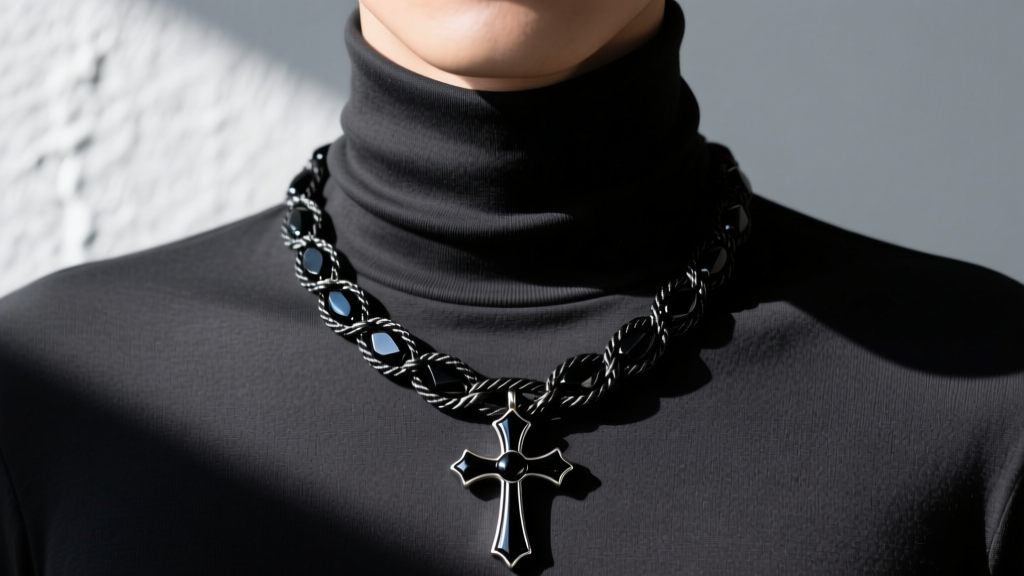
Gemstone Inlays: Adding Depth to the Darkness
Many premium black gothic cross necklaces incorporate dark gemstones to elevate the design. However, not all black stones are suitable for daily wear. Here is a breakdown based on the Mohs hardness scale:
- Black Onyx (Mohs 7): The industry standard. It offers a deep, opaque black finish and is hard enough to resist everyday scratching. Usually set in bezels to protect the edges.
- Black Spinel (Mohs 8): A step up in durability and brilliance. Black spinel has a glass-like luster that contrasts beautifully with matte blackened metals.
- Obsidian (Mohs 5-5.5): While visually striking and historically relevant to gothic lore, obsidian is essentially volcanic glass. It can scratch or chip if bumped against hard surfaces. Reserve obsidian inlays for occasional wear.
Styling Frameworks for the Dark Aesthetic
True gothic styling relies on the interplay of texture and silhouette, not just wearing head-to-toe black. Let the hardware do the talking.
Monochrome Textural Layering: Pair your black gothic cross necklace with varying textures of black clothing. A matte black cotton turtleneck layered under a distressed leather jacket allows the metallic sheen of an oxidized silver cross to pop without relying on color contrast.
The High-Contrast Romantic: Channel Victorian romance by wearing a highly detailed, blackened filigree cross over a crisp white linen shirt or a cream silk blouse. The stark contrast highlights the dark patina of the metal and feels incredibly sophisticated.
Maintenance: Preserving the Patina
Caring for blackened jewelry requires a departure from standard silver cleaning methods. Never use liquid silver dip or ultrasonic cleaners on an oxidized black gothic cross necklace. These harsh chemicals will strip the liver of sulfur oxidation right out of the crevices, leaving you with a flat, bright silver piece.
Instead, clean your necklace using a few drops of mild dish soap and warm water. Gently agitate with a soft-bristled baby toothbrush, being careful not to scrub the recessed black areas. Dry immediately with a microfiber cloth. If the high points of your silver cross begin to tarnish unevenly, use a dedicated silver polishing cloth only on the raised edges to restore the high-contrast antique finish. For PVD black steel, simply wipe down with a damp cloth to remove skin oils and lotions, ensuring the black coating remains pristine for years to come.


