The Beginner's Guide to Buying a Diamond Clover Necklace
Discover how to choose the perfect diamond clover necklace. Learn about melee diamond quality, metal grades, and styling tips in our beginner guide.

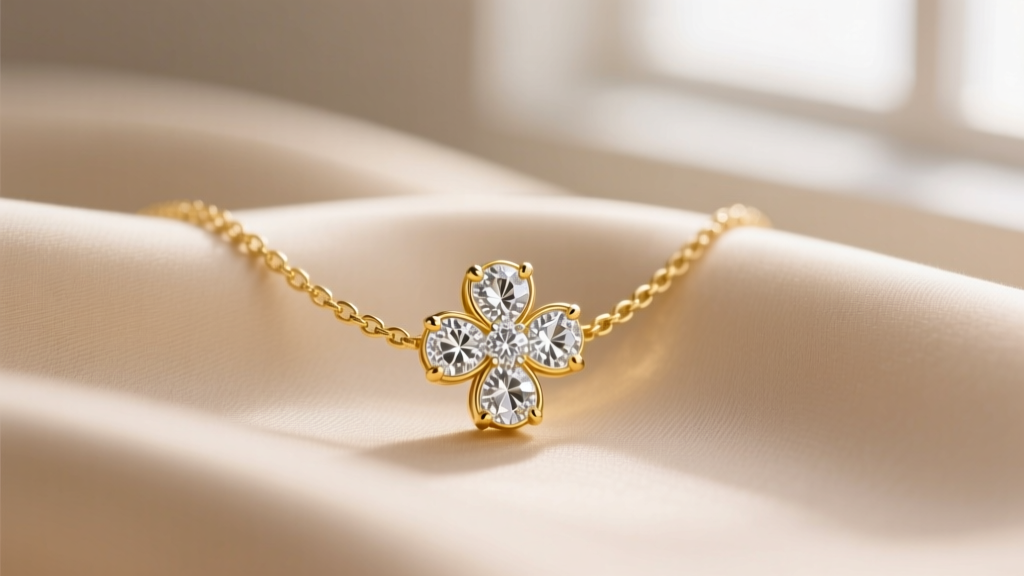
The clover motif has long been a symbol of serendipity, elegance, and timeless femininity in fine jewelry. While the four-leaf clover is universally recognized as a talisman of luck, adding diamond accents transforms this whimsical shape into a sophisticated staple for everyday wear and evening layering. For beginners navigating the fine jewelry market, purchasing a diamond clover necklace can feel overwhelming. Between deciphering diamond grading reports, choosing the right gold karat, and selecting a chain that won't snap, there are numerous technical details to consider. This comprehensive guide breaks down everything you need to know to make an informed, confident purchase in 2026.
Decoding the Clover Motif: More Than Just Luck
The four-leaf clover represents faith, hope, love, and luck. In jewelry design, the symmetrical geometry of the clover provides an ideal canvas for diamond setting. The rounded edges of the petals allow for seamless pavé or bezel settings, creating a continuous halo of brilliance. While luxury houses like Van Cleef & Arpels popularized the clover motif with their iconic Alhambra collection, the diamond-studded clover pendant has become a distinct category of its own, embraced by both heritage jewelers and modern independent designers.
'A well-crafted diamond clover pendant bridges the gap between playful symbolism and serious fine jewelry, making it one of the most versatile investments a collector can make.'
Diamond Quality 101: What Matters in Melee Stones
The diamonds used in clover pendants are typically classified as melee (pronounced meh-lay). According to the Gemological Institute of America (GIA), melee diamonds are small diamonds that weigh less than 0.15 carats each. Because they are small, they are rarely individually graded, but their collective quality dictates the overall sparkle of your necklace.
Single Cut vs. Full Cut Melee
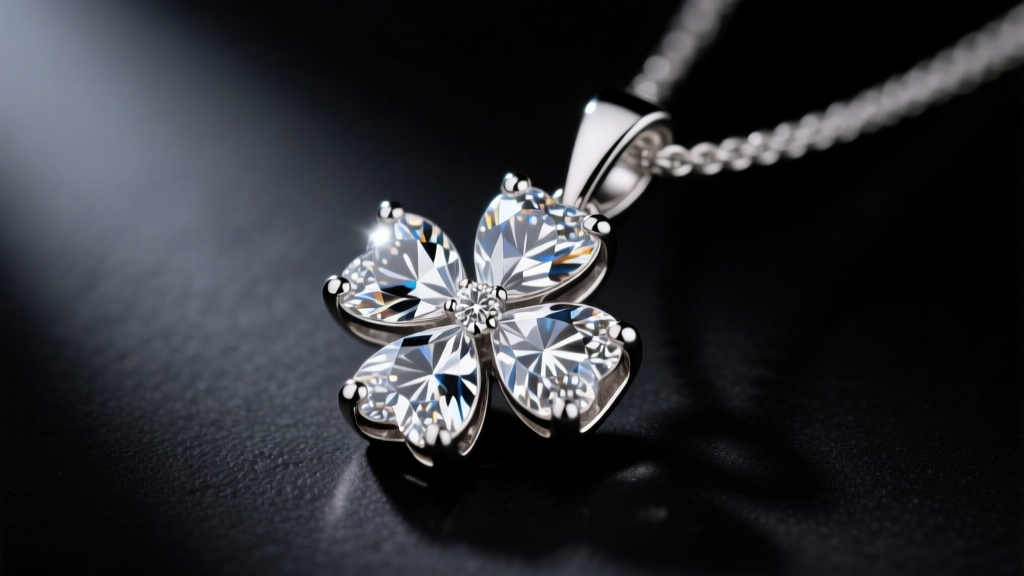
This is the most critical detail beginners overlook. Melee diamonds come in two primary cuts:
- Single Cut (17-18 facets): Often used in budget-friendly jewelry. These diamonds have fewer facets, meaning they reflect less light and can appear glassy or flat.
- Full Cut (57-58 facets): These are miniature versions of standard round brilliant diamonds. They offer maximum fire and brilliance. Always ask the jeweler if the diamond clover necklace features full-cut melee.
Color and Clarity in Small Stones
For melee diamonds, color is far more noticeable than clarity. Inclusions (flaws) are virtually invisible to the naked eye in stones under 0.10 carats. However, a yellowish tint will be obvious, especially if set in white gold or platinum. Aim for melee diamonds in the G-H color range (near colorless) to ensure the clover petals look bright and icy.
Metal Matters: Choosing the Right Setting
The metal you choose impacts both the durability and the aesthetic of your diamond clover necklace. Here is a breakdown of the most common options:
| Metal Type | Purity & Durability | Best For |
|---|---|---|
| 14k Gold | 58.5% pure gold. Highly durable, resistant to scratching. | Everyday wear, active lifestyles, budget-conscious buyers. |
| 18k Gold | 75% pure gold. Richer color, but softer and more prone to scuffing. | Heirloom pieces, luxury buyers, those with metal sensitivities. |
| Platinum | 95% pure. Extremely dense, heavy, and naturally white. | Securing high-value diamonds, heirloom longevity, white metal lovers. |
Prong vs. Bezel Settings
The way the diamonds are held in the clover petals matters. Pavé prong settings use tiny metal beads to hold the stones, allowing maximum light entry for superior sparkle. However, prongs can catch on knitwear. Bezel settings wrap a thin rim of metal around the diamond cluster or individual stones. While bezel settings slightly reduce light return, they offer a sleek, modern look and are virtually snag-proof.
Chain Selection and Length Guide
A diamond clover pendant typically weighs between 2 to 6 grams. Pairing it with the wrong chain is a common beginner mistake that leads to breakage.
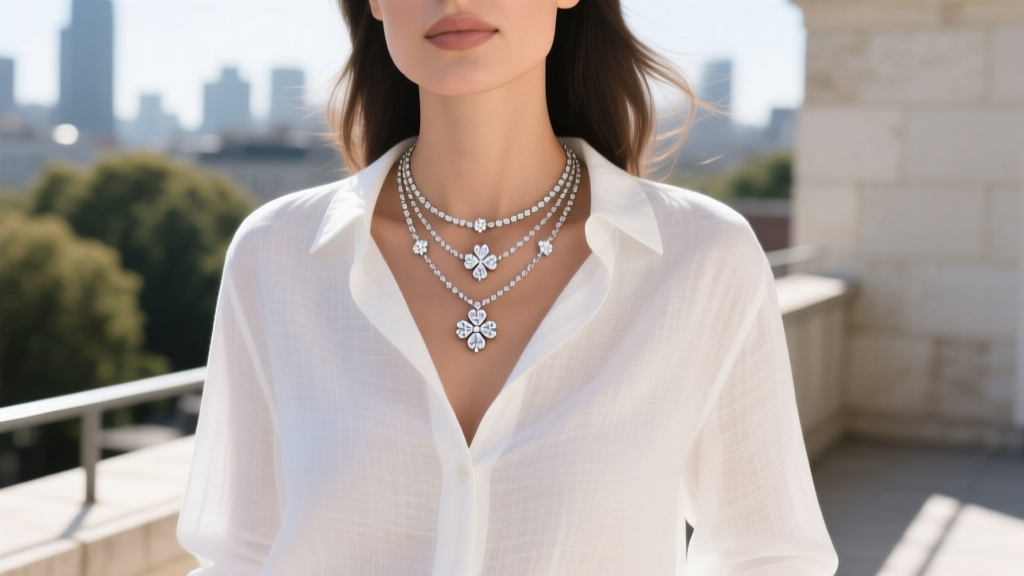
- 16 Inches (Choker/Collarbone): Ideal for smaller, delicate clover pendants (under 10mm). Sits high on the neck, perfect for V-necklines.
- 18 Inches (Standard): The most versatile length. The pendant rests just below the collarbone, making it the perfect anchor piece for layering with longer gold chains.
- 20+ Inches (Matinee): Best for larger, heavier clover motifs. Worn over sweaters or dresses for a bold, bohemian statement.
Chain Style & Clasp: Avoid hollow chains. Opt for a solid 1.0mm Box chain or a 0.9mm Cable chain. Box chains are structurally superior for holding pendants because their interlocking square links resist kinking. Always ensure the necklace features a lobster claw clasp rather than a spring ring clasp; lobster clasps have a stronger internal spring mechanism and are far less likely to pop open accidentally.
Pricing Tiers: What to Expect
Understanding market pricing helps you avoid overpaying for subpar materials. Here is a realistic pricing framework for diamond clover necklaces in the current market:
- Entry-Level ($400 - $900): Usually set in 10k or 14k gold. Features single-cut melee diamonds with I1-I2 clarity and J-K color. Often mass-produced with lightweight, hollow chains.
- Mid-Range ($1,200 - $3,500): Set in solid 14k or 18k gold or platinum. Features full-cut melee diamonds (G-H color, SI1-SI2 clarity). Includes a sturdy, solid-link chain and high-quality finishing.
- Luxury & Designer ($5,000 - $15,000+): Heritage brand pieces or custom jewelers. Features VVS clarity, D-F color melee diamonds, meticulous hand-polishing, and often incorporates mother-of-pearl or onyx inlays alongside the diamonds.
Care and Maintenance: Keeping Your Clover Bright
Diamonds are naturally lipophilic, meaning they attract oils from your skin, lotions, and perfumes. A dirty diamond clover necklace will quickly lose its fire and look dull. According to the GIA Diamond Care Guide, regular at-home cleaning is essential.
The Right Way to Clean
Soak the necklace in a bowl of warm water with a few drops of mild, ammonia-free dish soap for 20 minutes. Use a baby toothbrush with ultra-soft bristles to gently sweep the back of the clover setting (the pavilion), where lotion and dead skin accumulate. Rinse thoroughly under warm water and pat dry with a lint-free microfiber cloth.
What to Avoid
Never use ultrasonic cleaners on a pavé diamond clover necklace unless a jeweler has recently inspected it. The high-frequency vibrations can easily shake loose melee diamonds if the tiny prongs are even slightly worn. Additionally, remove your necklace before swimming in chlorinated pools, as chlorine can degrade the alloys in 14k and 18k gold, leading to microscopic stress fractures over time.
Final Thoughts
A diamond clover necklace is more than just a lucky charm; it is a masterclass in geometric jewelry design. By prioritizing full-cut melee diamonds, selecting a durable metal and chain, and committing to proper maintenance, you will secure a piece that sparkles brilliantly for decades. Whether you are treating yourself or buying a meaningful gift, focusing on these structural and material details ensures your investment remains as timeless as the motif itself.