A Beginner's Guide to Styling and Choosing Crochet Necklaces
Learn how to choose, style, and care for crochet necklaces. Our beginner guide covers yarn types, bead sizes, and neckline matching tips.

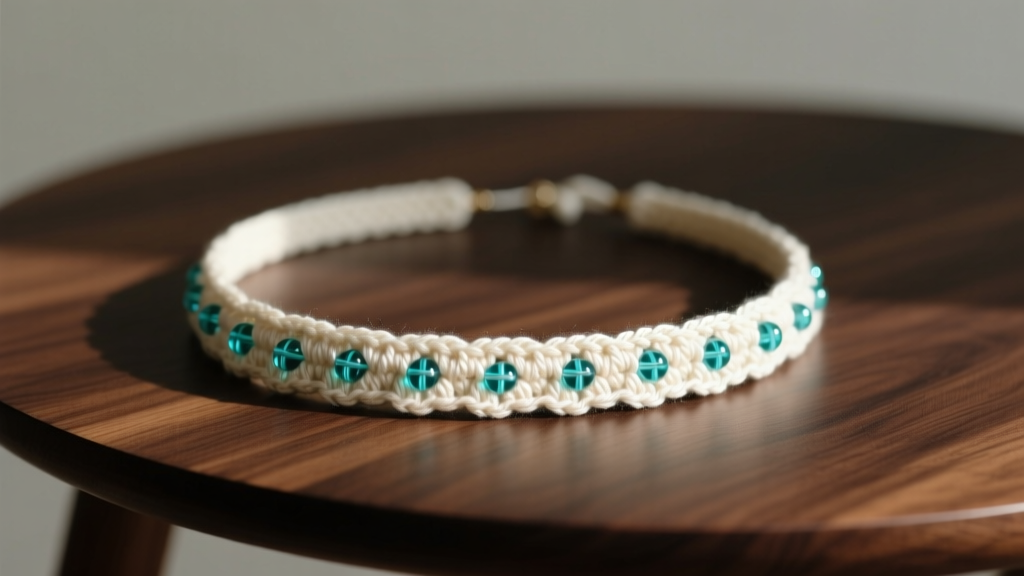
What Are Crochet Necklaces?
Crochet necklaces represent a unique intersection of textile art and wearable jewelry. Unlike traditional metal chains or strung beads, crochet necklaces are constructed using a single hook to interlock loops of yarn or thread, creating a flexible, lightweight, and deeply textured accessory. For beginners, the appeal lies in the infinite customization options—from bohemian festival wear to elegant, bead-encrusted collar pieces. However, transitioning from standard crochet projects (like blankets or garments) to micro-scale jewelry requires a fundamental shift in materials, tension control, and hardware integration. This guide breaks down the exact specifications, material grades, and styling frameworks you need to master crochet necklaces.
Essential Materials for Jewelry-Scale Crochet
The most common mistake beginners make is using standard worsted weight yarn and a 5.0mm hook. Jewelry requires precision, drape, and durability. According to the Craft Yarn Council's hook sizing standards, jewelry-scale crochet relies heavily on steel hooks and fine threads.
Thread and Yarn Selection
- Size 10 Crochet Thread: The gold standard for delicate bead crochet ropes. Brands like Aunt Lydia’s Fashion Crochet Thread or DMC Cebelia offer high-visibility, tightly twisted mercerized cotton that resists fraying.
- Mercerized Cotton Yarn (Sport or DK Weight): For chunkier, statement-making collar necklaces, mercerized cotton provides a subtle sheen and structural integrity that fuzzy acrylics lack.
- Metallic Blends: Kreinik metallic threads can be plied alongside cotton to introduce a subtle shimmer without sacrificing tensile strength.
Beads and Findings
Integrating beads requires precise sizing. Seed beads are measured in aught sizes (e.g., 6/0, 8/0, 11/0). For size 10 thread, Miyuki Delica 11/0 or Toho 8/0 beads are ideal. You will also need specialized jewelry findings: fold-over crimp ends, lobster claw clasps, and 24-gauge craft wire for reinforcing structural loops.
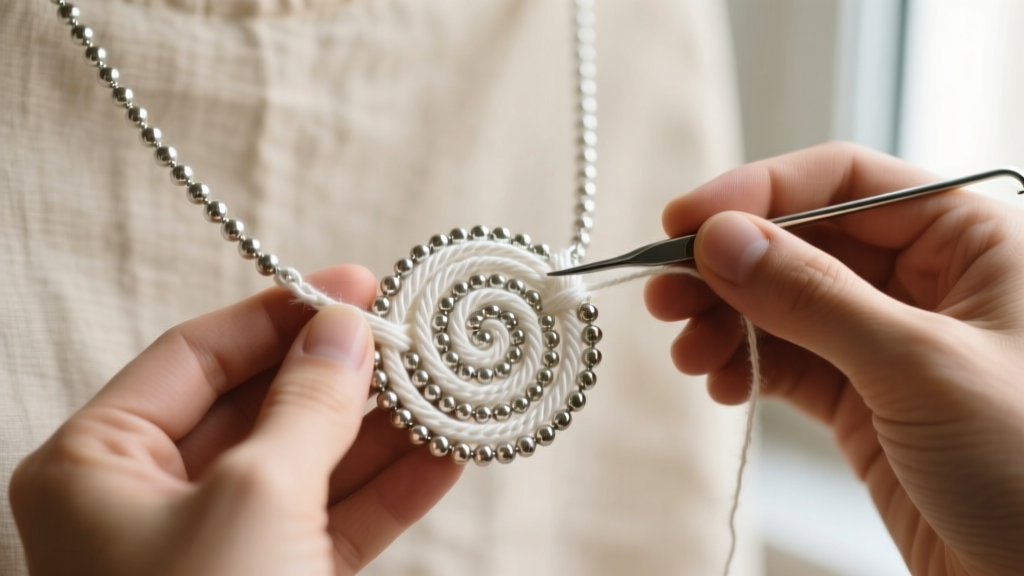
Core Techniques: From Simple Chains to Bead Ropes
Creating a crochet necklace goes far beyond a simple chain stitch. The two most prominent techniques for beginners to master are the Bead Crochet Rope and Tapestry Crochet.
The Bead Crochet Rope
This technique creates a hollow, flexible tube entirely encrusted in beads. The critical first step is pre-stringing: you must thread hundreds of seed beads onto your thread before you begin crocheting. Using a bead spinner tool reduces this tedious process from hours to minutes. As you work in a continuous spiral using slip stitches or single crochets, you slide one bead up into the V of the previous stitch. The The Spruce Crafts' guide to crochet jewelry emphasizes that maintaining consistent tension is vital; if your tension is too loose, the beads will spin out of alignment, ruining the geometric pattern.
Tapestry Crochet for Colorwork
For flat, pendant-style necklaces or wide collars, tapestry crochet allows you to carry multiple colors of thread simultaneously, creating pixelated, graphic designs. This requires a slightly larger hook (1.75mm to 2.25mm) to accommodate the extra threads hidden inside the stitches.
Crochet Necklace Material Compatibility Chart
| Thread/Yarn Type | Recommended Hook Size | Compatible Bead Size | Best Necklace Style |
|---|---|---|---|
| Size 30 Crochet Thread | 0.60mm - 0.75mm Steel | Miyuki 15/0 Seed | Micro-beaded delicate lariats |
| Size 10 Crochet Thread | 1.25mm - 1.50mm Steel | Toho 8/0 or 11/0 | Standard bead ropes, chokers |
| Sport Weight Mercerized | 2.25mm - 2.75mm Aluminum | 6/0 Seed or 4mm Gems | Wide collars, statement bibs |
| DK Weight Cotton | 3.00mm - 3.50mm Aluminum | Large wooden or ceramic | Boho pendants, long matinees |
How to Style Crochet Necklaces for Any Neckline
Because crochet necklaces possess a matte, textile-based texture, they interact with clothing differently than reflective metals. Here is a framework for pairing them with common necklines:
- V-Neck Tops: Pair with a Y-shaped lariat or a 20-inch matinee-length bead rope. The vertical drop of the crochet rope mirrors the V-neck, elongating the torso without overwhelming the collarbone.
- Scoop Necks: Opt for a 16-inch choker or a wide, tapestry-crocheted collar that sits flush against the skin, filling the negative space of the scoop.
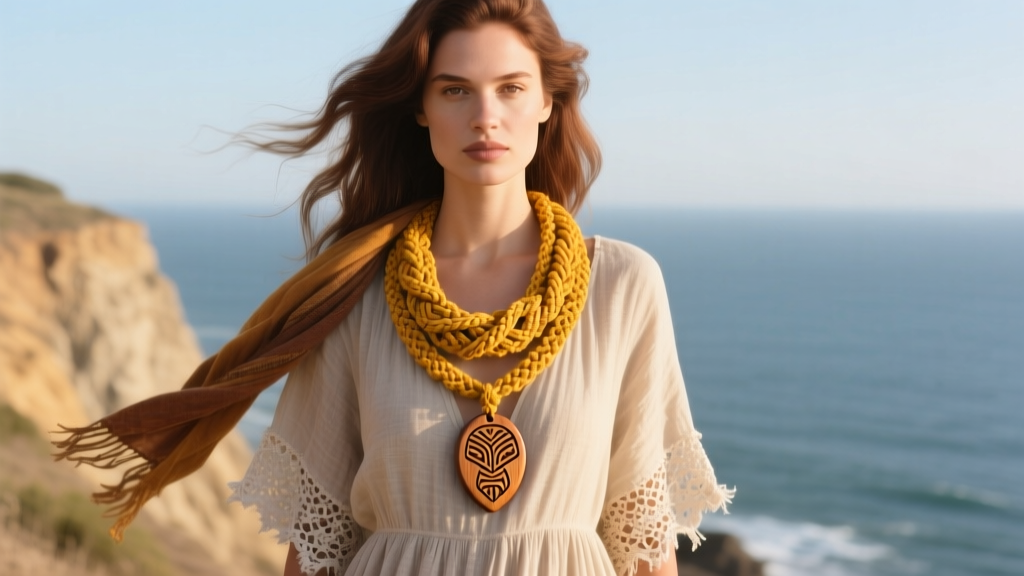
- Boat Necks & Turtlenecks: Long, 28-to-32-inch opera-length crochet necklaces with heavy, crocheted-over wooden pendants work best. They provide a striking vertical contrast against the horizontal, high-cut fabric.
Troubleshooting Common Beginner Mistakes
Even experienced crocheters face structural failures when scaling down to jewelry. Here is how to troubleshoot the most common issues:
Bead Spin and Slippage
If your beads are spinning inside the stitch or hiding behind the thread, your hook is too large for the thread-bead combination. Downsize your hook by 0.25mm. The bead should feel slightly 'locked' into the top loop of the stitch.
Clasp Detachment and Fraying
Never simply tie a crochet necklace to a jump ring; the cotton thread will eventually fray and snap. Instead, use a fold-over crimp end. Apply a micro-drop of G-S Hypo Cement to the final half-inch of your crochet rope, let it cure for 10 minutes to create a hardened seal, and then clamp the metal crimp over the glued section using flat-nose pliers. For heavy pendants, crochet your final few rounds over a core of 24-gauge craft wire to provide unbreakable tensile support.
Warping in Flat Collars
If a flat, circular crochet collar refuses to lay flat against the chest and instead ruffles like a potato chip, you have too many increases in your outer rounds. Consult standard doily increase charts, but reduce the final two rounds of increases to force the piece to cup slightly inward, matching the natural concavity of the human chest.
Care, Washing, and Long-Term Storage
Crochet necklaces are highly susceptible to moisture, oils, and snagging. Proper maintenance ensures the piece lasts for years.
- Washing: Never machine wash. Submerge the necklace in cool water with a no-rinse wool wash like Eucalan. Gently press the water through the fibers without agitating or wringing, which will distort the stitches.
- Drying and Blocking: Roll the necklace in a clean microfiber towel to absorb excess moisture. Lay it flat on a foam blocking mat, using rust-proof T-pins to gently stretch and shape the piece to its exact dimensions while it air dries.
- Storage: Cotton and silk threads will snag disastrously if they come into contact with Velcro, zippers, or rough gemstones. Always store crochet necklaces flat in a dedicated satin pouch. Avoid hanging heavy bead ropes, as the sustained gravity can permanently stretch the cotton fibers over time.
By respecting the micro-engineering required for jewelry-scale textiles, beginners can elevate their crochet skills from simple hobby crafts to high-end, bespoke wearable art. For further reading on finishing techniques, Interweave's crochet resources offer excellent visual tutorials on invisible joins and seamless bead integration.


