How to Style a Rose Choker Necklace: A Beginner's Guide
Discover how to choose, style, and care for a rose choker necklace. Our beginner-friendly guide covers materials, fit, and neckline pairing.

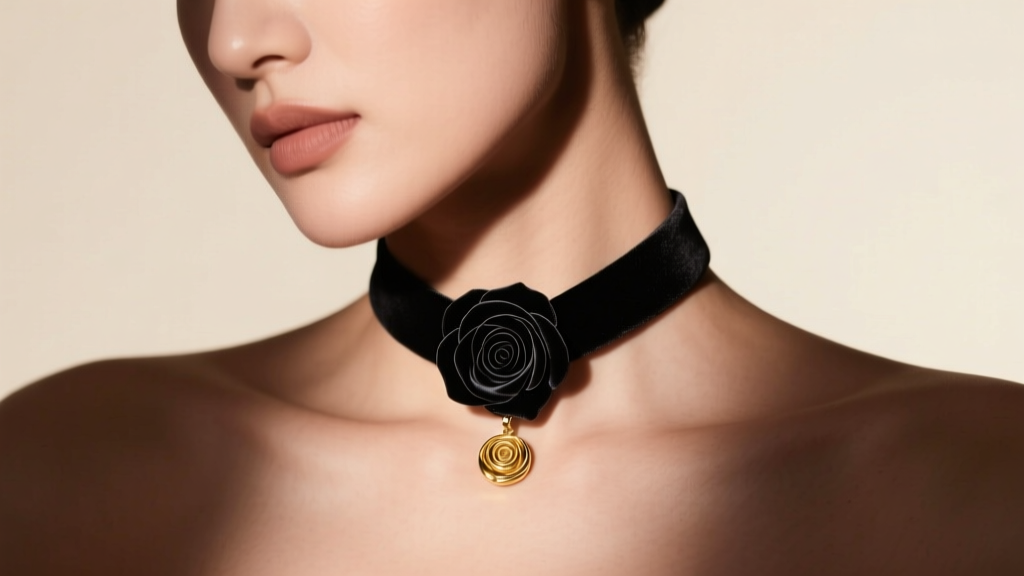
What Exactly is a Rose Choker Necklace?
The term rose choker necklace generally refers to one of two distinct jewelry styles: a close-fitting necklace featuring a romantic rose motif (such as a carved cameo, a 3D metal flower, or an enamel bloom), or a delicate choker crafted entirely in rose gold. Both variations sit snugly against the base of the neck, typically measuring between 14 and 16 inches in circumference. For beginners, the rose choker is an exceptional entry point into statement neckwear because it bridges the gap between vintage romance and modern edge.
Unlike standard 18-inch princess chains that get lost beneath collars, a choker demands attention. However, because it sits directly on the skin and interacts closely with your jawline and collarbones, choosing the wrong material or fit can lead to discomfort, tarnishing, or awkward pendant spinning. This guide will walk you through the exact specifications needed to select, size, and style your first rose choker necklace with confidence.
The Material Matrix: Choosing Your Base
The foundation of your choker dictates its longevity, comfort, and price point. According to the Gemological Institute of America (GIA), understanding metal alloys and textile blends is crucial for preventing skin irritation and premature wear. Below is a breakdown of the most common materials used for rose chokers.
| Material | Width / Gauge | Price Range | Best For | Durability & Risks |
|---|---|---|---|---|
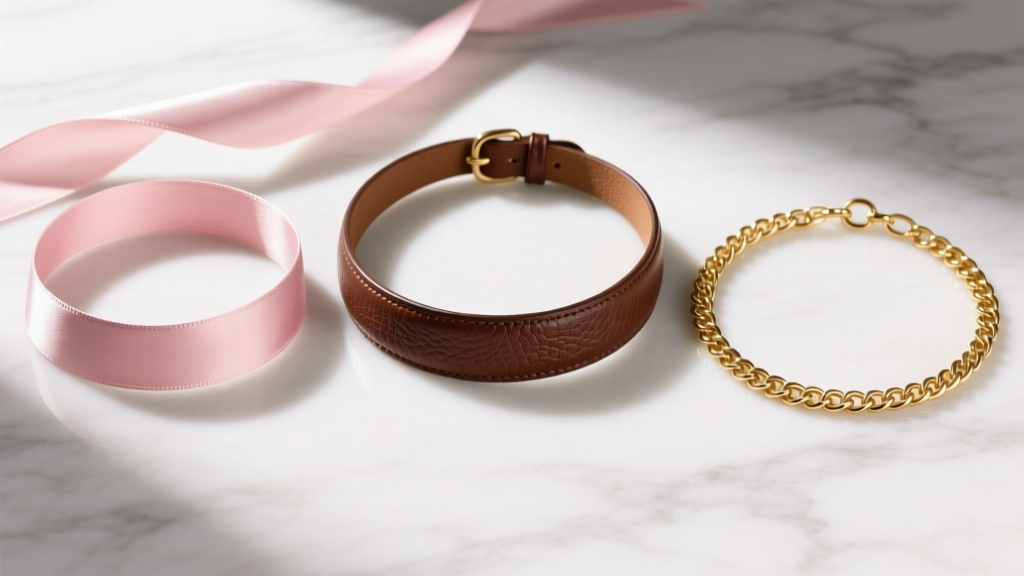
| Velvet Ribbon | 12mm - 15mm | $15 - $45 | Evening, Gothic, Romantic | Low. Prone to fraying at the clasp crimp and crushing if stored improperly. |
| Rose Gold Vermeil | 2mm - 4mm Cable | $65 - $180 | Everyday, Office, Layering | Medium. Requires a 925 sterling silver base. The copper in rose gold can oxidize if exposed to sweat. |
| Oxidized Sterling | 3mm - 5mm Chain | $80 - $250 | Edgy, Grunge, Casual | High. Intentionally darkened crevices hide everyday dirt and resist visible tarnish. |
| PU Leather | 8mm - 12mm Band | $20 - $60 | Concerts, Streetwear | Low-Medium. Degrades and peels after 12-18 months of regular skin contact. |
Expert Tip: If you are buying a rose gold choker, always verify that it is "vermeil" (a thick layer of gold over sterling silver) rather than "gold-plated brass." Brass bases contain high levels of copper and zinc, which will turn your neck green when the microscopic plating wears off.
Precision Sizing: Avoiding the Stranglehold
The most common beginner mistake with any choker is guessing the size. A necklace that is meant to sit at the base of the throat will look entirely different on a 13-inch neck versus a 15-inch neck.
The Measurement Formula
Take a soft tailor’s measuring tape and wrap it snugly around the exact part of your neck where you want the choker to sit.
- For a snug, traditional choker fit: Add 0.5 inches to your exact measurement.
- For a relaxed, collarbone-skimming fit: Add 1.5 to 2 inches.
If your neck measures 14 inches, a 14.5-inch chain will feel secure but comfortable. Most mass-market rose choker necklaces are sold in standard 15-inch or 16-inch lengths with a 2-inch extender chain. Always look for an extender chain; it provides crucial flexibility for days when your neck might be slightly swollen due to heat or hydration levels.
The Two-Finger Rule
Once clasped, you should be able to comfortably slide two fingers between the choker and your skin. If you can only fit one finger, the clasp will dig into your nape, and the metal or velvet will trap sweat, accelerating tarnish and fabric degradation.
Neckline Pairing: Where the Rose Choker Thrives
Because a rose choker necklace draws the eye horizontally across the throat, it interacts heavily with the neckline of your clothing. The goal is to create negative space that frames the jewelry, rather than competing with it.
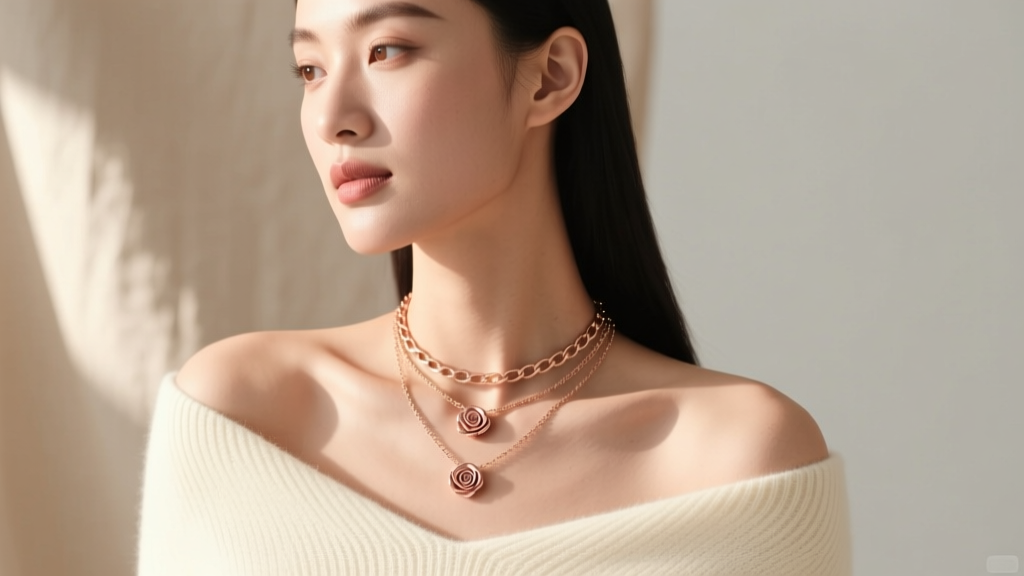
- Off-the-Shoulder & Bardot Tops: The Ideal Match. The bare expanse of the collarbone and upper chest provides a blank canvas, allowing a delicate rose gold chain or a velvet ribbon with a cameo to stand out beautifully.
- Deep V-Necks: Excellent. The V-shape naturally points the viewer’s eye upward toward the choker, creating a balanced, elongating effect on the torso.
- Crew Necks & Turtlenecks: Avoid. A thick cotton crew neck will swallow a delicate 2mm rose gold chain. If you must wear a choker with a high-necked shirt, opt for a thick, 15mm velvet band or a chunky metal collar that sits over the fabric, rather than against bare skin.
Maintenance: Preventing Copper Oxidation and Velvet Crush
Proper care extends the life of your jewelry exponentially. As noted by the experts at Jewelers Mutual, environmental factors and body chemistry are the primary culprits behind jewelry degradation.
Caring for Rose Gold Motifs
Rose gold gets its signature pinkish hue from a high copper content (usually 20% to 25% copper alloyed with pure gold). Copper is highly reactive to the acidic pH of human sweat and the sulfur in the air. To prevent your rose pendant from dulling:
- Wipe the metal with a dry, lint-free microfiber cloth immediately after taking it off.
- Never spray perfume or hairspray directly onto the neck area before putting on the choker; the alcohol and aerosols will strip the vermeil plating.
Preserving Velvet and Silk
Velvet ribbons are prone to "crushing," where the fibers lay flat and lose their texture. Never hang a velvet rose choker by its clasp; the weight of the pendant will stretch the wet fibers if you are sweating. Instead, store it flat in a shallow jewelry drawer, ideally rolled loosely around a small acid-free tissue tube to maintain its structural curve.
Troubleshooting Common Beginner Mistakes
Even with the right size and material, beginners often encounter functional annoyances. Here is how to troubleshoot the most frequent issues:
- The Spinning Pendant: If your 3D metal rose pendant keeps flipping upside down, the chain is too flexible and the bail (the loop holding the pendant) is too loose. Fix: Slide a tiny, clear silicone jewelry O-ring onto the chain on either side of the pendant bail to act as a friction stopper.
- The Clasp Irritation: Standard lobster clasps can scratch the nape of the neck. Fix: Look for chokers that feature a "tag and ring" closure, or use a pair of jewelry pliers to gently file down any sharp casting seams on the lobster clasp.
- Velvet Fraying at the Crimp: The metal tube that clamps the velvet ribbon to the clasp often cuts into the fabric over time. Fix: Apply a microscopic drop of clear jewelry glue (like E6000) inside the crimp bead before the jeweler seals it, or wrap the end of the ribbon in a tiny piece of clear heat-shrink tubing before crimping.
Final Thoughts on Your First Rose Choker
A rose choker necklace is more than just a trend; it is a versatile framing device for your face and outfit. By prioritizing a sterling silver base for metals, accurately measuring your neck for a 0.5-inch breathing room, and pairing the piece with open necklines, you will elevate your jewelry game instantly. Start with a mid-range vermeil or high-quality velvet piece, master the styling mechanics, and you will find this romantic staple becoming the most reached-for item in your collection.


