Best Chain for Necklace Pendants: A Beginner Guide to Link Styles
Discover how to choose the best chain for necklace pendants. Learn about link styles, metal grades, and gauge thicknesses to prevent breakage.

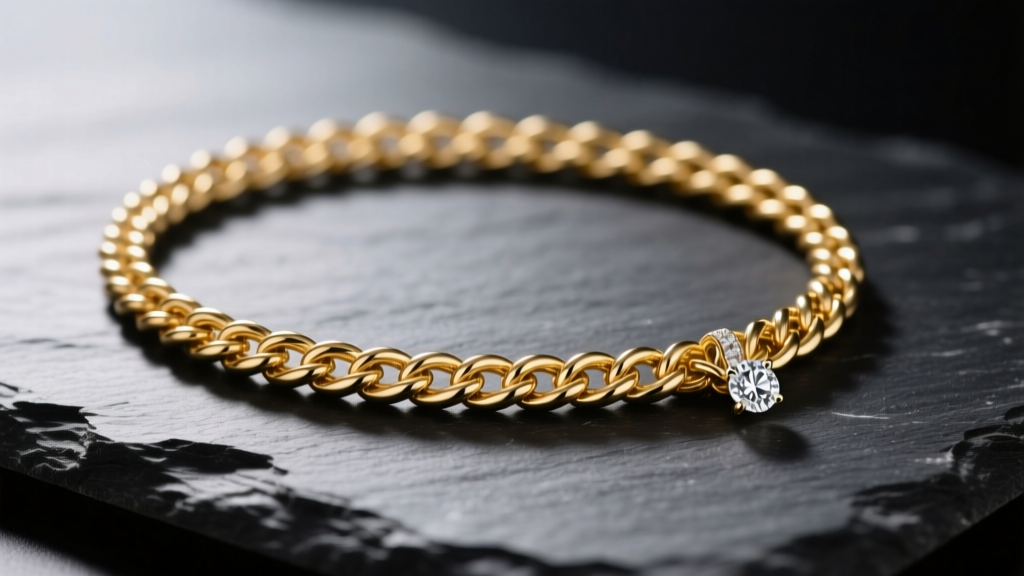
Selecting the right chain for necklace pendants is an exercise in balancing aesthetics with structural engineering. A beautiful pendant is only as secure as the chain holding it, yet many beginners make the mistake of pairing heavy gemstones with delicate, unsuitable links. Whether you are threading a vintage locket, a solid gold charm, or a lightweight gemstone, understanding link architecture, gauge thickness, and metal durability is essential. This guide breaks down the exact specifications you need to choose a chain that will last a lifetime without snapping or distorting.
The Anatomy of a Pendant Chain
Before diving into specific styles, it is crucial to understand what gives a chain its strength. A chain's durability relies on three factors: link shape, solder, and gauge. Soldered links—where the tiny seam of each metal ring is fused shut with a laser or torch—are vastly superior to unsoldered links. Unsoldered links can easily pull apart when subjected to the lateral tension of a swinging pendant. When shopping, always check the product specifications for the word 'soldered' or 'diamond-cut and soldered' to ensure structural integrity.
Top 5 Chain Styles for Everyday Pendants
Not all links are created equal. Some are designed to lay flat and catch the light, while others are engineered to bear heavy loads. Here are the most reliable styles for pendant necklaces:
- Box Chain: Composed of square, interlocking links that create a smooth, geometric surface. Box chains are exceptionally strong, resist kinking, and easily slide through most pendant bails. They are the gold standard for medium-weight pendants (5g to 15g).
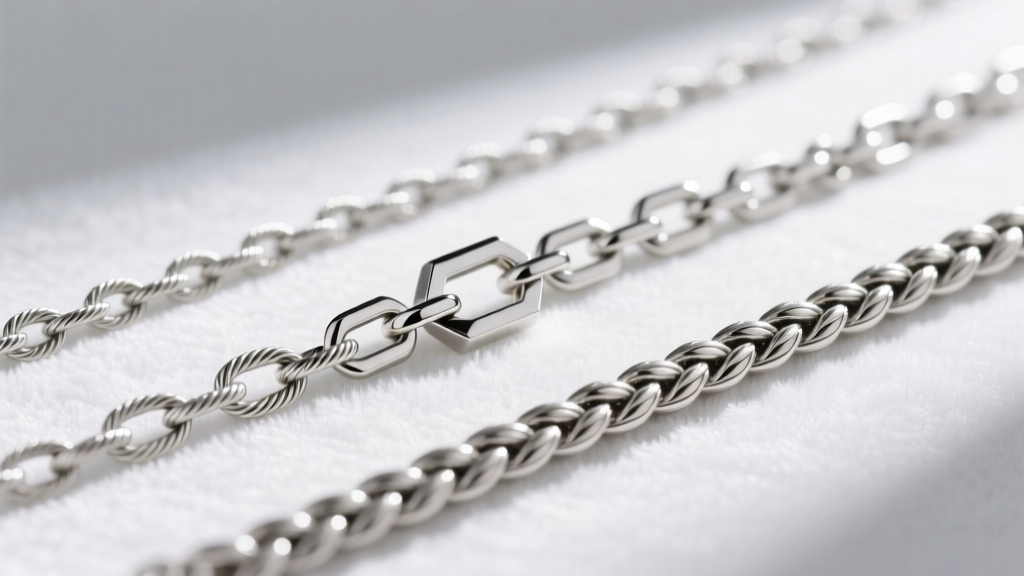
- Rope Chain: Crafted from small metal links twisted together to mimic the look of a woven rope. The twisting pattern not only reflects light brilliantly but also distributes tension evenly across multiple links, making it highly resistant to snapping.
- Wheat (Spiga) Chain: Featuring oval links woven together in a braided, V-shaped pattern. Wheat chains are incredibly durable and flexible, making them the premier choice for heavy, oversized pendants. The woven structure hides scratches and resists pulling.
- Cable Chain: The most traditional style, consisting of uniform oval or round links. While classic, standard cable chains are prone to stretching if the links are unsoldered. Only use soldered cable chains, and reserve them for lightweight charms.
- Figaro Chain: An Italian design featuring a pattern of three short links followed by one long link. It offers a masculine or vintage aesthetic and provides excellent tensile strength when properly soldered.
Gauge Thickness vs. Pendant Weight
The most common mistake beginners make is ignoring the chain's gauge (thickness). Gauge dictates the maximum load the chain can bear before the links begin to stretch or the clasp fails. Below is a professional framework for matching your chain's millimeter thickness to your pendant's weight.
| Gauge (AWG) | Thickness (mm) | Max Pendant Weight | Best Use Case |
|---|---|---|---|
| 24 Gauge | 0.5mm | Under 3 grams | Ultra-lightweight charms, minimalist birthstones |
| 20 Gauge | 0.8mm | 3g to 8g | Standard lightweight pendants, small lockets |
| 18 Gauge | 1.0mm | 8g to 15g | Medium gemstone pendants, silver crosses |
| 16 Gauge | 1.2mm - 1.5mm | 15g to 25g | Heavy metal pendants, large statement stones |
| 14 Gauge | 1.6mm+ | 25g and above | Oversized solid gold pieces, heavy vintage medallions |
Pro Tip: Always weigh your pendant on a digital jeweler's scale before purchasing a chain. If your pendant weighs 12 grams, do not buy a 1.0mm chain that maxes out at 15 grams; opt for a 1.2mm chain to provide a safety margin for sudden tugs.
Metal Grades and Durability
The metal alloy you choose dictates both the chain's tensile strength and its maintenance requirements. According to the Gemological Institute of America (GIA), the purity of gold directly impacts its hardness. Pure 24k gold is far too soft for chains and will stretch out of shape within weeks.
- 14k Gold (58.5% pure): The ideal balance of rich color and structural durability. The alloy metals (like copper and zinc) give 14k chains the stiffness required to hold heavy pendants without stretching.
- 925 Sterling Silver: An alloy of 92.5% silver and 7.5% copper. As noted by The Silver Institute, the copper addition provides necessary strength, though silver remains softer than gold and is prone to tarnishing. It is best for medium-weight pendants.
- 316L Stainless Steel: A budget-friendly, hypoallergenic powerhouse. Surgical-grade steel is incredibly difficult to scratch or snap, making it perfect for heavy, everyday pendants, though it cannot be easily resized or soldered by a traditional jeweler if broken.
- Platinum: The ultimate luxury choice. Platinum is dense, heavy, and highly resistant to wear. A 1.0mm platinum chain can hold significantly more weight than a 1.0mm gold chain due to the metal's sheer density.
Clasp Types: The Weakest Link?
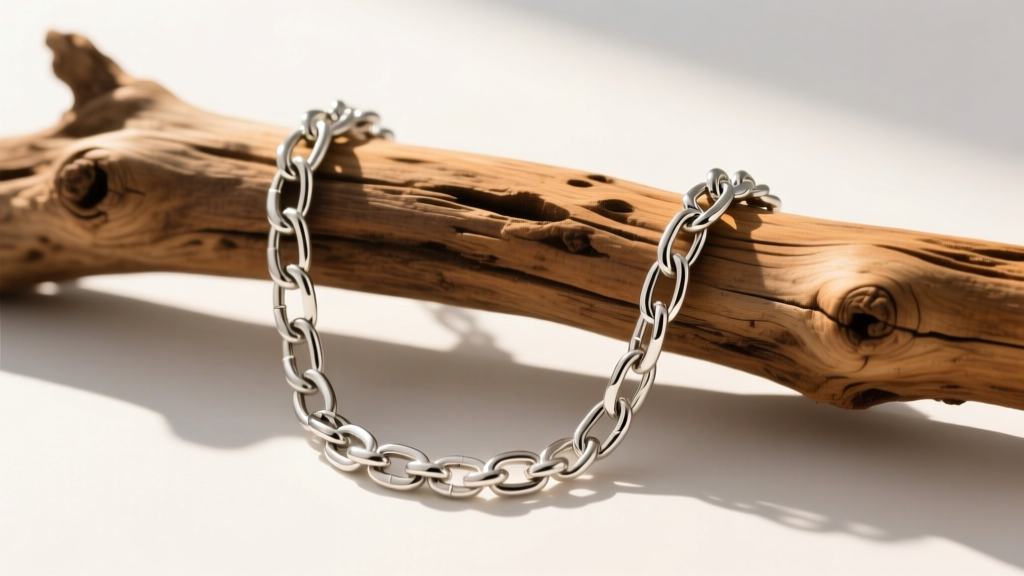
A chain is only as strong as its clasp. The wrong clasp will fail long before the links do.
Lobster Claw Clasp
The industry standard for a reason. Shaped like a lobster's claw, this clasp features a robust internal spring and a wide lever that is easy to operate. It provides excellent security for chains up to 16 gauge.
Spring Ring Clasp
Often found on inexpensive, mass-market jewelry. These small, circular clasps have tiny, fragile internal springs that frequently jam or snap under the weight of a pendant. Avoid spring rings for anything heavier than 5 grams.
Box Clasp with Safety Catch
For heavy, thick chains (14 gauge and above), a box clasp is mandatory. The chain slides into a secure metal box and locks into place, often accompanied by a secondary wire safety catch. This prevents catastrophic loss if the primary mechanism is bumped.
Troubleshooting Common Chain Failures
Even high-quality chains can fail if subjected to specific stressors. Here is how to diagnose and prevent the most common issues:
- Link Stretching: If your cable or figaro chain begins to look elongated, it is experiencing tensile overload. This happens when the pendant is too heavy for the gauge, or when the chain is frequently pulled. Solution: Upgrade to a box or wheat chain of the same thickness.
- Clasp Slippage: If your necklace constantly spins, bringing the clasp to the front of your neck, the pendant bail (the loop) is too large for the chain width. Solution: Add a small jump ring to the pendant bail to center the chain, or switch to a thicker chain that fills the bail space.
- Solder Fatigue: Over time, body oils, lotions, and friction can degrade the microscopic solder joints on delicate links. Solution: Remove your necklace before showering or applying cosmetics, and have a jeweler inspect the solder points annually.
Choosing the perfect chain for your necklace pendant requires looking beyond the display case and examining the structural realities of the jewelry. By matching the correct gauge to your pendant's weight, selecting a soldered link style like a box or wheat chain, and securing it with a reliable lobster or box clasp, you ensure that your favorite pieces remain safe, secure, and beautifully displayed for years to come.


