The Best Necklace Big Chain Materials: A Property Guide
Discover the best materials for a necklace big chain. Compare gold, silver, stainless steel, and titanium for weight, durability, and skin safety.

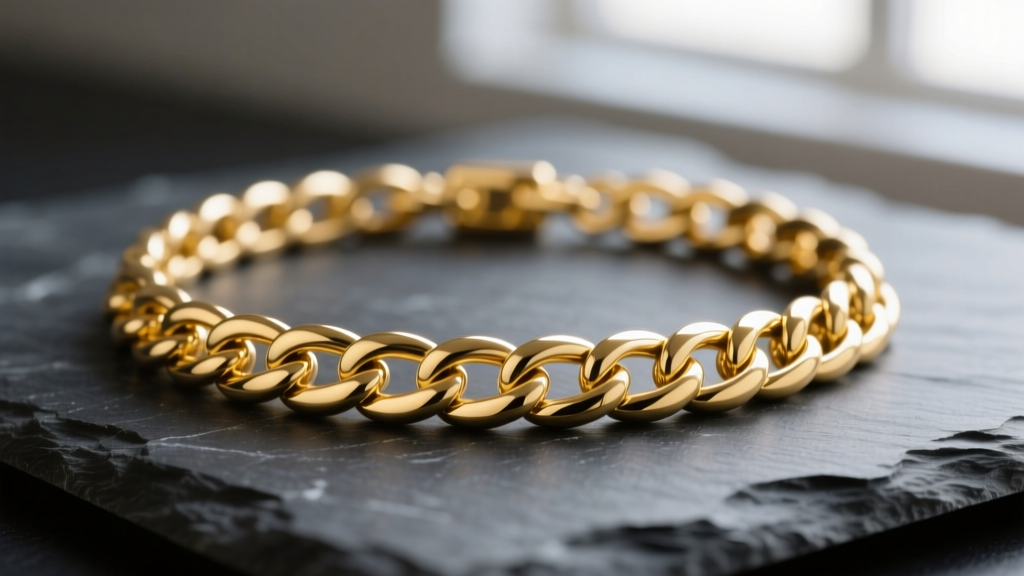
When shopping for a necklace big chain, aesthetics often overshadow structural engineering. A thick 12mm Cuban link or a heavy 8mm Figaro chain is not merely a fashion statement; it is a suspended mechanical load that places continuous stress on both the metal links and the wearer's cervical spine. In 2026, with precious metal markets experiencing unprecedented volatility, understanding the metallurgical properties of your jewelry is more critical than ever. Choosing the wrong material for a heavy chain can result in stretched links, severe skin sensitization, or catastrophic clasp failure.
The Physics of Thick Links: Why Material Density Matters
The most overlooked property when selecting a heavy chain is specific gravity (density). The sheer volume of metal required to forge a 'big chain' means that density directly dictates the final weight. For context, pure gold has a specific gravity of 19.32 g/cm³, while surgical stainless steel sits at roughly 8.0 g/cm³.
A 20-inch, 12mm solid 14k gold Cuban link chain will weigh approximately 180 to 220 grams. That is nearly half a pound of concentrated force pulling downward on the nape of your neck. Conversely, a chain of the exact same dimensions crafted from Grade 5 titanium will weigh under 90 grams. Understanding this weight discrepancy is vital for daily wearability and long-term comfort.
Solid Gold vs. Plated Alternatives for Heavy Chains
Gold remains the premier choice for luxury chains, but not all gold is created equal when subjected to the friction of thick, interlocking links.
The 14k vs. 18k Durability Debate
While 18k gold (75% pure gold) offers a richer, deeper yellow hue, it is inherently softer. On the Vickers hardness scale (HV), 18k gold typically measures around 125 HV. In contrast, 14k gold (58.5% pure gold) is alloyed with higher percentages of copper, silver, and zinc, pushing its hardness to approximately 135-145 HV. According to the Gemological Institute of America (GIA), the increased tensile strength of 14k gold makes it vastly superior for heavy chains, as the links are less prone to warping or stretching under their own weight.
The Danger of Gold Vermeil and Plating on Big Chains
Never purchase a gold-plated or vermeil necklace big chain. Thick chains generate significant kinetic friction where the links connect. Within weeks of daily wear, the gold plating on the interior of the links will wear away, exposing the base metal (usually brass or copper) and leading to rapid oxidation and skin discoloration. For heavy chains, solid gold is the only viable gold option.
Stainless Steel and Titanium: The Modern Heavyweights
For those seeking the imposing look of a thick chain without the precious metal price tag—or the crushing weight—alternative metals offer exceptional structural integrity.
316L Surgical Stainless Steel
316L austenitic stainless steel is an alloy containing chromium, molybdenum, and nickel. It boasts a Vickers hardness of up to 190 HV, making it highly resistant to scratching and link deformation. However, the presence of nickel (typically 8-10%) makes it a poor choice for individuals with metal sensitivities. The heavy weight of a thick steel chain pressing against the sweaty skin of the neck can accelerate nickel leaching, triggering contact dermatitis.
Grade 5 Titanium (Ti-6Al-4V)
Titanium is the ultimate material for an oversized, lightweight chain. Grade 5 titanium is an aerospace-grade alloy that is completely hypoallergenic and highly biocompatible, as noted in FDA guidelines on titanium medical alloys. It is roughly 45% lighter than steel but possesses a higher strength-to-weight ratio. A 10mm titanium rolo chain provides the exact visual footprint of a heavy steel chain but feels like a standard pendant necklace on the collarbone.
Sterling Silver: The Tarnish and Softness Dilemma
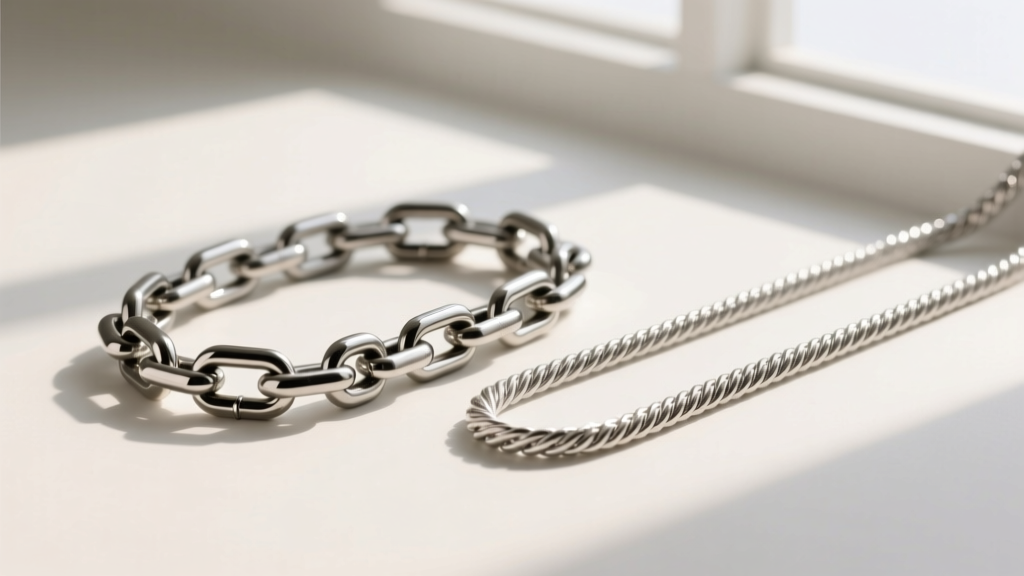
Sterling silver (.925) is a classic jewelry staple, but it presents unique engineering challenges when scaled up to a necklace big chain. Pure silver is exceptionally soft, and even when alloyed with 7.5% copper to create sterling silver, its hardness maxes out around 65-75 HV.
Expert Warning: Heavy sterling silver chains are highly susceptible to 'creep'—the gradual, permanent stretching of oval and round links under constant tensile load. A heavy silver rope chain will visibly elongate and lose its structural tightness within a few years of daily wear.
Furthermore, the massive surface area of a thick silver chain accelerates tarnishing. The sulfur compounds in the air react with the copper alloy in the silver, requiring frequent, labor-intensive polishing to maintain the mirror finish.
Material Comparison Matrix
The table below synthesizes the critical metallurgical data for the four most common materials used in heavy chain manufacturing, based on a standard 20-inch, 10mm Cuban link profile.
| Material | Density (g/cm³) | Hardness (HV) | Approx. Weight (20in/10mm) | Allergy Risk | Estimated 2026 Retail |
|---|---|---|---|---|---|
| 14k Solid Gold | 13.5 | 140 | 165g | Very Low | $4,500 - $6,000 |
| .925 Sterling Silver | 10.3 | 70 | 125g | Low (Copper) | $300 - $500 |
| 316L Stainless Steel | 8.0 | 180 | 110g | Moderate (Nickel) | $80 - $150 |
| Grade 5 Titanium | 4.4 | 334 | 65g | None | $250 - $450 |
Clasp Engineering: The Weakest Link in a Big Chain
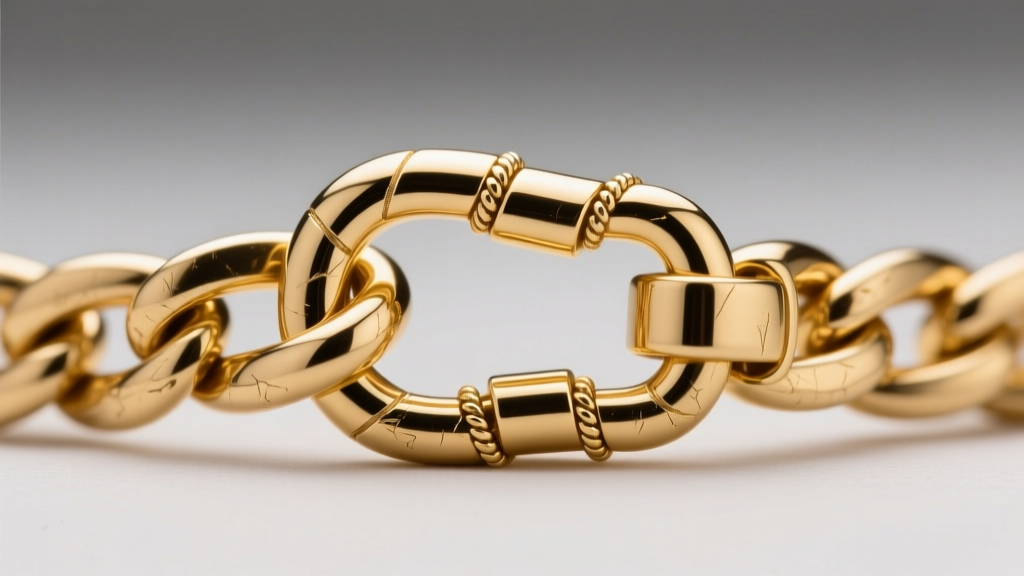
The most catastrophic failure point on any heavy chain is the clasp. A standard 12mm cast lobster claw clasp has a tensile failure point of roughly 15 kilograms. While a 150-gram chain does not exert 15kg of static force, the dynamic force generated by walking, jogging, or suddenly looking down can easily create a kinetic whip effect that exceeds the clasp's yield strength.
- Lobster Clasps: Acceptable only for chains under 80 grams. Ensure the jump ring connecting the clasp to the chain is fully soldered, not just pinched closed.
- Box Clasps: The mandatory standard for chains over 100 grams. A well-machined box clasp with a friction-fit tongue and a dual-hinged safety catch distributes the tensile load across a wider surface area.
- Magnetic Clasps: Avoid entirely for heavy chains. The neodymium magnets used in jewelry clasps cannot reliably counteract the sheer drop-force of a heavy metal chain.
Final Verdict: Matching Material to Lifestyle
Selecting the ideal necklace big chain requires balancing visual impact with material science. If you desire a generational heirloom piece and have the budget, a 14k solid gold chain offers the perfect blend of prestige, workability, and long-term value retention. For streetwear enthusiasts who want an oversized, indestructible profile without neck fatigue, Grade 5 titanium is the undisputed champion of modern metallurgy. Avoid silver for heavy, daily-wear links due to stretching, and bypass plated metals entirely. By respecting the physics of heavy jewelry, you ensure your chain remains a staple of your wardrobe, rather than a broken burden in your jewelry box.