How to Choose the Perfect Big Silver Heart Necklace: Buyer's Guide
Discover what to look for when buying a big silver heart necklace. Learn about silver grades, chain weights, clasp types, and pricing in this expert guide.

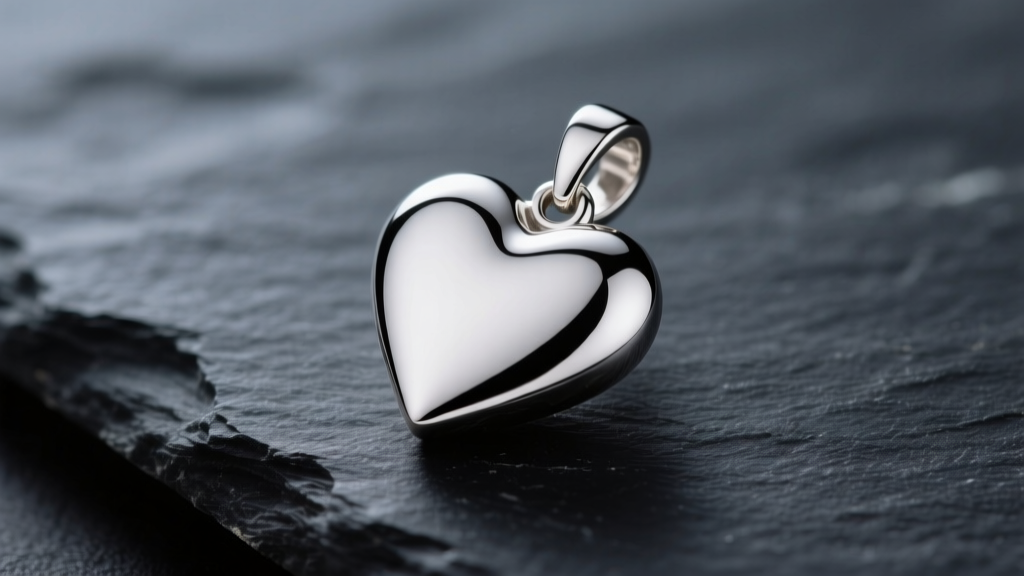
The Anatomy of a Statement Heart
The heart motif is a timeless staple in jewelry, but the big silver heart necklace has evolved dramatically. Moving far beyond the thin, easily dented mall-kiosk pendants of the late 1990s, the 2026 iteration of the statement heart is all about substantial weight, heirloom-quality metallurgy, and deliberate proportions. Whether you are anchoring a minimalist layering stack or wearing it as a standalone bold piece over a heavy knit sweater, choosing the right large-scale heart pendant requires an understanding of metal purity, structural integrity, and chain mechanics. This comprehensive buying guide breaks down exactly what to look for to ensure your investment lasts a lifetime.
Silver Purity: Why .925 Beats .999 for Large Pendants
When shopping for a large surface-area pendant, the purity of the silver dictates its durability. According to the Gemological Institute of America (GIA), pure silver is highly malleable, which is excellent for intricate wirework but disastrous for broad, flat statement pieces.
- Fine Silver (.999): Avoid this for big pendants. A 40mm wide heart stamped in .999 fine silver will warp, bend, and scratch under its own weight and daily wear.
- Sterling Silver (.925): The industry standard. Alloyed with 7.5% copper or other metals, it provides the necessary tensile strength to hold a polished, flat surface without warping.
- Argentium Silver (.935 or .960): The premium upgrade. Replacing some copper with germanium, Argentium is highly tarnish-resistant and slightly harder than traditional sterling. If you hate polishing your jewelry, seek out an Argentium big silver heart necklace.
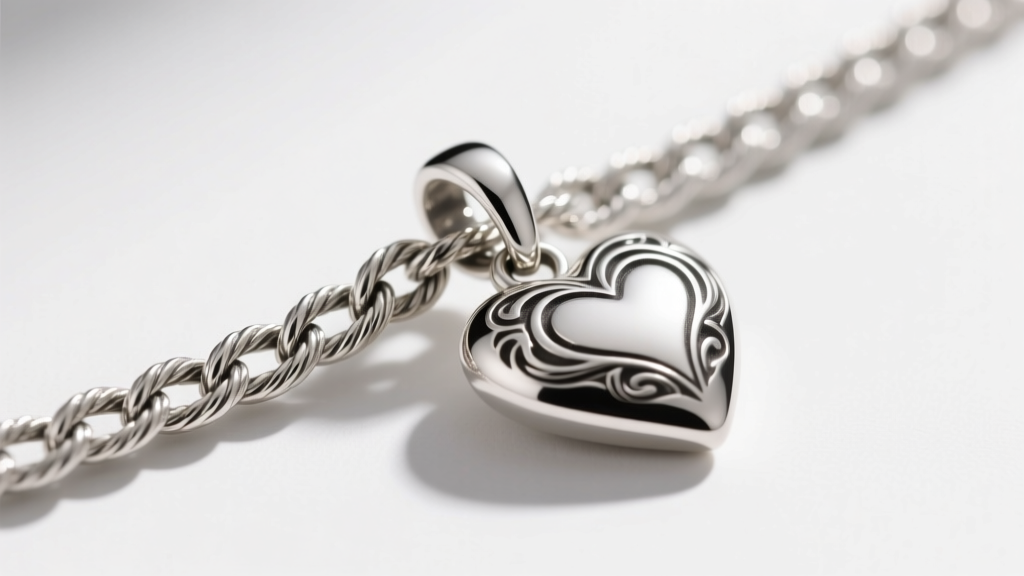
Solid vs. Hollow Construction: The Durability Test
The most critical failure point in large pendants is the manufacturing method. Many mass-market brands use die-struck, hollow-backed construction to save on metal costs. While a hollow 45mm heart might look identical to a solid one on display, hollow pendants are prone to catastrophic denting. If a hollow pendant is dropped on a hard floor or pressed against a steering wheel, the thin silver sheet (often under 0.8mm thick) will crease. Because there is no internal metal to push back, jewelers cannot easily hammer out these dents.
Always look for solid cast or thick-gauge stamped pendants. A solid piece can be aggressively polished, buffed, and even engraved without the risk of the tool breaking through the metal wall.
Dimensional Weight Guide
Use this chart to verify if the pendant you are buying has the appropriate heft for its dimensions. If the weight is significantly lower than the ideal range, it is likely hollow.
| Pendant Width | Ideal Depth/Thickness | Ideal Solid Weight | Recommended Chain Thickness |
|---|---|---|---|
| 25mm - 30mm | 1.5mm - 2.0mm | 5g - 8g | 1.5mm - 2.0mm |
| 35mm - 40mm | 2.0mm - 3.0mm | 10g - 16g | 2.5mm - 3.5mm |
| 45mm - 55mm | 3.0mm - 4.5mm | 18g - 28g | 3.5mm - 5.0mm |
Chain Selection and Bail Proportions
A heavy pendant requires a chain that can handle dynamic stress—the pulling and tugging that occurs as you move. The Silver Institute notes that silver chains are susceptible to link stretching if subjected to loads beyond their tensile limits. A delicate 1.2mm cable chain will eventually snap or stretch into an oval shape when supporting a 20g heart pendant.
Top Chain Styles for Heavy Pendants
- Curb Chains (3.0mm+): The interlocking, flattened links lay flat against the chest and distribute weight evenly. They are incredibly resistant to pulling.
- Rope Chains (2.5mm+): The twisted links offer a vintage aesthetic that pairs beautifully with heart motifs, providing excellent structural integrity.
- Box Chains (2.0mm+): Featuring square, interlocking links, box chains offer a modern, geometric contrast to the curves of a heart pendant. Ensure the links are soldered shut.
Crucial Detail: Check the bail (the loop connecting the pendant to the chain). For a big silver heart necklace, the bail must be seamlessly soldered to the pendant body, not merely pinched or glued. The interior diameter of the bail must be at least 1.5x the width of your chosen chain to allow the chain to glide smoothly without causing friction wear.
Clasp Mechanics: Securing the Weight
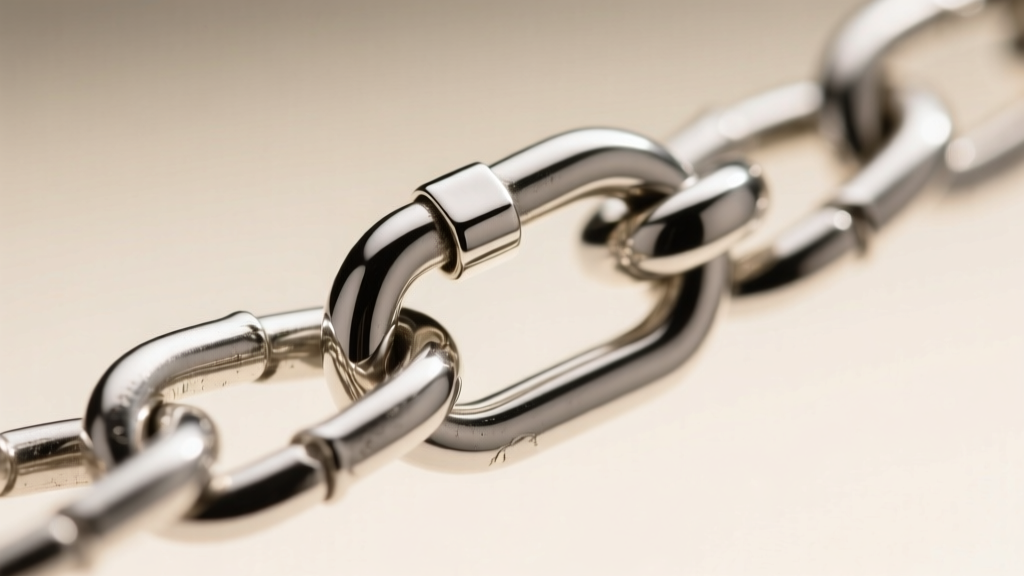
The clasp is the single most common point of failure on any necklace, and the risk multiplies with heavy statement pieces. Standard 7mm spring-ring clasps are entirely inadequate for pendants weighing over 10 grams. The internal spring mechanism will fatigue, and the thin wire gate will bend open under the pendulum effect of a swinging heart.
What to buy instead:
- Lobster Clasps (12mm to 17mm): The gold standard for heavy jewelry. A 15mm solid sterling lobster clasp features a robust internal spring and a thick gate that will not bend under a 30g load.
- Toggle Clasps: A thick T-bar that pulls through a large O-ring. These are exceptionally secure for heavy necklaces because the weight of the pendant actually pulls the T-bar horizontally against the ring, locking it in place. Ensure the O-ring is fully soldered with no gap.
Surface Finishes and Maintenance
The finish on your big silver heart necklace dictates both its aesthetic and its maintenance requirements.
- High Polish: A mirror-like shine that reflects maximum light. However, high polish shows every micro-scratch and fingerprint. It requires regular buffing with a jeweler's cloth.
- Brushed/Satin: A matte texture created by wire-brushing the silver. This is highly recommended for everyday wear, as the textured surface naturally camouflages minor scratches and scuffs.
- Oxidized (Antiqued): The silver is intentionally exposed to sulfur to create black patina in the recessed areas, which is then polished off the high points. This creates a dramatic, vintage contrast and requires almost zero maintenance, as new tarnish simply blends into the design.
Pricing Expectations and Brand Tiers
Understanding the market tiers will protect you from overpaying for hollow construction or underpaying for suspiciously cheap 'silver' that may actually be plated brass.
- Mass Market / Fast Fashion ($30 - $80): Usually hollow-backed, die-struck .925 silver with thin 1.5mm chains and weak spring-ring clasps. Expect a lifespan of 1-3 years before chain failure or denting.
- Artisan & Mid-Tier Jewelers ($120 - $350): The sweet spot for quality. You will find solid cast .925 or Argentium silver, substantial weight (15g+), properly soldered bails, and heavy lobster clasps.
- Luxury & Designer ($500 - $1,500+): Paying for brand heritage, unique architectural designs, and often the integration of diamond pavé or mixed metals (like 18k gold accents) on the sterling base.
Expert Troubleshooting Tip: If you already own a beautiful, heavy heart pendant but the chain keeps breaking, do not simply buy a thicker chain. Take the pendant to a jeweler and ask them to 're-solder the bail ring.' Often, the friction of a heavy pendant rubbing against a single jump ring will wear a microscopic groove into the ring, eventually slicing it open. A jeweler can fuse the jump ring shut or replace it with a hardened steel-reinforced bail.
Final Pre-Purchase Checklist
Before adding that big silver heart necklace to your cart, verify these five critical specifications:
- Hallmark Check: Is it stamped '.925' or 'Argentium'? Avoid anything simply labeled 'Tibetan Silver' or 'Silver Tone'.
- Weight Verification: Does the product description list the gram weight? If it's a 40mm pendant weighing only 3 grams, it is hollow.
- Bail Inspection: Zoom in on the photos. Is the bail seamlessly integrated or securely soldered?
- Clasp Upgrade: Does it come with a 12mm+ lobster clasp or a toggle? If it has a spring ring, factor in $25 to have a jeweler swap it out immediately.
- Chain Harmony: Is the chain at least 2.5mm thick to visually and structurally balance the large heart?
By prioritizing solid construction, appropriate metallurgy, and robust hardware, your statement heart will remain a powerful, tarnish-free anchor in your jewelry wardrobe for decades to come.


