Black Beaded Mens Necklace Guide: Onyx, Obsidian & Wood
Compare onyx, obsidian, and wood for your next black beaded mens necklace. Expert insights on durability, Mohs hardness, and styling.

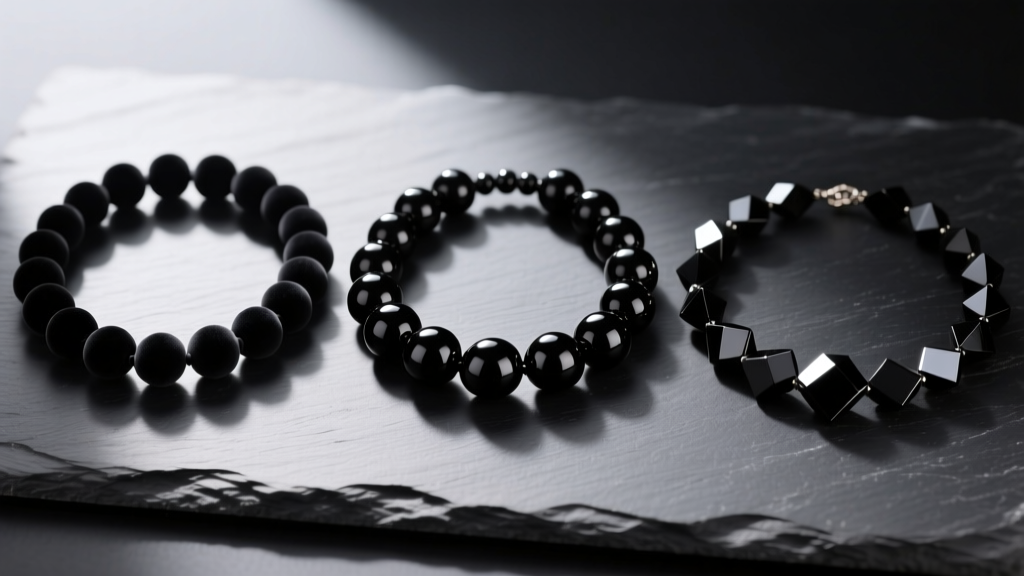
The resurgence of the black beaded mens necklace in contemporary menswear is not just a fleeting trend; it is a return to tactile, grounded accessories that bridge the gap between casual streetwear and refined minimalism. However, not all black beads are created equal. The market is flooded with synthetic imitations, poorly dyed stones, and fragile organic materials that degrade upon contact with sweat. To make a sound investment, you must understand the material science behind the beads.
In this comprehensive guide, we dissect the three dominant materials used in premium black beaded mens necklaces: Onyx, Obsidian, and Ebony wood. We will evaluate their Mohs hardness, tensile strength, reaction to skin oils, and long-term durability, providing you with a definitive framework for your next purchase.
The Mineral vs. Organic Divide
When selecting a black beaded mens necklace, the first decision is choosing between mineral (stone/glass) and organic (wood) materials. Minerals offer superior scratch resistance and a permanent, unyielding polish. They are cold to the touch, dense, and provide a satisfying, heavy drape across the chest. Organic materials, conversely, offer warmth, lightweight comfort, and a matte finish that evolves over time as the wood absorbs natural skin oils, developing a rich patina.
The choice ultimately hinges on your lifestyle. If you are highly active, sweat heavily, or work in environments where your jewelry might impact hard surfaces, the structural integrity of the bead material becomes the primary deciding factor.
Comprehensive Material Comparison Matrix
Before diving into the nuances of each material, review this baseline data table comparing the physical properties of the top three black bead materials used in high-end mens jewelry.
| Material | Hardness Scale | Density (g/cm³) | Sweat Resistance | Avg. Price Range (8mm Beads) |
|---|---|---|---|---|
| Black Onyx (Dyed Agate) | 6.5 - 7 (Mohs) | 2.60 - 2.65 | Excellent | $45 - $120 |
| Obsidian (Volcanic Glass) | 5.0 - 5.5 (Mohs) | 2.35 - 2.60 | Excellent | $30 - $85 |
| African Ebony (Wood) | 3200 (Janka) | 1.10 - 1.30 | Moderate (Needs Oil) | $60 - $150 |
Onyx: The Dyed Standard of Durability
True, naturally occurring black onyx is exceptionally rare. According to the Gemological Institute of America (GIA), the vast majority of black onyx on the market is actually grey or white chalcedony (a form of agate) that has been treated with a sugar solution and subsequently heated in sulfuric acid to carbonize the sugars, turning the stone a deep, permanent black.
This dyeing process does not compromise the stone's structural integrity. With a Mohs hardness of 6.5 to 7, onyx is highly resistant to scratching from everyday wear, keys, or coins in your pocket. It takes an exceptional, glass-like polish that will not dull over time. The primary failure mode for onyx beads is not scratching, but chipping along the drill holes if the beads are struck forcefully against one another.
Obsidian: The Volcanic Glass Alternative
Obsidian is an igneous rock that forms as a natural glass when felsic lava cools so rapidly that mineral crystals have no time to form. While it is visually striking—offering a deeper, more glass-like luster than onyx—it comes with a significant durability caveat.
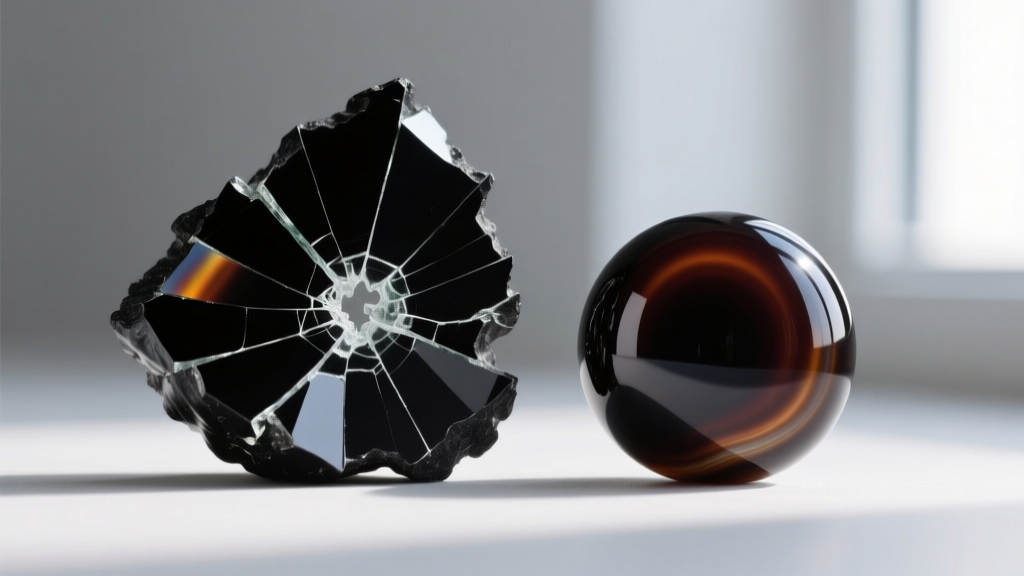
As noted in GIA's mineral database, obsidian sits at a 5 to 5.5 on the Mohs scale. More importantly, it exhibits a conchoidal fracture, meaning it breaks with smooth, curved, shell-like surfaces that are razor-sharp. If an obsidian beaded necklace is dropped onto a tile floor or subjected to high-impact compression, the beads are highly likely to shatter rather than merely chip. Obsidian is best suited for dress occasions or office environments where impact risks are minimal.
African Ebony: The Organic Powerhouse
For those who prefer a matte, lightweight, and warm aesthetic, African Ebony (Diospyros crassiflora) is the premier choice. Unlike standard hardwoods, genuine ebony is so dense that it sinks in water. It ranks at an astonishing 3,200 lbf on the Janka hardness scale, making it one of the hardest woods on the planet.
However, wood is porous. According to the Wood Database, ebony's natural oils provide some water resistance, but prolonged exposure to acidic sweat can eventually dry out the wood, leading to micro-cracking along the bead's grain. To mitigate this, premium ebony necklaces are often sealed with a micro-thin layer of carnauba wax or treated with tung oil. If you choose an ebony black beaded mens necklace, you must commit to re-oiling the beads with mineral oil every six months to maintain their structural stability and deep black hue.
The Hidden Failure Point: Stringing and Hardware
A common mistake when buying a black beaded mens necklace is focusing entirely on the beads while ignoring the stringing material. The bead material is only as strong as the cord holding it together.
- Standard Elastic (Latex): Avoid this. Latex degrades rapidly when exposed to UV light, sweat, and the natural oils from your neck. Expect a lifespan of 6 to 12 months before catastrophic snapping.
- TPU (Thermoplastic Polyurethane) Elastic: A massive upgrade. TPU is highly resistant to oil, grease, and abrasion. A 1.0mm TPU cord can easily support the heavy weight of 8mm or 10mm onyx beads without stretching out permanently.
- 49-Strand Micro-Fused Steel Wire: The gold standard for non-stretch necklaces. Coated in nylon to prevent the metal from sawing through the bead holes, steel wire offers a fluid, fabric-like drape and is virtually unbreakable under normal human tension. It requires a secure clasp, usually a stainless steel lobster claw or a macramé slip-knot closure.
Expert Tip: If buying a heavy stone necklace (over 80 grams), always inspect the drill holes. Rough, unpolished drill holes will act like microscopic saws, eventually fraying and cutting through elastic or nylon-coated wire. Premium manufacturers use diamond-tipped bits and polish the interior of the bead hole to a smooth finish.
Styling and Neckline Pairings
The versatility of a black beaded mens necklace lies in its ability to anchor an outfit without overwhelming it. The visual weight of the necklace is dictated by the bead diameter.
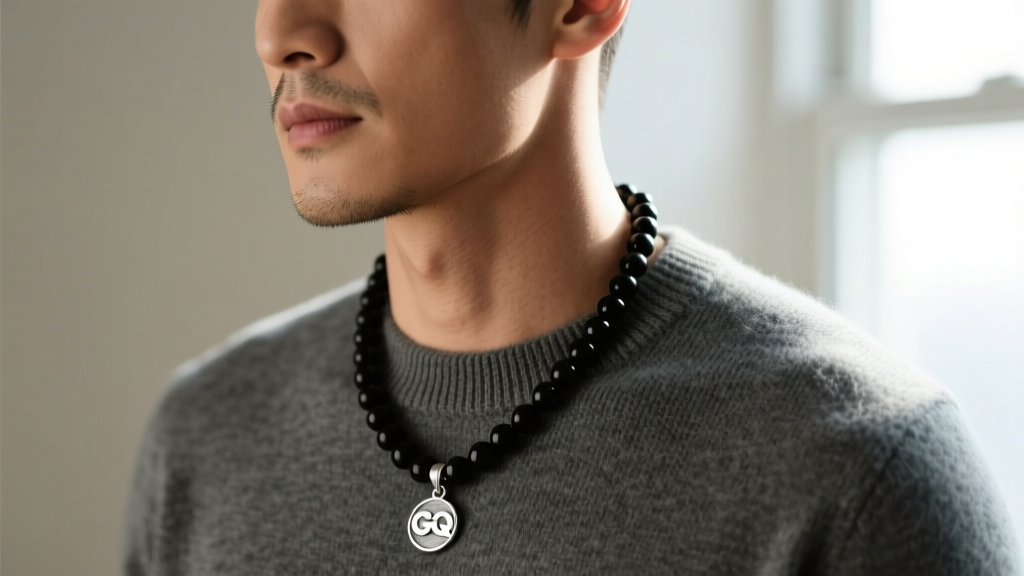
For a subtle, sophisticated look, opt for 6mm beads. These sit close to the collarbone and pair flawlessly with unbuttoned linen shirts or lightweight merino wool V-necks. The 8mm bead is the industry standard, offering enough presence to be seen over a crewneck t-shirt but remaining discreet enough for a corporate-casual environment. For streetwear or high-fashion statements, 10mm to 12mm beads provide a bold, chunky silhouette that demands attention, especially when layered over heavyweight cotton hoodies or denim jackets.
When layering, combine the matte texture of ebony with a high-polish sterling silver chain. The contrast between the organic, light-absorbing wood and the reflective metal creates a dynamic visual depth that elevates the entire ensemble.
Maintenance and Longevity Protocols
Proper care ensures your necklace outlasts the trends. For onyx and obsidian, maintenance is trivial: simply wipe the beads with a damp microfiber cloth to remove sebum and dead skin cells. Never use ultrasonic cleaners on obsidian, as the high-frequency vibrations can exploit microscopic internal fractures and cause the glass to shatter.
For ebony and other blackwoods, avoid submerging the necklace in water. Once a month, apply a single drop of jojoba oil to a soft cloth and gently buff the beads. This replenishes the wood's natural lipids, prevents the black dye (if color-enhanced) from fading, and maintains a rich, satin luster. Store all beaded necklaces flat or draped over a wide-radius velvet bust; hanging heavy stone beads on a small hook for years can cause permanent deformation and stretching of the stringing material.
Final Verdict
The ideal black beaded mens necklace is a highly personal choice dictated by your daily environment. Choose Onyx for a bulletproof, high-gloss everyday piece that requires zero maintenance. Select Obsidian if you prioritize a deep, glassy luster for evening wear and can handle it with care. Opt for Ebony if you value lightweight warmth, organic texture, and the evolving character of a natural material. By prioritizing material density, drill-hole polish, and TPU or steel stringing, you will secure an accessory that remains a staple in your wardrobe for decades.


