2026 Trend Forecast: Styling the Black Statement Necklace
Discover 2026 trends for the black statement necklace. Expert analysis on PVD titanium, black rhodium, styling frameworks, and luxury market shifts.

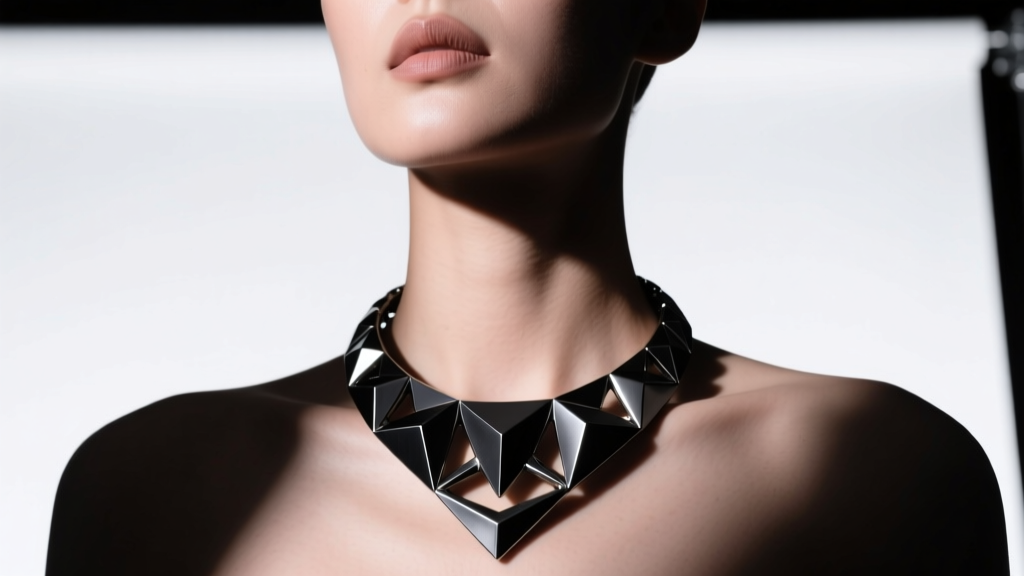
The jewelry landscape in 2026 has decisively pivoted away from the hyper-minimalist, barely-there chains of the early 2020s. Today, the black statement necklace stands as a cornerstone of both avant-garde streetwear and elevated evening attire. No longer confined to gothic subcultures or reserved strictly for mourning jewelry, dark, architectural neckpieces are dominating global runways and luxury market forecasts. According to recent industry analyses by Vogue Business, the consumer appetite for high-contrast, oversized silhouettes in dark metals has surged by 34% year-over-year, driven by a desire for pieces that offer visual weight without the traditional flash of yellow gold or bright diamonds.
However, not all black necklaces are created equal. The market is currently flooded with everything as cheap, painted alloys to masterfully engineered aerospace-grade metals. As a collector or stylist, understanding the material science, precise styling frameworks, and long-term durability of these pieces is critical. This guide deconstructs the 2026 black statement necklace trend, offering actionable insights on material grades, neckline pairings, and maintenance protocols.
The 2026 Material Evolution: Beyond Basic Onyx
Historically, achieving a deep black aesthetic in fine jewelry meant relying heavily on black onyx, black spinel, or melanite garnet. While the Gemological Institute of America (GIA) notes that natural black onyx (often dyed agate) remains a staple for cameo carving and beadwork, the 2026 statement necklace relies far more on advanced metallurgy and synthetic treatments than traditional gemstones.
Physical Vapor Deposition (PVD) on Grade 5 Titanium
The undisputed champion of the 2026 black metal trend is PVD-coated titanium. Specifically, jewelers are utilizing Grade 5 Titanium (Ti-6Al-4V), an aerospace alloy that is 45% lighter than steel but boasts exceptional tensile strength. By using a Physical Vapor Deposition process, a microscopic layer of black titanium nitride or diamond-like carbon (DLC) is fused to the metal at the atomic level. This results in a black statement necklace that is completely impervious to tarnish, sweat, and UV degradation, making it the ultimate choice for massive, oversized collar pieces that would be uncomfortably heavy if cast in solid silver or gold.
Vulcanized Rubber and Blackened Gold Alloys
For high-luxury iterations, designers are integrating vulcanized rubber with 18k blackened gold. The rubber provides a matte, light-absorbing texture that contrasts sharply with the subtle, dark luster of rhodium-plated or ruthenium-alloyed gold. This hybrid material approach allows for flexible, articulated bib necklaces that mold to the collarbone while maintaining a rigid, architectural appearance.
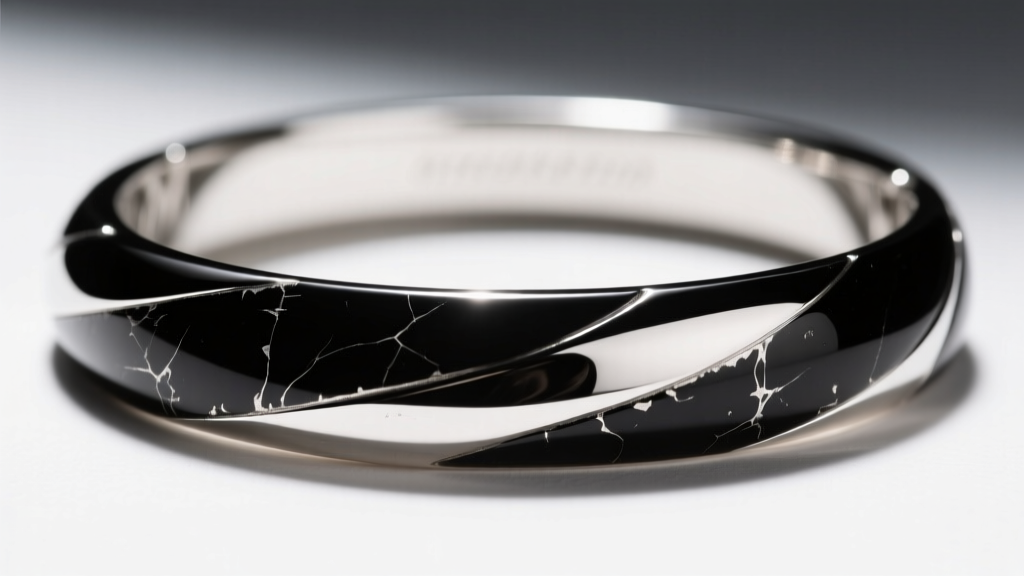
Durability & Finish: The Black Metal Matrix
One of the most common failure modes in dark jewelry is the 'wear-through' effect, where the black plating rubs off against the skin or clothing, revealing the base metal beneath. When investing in a black statement necklace, you must understand the Vickers Hardness (HV) and plating thickness of the finish. Below is a comparative matrix of the four most common black finishes used in 2026.
| Material / Finish | Base Metal | Hardness (HV) | Coating Thickness | Expected Lifespan |
|---|---|---|---|---|
| Black Rhodium | Sterling Silver / 18k Gold | 120 - 150 HV | 0.1 - 0.3 microns | 1 - 3 Years (High wear) |
| PVD Titanium (DLC) | Grade 5 Titanium | 2000 - 3000 HV | 2.0 - 4.0 microns | Lifetime (Scratch-proof) |
| Oxidized Silver | 925 Sterling Silver | 60 - 80 HV (Surface) | Chemical Patina | Requires annual re-oxidation |
| Black Zirconium | Zirconium Alloy | 1800+ HV (Oxide Layer) | Natural Oxidation | Permanent (Ceramic-hard) |
Expert Insight: If you are purchasing a heavy, everyday black statement necklace, avoid black rhodium. The friction against the collarbone will strip the 0.2-micron plating within months. Always opt for PVD Titanium or Black Zirconium for permanent, maintenance-free darkness.
The Styling Matrix: Necklines & Proportions
A statement piece of this magnitude requires a precise styling framework. The sheer visual weight of a black necklace can easily overwhelm an outfit if the neckline and drop length are not mathematically balanced. Here is the 2026 proportion guide for styling dark, oversized necklaces.
1. The Deep Plunge (V-Neck & Wrap Dresses)
For deep V-necklines, avoid rigid collars. Instead, utilize a black Y-drop or lariat statement necklace featuring a heavy matte-black pendant (such as a geometric PVD titanium drop or a raw, unpolished black tourmaline cluster). The ideal chain length is 50cm to 60cm, allowing the focal point to rest exactly two inches above the apex of the V-neck. This elongates the torso and draws the eye vertically.
2. The Asymmetrical & One-Shoulder Silhouette
Asymmetrical necklines demand structural balance. Pair a one-shoulder top with a rigid, off-center black collar necklace measuring 35cm to 40cm. An oxidized silver cuff that sits flush against the clavicle on the exposed side creates an avant-garde, architectural look. The dark metal acts as a visual anchor, preventing the asymmetrical garment from looking unbalanced.

3. The High Neck (Turtlenecks & Mock Necks)
High necklines provide the ultimate blank canvas for a black statement necklace. Because the fabric covers the décolletage, you need a piece with massive surface area. Opt for a multi-strand matte black bib necklace or a wide, articulated vulcanized rubber and blackened gold collar. The ideal drop is 45cm, sitting squarely on the upper chest. The contrast between a charcoal or camel turtleneck and a light-absorbing black metal bib is a hallmark of 2026 winter styling.
Market Tiers & Investment Value
The luxury market has seen a distinct bifurcation in the black jewelry sector. According to the Bain & Company Luxury Market Report, consumers are increasingly willing to pay a premium for 'quiet luxury' pieces that rely on material innovation rather than obvious brand logos. The black statement necklace market is currently divided into three distinct tiers:
- Entry-Level Artisan ($80 - $250): Dominated by independent metalsmiths utilizing oxidized sterling silver and ethically sourced black onyx. These pieces offer incredible organic textures but require annual chemical re-oxidation (using liver of sulfur) to maintain their dark patina.
- Mid-Tier Contemporary ($300 - $850): The sweet spot for PVD-coated Grade 5 Titanium and black zirconium. Brands in this tier focus on CNC-milled geometric designs and modular links. These are the most durable options for daily wear.
- High Luxury & Avant-Garde ($1,200 - $5,000+): Led by heritage houses and high-fashion outliers (e.g., Shaun Leane, Alexander McQueen). These pieces utilize complex hybrid materials, such as black rhodium-plated 18k white gold interwoven with black diamond pavé and vulcanized rubber. While visually stunning, they are high-maintenance and should be treated as wearable art rather than daily accessories.
Maintenance: Preventing the 'Wear-Through' Effect
Proper care is non-negotiable for dark jewelry. The most common mistake consumers make is treating black metals exactly like yellow gold or platinum. Follow these strict maintenance protocols to preserve the integrity of your black statement necklace:
- Never Use Ultrasonic Cleaners on Plated Metals: If your necklace features black rhodium or black ruthenium plating, the high-frequency vibrations of an ultrasonic cleaner will cause microscopic fracturing in the plating, leading to rapid peeling and flaking.
- Avoid Chlorine and Sulfur: While PVD titanium is virtually indestructible, oxidized silver relies on a delicate sulfur-based patina. Exposure to chlorinated pool water or hot springs will strip the oxidation, leaving you with a patchy, grey-and-white necklace.
- The Microfiber Protocol: For daily cleaning of matte black finishes, use only a dry, lint-free microfiber cloth. Oils from the skin can build up in the crevices of matte metals, turning them glossy and grey over time. If degreasing is required, use a single drop of pH-neutral dish soap and lukewarm water, patting dry immediately.
- Storage Isolation: Black zirconium and PVD titanium are harder than traditional precious metals. If stored in a communal jewelry box, a black titanium necklace will act like sandpaper, scratching your gold and silver pieces. Always store black statement pieces in individual flannel pouches.
The black statement necklace in 2026 is a triumph of material science and bold proportion. By moving beyond fragile platings and embracing aerospace-grade alloys and industrial hybrid materials, today's dark neckpieces offer a lifetime of striking, maintenance-free wear. Whether you are anchoring a high-neck winter ensemble or adding avant-garde edge to an asymmetrical evening gown, understanding the metallurgy and styling geometry behind these pieces ensures your investment remains as impactful as the day you acquired it.


