Genuine Blue Chalcedony Bead Necklace: Material Properties Guide
Discover the material properties of a genuine blue chalcedony bead necklace. Compare it to sodalite, lapis, and aquamarine for informed jewelry buying.

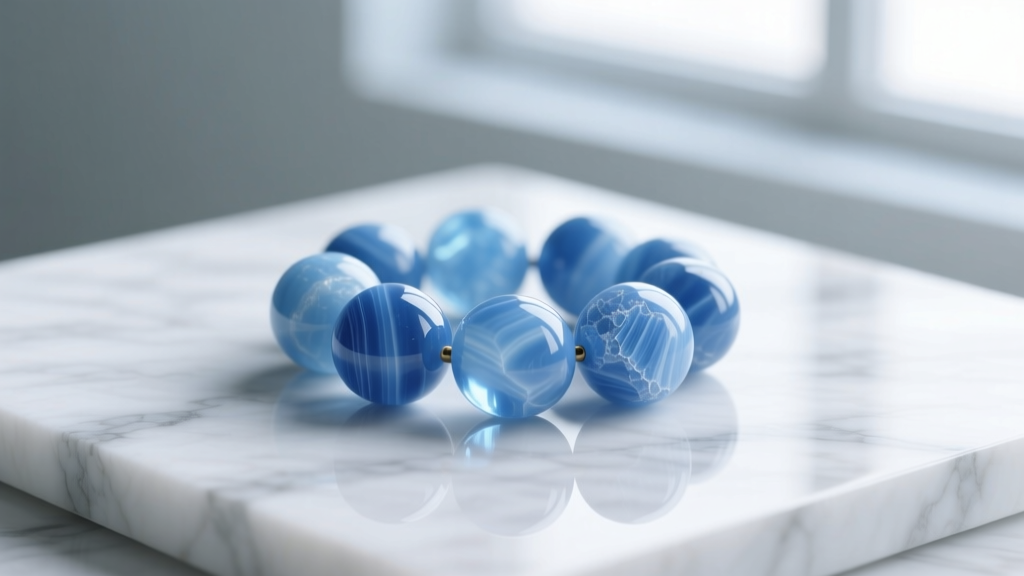
The Mineralogy of Blue Chalcedony: What You Are Actually Wearing
When investing in a blue chalcedony bead necklace, understanding the underlying mineralogy is crucial for assessing both value and longevity. Chalcedony is not a single mineral, but rather a cryptocrystalline form of silica (silicon dioxide, SiO2). Unlike macrocrystalline quartz varieties like amethyst or citrine, which form visible geometric crystals, chalcedony consists of microscopic, fibrous quartz crystals intergrown with moganite. This dense, interlocking microscopic structure is what gives chalcedony beads their exceptional durability and characteristic waxy to vitreous luster.
According to the Gemological Institute of America (GIA), natural blue chalcedony derives its soft, translucent color from trace inclusions, often involving chrysocolla or copper-bearing minerals, though the exact coloring agents can vary by geographic origin. The material registers between 6.5 and 7 on the Mohs hardness scale, making it highly resistant to everyday abrasion. Its specific gravity ranges from 2.58 to 2.64, meaning a standard 18-inch necklace of 8mm round beads will carry a substantial, luxurious weight of approximately 55 to 60 grams.
Blue Chalcedony vs. Look-Alikes: A Gemological Comparison
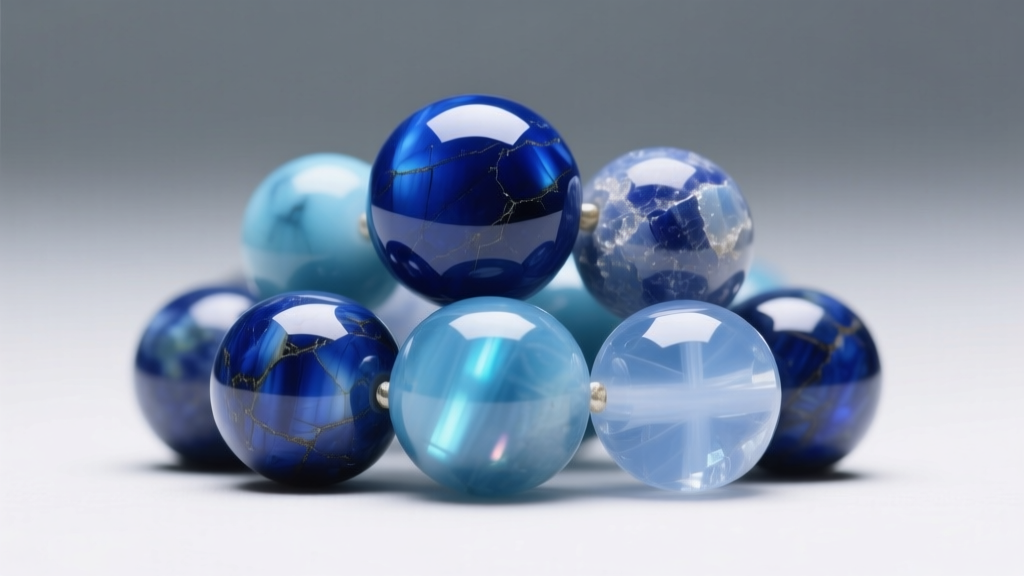
The market is saturated with opaque blue stones frequently misidentified or deliberately mislabeled as chalcedony. To make an informed purchase, buyers must understand how genuine blue chalcedony compares to its most common visual substitutes. Below is a gemological breakdown comparing these materials across critical physical properties.
| Gemstone Material | Mohs Hardness | Refractive Index (RI) | Specific Gravity | Typical 8mm Bead Price | Porosity & Dye Risk |
|---|---|---|---|---|---|
| Blue Chalcedony | 6.5 - 7.0 | 1.530 - 1.540 | 2.58 - 2.64 | $2.00 - $6.00 | Moderate (Frequently dyed) |
| Sodalite | 5.5 - 6.0 | 1.480 | 2.27 - 2.33 | $0.50 - $1.50 | Low (Rarely dyed) |
| Lapis Lazuli | 5.0 - 5.5 | 1.500 | 2.40 - 2.50 | $3.00 - $10.00+ | High (Often dyed/waxed) |
| Blue Lace Agate | 6.5 - 7.0 | 1.530 - 1.540 | 2.58 - 2.64 | $3.00 - $8.00 | Moderate (Banded structure) |
| Aquamarine (Beryl) | 7.5 - 8.0 | 1.577 - 1.583 | 2.68 - 2.74 | $15.00 - $50.00+ | None (Macrocrystalline) |
As noted by mineralogical databases like Mindat.org, the presence of distinct banding usually classifies the stone as agate rather than pure chalcedony, though both are technically the same microcrystalline quartz family. Sodalite and lapis lazuli are significantly softer and more prone to scratching from everyday wear, while aquamarine is a completely different mineral family (beryl) and is rarely cut into uniform opaque beads due to its high rough cost.
The Dye Dilemma: Authentication and Treatment Detection
The most critical material property of chalcedony from a buyer's perspective is its porosity. Despite its high hardness, the microscopic interstitial spaces between the fibrous quartz crystals allow liquids to penetrate. Consequently, the vast majority of vivid, saturated blue chalcedony bead necklaces on the commercial market are dyed. Natural, untreated blue chalcedony typically exhibits a pale, grayish-blue, lavender, or milky periwinkle hue.
How to Spot Dyed Chalcedony Beads
- The Loupe Test: Examine the beads under a 10x jeweler's loupe. In dyed stones, you will observe "color pooling"—concentrations of dark blue pigment trapped in microscopic surface fractures, drill holes, or cryptocrystalline boundaries.
- The Scratch Test: If you take a steel needle (Mohs 5.5) and gently scrape an inconspicuous area near the drill hole, dyed chalcedony may yield a colored powder, whereas natural stone will only produce white silica dust.
- Thermal Reaction: Dyed beads may sometimes leach color if left in warm water or exposed to heavy perspiration over time, especially if the dye was applied using cheap aniline processes rather than permanent inorganic cobalt treatments.
Expert Insight: Dyeing is an accepted and widely disclosed treatment in the gem trade for chalcedony. However, a premium is still commanded by "natural color" stones. Always ask the vendor for a disclosure of treatments; if the beads are a deep, uniform "smurf blue" with no color variation, they are almost certainly enhanced.
Evaluating Bead Manufacturing and Drill Quality
Because chalcedony is a hard, tough material (Mohs 6.5-7), manufacturing uniform beads requires specialized diamond-tipped core drills. The quality of the drilling is a primary indicator of the necklace's overall craftsmanship and price point.
In premium blue chalcedony bead necklaces, the drill holes are perfectly centered, smooth, and feature a slight chamfer (bevel) at the edges. This bevel is critical: it prevents the sharp edge of the bead from acting like a microscopic knife against the stringing material. In lower-tier, mass-produced bead necklaces, mechanical drilling is rushed, leading to conchoidal fracturing around the drill holes. These chipped, razor-sharp edges will eventually fray and snap silk or nylon stringing threads, resulting in a catastrophic necklace failure.
Stringing Materials and Hardware Pairings
The specific gravity and weight of a chalcedony bead necklace dictate the necessary stringing infrastructure. A heavy stone necklace cannot be reliably strung on standard silk thread without risking stretch and eventual breakage.
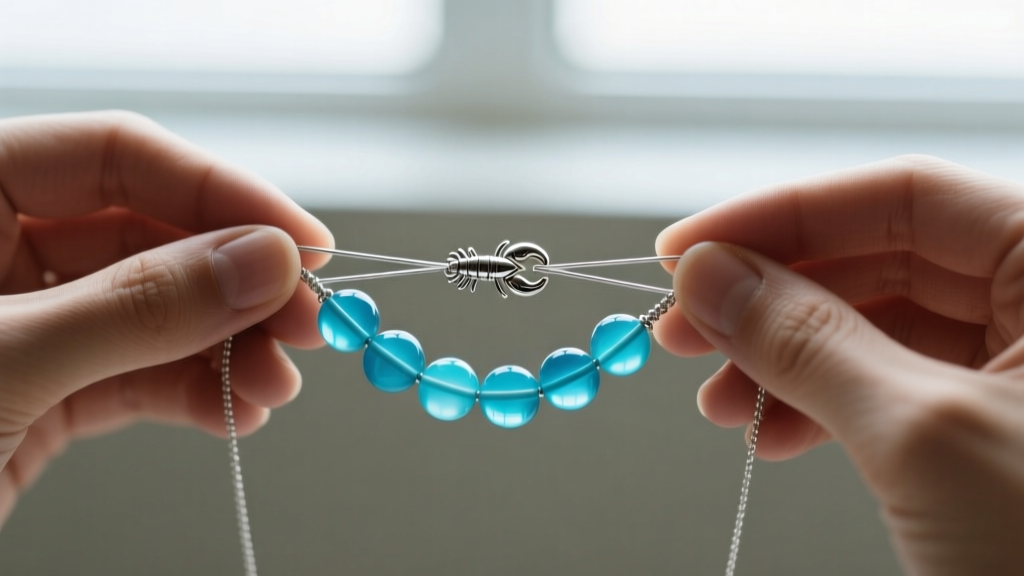
Optimal Stringing Configurations
- 49-Strand Micro-Wire (0.018" diameter): The industry gold standard for heavy gemstone beads. Brands like Beadalon offer nylon-coated stainless steel wires that provide the drape of silk with the tensile strength of steel. The 0.018" gauge easily passes through standard 1mm to 1.5mm diamond-drilled chalcedony holes.
- French Wire (Gimp) Protectors: Essential at the clasp connection points. The micro-wire should pass through a sterling silver or 14k gold-filled French wire loop to prevent the metal clasp from sawing through the nylon coating of the wire over time.
- Crimp Beads vs. Crimp Covers: Use 2mm x 2mm sterling silver seamless tube crimps, secured with a micro-crimping tool to fold the tube into a rounded shape. For a high-end finish, encapsulate the folded crimp in a 3mm or 4mm crimp cover that matches the metal of your clasp.
Aesthetically, the cool, grayish undertones of natural blue chalcedony pair exceptionally well with oxidized sterling silver or white gold hardware. Yellow gold can create a striking, high-contrast vintage look, but rose gold often clashes with the stone's inherent cool color temperature.
Long-Term Care and Environmental Vulnerabilities
While chalcedony is highly durable, it is not indestructible. The cryptocrystalline structure makes it susceptible to thermal shock. Never clean a blue chalcedony bead necklace in an ultrasonic cleaner, especially if the stone is dyed or possesses internal micro-fractures; the high-frequency vibrations and localized heat can shatter the beads or cause the dye to bleed.
For routine maintenance, wipe the beads with a soft, damp microfiber cloth. If deeper cleaning is required, use a mild, pH-neutral dish soap and lukewarm (never hot) water, gently scrubbing with a soft-bristled baby toothbrush. Avoid exposing the necklace to harsh household chemicals, chlorine, or prolonged direct sunlight, which can cause certain organic dyes to fade or the natural stone to dehydrate and develop a chalky surface patina over decades of wear.


