The Blue Crucifix Necklace: 2026 Trend & Style Guide
Explore the 2026 blue crucifix necklace trend. Discover styling tips, material comparisons like lapis and enamel, and layering techniques for this iconic piece.

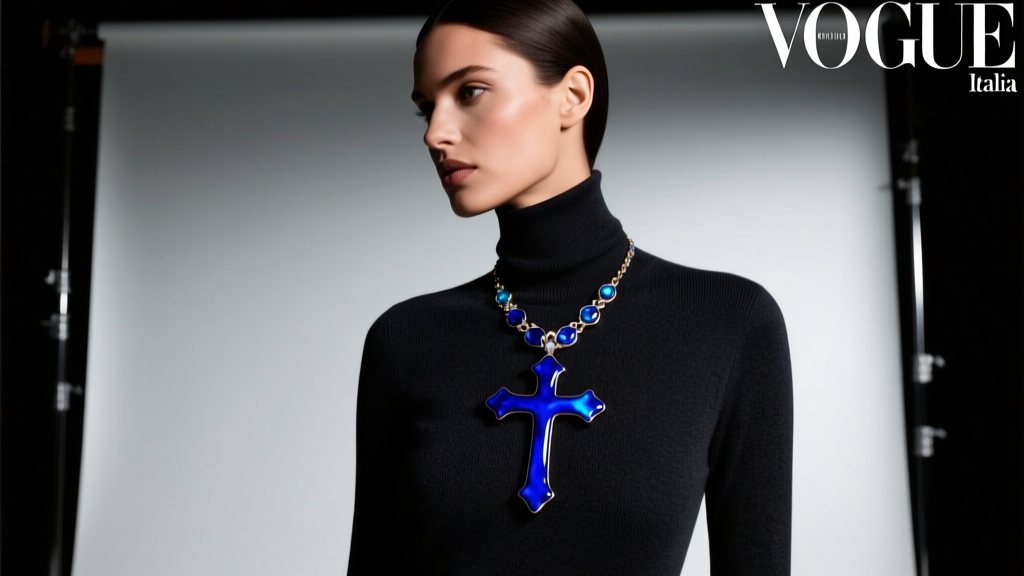
The Chromatic Disruption: Why the Blue Crucifix is Defining 2026
For decades, the crucifix pendant has been anchored in traditional metallurgy—yellow gold, sterling silver, and occasionally rose gold. However, the 2026 style landscape has introduced a striking chromatic disruption: the blue crucifix necklace. Driven by the intersection of 'coastal gothic' aesthetics, ethereal grunge, and a broader cultural shift toward personalized, non-dogmatic spirituality, blue crucifixes are dominating both high-fashion runways and curated street style. This is not merely a color swap; it is a fundamental reimagining of religious iconography through the lens of modern gemology and artisanal enameling.
Whether crafted from deep lapis lazuli, vitreous cobalt enamel, or lab-grown sapphire pavé, the blue crucifix serves as a focal point that bridges vintage subculture with contemporary luxury. In this comprehensive trend analysis, we break down the exact materials, chain gauges, and layering frameworks you need to master this iconic silhouette.
Material Matrix: Sapphire, Lapis, and Enamel
Choosing the right blue crucifix necklace requires an understanding of gemological properties and artisanal techniques. The market is currently segmented into three primary material categories, each offering distinct visual weights and price points.
| Material | Mohs Hardness | Average Price Range | Best Chain Gauge | Maintenance Level |
|---|---|---|---|---|
| Lapis Lazuli Inlay | 5.0 - 6.0 | $85 - $350 | 1.5mm - 2.0mm | High (Porous) |
| Vitreous Enamel | 5.5 - 6.5 (Glass) | $150 - $600 | 1.2mm - 1.8mm | Medium (Chipping Risk) |
| Lab-Grown Sapphire Pavé | 9.0 | $450 - $1,500+ | 1.0mm - 1.5mm | Low (Highly Durable) |
Lapis Lazuli: The Organic Talisman
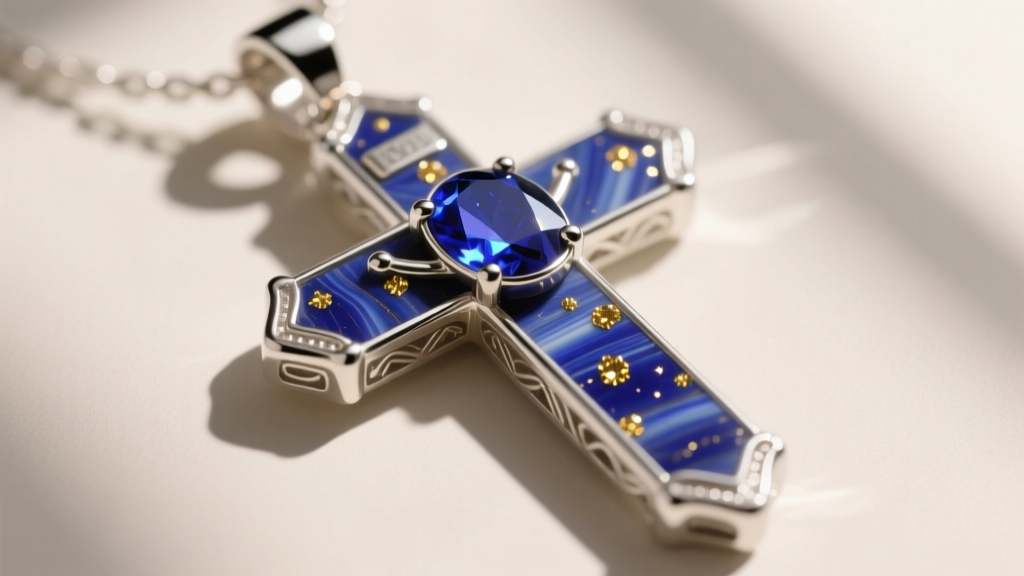
Lapis lazuli provides a deeply saturated, opaque azure that inherently carries historical weight. According to the Gemological Institute of America (GIA), high-grade lapis is prized for its uniform royal blue color and the presence of golden pyrite flecks, which add a celestial, starry-night effect to the crucifix silhouette. Because lapis is a porous rock (not a single crystal), it is typically cut into cabochons or custom-calibrated inlays set within 925 sterling silver bezels. Warning: Never clean a lapis crucifix in an ultrasonic cleaner, as the high-frequency vibrations can fracture the stone or dissolve the epoxy used in channel settings.
Vitreous Enamel: The Artisan's Choice
For those seeking a glass-like, hyper-reflective finish, vitreous enamel is the premier choice. Artisans sift powdered glass over a guilloché-engraved silver base and fire it in a kiln at approximately 1400°F. The result is a translucent or opaque cobalt blue that catches the light with unparalleled depth. Enamel crucifixes often feature a dark, oxidized silver framework to enhance the 'gothic romance' aesthetic. While visually stunning, enamel is essentially glass and can chip if dropped on a hard surface.
Lab-Grown Blue Sapphire Pavé: Modern Luxury
The GIA Sapphire Encyclopedia notes that lab-grown sapphires possess the exact same chemical and optical properties as mined stones (aluminum oxide with trace titanium and iron) but are free of the ethical and environmental concerns associated with traditional mining. In 2026, micro-pavé settings using 1.0mm to 1.5mm lab-grown blue sapphires set in 14k white gold are the pinnacle of luxury crucifix styling. The Mohs 9 hardness makes sapphire virtually scratch-proof, ideal for daily wear.
Chain Pairings: Gauges and Metallurgy
A blue crucifix pendant will look visually unbalanced if paired with the wrong chain. The heavy, dark nature of blue stones requires specific metallurgical pairings to ensure structural integrity and aesthetic harmony.
- For Heavy Lapis (10g - 20g): Opt for a 2.5mm to 3.0mm oxidized sterling silver box chain or a sturdy rope chain. The oxidation (blackening) of the silver links complements the dark matrix of the lapis lazuli and provides the tensile strength needed to support the pendant's weight without stretching.
- For Enamel and Sapphire (3g - 8g): A 1.2mm to 1.5mm diamond-cut cable chain in 14k yellow or white gold is ideal. The diamond-cut facets reflect light, mimicking the brilliance of the sapphire or the glossy sheen of the enamel, while remaining delicate enough not to overpower the pendant's intricate details.
The 2026 Layering Framework
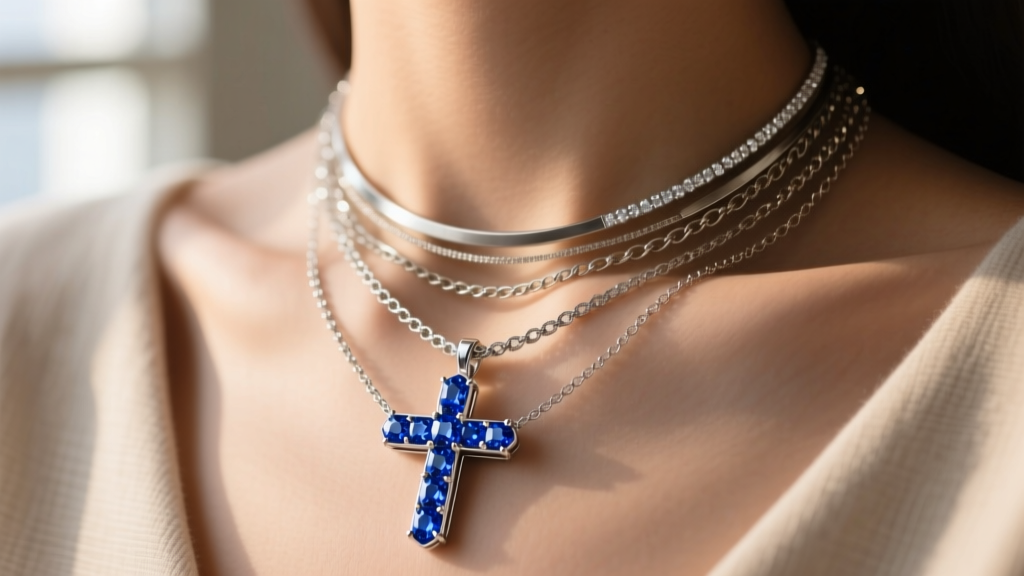
The isolated pendant is giving way to the curated stack. The blue crucifix necklace acts as the 'anchor' piece in a layered arrangement. To achieve the 2026 'ethereal grunge' look, follow this precise layering formula:
- The Base (14-15 inches): A 2mm lapis lazuli or blue apatite bead choker. This establishes the color palette close to the neckline.
- The Bridge (18 inches): A minimalist, bezel-set blue sapphire solitaire or a simple oxidized silver bar pendant. This bridges the gap without competing for visual attention.
- The Anchor (22-24 inches): Your primary blue crucifix necklace. Allowing the crucifix to drop below the collarbone and rest on the upper sternum ensures it remains the undisputed focal point of the stack.
Care and Preservation Protocols
Maintaining the vivid hue of your blue crucifix requires material-specific care. Lapis lazuli is highly sensitive to acids and prolonged water exposure, which can dull its polish and cause the calcite inclusions to leach. Always apply perfumes, hairsprays, and lotions before putting on a lapis or enamel piece. For sapphire pavé, a simple soak in warm water with a few drops of mild dish soap, followed by gentle brushing with a soft-bristled toothbrush, will remove sebum and lotion buildup from beneath the micro-prongs, restoring the stones' maximum light return.
'The blue crucifix is no longer just a symbol; it is a masterclass in color-blocking. It forces the eye to pause, transforming a traditional silhouette into a modern artifact of personal style.'
By understanding the gemological nuances, structural requirements, and styling frameworks of the blue crucifix necklace, you can confidently integrate this powerful 2026 trend into your permanent jewelry rotation. Whether you gravitate toward the organic mystique of lapis or the flawless brilliance of lab-grown sapphire, the blue crucifix remains an unparalleled statement of contemporary elegance.


