Broken Necklace Repair vs Replace: A Value Assessment Guide
Is your broken necklace worth fixing? Compare repair costs, chain types, and metal values to decide whether to solder, weld, or replace.

There are few jewelry moments more devastating than feeling the sudden, weightless snap of a favorite chain. When you are left holding the remnants of a broken necklace, the immediate question is rarely just emotional—it is financial. Should you pay for a professional repair, or is it time to melt it down and invest in a replacement? As jewelry prices and bench fees continue to shift in 2026, conducting a proper budget and value assessment is critical before you hand your piece over to a jeweler.
The True Cost of a Broken Necklace: Repair vs. Replace
The decision to repair or replace hinges on three core metrics: the intrinsic scrap value of the metal, the complexity of the chain weave, and the sentimental premium you place on the piece. A basic 14k gold cable chain might cost $150 to replace, but a professional laser weld could run $65. In this scenario, repair is the clear financial winner. However, if you are dealing with a heavily worn, hollow-rope chain that has suffered multiple micro-fractures, a $90 repair is merely a temporary bandage on a depreciating asset. According to consumer guidelines from Jewelers of America, assessing the structural integrity of the surrounding links is just as important as fixing the single broken one.
Chain Weave Complexity and Repair Feasibility
Not all chains are created equal. The geometry of the chain weave dictates whether a repair will be invisible, merely functional, or structurally doomed to fail again. Hollow chains, while budget-friendly at the point of purchase, are notoriously difficult to weld because the laser or torch can easily collapse the thin metal tubing.
| Chain Style | Avg Repair Cost (2026) | Success Rate | Value Retention Post-Repair |
|---|---|---|---|
| Cable / Curb (Solid) | $35 - $65 | 95% | High (Seamless joint) |
| Box / Wheat | $50 - $90 | 80% | Medium (Slight stiffness) |
| Rope (Solid) | $75 - $150 | 60% | Low (Visible scar, stiff spot) |
| Herringbone / Snake | $60 - $120 | <30% | Poor (Permanent kink point) |
Herringbone and snake chains consist of tightly packed, flat interlocking links that rely on structural memory to lay flat. When they snap, the surrounding links are almost always bent. Fusing them back together creates a permanent hinge point that will catch on clothing and inevitably snap again. From a value perspective, replacing a broken herringbone chain is almost always the smarter financial move.
Material Matters: Gold, Silver, and Platinum Welding
The metal composition of your necklace dictates the bench technique required, which directly impacts your final bill. Traditional torch soldering uses a filler metal (solder) that flows at a lower temperature than the base metal. While effective for thick 14k gold curb chains, torch soldering leaves a visible seam and can weaken adjacent links if overheated.
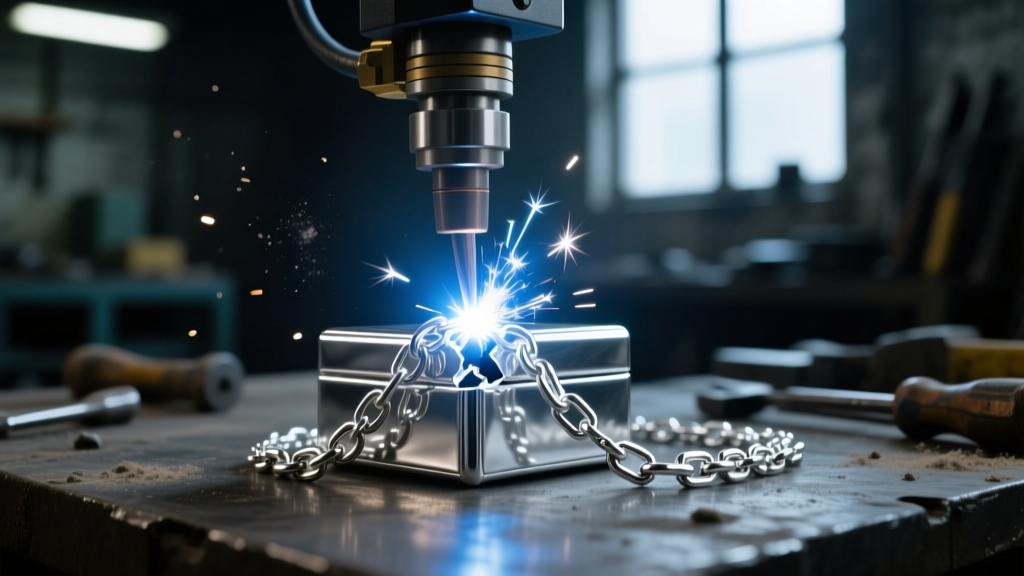
Modern jewelers increasingly rely on laser welding for delicate chains. Laser welding fuses the exact base metal without filler, creating a joint that is as strong as the original link. This is particularly vital for 950 platinum, which has a melting point of 1,768°C. Attempting to torch-solder a fine platinum chain risks melting the intricate links entirely. Similarly, 925 sterling silver is highly thermally conductive; a torch can rapidly transfer heat and melt a 1.0mm silver box chain in seconds. The Gemological Institute of America (GIA) notes that laser welding is the premier method for preserving the integrity of thermally sensitive metals and chains situated near heat-sensitive gemstones like opals or emeralds.
- 14k/18k Yellow Gold: Highly repairable via torch or laser. Solder color-matching is easy. ($45 - $85)
- White Gold: Requires laser welding or careful soldering followed by rhodium re-plating to hide the seam. ($60 - $110)
- Sterling Silver: Laser welding strongly preferred to prevent melting. ($35 - $60)
- Platinum: Strictly laser welding. High bench fee due to metal density and equipment time. ($85 - $150+)
The Clasp Conundrum: Upgrading vs. Fixing
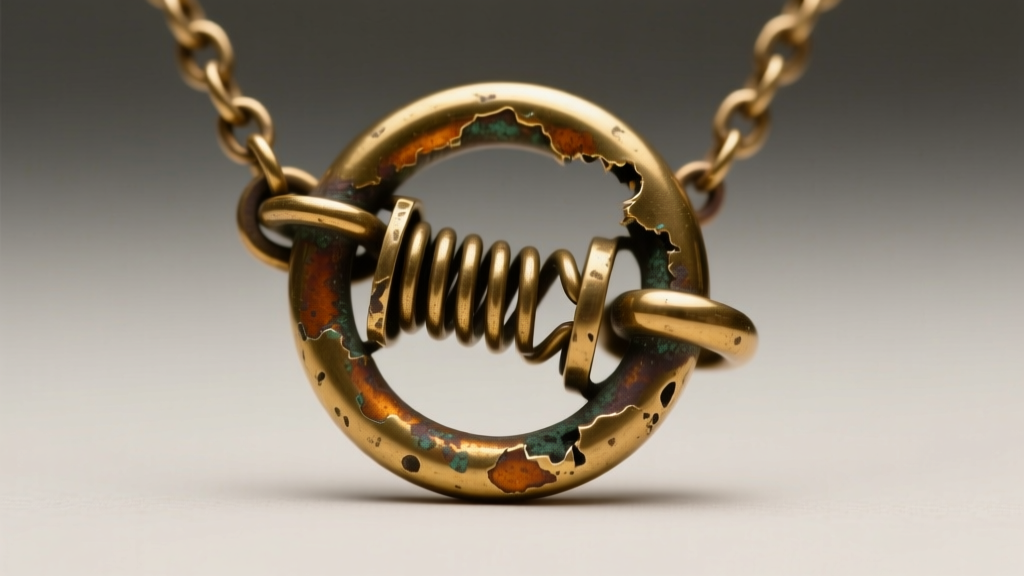
Sometimes, the chain hasn't snapped; the clasp has simply failed. Spring ring clasps, commonly found on budget-friendly and mid-tier necklaces, contain a tiny internal steel spring. Over time, moisture causes this steel spring to rust, or the tension simply fatigues, resulting in a clasp that won't stay closed. Repairing a broken spring ring is impossible; it must be replaced.
Rather than replacing it with another $15 spring ring, use this failure as an opportunity to upgrade the hardware. Swapping to a solid-cast lobster claw clasp ($35 - $60 for the part and labor) dramatically increases the security of the necklace. Lobster clasps lack the delicate internal springs of spring rings and can withstand decades of daily tension. If you are wearing a heavy pendant, upgrading to a lockable clasp or a magnetic neodymium clasp with a safety catch is a high-ROI investment that protects the overall value of the piece.
Sentimental vs. Scrap Value: The Decision Matrix
When evaluating a broken necklace, you must separate emotional attachment from market reality. Use this quick framework to make your decision:
The 50% Rule of Jewelry Repair: If the cost of the repair exceeds 50% of the cost to purchase a brand-new chain of the exact same weight, gauge, and metal purity, replacement is the mathematically sound choice—unless the piece possesses irreplaceable sentimental or antique provenance.
For example, if you have a 1.5mm solid 14k gold rope chain that originally cost $400, and the jeweler quotes $120 to laser weld a complex fracture, the repair is justified. However, if you have a hollow 18k gold chain that costs $80 to repair but would cost $150 to replace, the hollow chain's inherent fragility means it will likely break again. In that case, taking the $150 replacement budget and buying a smaller, but solid, chain yields a much higher long-term value.
How to Prevent Future Breaks (Maintenance ROI)
The most cost-effective repair is the one you never have to make. Chain breakages are rarely spontaneous; they are the result of cumulative micro-trauma. To protect your investment, adhere to these maintenance protocols:
- Monitor the Bail: The metal loop (bail) that connects your pendant to the chain acts like a saw. Over years of friction, it can wear through the chain link. Have a jeweler check the bail for sharp edges every two years.
- Avoid Chemical Degradation: Chlorine in swimming pools and hot tubs attacks the alloys in 14k and 18k gold, causing a phenomenon called stress corrosion cracking. This makes the links brittle and prone to snapping under minimal tension.
- Proper Storage: Never toss necklaces into a communal jewelry box. The resulting tangles require forceful pulling to undo, which stretches and weakens the links. Hang them individually or lay them flat in a lined tray.
Ultimately, a broken necklace is an opportunity to reassess your jewelry portfolio. By understanding the metallurgical realities of your chain, the limitations of specific weaves, and the true cost of bench labor, you can make a financially sound decision that keeps your most cherished pieces resting securely around your neck.