Buddha Necklace Meaning & Buyer's Guide: Symbols & Metals
Discover the true buddha necklace meaning and learn how to choose the right mudra, metal, and chain in our expert jewelry buying guide.

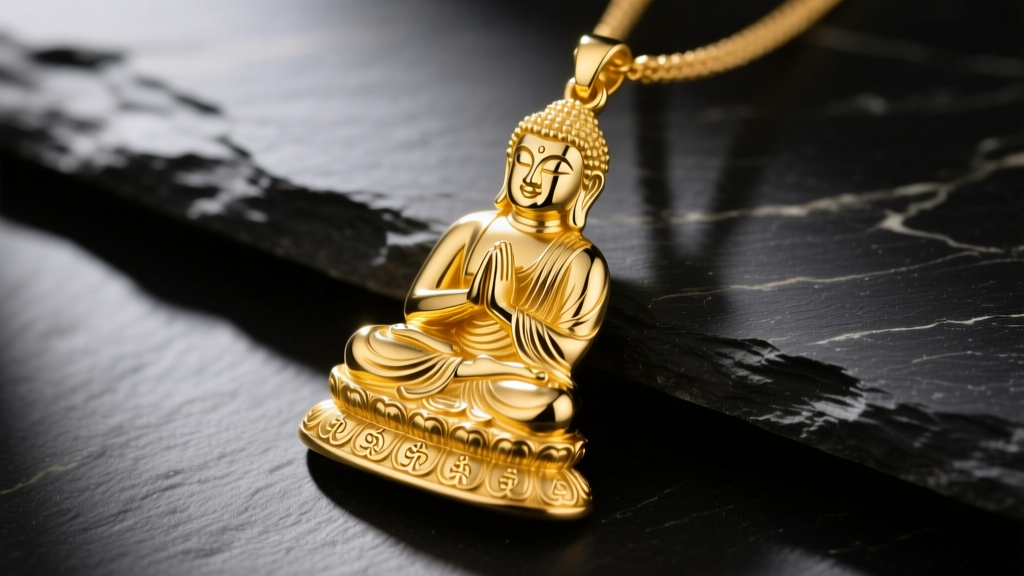
When shopping for spiritual or symbolic jewelry, understanding the iconography is just as important as evaluating the craftsmanship. The buddha necklace meaning extends far beyond a simple fashion statement; it is a wearable reminder of mindfulness, compassion, and the pursuit of enlightenment. However, navigating the market requires a discerning eye. From distinguishing between Siddhartha Gautama and the folkloric Budai (Laughing Buddha) to selecting a chain that can safely support a heavy solid-gold casting, this comprehensive buying guide will help you make an informed, respectful, and high-quality purchase.
The Core Buddha Necklace Meaning and Symbolism
At its root, a Buddha pendant represents the teachings of Siddhartha Gautama, the historical Buddha who attained enlightenment in the 5th century BCE. Wearing this symbol is traditionally meant to inspire inner peace, ward off negative energy, and serve as a focal point for meditation. However, the specific meaning of your necklace changes dramatically based on the figure depicted and their physical posture.
Decoding the Mudras (Hand Postures)
In Buddhist art, hand gestures—known as mudras—communicate specific teachings. When evaluating a pendant, look closely at the hands to understand the exact energy the piece projects:
- Dhyana Mudra (Meditation): Both hands rest in the lap, palms facing upward. This signifies deep concentration, inner peace, and spiritual balance. It is the most common posture for pendants intended for daily mindfulness.
- Bhumisparsha Mudra (Earth Witness): The left hand rests in the lap while the right hand touches the ground. This represents the exact moment of the Buddha's enlightenment, calling the earth to witness his triumph over illusion.
- Abhaya Mudra (Fearlessness): The right hand is raised to shoulder height, palm facing outward. This gesture offers protection, dispels fear, and grants divine reassurance.
- Varada Mudra (Compassion/Charity): The right hand is extended downward, palm open. It symbolizes the granting of wishes, mercy, and the offering of Buddhist teachings to the world.
Siddhartha Gautama vs. Budai (The Laughing Buddha)
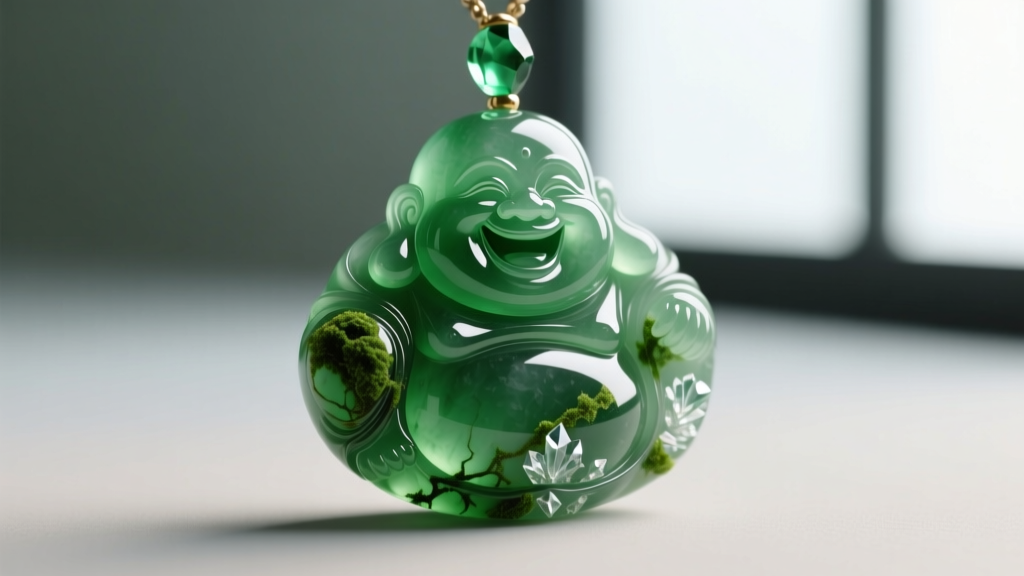
Buyers often confuse the historical Buddha with Budai, the rotund, smiling figure commonly seen in jade carvings. Budai is actually a 10th-century Chinese Zen monk considered an emanation of Maitreya (the future Buddha). While a Siddhartha pendant represents spiritual awakening and discipline, a Budai pendant symbolizes abundance, joy, and prosperity. Knowing which figure you are buying ensures your jewelry aligns with your personal intentions.
Material Matters: Choosing the Right Metal and Stone
The material of your Buddha pendant dictates not only its price but its longevity, especially given the intricate facial features and delicate folds of the robes common in these castings. According to the Gemological Institute of America (GIA), understanding material grades is critical to avoiding overpriced or treated stones.
| Material | Durability & Characteristics | Price Range (Approx.) | Best For |
|---|---|---|---|
| 14k Solid Gold | Highly durable; harder than 18k, preserving intricate facial castings over decades of wear. | $400 - $1,500+ | Heirloom pieces, daily wear, intricate details. |
| 925 Sterling Silver | Prone to tarnish in deep crevices; requires rhodium plating or regular polishing. | $45 - $150 | Budget-conscious buyers, larger statement pieces. |
| Grade A Jadeite | 100% natural, untreated. Mohs hardness 6.5-7. Highly resistant to chipping if carved thickly. | $300 - $5,000+ | Collectors, spiritual practitioners, luxury gifts. |
| Grade B/C Jade | Acid-bleached and polymer-impregnated (B) or dyed (C). Brittle and degrades over time. | $20 - $80 | Avoid for fine jewelry; strictly costume wear. |
The Jade Grading Trap
If you are purchasing a carved jade Buddha, you must demand certification. Grade A jade is completely natural and only polished with traditional plum juice and beeswax. Grade B jade has been acid-washed to remove impurities and injected with polymer resin, making it structurally compromised and prone to yellowing. Grade C is chemically dyed. Always buy Grade A for a pendant meant to hold spiritual significance and long-term value.
Chain Selection: Pairing the Pendant with the Right Necklace
A common failure mode in spiritual jewelry is a heavy pendant snapping a delicate chain. Buddha pendants, especially those cast in solid gold or carved from dense nephrite jade, can easily weigh between 8 and 20 grams. You must match the chain's tensile strength and the bail's internal diameter to the pendant.
Chain Weight Limits and Bail Sizing
- 1.0mm - 1.5mm Cable/Curb Chains: Can safely support up to 5 grams. Only suitable for lightweight, hollow-backed silver or gold-plated Buddha pendants.
- 2.0mm - 2.5mm Rope or Box Chains: Can support 10 to 18 grams. This is the ideal sweet spot for most solid 14k gold or medium-sized jade carvings. The interlocking links of a rope chain provide superior tensile strength against sudden tugs.
- 3.0mm+ Miami Cuban or Figaro Chains: Required for oversized, heavy statement pieces exceeding 20 grams.
Pro Tip: Always measure the inner dimensions of the pendant's bail (the loop at the top). A standard 14k gold Buddha pendant usually features a 4mm x 6mm bail. If you buy a 3.5mm chain, it will not fit through the bail without scratching the metal or getting stuck.
Cultural Respect vs. Fashion: What You Need to Know
Because the buddha necklace meaning is deeply tied to a major world religion, wearing one requires cultural awareness. In countries like Thailand and Sri Lanka, the Buddha image is highly sacred. The Thai Ministry of Culture has previously issued guidelines discouraging the use of Buddha images as mere decorative fashion accessories, particularly when placed on lower body parts or worn in inappropriate settings.
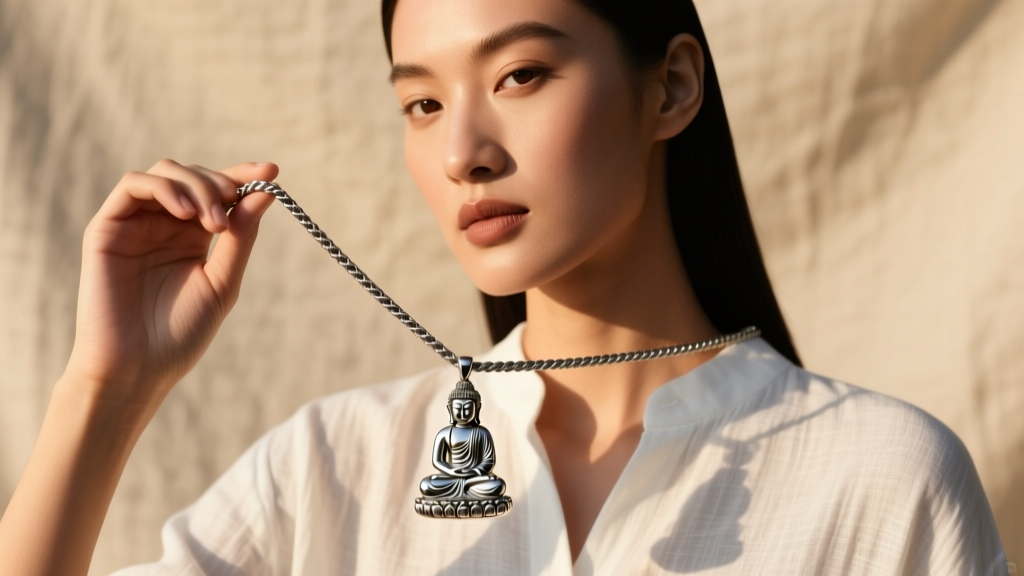
To wear a Buddha necklace respectfully:
- Keep it above the waist: Never wear a Buddha pendant on a long chain that rests near the stomach or waistline. It should rest on the chest or collarbone.
- Remove it in inappropriate places: Take the necklace off before entering a bathroom, engaging in intense physical labor, or visiting venues where intoxication is the primary focus.
- Store it properly: When not wearing it, do not toss it into a messy drawer or on the floor. Wrap it in a clean cloth or place it in a dedicated jewelry box. As noted by cultural resources at the Asia Society Museum, treating sacred iconography with physical respect honors the philosophical weight of the object.
Sizing and Proportions for Different Necklines
The visual impact of your pendant depends heavily on its scale relative to your body type and wardrobe.
- The Subtle Reminder (12mm - 16mm): Ideal for layering over t-shirts or wearing under a button-down collar. This size is lightweight and serves as a personal, intimate talisman rather than a loud fashion piece.
- The Standard Pendant (18mm - 25mm): The most versatile size. It rests perfectly on the sternum and is easily visible over crewnecks, V-necks, and linen shirts. This size allows the jeweler to capture fine details in the facial expression and robe folds.
- The Statement Carving (30mm+): Typically reserved for jade or thick silver pieces. Best worn solo on a thick rope chain over minimalist clothing to let the stone's natural color and translucency take center stage.
Final Checklist Before You Buy
Before finalizing your purchase, run through this quick quality-assurance checklist:
- Verify the Metal Stamp: Look for '925', '14k', '18k', or '750' stamped on the bail or the back of the pendant.
- Check the Facial Symmetry: In high-quality castings and carvings, the Buddha's eyes should be perfectly symmetrical and serene. Asymmetry is a hallmark of cheap, mass-produced molds.
- Request Jade Certificates: If buying jade, ensure it comes with a lab report from GIA, NGTC, or a reputable local gemological lab confirming 'Grade A' status.
- Inspect the Bail Weld: Ensure the loop at the top is seamlessly soldered shut. An open jump ring will eventually pull apart under the weight of a solid pendant.
By understanding the profound buddha necklace meaning and pairing it with rigorous material standards, you ensure that your jewelry is not only a beautiful accessory but a lasting, respectful emblem of mindfulness.


