How to Clean a Gold Necklace with Jade: Expert Care Tips
Learn how to safely clean and maintain your gold necklace with jade. Expert tips on washing, storage, and avoiding damage to soft gems.

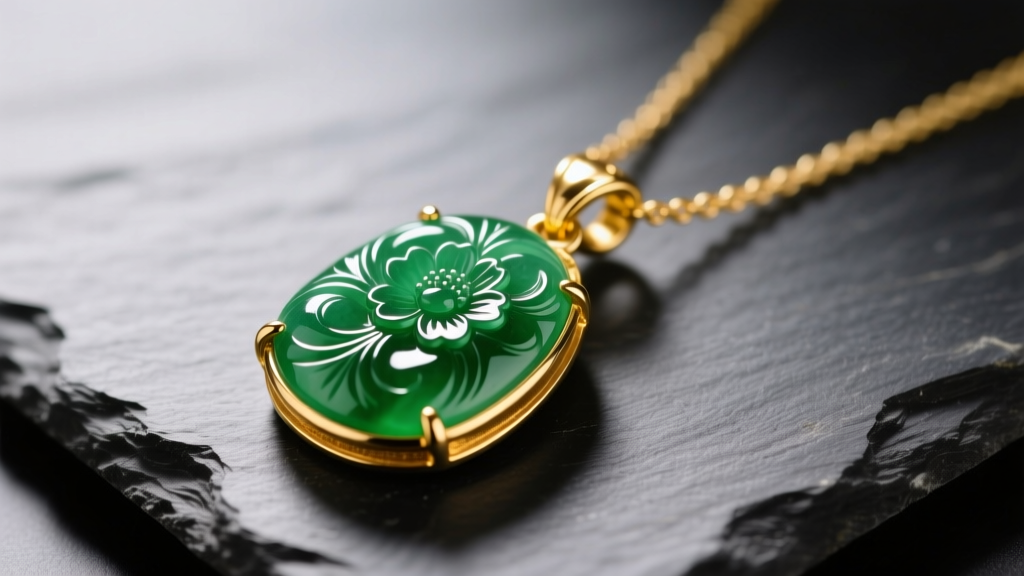
The Delicate Balance of Gold and Jade Care
Owning a gold necklace with jade is an investment in both timeless metallurgy and ancient gemological beauty. However, maintaining this specific combination requires a nuanced understanding of two vastly different materials. While gold is a durable, malleable metal, jade is a complex, micro-interlocking silicate that is surprisingly vulnerable to thermal shock and harsh chemicals. According to the Gemological Institute of America (GIA), improper cleaning is the leading cause of structural degradation in treated jadeite and nephrite.
In this comprehensive care guide, we will break down the exact chemical and physical boundaries of your jewelry, providing a masterclass in cleaning, storing, and preserving the integrity of your gold and jade pieces.
Understanding Your Materials: The Science of Jade and Gold
Before applying any cleaning solution, you must understand the material grades you are working with. Jade is not a single mineral; it refers to either jadeite or nephrite. Nephrite is softer (Mohs 6-6.5) but highly resistant to breaking due to its fibrous structure. Jadeite is harder (Mohs 6.5-7) but more brittle. Furthermore, the gemological market categorizes jade into three distinct treatment types, which dictate your cleaning limits:
- Type A (Untreated): Completely natural jade, only polished with wax. Safe for gentle aqueous cleaning.
- Type B (Bleached & Polymer-Impregnated): Acid-washed to remove impurities and filled with resin. Highly sensitive to heat and solvents.
- Type C (Dyed): Chemically colored. Solvents and prolonged water exposure can cause the dye to bleed or fade.
On the metal side, a gold necklace with jade is typically crafted in 14k or 18k gold. Pure 24k gold is rarely used for jade settings because its extreme softness cannot securely hold the heavy, dense gemstone. The alloy metals in 14k (copper, silver, zinc) are what make the necklace susceptible to tarnishing and chemical reactions, particularly from chlorine and sulfur.
The Golden Rule: What NEVER to Use
The most common mistake consumers make is treating a gold necklace with jade like a standard diamond or sapphire piece. The following cleaning methods will cause irreversible damage to your jewelry:
1. Ultrasonic Cleaners
Ultrasonic machines use high-frequency sound waves to create microscopic cavitation bubbles that blast away dirt. While excellent for plain gold, these vibrations can exploit natural cleavage planes in jade, causing internal fractures. If your jade is Type B, the ultrasonic waves will shatter the polymer resin holding the stone together, resulting in a cloudy, ruined gemstone.
2. Steam Cleaners
Steam cleaning introduces sudden, extreme temperature changes. Jade is highly susceptible to thermal shock. A blast of hot steam can cause immediate, catastrophic cracking, especially in carved or thin jade pendants.
3. Harsh Chemical Solvents
Ammonia, bleach, and commercial silver dips will strip the natural wax polish off Type A jade and dissolve the resin in Type B jade. Furthermore, chlorine (found in bleach and swimming pools) attacks the alloy metals in 14k and 18k gold, leading to stress corrosion cracking in the prongs holding your jade.
Step-by-Step Cleaning Routine
To safely restore the luster of your gold necklace with jade, follow this gemologist-approved, pH-neutral cleaning protocol.
Step 1: Prepare the Solution
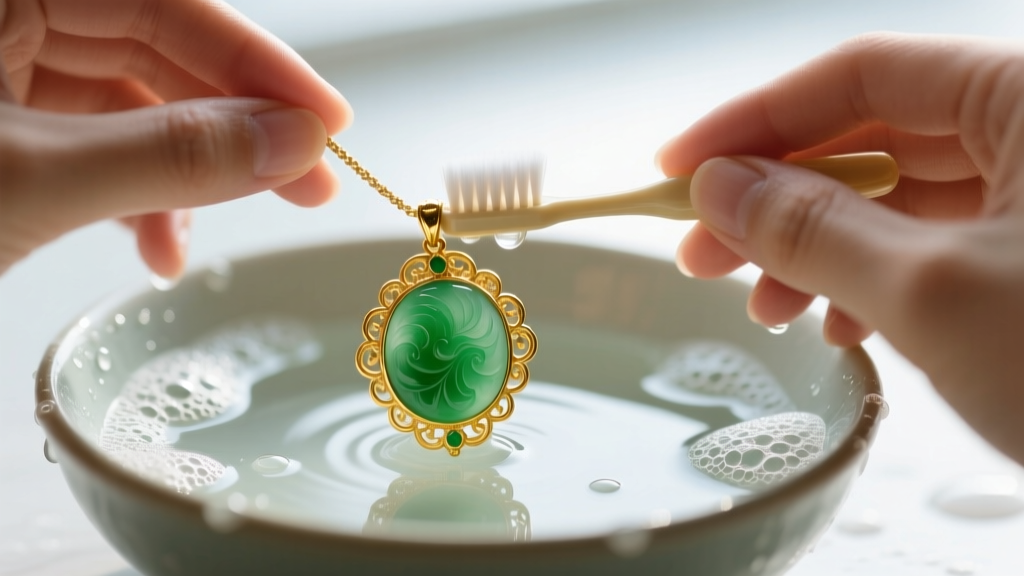
Mix one cup of distilled lukewarm water with 1/4 teaspoon of a mild, pH-neutral dish soap (such as Dawn). Avoid tap water, as the chlorine and hard minerals can leave microscopic deposits on the jade's surface and react with the gold alloys.
Step 2: The Brief Soak
Submerge the necklace in the solution for no more than 3 to 5 minutes. This is enough time to loosen body oils, lotions, and environmental dust from the gold settings without allowing water to penetrate any micro-fissures in the jade.
Step 3: Gentle Agitation
Using an extra-soft baby toothbrush, gently sweep the bristles over the gold chain and the back of the jade setting. Do not scrub the face of the jade aggressively; the soap will do the work. Pay special attention to the bail (the loop connecting the pendant to the chain) where grime accumulates.
Step 4: Rinsing and Drying
Rinse the necklace under a gentle stream of lukewarm distilled water. Immediately pat it dry with a clean, lint-free microfiber cloth. Allow it to air dry completely in a well-ventilated area before storing to ensure no moisture remains trapped under the bezel or prongs.
Maintenance, Storage, and Wear Guidelines
Proactive maintenance is just as critical as the cleaning process. How you store and wear your gold necklace with jade will determine its lifespan. Review the hazard matrix below to understand how everyday environments affect your piece.
| Environmental Hazard | Effect on Gold Setting | Effect on Jade Gemstone |
|---|---|---|
| Chlorine (Pools/Spas) | Weakens alloy prongs, causes stress corrosion | Dulls surface polish, penetrates micro-cracks |
| Hairspray & Perfume | Leaves sticky residue, attracts dust | Chemically alters dyed (Type C) jade over time |
| Direct Sunlight / Heat | No direct damage | Can dehydrate the stone, causing internal clouding |
| Friction / Hard Impacts | Scratches and bends soft 18k/24k gold | Chips edges, fractures along cleavage planes |
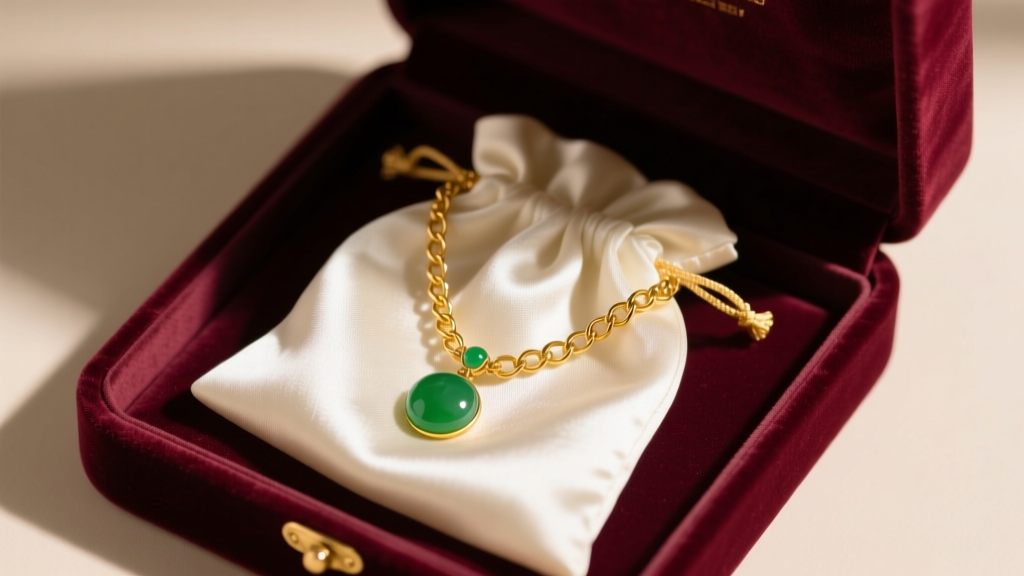
For storage, the Jewelers of America strongly recommends isolating pieces. Jade (Mohs 6.5-7) can easily be scratched by diamonds or sapphires, but it can also scratch softer gems and even gold itself. Always store your necklace in a dedicated, soft silk pouch or a separate compartment in a velvet-lined jewelry box.
When to Seek Professional Restoration
While home cleaning handles surface oils and dust, it cannot fix structural wear. You should take your gold necklace with jade to a certified bench jeweler under the following circumstances:
- Prong Wear: If your jade is held by gold prongs, have them checked annually. Gold wears away over time, and a weakened prong will result in the loss of the heavy jade stone.
- Re-Polishing: If the gold has accumulated deep scratches, a jeweler can polish it using specialized rouges that will not damage the adjacent jade. Never attempt to use a rotary tool at home.
- Re-Waxing: Type A jade is traditionally finished with a beeswax or carnauba wax coating to enhance its luster. A professional lapidary can safely re-wax the stone if it begins to look dry or chalky.
Conclusion
A gold necklace with jade is a masterpiece of contrasting elements—the enduring shine of precious metal and the deep, tranquil beauty of an ancient gem. By avoiding ultrasonic traps, utilizing distilled water and pH-neutral soaps, and respecting the physical limitations of jadeite and nephrite, you ensure your necklace remains a vibrant, structural heirloom for generations to come.


