The Ultimate Guide to Cleaning Your Gold Turtle Necklace
Learn expert techniques to safely clean, polish, and maintain your gold turtle necklace, protecting intricate shell details and delicate chains.

Gold turtle necklaces are beloved for their symbolism of longevity, wisdom, and their intricate, nature-inspired designs. However, the very details that make a turtle pendant captivating—the domed shell, the recessed scutes (shell plates), and the delicate flipper joints—also make it a magnet for lotions, sebum, and environmental dust. Unlike a simple, flat gold disc, a three-dimensional animal pendant requires a highly specialized approach to maintenance. Improper cleaning can permanently dull textured finishes, loosen gemstone inlays, or damage the delicate chains that support them.
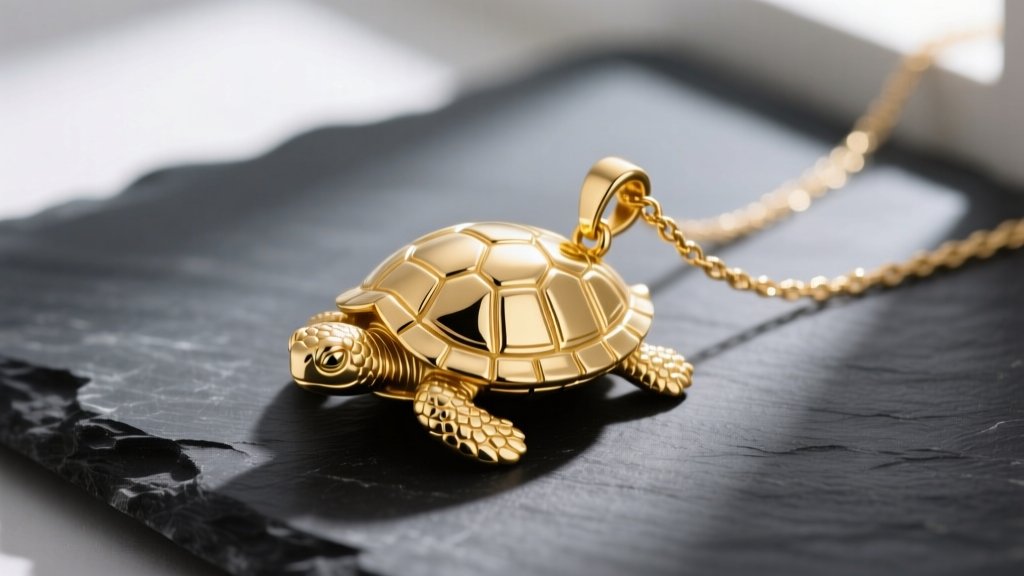
Understanding Your Gold Turtle's Anatomy and Material Vulnerabilities
Before applying any cleaning solution, it is critical to identify the karat of your gold and the specific texturing techniques used on the pendant. The structural integrity and color of your necklace depend heavily on its alloy composition.
14k vs. 18k Gold: How Alloys React to Cleaners
Most detailed animal pendants are cast in 14k gold (58.5% pure gold). The remaining 41.5% consists of alloy metals like copper, silver, and zinc, which provide the tensile strength needed to hold the fine details of the turtle's flippers and head. However, copper is highly reactive. When exposed to sweat, cosmetics, and sulfur in the air, the copper in 14k gold can oxidize, creating a dark, stubborn tarnish deep within the recessed scutes of the shell.
Conversely, 18k gold (75% pure gold) offers a richer, warmer yellow hue and is highly resistant to tarnish. However, it is significantly softer. The high points of an 18k turtle shell—such as the center of the dome or the edges of the flippers—are highly susceptible to micro-scratches if abrasive polishing cloths or stiff brushes are used during cleaning.
Textured vs. Polished Finishes
Many gold turtle pendants utilize a combination of finishes. The shell might feature a matte, sandblasted, or hammered texture to mimic a natural carapace, while the flippers and head are polished to a high shine. You must never use commercial silver dips or harsh chemical polishes on textured gold. These liquids strip away the intentional oxidation (antiquing) that jewelers apply to recessed areas to create contrast and depth, leaving the turtle looking flat and artificially bright.
The Step-by-Step Cleaning Protocol for Textured Gold Shells
To safely remove accumulated sebum and environmental grime without damaging the gold or its finishes, follow this professional-grade cleaning protocol.
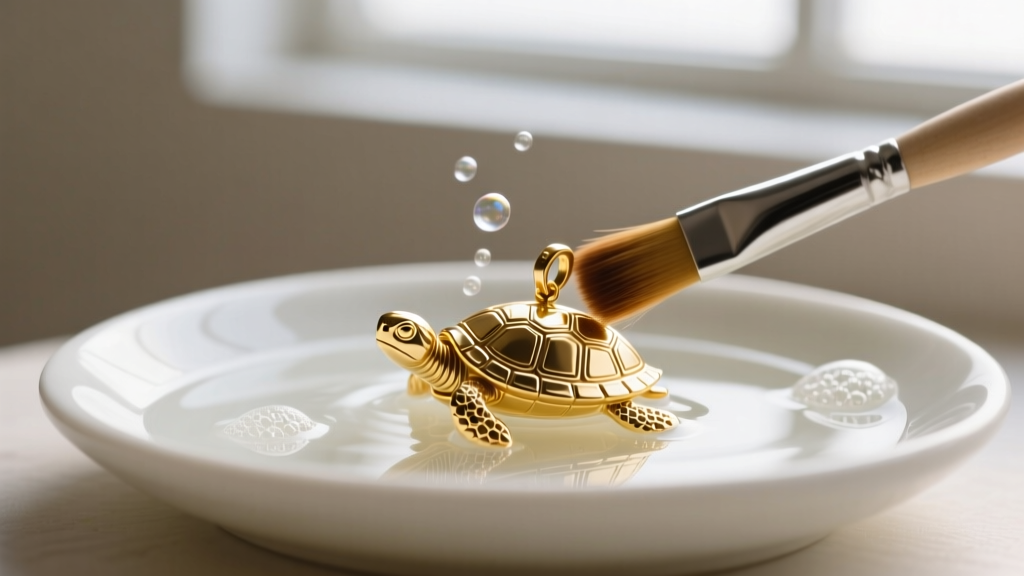
Step 1: The Soak
Fill a small glass bowl with lukewarm water (never hot, as extreme temperature shifts can fracture internal stress points in cast gold). Add two drops of phosphate-free, mild dish soap. Avoid soaps with added moisturizers or citrus extracts, as citric acid can react with the copper alloys in 14k gold. Submerge the necklace and let it soak for exactly three to five minutes. This is enough time to soften oils without compromising any potential adhesive used in the clasp or inlays.
Step 2: Targeted Agitation
Discard standard adult toothbrushes; their bristles are far too stiff and will leave microscopic scratch patterns on polished gold. Instead, use an extra-soft baby toothbrush or a clean, goat-hair makeup brush. Gently agitate the bristles in a circular motion over the domed shell, paying special attention to the deep grooves between the scutes and the joints where the flippers meet the body. The soft bristles will dislodge trapped dead skin cells and lotion without abrading the metal.
Step 3: The Rinse and Dry
Rinse the pendant thoroughly under a gentle stream of lukewarm water to remove all soap residue. Do not use a paper towel or cotton swab to dry the piece, as these materials leave behind microscopic lint fibers that will immediately cling to the damp, textured shell. Instead, use a clean, lint-free microfiber cloth to gently pat the high points dry. For the deep crevices of the shell and the chain links, use a can of compressed air (held at least six inches away) to blow out trapped moisture. Leaving water in the crevices can lead to localized water spots and accelerate alloy tarnishing.
Special Considerations for Turtle Shell Inlays
Turtle pendants frequently feature inlaid materials on the shell to add color and visual interest. These materials dictate entirely different care rules. According to the Gemological Institute of America (GIA), porous organic and semi-precious stones require extreme caution, as they can absorb chemicals and permanently alter their structural integrity.
The Ultrasonic Trap
Never place a gold turtle necklace with inlays into an ultrasonic cleaner. Ultrasonic machines use high-frequency sound waves to create cavitation bubbles in a liquid solution. When these microscopic bubbles implode against the surface of the jewelry, they generate localized shockwaves and intense heat. While this is excellent for plain diamond solitaires, it will shatter brittle enamel (such as guilloché or champlevé), fracture turquoise, and delaminate mother-of-pearl from its gold setting.
Material-Specific Cleaning Matrix
| Inlay Material | Safe Cleaning Method | Strictly Avoid | Primary Vulnerability |
|---|---|---|---|
| Turquoise | Dry microfiber wipe only | Water, soap, ultrasonics, steam | Highly porous; absorbs liquids, leading to permanent color shifting and structural weakening. |
| Mother-of-Pearl | Damp cloth, mild soap, immediate dry | Ammonia, acids, ultrasonics | Organic calcium carbonate; dissolves and loses iridescence when exposed to harsh chemicals. |
| Enamel | Soft brush, mild soap, air dry | Ultrasonics, thermal shock, abrasives | Glass-like fused powder; prone to crazing, chipping, and cracking under vibration or heat. |
| Lapis Lazuli | Dry, soft brush only | Water, acids, commercial dips | Contains calcite and pyrite; water can degrade the calcite matrix and cause pyrite to rust. |
Chain Maintenance: Preventing Tangles and Clasp Failure
The chain supporting your gold turtle pendant requires just as much attention as the pendant itself. Turtle pendants are typically paired with delicate cable, box, or rope chains to maintain a balanced silhouette.
Deep Cleaning Rope and Box Chains
Rope chains are notorious for trapping sebum, dead skin cells, and cosmetic powders deep within their twisted links, leading to a dull, grayish appearance over time. To clean a rope chain, lay it flat on a microfiber towel, apply a small amount of the mild soapy solution used for the pendant, and gently massage the links between your thumb and forefinger. Rinse thoroughly and use compressed air to blow out the water trapped inside the twisted links.
Lobster Clasp Lubrication
The most common point of failure on a delicate necklace is the lobster clasp. Over time, dust and lint infiltrate the microscopic spring mechanism, causing the trigger to become sticky or fail to close completely. Jewelers of America recommends against using household oils or WD-40, which attract more dirt and eventually turn into a thick sludge. Instead, use a mechanical pencil to rub a tiny amount of graphite powder into the clasp hinge. Graphite is a dry lubricant that will free the spring without attracting environmental debris.
Proper Storage to Prevent Scratching and Tarnish
How you store your gold turtle necklace when it is not being worn is the single most important factor in its long-term preservation. Tossing the necklace into a communal jewelry box guarantees that the delicate gold flippers will be scratched by harder gemstones (like diamonds or sapphires) from other pieces, and the chain will inevitably tangle around the pendant's protruding head.
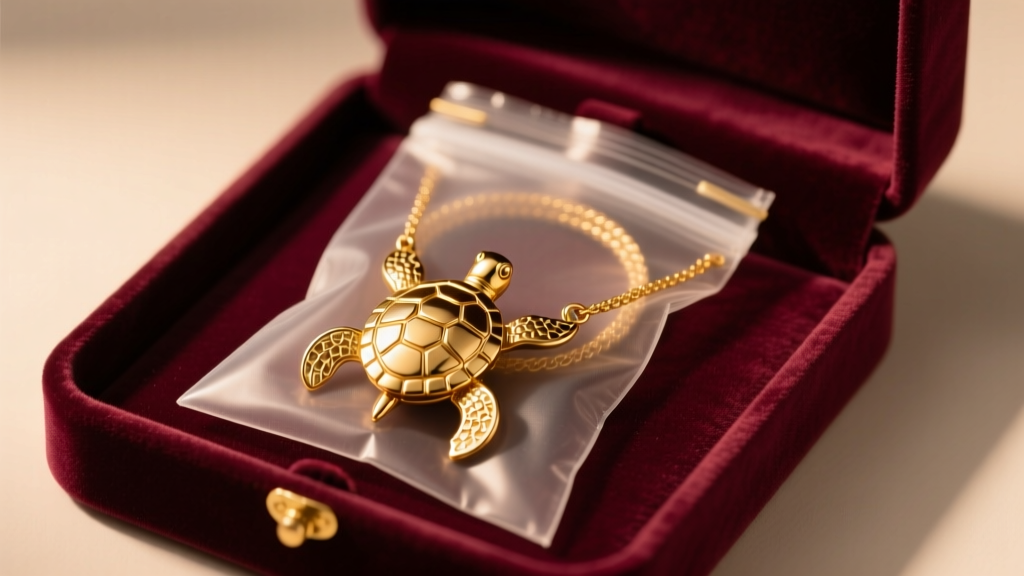
The Dangers of PVC and the Necessity of Polyethylene
Many consumers store their jewelry in cheap, clear plastic ziplock bags. However, these bags are often made from PVC (polyvinyl chloride). PVC off-gasses chemicals over time, and when trapped in a sealed environment with gold alloys, these chemicals accelerate tarnishing and can cause a cloudy, irreversible film to form on polished gold surfaces. Always store your gold turtle necklace in an archival-safe, polyethylene (PE) bag.
Utilizing Anti-Tarnish Technology
Even in a polyethylene bag, trace amounts of sulfur in the air will eventually cause the copper alloys in 14k gold to tarnish. To prevent this, place a 3M anti-tarnish strip inside the bag with the necklace. These strips contain copper sulfate particles that act as a sacrificial anode, absorbing airborne sulfur and hydrogen sulfide before they can reach your gold. Replace the strip every six months to ensure continuous protection, keeping the intricate details of your turtle pendant pristine and brilliant for decades.


