Expert Care Guide for Your Mini Diamond Cross Necklace
Learn expert cleaning and maintenance tips to keep your mini diamond cross necklace sparkling. Discover safe solutions and prong checks.

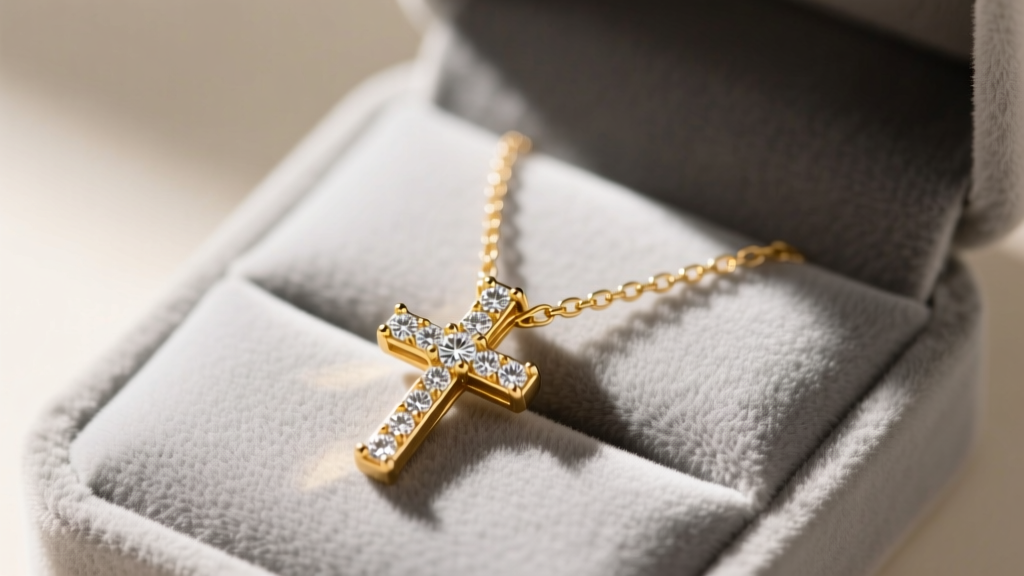
The Anatomy of a Mini Diamond Cross Necklace: Understanding Vulnerabilities
The mini diamond cross necklace has cemented its status as a staple of modern fine jewelry, offering a perfect blend of subtle elegance and everyday wearability. However, as we move through 2026, the trend of layering ultra-fine jewelry means these delicate pieces are subjected to more friction, chemical exposure, and environmental stress than ever before. To properly care for your pendant, you must first understand its microscopic anatomy.
Most mini cross pendants feature melee diamonds, which typically range from 0.01 to 0.05 carats each. Because these stones are so small, the prongs securing them are microscopic—often less than 0.5mm thick and barely visible to the naked eye. Furthermore, the chains paired with these pendants are usually ultra-delicate cable or box chains ranging from 0.8mm to 1.1mm in gauge. This combination of micro-prongs and fine chains creates specific vulnerabilities that require a highly specialized approach to cleaning and maintenance.
Daily Wear Risks: Environmental and Chemical Threats
Diamonds are inherently durable, ranking a 10 on the Mohs hardness scale, but the metals holding them and the environment they sit in are not. The primary enemy of a mini diamond cross necklace is not physical impact, but chemical accumulation. According to the Gemological Institute of America (GIA), diamonds are natural grease magnets. Every time you apply lotion, sunscreen, or foundation, a microscopic film of lipids adheres to the diamond's pavilion (the bottom half of the stone).
When dealing with melee diamonds, the surface area available for light return is already constrained by the stone's physical diameter. Any accumulation of sebum or cosmetic residue will immediately suffocate the diamond's brilliance, making it appear cloudy or grey. Additionally, hard water from daily showers leaves behind calcium and magnesium deposits that bake onto the gold or platinum settings, creating a dull, chalky film that is difficult to remove without professional polishing.
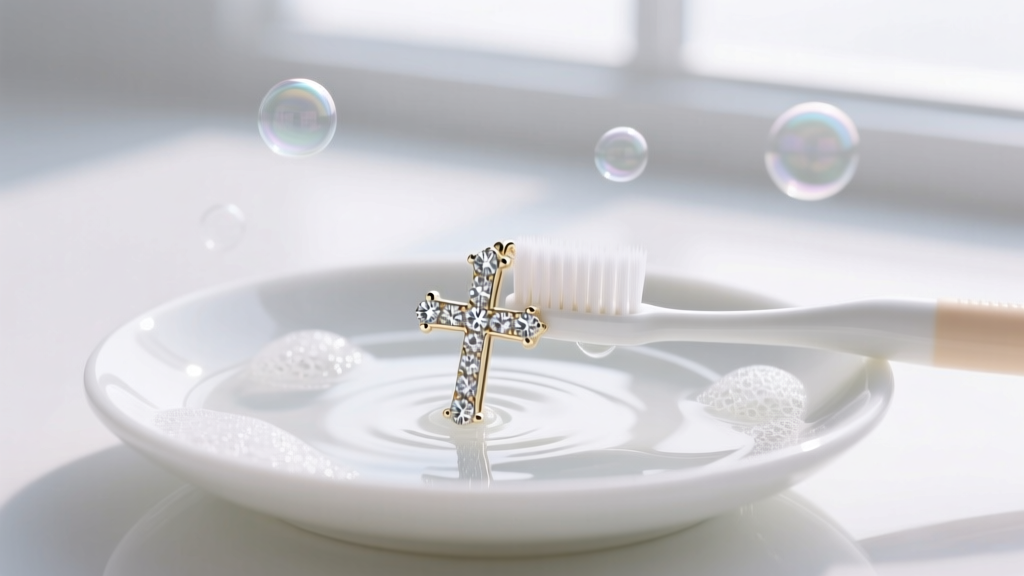
The Expert Step-by-Step Cleaning Protocol
To restore the fiery brilliance of your mini diamond cross necklace, you must abandon harsh commercial jewelry dips and adopt a gentle, precision-based cleaning protocol. We recommend performing this deep clean every two to three weeks, depending on your daily wear habits.
Phase 1: The Safe Soak
Begin by mixing a solution of one part clear, non-detergent ammonia to six parts warm distilled water in a small glass bowl. If you prefer an ammonia-free route, a few drops of pH-neutral dish soap (such as original blue Dawn) in warm distilled water works exceptionally well. Submerge your necklace and let it soak for exactly 15 to 20 minutes. This specific timeframe is crucial; it is long enough to break down lipid bonds and cosmetic films, but short enough to prevent any potential weakening of older solder points on the delicate chain.
Phase 2: Precision Brushing
Remove the necklace from the solution and lay it flat on a clean, lint-free microfiber cloth. Using an extra-soft baby toothbrush or a specialized jewelry brush with tapered bristles, gently agitate the diamonds. Do not scrub in wide circles. Instead, use short, light back-and-forth strokes, paying special attention to the underside of the cross pendant where the pavilion of the diamonds sit. This is where 90% of light-blocking grease accumulates. Apply zero downward pressure; let the bristles do the work to avoid bending the micro-prongs.
Phase 3: Rinsing and Drying
Rinse the necklace under a gentle stream of lukewarm distilled water. Critical Warning: Always place a mesh strainer or a rubber stopper over your drain before rinsing. The 1mm jump rings connecting the cross to the chain can easily slip through standard drain grates. After rinsing, pat the piece dry with a microfiber cloth and use a hair dryer on the 'cool' setting to blow out any remaining water droplets trapped beneath the diamond settings.
Evaluating Cleaning Methods: What to Avoid
Not all cleaning methods are safe for delicate religious or geometric pendants. Below is a comparison of common jewelry cleaning techniques and their safety profile for mini diamond crosses.
| Cleaning Method | Safety for Mini Cross | Risk Level | Expert Notes |
|---|---|---|---|
| Mild Soap & Soft Brush | Highly Safe | Low | The gold standard for weekly home maintenance and grease removal. |
| Ultrasonic Cleaners | Use with Caution | Medium-High | High-frequency vibrations can shake loose micro-pave stones or fracture diamonds with internal inclusions (feathers). |
| Steam Cleaners | Conditionally Safe | Medium | Safe for solid gold and high-clarity diamonds, but dangerous for fracture-filled diamonds or porous gemstone accents. |
| Commercial Silver Dips | Unsafe | High | Highly acidic; will strip rhodium plating from white gold and damage diamond polish over time. |
Troubleshooting Common Chain and Pendant Issues
Beyond cleaning, owners of mini diamond cross necklaces frequently encounter mechanical issues related to the delicate nature of the piece. Here is how to troubleshoot the most common problems:
- Chain Kinking: Sleeping in a 0.9mm box chain almost guarantees kinking. If a kink occurs, do not pull it. Lay the chain flat on a hard surface, place a thin cotton cloth over the kink, and gently run a warm (not hot) iron over the cloth. The mild heat relaxes the metal's memory, allowing you to gently massage the kink out with a wooden toothpick.
- Cloudy Diamonds Post-Cleaning: If your diamonds still look grey after a soap soak, you likely have hard water mineral buildup. Switch to the ammonia-to-distilled-water ratio mentioned above, as ammonia is highly effective at dissolving calcium deposits that soap cannot touch.
- Clasp Slipping: The tiny lobster clasps on fine chains often lose their spring tension. If your clasp feels mushy, it needs to be replaced by a jeweler; attempting to pry it open with a needle will snap the internal spring.

Prong Maintenance and Professional Servicing
Because the prongs on a mini diamond cross are so small, they wear down faster than those on a traditional solitaire ring. Friction from clothing, especially knitwear and silk, can gradually file down the metal tips holding your melee diamonds. The Jewelers of America recommends having fine jewelry inspected under a loupe by a professional at least once a year.
'The snag test is your best early warning system. If the edge of your cross pendant catches on a sweater or your hair, a micro-prong has lifted. Stop wearing the piece immediately and take it to a bench jeweler for a simple re-tipping before the stone is lost.'
During a professional service, the jeweler will check the structural integrity of the bail (the loop connecting the cross to the chain), ensure the jump ring is fully soldered, and use a microscope to verify that no prongs are compromised.
Proper Storage to Prevent Scratches and Tangling
How you store your mini diamond cross necklace is just as important as how you clean it. Diamonds can only be scratched by other diamonds, but the gold or platinum setting can easily be scratched by neighboring pieces. Never toss your necklace into a communal jewelry drawer. Instead, store it in an individual anti-tarnish polyethylene bag or hang it on a dedicated velvet hook inside a lined jewelry box.
Hanging the necklace vertically is the single most effective way to prevent the delicate chain from tangling and kinking. If you must store it flat, ensure the clasp is left unfastened and resting outside the ziplock seal to prevent the chain from knotting upon itself. By combining meticulous cleaning habits with proper storage and annual professional inspections, your mini diamond cross necklace will retain its brilliant fire and structural integrity for decades to come.


