Care & Cleaning Guide for a Carmela Soprano Necklace
Learn how to safely clean, polish, and maintain your heavy gold Carmela Soprano necklace to restore its iconic New Jersey mob-wife shine.

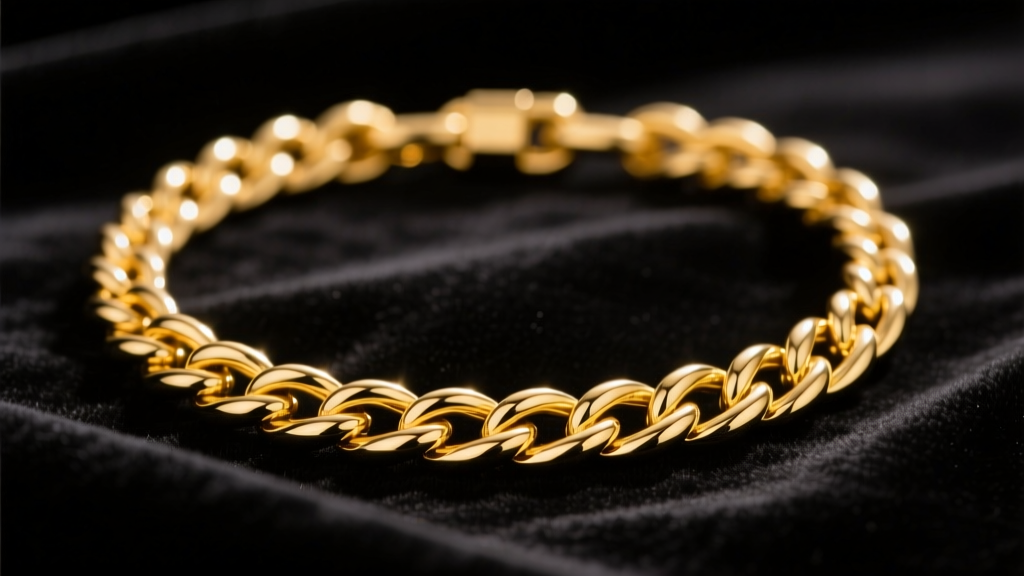
The Anatomy of the Iconic Carmela Soprano Necklace
When discussing the zenith of Italian-American maximalist jewelry, the 'Carmela Soprano necklace' remains the undisputed cultural touchstone. Characterized by its unapologetic weight, rich yellow gold hue, and commanding presence, this style typically features a thick rope, Figaro, or Miami Cuban chain ranging from 5mm to 10mm in width. Often paired with a substantial religious pendant, Madonna medal, or diamond-studded initial, these pieces are not just accessories; they are heirlooms that routinely weigh between 30 and 80 grams. However, the very intricacy that gives a heavy Italian gold chain its breathtaking light refraction also makes it a magnet for environmental grime, skin oils, and cosmetic residues. Maintaining the iconic mob-wife shine requires a strategic approach that respects the metallurgical realities of high-karat gold alloys.
Why Heavy Italian Gold Chains Dull Over Time
Pure 24k gold is virtually immune to tarnish, but it is far too soft to support the structural demands of a heavy rope chain. Therefore, authentic Carmela-style necklaces are crafted in 14k (58.5% gold) or 18k (75% gold). The remaining percentage consists of alloy metals like copper, silver, and zinc, which provide tensile strength and dictate the color. Copper, in particular, gives 14k and 18k yellow gold its warm, luxurious undertone, but it is also highly reactive. When dead skin cells, sebum, and lotions become trapped deep within the twisted crevices of a rope chain, they create an acidic microenvironment. Over time, this causes the copper and silver alloys to oxidize, resulting in a dull, darkened film that mimics tarnish. Furthermore, the heavy weight of the chain causes it to sit flush against the décolletage, maximizing its exposure to perfumes and body oils, which rapidly degrade the mirror-like polish of the gold.
Step-by-Step Deep Cleaning Protocol
To restore the brilliant luster of your heavy gold chain without risking structural damage or micro-scratches, you must abandon harsh commercial dips and rely on a methodical, gentle deep-cleaning process. According to the Jewelers of America, regular maintenance using mild surfactants is the safest way to preserve the integrity of gold alloys and any mounted gemstones.
Phase 1: The Safe Soak Method
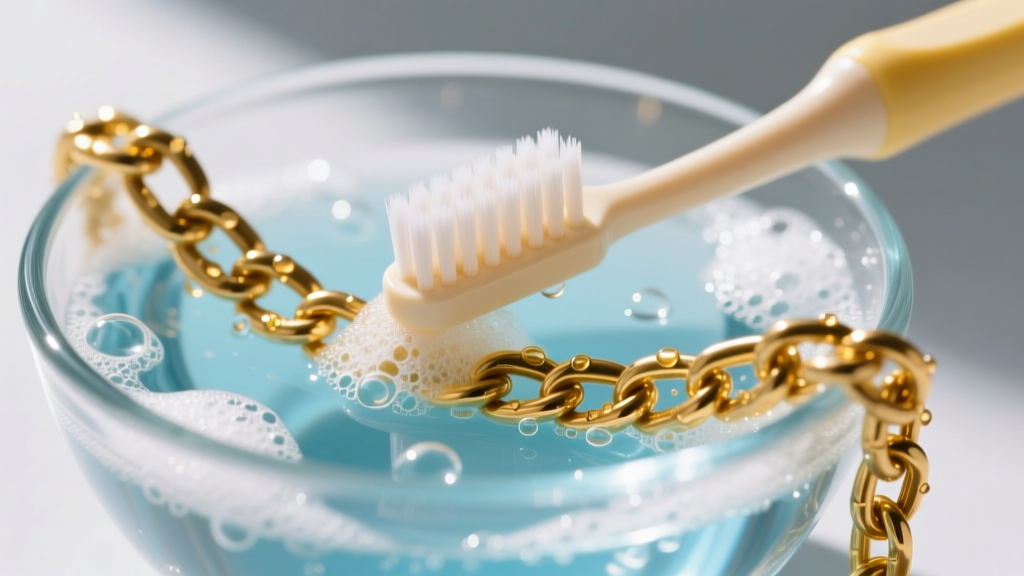
Begin by mixing a cleaning solution in a glass or ceramic bowl. Avoid metal bowls, which can cause microscopic galvanic reactions. Combine one cup of warm distilled water (tap water contains hard minerals like calcium that leave stubborn water spots) with three drops of phosphate-free, mild dish soap, such as Dawn Ultra. Submerge your necklace entirely. The warm water will gently soften the hardened sebum and cosmetic buildup lodged between the chain links and the pendant's bail. Allow the piece to soak for exactly 15 to 20 minutes. Do not exceed this time if your pendant features porous gemstones like turquoise, coral, or emeralds, as prolonged water exposure can fracture these delicate stones.
Phase 2: Agitation and Brushing Techniques
Once the grime is softened, mechanical agitation is required to dislodge it from the deep grooves of a rope or Figaro chain. Use an extra-soft baby toothbrush with a bristle diameter of less than 0.1mm. Standard adult toothbrushes, even those labeled 'soft,' possess bristles that are stiff enough to inflict micro-scratches on highly polished 18k gold. Gently brush the chain in the direction of the links, paying special attention to the clasp mechanism and the bail of the pendant where friction and debris accumulate most heavily. If your pendant features diamonds, carefully brush around the prongs to remove the film of lotion that dulls the stones' brilliance.
Phase 3: Rinsing and Drying Without Water Spots
Rinse the necklace thoroughly under a gentle stream of lukewarm distilled water to wash away the suspended dirt and soap residue. To dry, never use paper towels or standard bath towels, as their wood-pulp fibers can scratch soft gold, and their loops can snag on the chain links, potentially pulling a solder joint apart. Instead, lay the chain flat on a clean, lint-free microfiber cloth. Pat it dry gently, then use a hairdryer on the 'cool' setting to blow out any remaining moisture trapped deep inside the chain links.
Cleaning Method Comparison for Heavy Gold Chains
Not all cleaning methods are suitable for heavy, statement-making jewelry. Below is a comparison of common cleaning techniques evaluated specifically for thick gold chains and pendants.
| Cleaning Method | Efficacy on Rope Chains | Risk Level | Expert Verdict |
|---|---|---|---|
| DIY Dish Soap Soak | High | Very Low | The gold standard for weekly maintenance; safe for almost all gemstones and alloys. |
| Commercial Gold Dips | Medium | High | Contains thiourea and harsh acids that can strip the alloyed metals, leaving the gold porous and brittle over time. |
| Ultrasonic Cleaners | Very High | Medium | Excellent for diamonds, but the 40kHz cavitation vibrations can loosen older solder joints on heavy chains. |
| Professional Steam | Very High | Low (for plain gold) | Best for plain gold and diamonds; will instantly shatter porous stones like opals or emeralds. |
What to Avoid: The Enemies of High-Karat Gold
Preserving a Carmela Soprano necklace requires strict avoidance of common household chemicals that cause catastrophic metallurgical failures.
- Chlorine Exposure: Never wear your heavy gold chain in a chlorinated swimming pool or while cleaning with bleach. Chlorine reacts violently with the copper and zinc alloys in 14k and 18k gold, causing a phenomenon known as 'stress corrosion cracking.' This weakens the metal at the solder points, leading to sudden, irreparable chain snaps.
- Abrasive Polishing Cloths: While treated jeweler's cloths are fine for occasional use, daily rubbing with abrasive compounds will slowly strip away layers of gold. Over a decade, this can noticeably thin a heavy chain and alter its weight and drape.
- Ultrasonic Overuse: While the American Gem Society notes that ultrasonics are great for diamond pendants, running a heavy gold chain through an ultrasonic cleaner too frequently can shake loose the microscopic jump rings connecting the pendant to the chain.
Clasp Maintenance and Structural Integrity
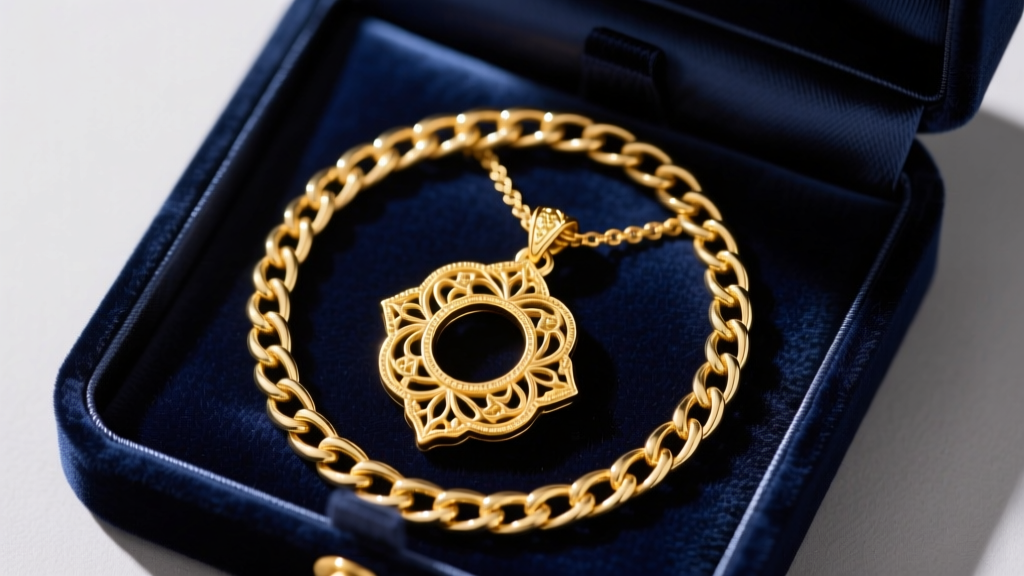
A true Carmela-style chain is heavy, meaning gravity exerts constant, significant tension on the clasp. Most of these necklaces utilize a heavy-duty lobster clasp or a box clasp with a figure-eight safety latch. The most common point of failure is not the chain itself, but the tiny soldered jump ring that connects the clasp to the chain. During your monthly cleaning routine, inspect this jump ring under a magnifying loupe. Look for any visible gaps where the solder has worn away. Additionally, test the spring mechanism of the lobster clasp; if it feels sluggish or fails to snap back flush against the body, the internal spring is compromised by trapped debris or metal fatigue. A jeweler can replace a heavy-duty 14k gold lobster clasp for roughly $40 to $85, a minor investment to prevent losing a multi-thousand-dollar heirloom.
Storing Your Statement Piece
How you store your necklace is just as critical as how you clean it. Heavy rope and Cuban chains are notoriously prone to kinking if tossed haphazardly into a jewelry box. A kink in a thick rope chain disrupts the continuous spiral pattern and creates a weak point that will eventually snap under the chain's own weight. Always lay the chain out flat, or coil it loosely in a large, sweeping circle. Fasten the clasp before storing to prevent the links from tangling with other jewelry. For optimal preservation, store the necklace in a tarnish-resistant flannel pouch or a silk-lined mahogany box, keeping it in a climate-controlled environment away from direct sunlight and high humidity. By adhering to this rigorous care protocol, your heavy gold necklace will retain its iconic, light-catching brilliance for generations.


