Carnelian Chip Necklace Buying Guide: What to Look For
Discover how to evaluate a carnelian chip necklace for authenticity, stone quality, and stringing durability in our comprehensive buying guide.

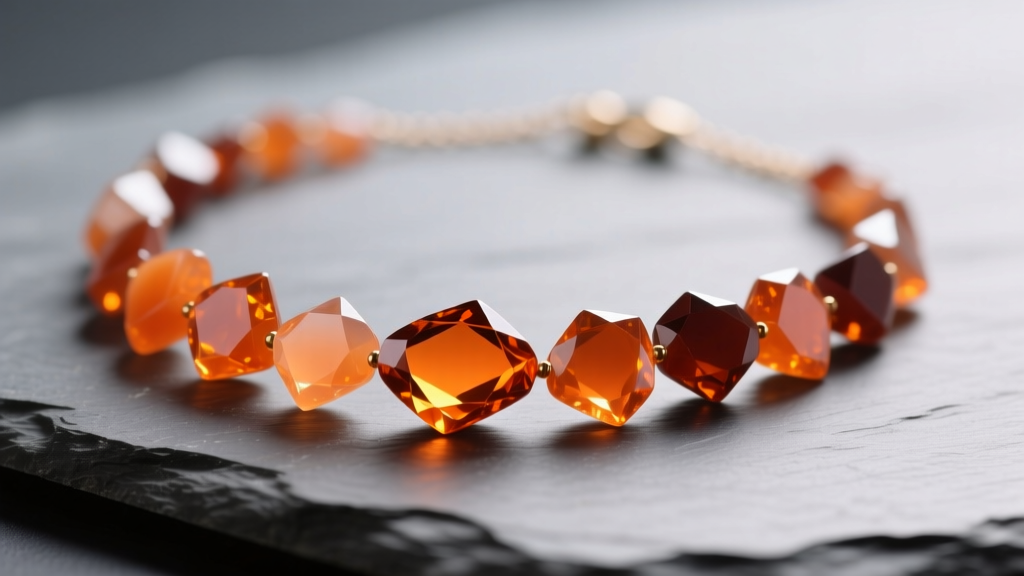
Understanding the Carnelian Chip Necklace
A carnelian chip necklace is a staple in both bohemian and contemporary jewelry wardrobes, prized for its warm, fiery hues and organic, unstructured silhouette. Carnelian is a brownish-orange to bright orange variety of chalcedony, a microcrystalline quartz. Its distinct coloration is caused by iron oxide (hematite) inclusions. Unlike perfectly calibrated round beads, "chip" beads are cut from rough or tumbled material, resulting in irregular, baroque shapes that catch the light uniquely. However, the unstructured nature of chip necklaces introduces specific durability and authenticity challenges that buyers must navigate. This guide breaks down the exact mineralogical, structural, and hardware specifications you need to evaluate before purchasing.
The Authenticity Test: Real Carnelian vs. Dyed Agate
The most critical factor when buying carnelian is verifying its authenticity. According to the Gemological Institute of America (GIA), the vast majority of commercial-grade red and orange chalcedony on the market is actually gray agate that has been heat-treated or chemically dyed. Agate is highly porous, making it an ideal candidate for color enhancement.
How to Spot Dyed Agate
While dyeing is an accepted industry practice if disclosed, undisclosed dyed agate is often sold at the premium price of natural carnelian. Here is how to troubleshoot and identify the difference using a standard 10x jeweler's loupe:
- Fracture Concentration: Dyed stones often exhibit "spiderwebbing"—microscopic concentrations of dye pooling in surface-reaching fractures and drill holes.
- Light Transmission: Hold the chip to a bright LED light. Natural carnelian displays a cloudy, uneven distribution of color due to natural iron banding. Dyed agate often appears uniformly saturated or shows distinct, unnatural color blotches.
- The Acetone Test: If you already own the necklace, vigorously rubbing a chip with a cotton swab dipped in acetone (nail polish remover) can sometimes lift surface-level organic dyes, revealing a pale gray core.
For definitive mineralogical data, resources like Mindat.org confirm that natural carnelian has a specific gravity of 2.58–2.64 and a Mohs hardness of 6.5–7, making it durable enough for daily wear, provided the dyeing process hasn't compromised its structural integrity through excessive acid soaking.

Evaluating Chip Cut, Size, and Polish
The term "chip" encompasses a wide range of lapidary finishes. The quality of the cut directly impacts the necklace's drape, comfort, and light reflection.
Size and Drape
Carnelian chips generally fall into three size categories, measured by their longest axis:
- Micro Chips (3mm - 5mm): Often barrel-tumbled, these mimic heishi beads. They offer a fluid, fabric-like drape and are ideal for layering or creating multi-strand torsades.
- Standard Chips (6mm - 10mm): The most common size. They provide substantial visual weight and a distinctly organic, rustic texture.
- Chunky Baroque (11mm - 18mm): Large, heavily textured pieces. These act as statement elements but can be heavy on the neck and require robust stringing materials.
Polish and Edge Sharpness
Poorly tumbled chips retain sharp, jagged edges from the cutting process. Run the strand through your fingers; if the edges catch on your skin or feel abrasive, the lapidary work is substandard. High-quality chips feature a high-gloss polish with smoothly rounded, albeit asymmetrical, edges. Furthermore, check the drill holes. They should be centered and smoothly reamed. Rough, unreamed drill holes will act like tiny saws, eventually fraying and snapping the stringing material.
Stringing Materials and Failure Modes
Because carnelian chips are relatively heavy (specific gravity ~2.6) and possess irregular, sometimes sharp edges near the drill holes, the stringing material is the primary point of failure. Traditional silk thread, while excellent for lightweight pearls, is a poor choice for heavy stone chips as it degrades rapidly when exposed to moisture and skin oils, and is easily severed by sharp bead edges.
| Material | Best For | Tensile Strength | Common Failure Mode |
|---|---|---|---|
| 49-Strand Beading Wire (.018") | Heavy/Chunky Chips | High (up to 20 lbs) | Kinking; metal fatigue at the clasp crimp |
| 7-Strand Beading Wire (.015") | Standard/Micro Chips | Medium (up to 12 lbs) | Snapping if subjected to sudden tension |
| Waxed Nylon Cord (0.8mm) | Knotted/Rustic Designs | Medium-High | Stretching over time; knot slippage |
| Silk Thread (Size F or G) | Not Recommended | Low | Fraying at drill holes; moisture rot |
Expert Recommendation: For a standard carnelian chip necklace, insist on a 49-strand stainless steel beading wire coated in nylon (such as Soft Flex or Beadalon). The .018-inch diameter provides the necessary tensile strength while maintaining enough flexibility to allow the chips to drape naturally without stiffening the neckline.
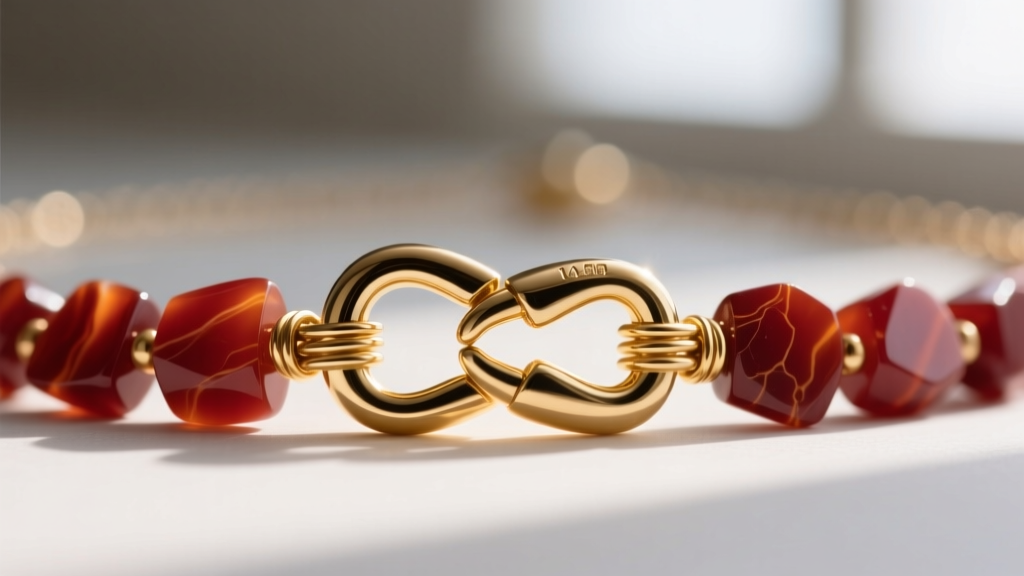
Hardware: Clasps and Metal Grades
The hardware on a chip necklace must balance security with aesthetic proportion. A heavy strand of 10mm carnelian chips can easily weigh between 40 and 60 grams. Lightweight, hollow base-metal clasps will bend or fail under this dynamic load.
Clasp Types
- Lobster Clasp: The industry standard. Ensure the trigger mechanism is spring-loaded and returns to a fully closed position instantly. For heavier strands, a 12mm or 15mm lobster clasp is required.
- Toggle Clasp: Excellent for heavy chip necklaces because the weight of the stones keeps the T-bar securely pulled through the ring. However, the ring must be at least 15mm in diameter to function reliably.
Metal Grades
Avoid "Tibetan Silver" or mystery base metals, which often contain nickel and cause contact dermatitis. Look for Sterling Silver (.925) or 14/20 Gold-Filled. Gold-filled hardware consists of a thick layer of 14k gold mechanically bonded to a brass core, offering vastly superior tarnish resistance and longevity compared to gold-plated alternatives, which will quickly wear off against the abrasive surface of stone chips.
Market Pricing and Value Tiers
Understanding the pricing matrix prevents overpaying for dyed materials or substandard assembly. While carnelian is not a precious gemstone, the craftsmanship of the lapidary and the quality of the hardware dictate the price.
| Tier | Price Range | Stone Quality | Hardware & Stringing |
|---|---|---|---|
| Entry-Level | $15 - $30 | Dyed agate; uneven polish; sharp edges | Base metal; 7-strand wire or cheap nylon |
| Mid-Range | $35 - $75 | Genuine carnelian or high-grade dyed; smooth tumble | Sterling silver; 49-strand wire; proper crimps |
| Premium | $80 - $150+ | Faceted chips; top natural color; precision drilled | 14k Gold-filled or Solid Gold; wire guardians |
Long-Term Care and Maintenance
Carnelian's Mohs hardness of 6.5 to 7 makes it resistant to everyday scratches, but it is still vulnerable to hard impacts. More importantly, if your necklace has been dyed, harsh chemicals will strip the color. Never use ultrasonic cleaners or steam cleaners on a carnelian chip necklace. The high-frequency vibrations can widen microscopic fractures, and the heat can alter the dye or cause thermal shock.
Instead, clean the necklace using a few drops of mild, phosphate-free dish soap in lukewarm water. Gently agitate the strand, use a soft-bristled baby toothbrush to clean the dirt trapped in the irregular crevices of the chips, and rinse thoroughly. Always lay the necklace flat on a microfiber towel to dry; hanging a wet beading wire necklace can cause the nylon coating to stretch or the metal wire to take on a permanent curved memory.
Pro Tip: Store your carnelian chip necklace flat or coiled loosely in a soft pouch. Prolonged exposure to direct, intense sunlight (such as leaving it on a car dashboard) can cause the natural iron oxide pigments—and especially artificial dyes—to fade or become brittle over time.


