Carolee Necklace Repair: Fix Tarnish, Clasps & Pearls
Learn how to troubleshoot and repair your vintage Carolee necklace. Expert fixes for tarnished plating, broken clasps, and peeling faux pearls.

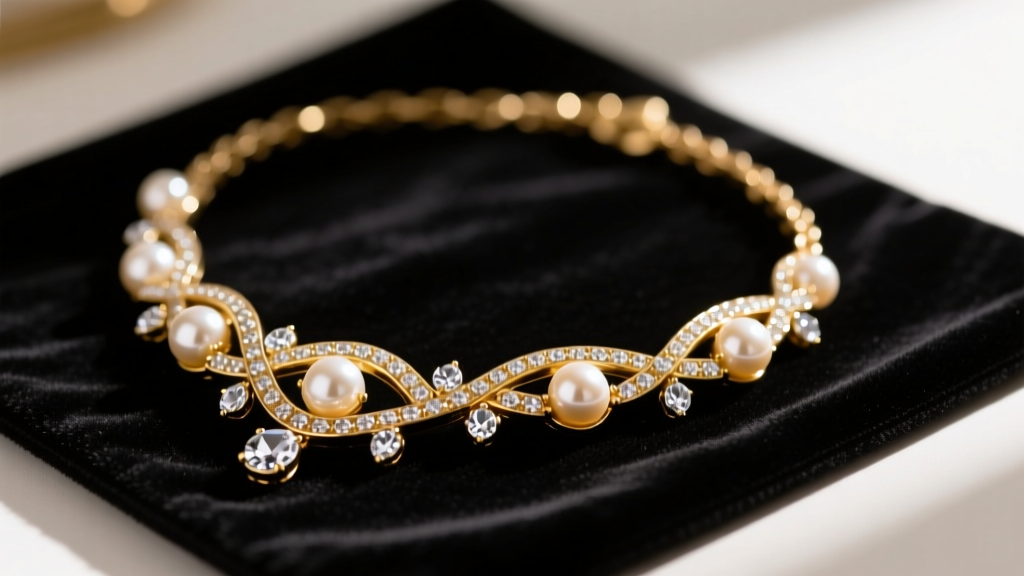
The Heritage of Carolee and the Reality of Fashion Jewelry Wear
Since its founding in 1972, Carolee has been a defining name in American fashion jewelry, celebrated for its elegant pearl strands, intricate crystal pendants, and sophisticated gold-tone and silver-tone plating. Whether you have inherited a vintage 1980s Carolee pearl choker or purchased a modern crystal lariat from a department store, these pieces are designed to emulate fine jewelry aesthetics. However, because fashion jewelry relies on base metals and specialized coatings rather than solid precious alloys, it presents a unique set of maintenance and repair challenges.
Troubleshooting a Carolee necklace requires an understanding of the materials used. Unlike solid 14k gold or sterling silver, fashion pieces are susceptible to specific failure modes: plating oxidation, spring-ring clasp fatigue, and faux pearl degradation. In this comprehensive repair guide, we will break down the exact methodologies for diagnosing and restoring your Carolee necklaces, ensuring they remain staple pieces in your layering rotation for years to come.
Diagnosing Plating Loss and Tarnish on Gold-Tone Pieces
The most common issue with vintage and well-loved Carolee necklaces is the deterioration of the gold-tone or silver-tone finish. Carolee typically utilizes brass or zinc-alloy base metals that are electroplated with a thin layer of gold or rhodium. Over time, exposure to skin oils, cosmetics, and atmospheric sulfur causes the base metal to oxidize, leading to dark tarnish spots or a complete wearing away of the plating, often revealing the brassy or dull gray metal beneath.
The Chemistry of Tarnish and Safe Cleaning Protocols
When dealing with plated fashion jewelry, you must absolutely avoid commercial silver dips or harsh chemical polishing pastes. These products contain abrasive compounds or thiourea-based chemicals that will strip the remaining micron-thin plating instantly. Instead, utilize a targeted, low-impact cleaning approach:
- The Mild Surfactant Bath: Mix one part clear, phosphate-free dish soap with ten parts distilled water. Submerge the metal chain (avoiding any glued-in crystals or pearls) for exactly three minutes. Gently agitate with a soft-bristled baby toothbrush, then rinse in cool distilled water and pat dry with a microfiber cloth.
- The Sunshine Cloth Method: For localized tarnish on the chain links or clasp, use a specialized jeweler's polishing cloth embedded with micro-abrasives and anti-tarnish agents. Gently buff the affected links. According to Jewelers of America, mechanical buffing with treated cloths is the safest way to remove oxidation from plated surfaces without compromising the underlying chemical bond of the electroplate.
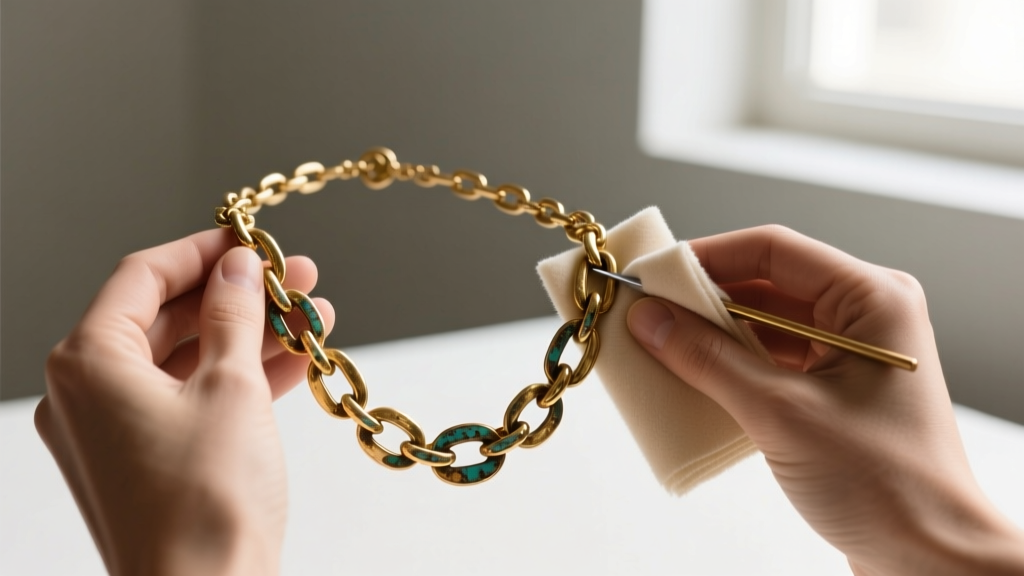
When Replating is the Only Option
If the gold-tone finish has completely rubbed off at the nape of the neck or near the clasp—areas subject to high friction—cleaning will not restore the color. The piece requires professional replating. A bench jeweler can polish the base metal and apply a new layer of gold via electroplating. For fashion jewelry, request a "heavy gold electroplate" (HGE) of at least 2.5 microns, rather than a standard 0.5-micron "flash" plate, to ensure the repair lasts. Expect to pay between $45 and $85 for this service, depending on the chain's surface area.
Troubleshooting Clasp Failures: Spring Rings and Box Clasps
Carolee necklaces frequently employ small spring-ring clasps on lighter chains and ornate box clasps on heavier pearl or crystal strands. Both mechanisms are prone to specific mechanical failures that can render the necklace unwearable or risk losing the piece entirely.
Fixing Stuck or Slack Spring Rings
Spring rings operate via a tiny internal steel spring. If the lever becomes stiff or fails to snap back, it is usually due to an accumulation of microscopic debris (dead skin cells, lotion, dust) inside the mechanism, or the internal spring has lost its tension. Do not attempt to pry the spring ring open with a needle; you will permanently dislodge the spring. If cleaning with a soft brush and isopropyl alcohol does not free the lever, the clasp must be replaced. Cut the old clasp and its attached jump ring using flush cutters. Attach a new 5mm or 6mm gold-filled spring ring using a fresh 4mm, 18-gauge jump ring. Always use two pairs of flat-nose pliers to twist the jump ring open laterally, rather than pulling it apart, to maintain its structural integrity.
Restoring Tension to Box Clasps
Box clasps, often found on vintage Carolee multi-strand pearl necklaces, secure via a V-shaped metal tongue that compresses and clicks into a recessed box. Over decades of use, the V-tongue flattens, causing the clasp to slip open unexpectedly. To troubleshoot this, use a pair of smooth-jawed chain-nose pliers to very gently bend the V-tongue outward by a fraction of a millimeter. This restores the necessary outward tension against the inside of the box. Additionally, ensure the figure-eight safety wire (if present on your specific model) is securely latched over the exterior pin.
The Pearl Dilemma: Faux Glass vs. Cultured Freshwater
Carolee is famous for its pearl jewelry, but the brand utilizes both high-quality glass faux pearls (often with pearlescent coatings) and genuine cultured freshwater pearls, depending on the collection and price point. Identifying which type you own is the critical first step in troubleshooting damage.
Perform the "tooth test": gently rub the pearl against the biting edge of your front tooth. If it feels perfectly smooth, it is a glass or plastic faux pearl. If it feels slightly gritty or sandy, it is a genuine cultured pearl. The Gemological Institute of America (GIA) notes that this tactile difference is due to the microscopic crystalline structure of nacre found only in genuine pearls.
| Pearl Type | Common Issue | DIY Troubleshooting | Professional Repair Solution |
|---|---|---|---|
| Glass Faux Pearl | Coating peeling or flaking off near the drill hole. | None. Faux pearl coatings cannot be chemically restored or painted. | Source matching vintage glass pearls and restring the strand. |
| Glass Faux Pearl | Dullness or loss of luster from skin oils. | Wipe gently with a damp microfiber cloth. Never submerge. | N/A - Preventative care is the only long-term solution. |
| Cultured Freshwater | Stretching, fraying, or visible gaps in the silk thread. | Do not wear. The strand is at high risk of snapping. | Professional restringing using Size F or G silk thread with French wire at the clasp. |
| Cultured Freshwater | Surface blemishes or minor etching from acidic sweat. | Wipe with a dry, soft cloth after every wear. | Light tumbling or professional polishing (removes a microscopic layer of nacre). |
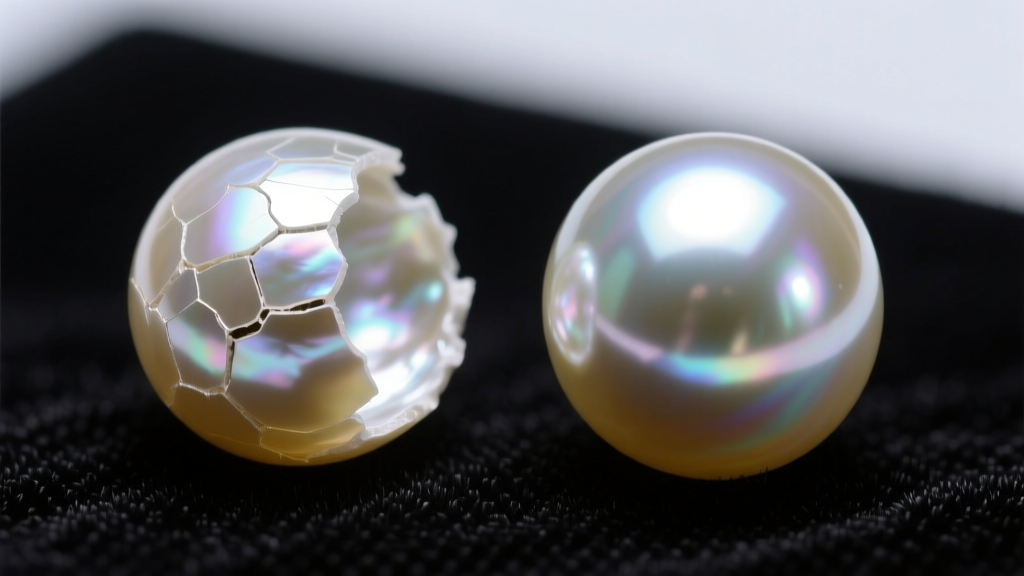
If your Carolee cultured pearl necklace requires restringing, never use standard nylon beading wire (like Tiger Tail). The rigid wire will eventually saw through the soft nacre at the drill holes. Insist that your jeweler uses 100% silk thread, knotting between every single pearl to prevent catastrophic loss if the strand breaks.
Restoring Cloudy Rhinestones and Crystal Pendants
Many Carolee statement necklaces feature aurora borealis (AB) coated crystals or foil-backed rhinestones. A frequent complaint is that these stones turn "cloudy" or "black" over time. This is rarely dirt on the surface; rather, it is moisture or chemical infiltration that has degraded the delicate metallic foil backing applied to the underside of the stone to create its mirror-like reflectivity.
If your rhinestones are cloudy due to foil degradation, they cannot be cleaned back to clarity. The only repair is stone replacement. However, if the cloudiness is merely surface-level buildup from hairspray or lotion, you can safely clean them using a wooden cotton swab lightly dampened with 90% isopropyl alcohol. Gently swab the top facet of the crystal only. Never allow the alcohol to pool around the prongs or seep into the setting, as this will instantly dissolve the adhesive or destroy the foil backing.
Expert Storage Tip: To prevent rhinestone foil degradation and base metal tarnish, store your Carolee necklaces in individual, acid-free tissue paper inside a sealed plastic bag with a 3M anti-tarnish strip. Never store fashion jewelry in a humid bathroom or a cedar-lined wooden box, as the acidic cedar oils and ambient moisture will rapidly accelerate plating loss and foil rot.
When to Seek a Professional Bench Jeweler
While jump ring replacements, clasp tension adjustments, and surface cleaning are well within the realm of DIY troubleshooting, certain Carolee necklace repairs require the torch and loupe of a professional. If a soldered chain link has snapped, attempting to use superglue or wire-wrapping will result in an ugly, weak repair that will inevitably fail. A jeweler can laser-weld or micro-solder the specific alloy without melting the surrounding gold-tone plating. Similarly, if a multi-strand crystal necklace has lost its structural integrity at the concealed end-bars, a professional must disassemble and re-crimp the entire piece using specialized micro-crimping pliers to ensure the tension is evenly distributed across all strands.


