The Ultimate Guide to Choosing a German Shepherd Necklace
Discover how to choose the perfect German Shepherd necklace. Learn about metals, chain styles, and custom engraving for dog lovers in this beginner guide.

Why Breed-Specific Jewelry Requires Special Consideration
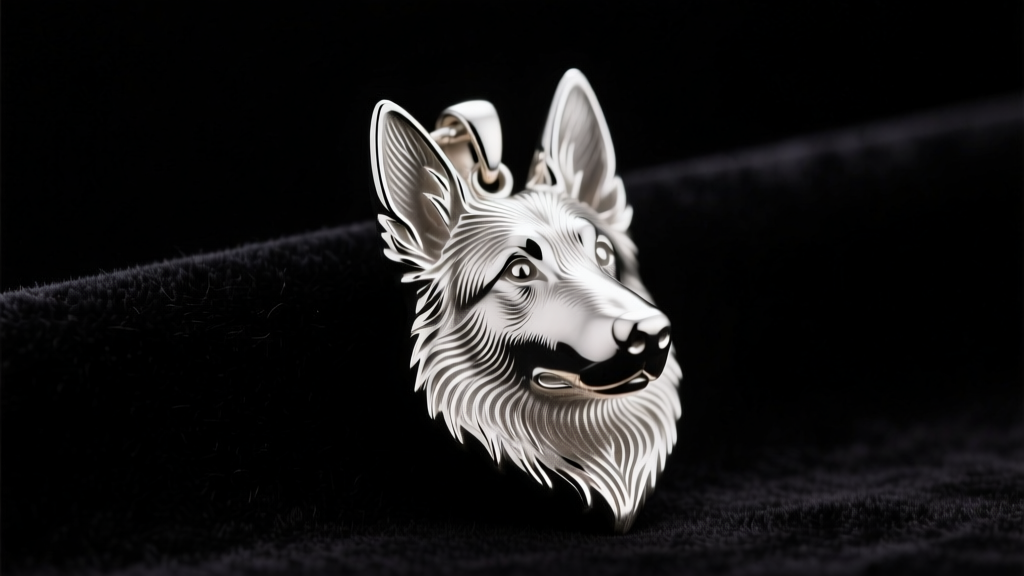
When shopping for a German Shepherd necklace, you are not just buying a generic dog tag; you are investing in a piece of jewelry that must capture the iconic, regal profile of one of the world's most recognizable breeds. According to the American Kennel Club (AKC), the German Shepherd is defined by its alert expression, erect ears, and noble head carriage. Translating these specific anatomical traits into a wearable metal pendant presents unique manufacturing challenges that every beginner buyer should understand before making a purchase.
Unlike breeds with floppy ears or rounded snouts, the German Shepherd's pointed ears and elongated muzzle require structural integrity in jewelry design. Cheaply made, hollow-cast pendants often feature brittle ear tips that snap off within weeks of daily wear. Furthermore, the slope of the back and the distinct angulation of the hindquarters—while true to the breed standard—are often smoothed out in jewelry silhouettes to create a more balanced, aesthetically pleasing pendant shape. Understanding these nuances separates a high-quality heirloom piece from a flimsy novelty item.
Choosing the Right Metal for Everyday Wear
The metal you select dictates the longevity, weight, and maintenance requirements of your necklace. Because dog lovers tend to wear breed-specific jewelry daily, the metal must withstand exposure to sweat, perfumes, and occasional water contact. The Gemological Institute of America (GIA) notes that different alloys react uniquely to environmental sulfur and moisture, which is critical when choosing a piece meant for lifelong wear.
| Metal Type | Average Price Range | Durability & Weight | Maintenance Level |
|---|---|---|---|
| 316L Stainless Steel | $15 - $35 | Highly durable, heavy, hypoallergenic | Very Low (Wipe clean) |
| 925 Sterling Silver | $45 - $95 | Medium durability, lightweight, classic | Medium (Requires polishing) |
| Gold Vermeil (Silver base) | $60 - $120 | Medium durability, lightweight | High (Avoid water/sweat) |
| Solid 14k Gold | $250 - $600+ | Extremely durable, heirloom quality | Low (Occasional wash) |
For beginners on a budget, 316L surgical stainless steel is the superior choice over cheap plated brass. It will not turn your skin green and resists rust. However, if you want a traditional jewelry feel, 925 sterling silver offers the best balance of precious metal value and affordability, provided you commit to occasional polishing.
Silhouette vs. Realistic: Picking the Pendant Style
German Shepherd pendants generally fall into three distinct manufacturing categories, each offering a different visual impact and price point.
1. CNC Laser-Cut Silhouettes
These are flat, 2D profiles cut from a solid sheet of metal. They are typically 1.5mm to 2.0mm thick. Because they are cut from a solid sheet, the pointed ears are structurally sound and highly resistant to bending. Silhouettes rely on negative space and outer contours to convey the breed's shape, making them perfect for minimalist, everyday layering.
2. Lost-Wax Cast 3D Figures
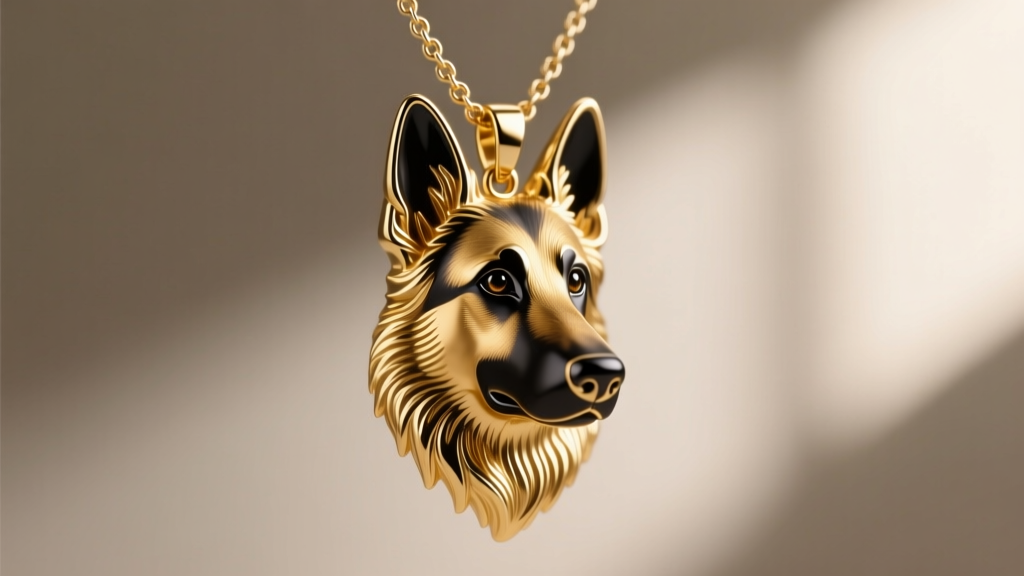
For a lifelike representation, jewelers use the lost-wax casting method to create 3D pendants. These pieces feature sculpted fur textures, dimensional muzzles, and sometimes inset enamel eyes. Buyer Beware: Always check the ear bases on 3D cast pieces. High-quality jewelers will reinforce the ear bases with extra metal mass to prevent snapping, while mass-produced imports often leave these areas dangerously thin.
3. Minimalist Line Art
Created by bending and soldering wire or using precision laser cutting, line-art necklaces trace the outline of the German Shepherd's face in a single continuous line. These are incredibly lightweight (often under 3 grams) and pair beautifully with delicate chains for a subtle, modern aesthetic.
Selecting the Ideal Chain Length and Gauge
A common mistake beginners make is pairing a heavy, detailed German Shepherd pendant with a flimsy chain. A standard 1.25-inch 3D cast pendant can weigh between 8 and 14 grams. If you hang this weight on a 0.8mm cable chain, the torque applied when the pendant flips or catches on clothing will eventually warp the links and cause the chain to snap.
The Golden Rule of Chain Pairing: Your chain's breaking strength should comfortably support at least five times the weight of the pendant. For an average 10-gram German Shepherd pendant, you need a chain rated for 50+ grams of tensile strength.
- Box Chains (1.5mm - 2.0mm): The best overall choice. The square links distribute weight evenly, resist kinking, and provide a sturdy, modern look that complements the angular features of the German Shepherd.
- Rope Chains (1.8mm - 2.5mm): Excellent for heavier 3D pendants. The twisted links offer high tensile strength and a brilliant sparkle that mimics the sheen of a healthy dog's coat.
- Wheat Chains (1.5mm): A fantastic middle-ground option that offers a braided, textured look with surprising durability for its width.
Always ensure the clasp is a lobster clasp measuring at least 10mm to 12mm. Spring-ring clasps are notoriously difficult to operate with one hand and are prone to internal spring failure under heavy loads.
Customization and Engraving Parameters
Adding your dog's name or a memorial date to the back of the pendant transforms a beautiful piece of jewelry into a deeply personal keepsake. However, the physical dimensions of the pendant dictate what is actually possible.
If you are engraving a flat silhouette pendant, you have ample surface area for 2 to 3 lines of text. Jewelers typically use rotary diamond-tip engraving for silver and steel, which physically carves the metal and leaves a bright, silvery finish in the grooves. For curved 3D pendants, fiber laser engraving is required. Laser engraving burns the metal at a microscopic level, allowing for incredibly precise, tiny fonts (down to 0.8mm height) that follow the contour of the dog's sculpted back without weakening the structural integrity of the piece.
Pro Tip: Avoid filling engraved text with black enamel or paint on pieces you plan to wear daily against bare skin. Body oils and friction will eventually lift the paint, leaving you with a messy, half-faded inscription. Opt for raw, unfilled engraving for maximum longevity.
Care and Maintenance Protocols
Proper care ensures your necklace retains its detail and luster for decades. Sterling silver German Shepherd pendants are particularly susceptible to tarnishing due to the sulfur compounds present in human sweat and household air.
- Daily Wipe Down: After wearing, gently wipe the pendant with a microfiber cloth to remove skin oils and lotions.
- Deep Cleaning: For sterling silver, use a dedicated silver polishing cloth impregnated with anti-tarnish agents. Never use liquid silver dips on pendants that feature oxidized (blackened) fur details, as the dip will strip the intentional darkening and leave the piece looking flat and washed out.
- Ultrasonic Cleaners: While ultrasonic cleaners are fantastic for solid gold and plain stainless steel, avoid using them on any pendant featuring inset gemstones, enamel eyes, or glued components, as the high-frequency vibrations can shatter the adhesive bonds.
Final Thoughts on Your Purchase
Selecting the perfect German Shepherd necklace is about balancing aesthetic preference with structural reality. By prioritizing reinforced ear designs, matching the chain gauge to the pendant's weight, and choosing a metal that aligns with your lifestyle, you will secure a piece of jewelry that honors your beloved companion with the quality and dignity the breed deserves. Whether you opt for a sleek stainless steel silhouette for daily errands or a heavy 14k gold 3D casting for special occasions, the right technical choices will ensure your necklace stands the test of time.


