Circle Jade Necklace Meaning & 2026 Trend Analysis
Discover the circle jade necklace meaning, from ancient Bi disks to 2026 styling trends. Learn jadeite grading, sizing, and layering techniques.

The Ancient Roots: Decoding the Circle Jade Necklace Meaning
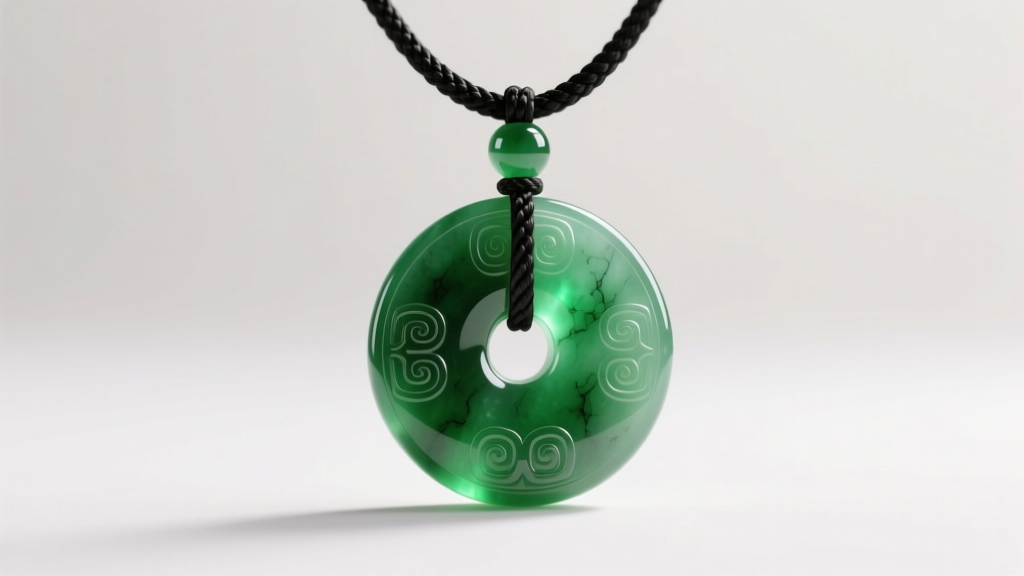
The circle jade necklace is far more than a passing aesthetic; it is a profound cultural artifact that has survived millennia. When discussing the circle jade necklace meaning, we must look to two distinct historical origins: the Bi disk and the Ping'an Kou. The Bi disk, dating back to the Neolithic Liangzhu culture (c. 3300–2250 BCE), was a ritual object used to symbolize heaven and the divine. According to the Metropolitan Museum of Art's archives on Chinese Jade, these early disks were carved from nephrite using abrasive sand and bamboo drills, representing the ultimate connection between the earthly realm and the cosmos.
In more contemporary Chinese metaphysical traditions, the simple, unadorned circle pendant is known as the Ping'an Kou (平安扣), which translates directly to 'safe and secure' or 'peace buckle.' The outer circle represents the vastness of the universe and the infinite nature of time, while the inner circle signifies inner peace, clarity, and the grounding of the human spirit. Wearing a Ping'an Kou is believed to offer the wearer protection from negative energy, promote mental clarity, and attract harmonious relationships. In 2026, as consumers increasingly seek jewelry with emotional resonance and historical weight, the circle jade pendant has transitioned from a traditional talisman to a cornerstone of mindful, intentional styling.
Jadeite vs. Nephrite: What You Are Actually Buying
To truly understand the market, one must distinguish between the two minerals that both legally and commercially carry the name 'jade.' The Gemological Institute of America (GIA) clearly defines jadeite and nephrite as distinct species with vastly different physical properties, visual characteristics, and price points. Nephrite is a calcium and magnesium-rich amphibole, renowned for its waxy luster and extreme toughness due to its interlocking fibrous crystal structure. Jadeite, a sodium and aluminum-rich pyroxene, is prized for its glassy vitreous luster, higher translucency, and vivid color spectrum.
| Feature | Jadeite (Fei Cui) | Nephrite (Hetian Jade) |
|---|---|---|
| Mohs Hardness | 6.5 - 7.0 | 6.0 - 6.5 |
| Specific Gravity | 3.30 - 3.38 | 2.90 - 3.03 |
| Luster | Vitreous (Glassy) | Greasy / Waxy |
| Top Color Varieties | Imperial Green, Lavender, Ice | Mutton Fat White, Spinach Green |
| Price Range (25mm Disk) | $500 - $50,000+ | $80 - $5,000 |
When shopping for a circle jade necklace in 2026, the most critical factor for jadeite is the treatment grade. Type A jadeite is completely untreated beyond surface waxing. Type B has been acid-bleached to remove impurities and polymer-impregnated to restore structural integrity, while Type C is artificially dyed. Only Type A jadeite holds intrinsic investment value and spiritual purity; Type B and C are considered structurally compromised and spiritually inert by traditionalists.
2026 Trend Analysis: The Evolution of the Circle Pendant
The styling of the circle jade necklace has undergone a radical transformation. While the traditional red silk cord remains a staple for lunar new year celebrations and bridal gifts, the 2026 everyday styling landscape is defined by material juxtaposition and asymmetric layering.
The 'Quiet Luxury' Bi Disk
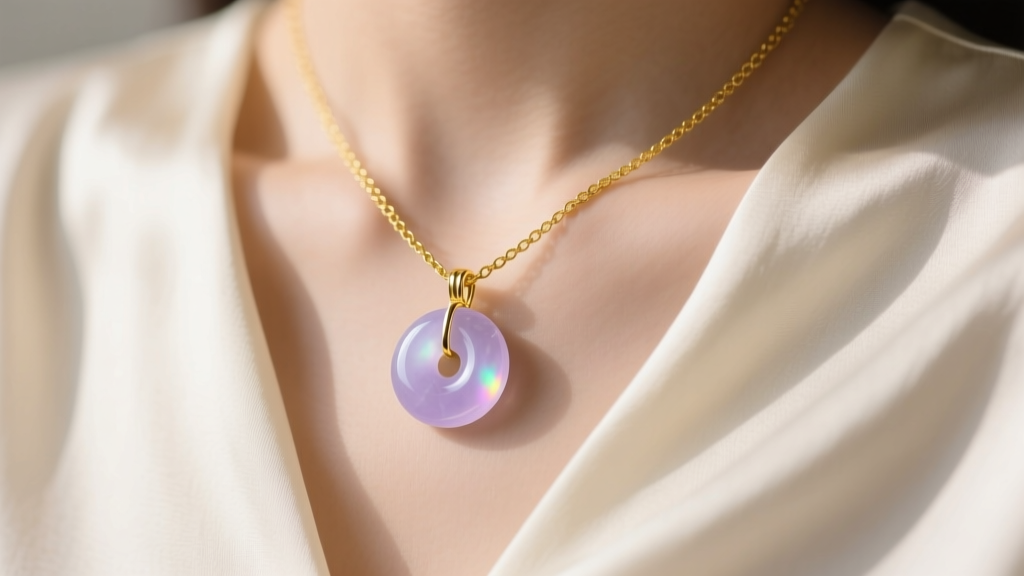
The minimalist movement has fully embraced the 15mm to 20mm Type A 'Ice' or 'Glassy' jadeite disk. Because these varieties lack intense green pigmentation, they offer a subtle, frosted translucency that mimics sea glass or quartz. Stylists are pairing these pale disks with ultra-fine 14k or 18k yellow gold cable chains (0.8mm to 1.2mm thickness). The warmth of the yellow gold contrasts beautifully with the cool, watery translucency of the ice jadeite, creating a sophisticated 'quiet luxury' aesthetic perfect for corporate environments and high-end casual wear.
Maximalist Jade & Diamond Halos
On the opposite end of the spectrum, high jewelry houses are reimagining the 30mm+ nephrite and deep green jadeite donuts by encasing them in architectural 18k rose gold frames and asymmetric diamond pavé halos. This trend bridges the gap between ancient talisman and modern red-carpet statement piece. The heavy, waxy luster of a dark spinach green nephrite disk grounds the brilliance of the diamonds, preventing the piece from looking overly flashy while maintaining a commanding presence.
Cord Engineering: Beyond Basic Cotton
For those who prefer the traditional cord, 2026 has seen an upgrade in cord engineering. Standard cotton cords fray and degrade from skin oils and environmental humidity. The current standard for premium circle pendants is micro-braided waxed polyester or high-tenacity nylon, finished with magnetic 18k gold vermeil clasps. This allows the wearer to maintain the protective, knot-free aesthetic of the traditional cord while enjoying the security and ease of a modern clasp system.
Sizing and Proportions: Choosing the Right Diameter
The visual impact of a circle jade necklace is entirely dependent on the outer diameter of the disk relative to the wearer's frame and neckline. The inner hole of a traditional Bi disk should ideally occupy 20% to 33% of the total diameter to maintain aesthetic harmony and historical accuracy. Below is a functional sizing guide for modern styling:
- 10mm - 15mm (The Delicate Layering Disk): Best suited for 16-inch to 18-inch chains. Ideal for layering with longer gold lariat necklaces or pearl strands. Pairs perfectly with V-neck blouses and open collars.
- 20mm - 25mm (The Standard Statement): The most versatile size. Functions beautifully as a standalone piece on a 20-inch black waxed cord or a 1.5mm gold box chain. Sits perfectly at the sternum, complementing crew necks and boat necks.
- 30mm - 40mm (The Architectural Focal Point): Requires a heavier suspension method, such as a 2mm woven silk cord or a thick 18k gold rolo chain. Best worn over high-necked knitwear, turtlenecks, or structured blazers to allow the stone's mass to anchor the outfit.
Authenticity and Sourcing: Avoiding Treated Jade Scams
As the demand for authentic circle jade necklaces surges, so does the sophistication of treated jade on the market. Acid-bleached and polymer-impregnated (Type B) jadeite can look remarkably similar to high-quality Type A ice jadeite to the untrained eye. To protect your investment, you must rely on specific diagnostic tools and verifiable documentation.
First, always request a certificate from a recognized, independent gemological laboratory. The GIA (Gemological Institute of America) and the NGTC (National Gemstone Testing Center of China) are the gold standards for jade authentication. A legitimate certificate will explicitly state 'Natural Jadeite' or 'Jadeite (Type A)' and will note if any polymer or dye is detected.
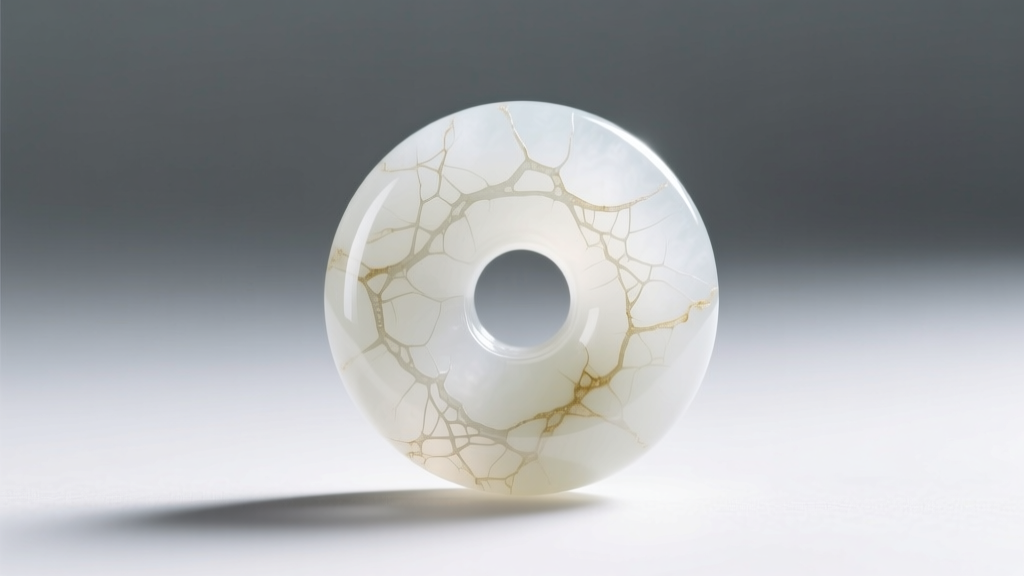
Second, utilize a 10x jeweler's loupe to examine the surface reflection of the pendant. Type A jadeite will show a smooth, continuous surface with minor natural polishing lines. Type B jadeite, due to the acid etching process, will often exhibit a pitted, 'spider-web' or 'orange peel' texture on the surface where the polymer filler has shrunk or worn away over time. Furthermore, under a strong LED flashlight, Type A jadeite will display a natural, fibrous or granular internal structure, whereas dyed (Type C) jade will show pigment concentrating along the microscopic crystal boundaries, creating a web-like network of unnatural color.
Final Styling Verdict
The circle jade necklace meaning transcends mere ornamentation; it is a wearable philosophy of balance, protection, and continuity. Whether you opt for the glassy, vitreous brilliance of an 18mm Type A lavender jadeite disk on a delicate gold chain, or the grounding, waxy weight of a 35mm Mutton Fat nephrite donut on a braided cord, you are participating in a design lineage that spans thousands of years. By understanding the precise material grades, adhering to proportional sizing, and embracing modern layering techniques, you can seamlessly integrate this ancient talisman into a contemporary, forward-thinking wardrobe.


