Building the Perfect Clairo Necklace: A Technical Guide
Master the clairo necklace aesthetic with our technical guide to chain weaves, gold-filled metallurgy, jump ring gauges, and layered stack engineering.

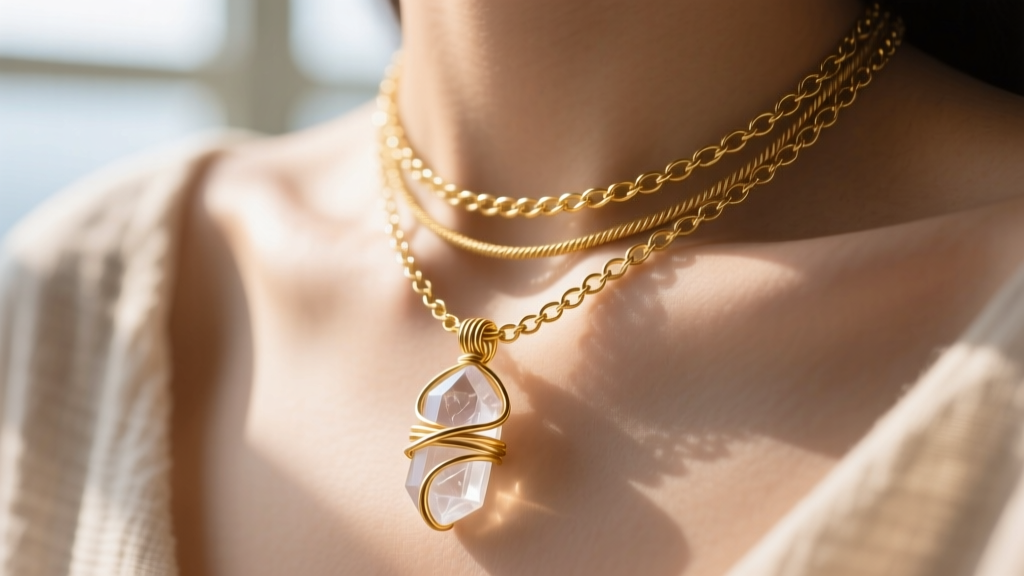
When jewelry enthusiasts and stylists search for a clairo necklace, they are rarely looking for a single, mass-produced pendant. Instead, they are referencing a highly specific, indie-pop aesthetic characterized by delicate layering, mixed-metal subtlety, and DIY-adjacent charm integration. Popularized by the musician Clairo and the broader indie-bedroom-pop subculture, this style relies on an effortless, curated imperfection. However, achieving a stack that looks effortlessly vintage while surviving the mechanical stresses of daily wear requires a deep understanding of jewelry engineering.
In this technical deep dive, we deconstruct the anatomy of the clairo necklace stack. We will examine exact chain weave specifications, the metallurgical realities of gold-filled versus vermeil components, and the precise jump ring gauges required to secure heavy wire-wrapped crystals without catastrophic failure.
The Anatomy of the Clairo Necklace Stack
The signature clairo necklace look is never a single chain; it is a carefully calibrated three-tier stack that plays with varying link geometries and focal weights. To replicate this aesthetic without the necklaces tangling into an unmanageable knot, you must adhere to strict length and width differentials.
- The Base Layer (Choker/Collar): 14 to 15 inches in length. This layer sits flush against the clavicle. It requires a high-flexibility weave, typically a 1.0mm to 1.2mm soldered cable chain, which moves like fabric and anchors the stack.
- The Mid Layer (Princess): 17 to 18 inches. This layer introduces texture. A 2.5mm hollow paperclip chain or a 3.0mm satellite chain (alternating small links with larger elongated links) provides the necessary visual contrast without adding excessive gram weight.
- The Pendant Layer (Matinee): 20 to 22 inches. This is the focal point, usually featuring a wire-wrapped raw quartz crystal, a vintage micro-loomed bead, or an initial charm. The chain here should be a slightly heavier 1.5mm box or rolo chain to support the pendant's pendulum swing.
Chain Weave Specifications and Tensile Limits
A common failure mode in indie-style jewelry is chain snapping at the clasp or jump ring due to improper weave selection. The aesthetic demands delicate chains, but delicate does not have to mean structurally compromised. Below is a technical breakdown of the weaves most commonly used in the clairo necklace aesthetic and their mechanical limits.
| Chain Weave | Wire Gauge / Width | Tensile Limit (Approx.) | Best Stack Position |
|---|---|---|---|
| Soldered Cable | 22g / 1.2mm | 3.5 lbs (1.5 kg) | Base Layer (14-15") |
| Hollow Paperclip | 18g / 2.5mm | 2.0 lbs (0.9 kg) | Mid Layer (17-18") |
| Solid Rolo | 20g / 1.5mm | 5.0 lbs (2.2 kg) | Pendant Layer (20-22") |
| Satellite (Mixed) | 24g / 3.0mm span | 1.5 lbs (0.6 kg) | Accent Layering Only |
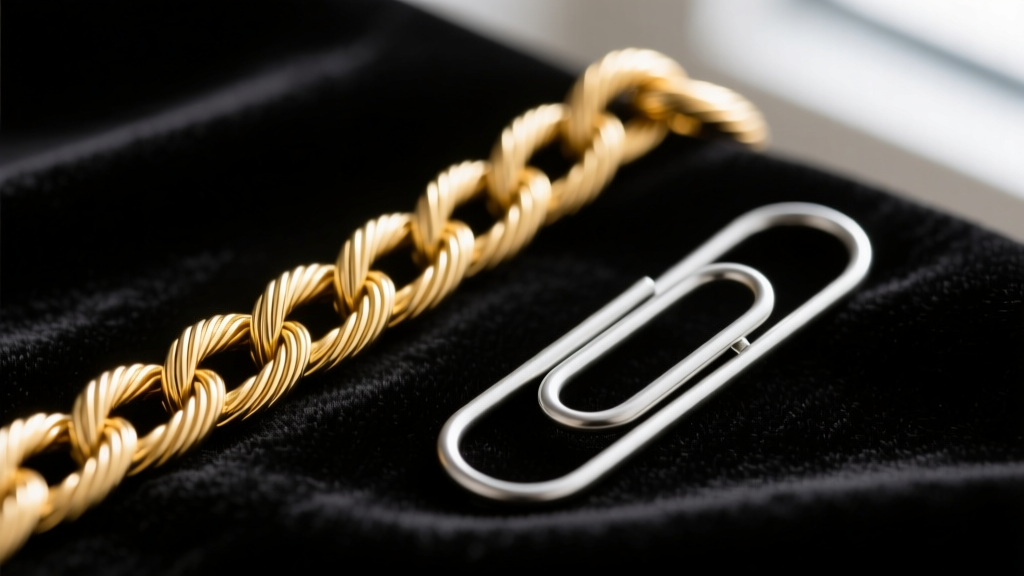
Notice that hollow paperclip chains, while visually striking and highly relevant to the indie aesthetic, possess a lower tensile limit due to the lack of interior metal support. They should never be used to suspend heavy wire-wrapped pendants. For technical sourcing of these specific weaves, wholesale suppliers like Rio Grande offer exact tensile data sheets for bulk chain spools.
Metallurgy: Why Gold-Filled Outperforms Vermeil
The clairo necklace aesthetic relies heavily on warm, vintage gold tones. However, the friction generated by a three-layer stack rubbing against the skin and itself will rapidly destroy inferior plating. Understanding the metallurgical difference between Gold Vermeil and Gold-Filled (GF) materials is critical for longevity.
The Vermeil Failure Point
Gold vermeil consists of a sterling silver base electroplated with a minimum of 2.5 microns of gold (usually 14k or 18k). While 2.5 microns sounds substantial, the mechanical friction at the nape of the neck—where the chain links grind against each other—will wear through this plating in 6 to 12 months of daily wear, exposing the oxidizing silver beneath.
The Gold-Filled Advantage
For a durable clairo necklace stack, 1/20 14k Gold-Filled is the mandatory standard. According to the Gemological Institute of America (GIA), gold-filled materials are created through a mechanical bonding process where a solid sheet of 14k gold is heat- and pressure-bonded to a brass core. The gold layer must constitute at least 5% of the total weight of the item. This results in a gold layer that is 50 to 100 times thicker than vermeil, capable of withstanding years of friction, sweat, and layering abrasion without flaking or peeling.
Jump Ring Mechanics and Charm Integration
The DIY charm element is central to the clairo necklace look. Whether attaching a tiny crescent moon, a raw amethyst slice, or a vintage letter bead, the jump ring is the single most critical point of failure. Most commercial indie brands use soft-temper 22-gauge jump rings that pull open under the weight of a 4-gram crystal pendant.
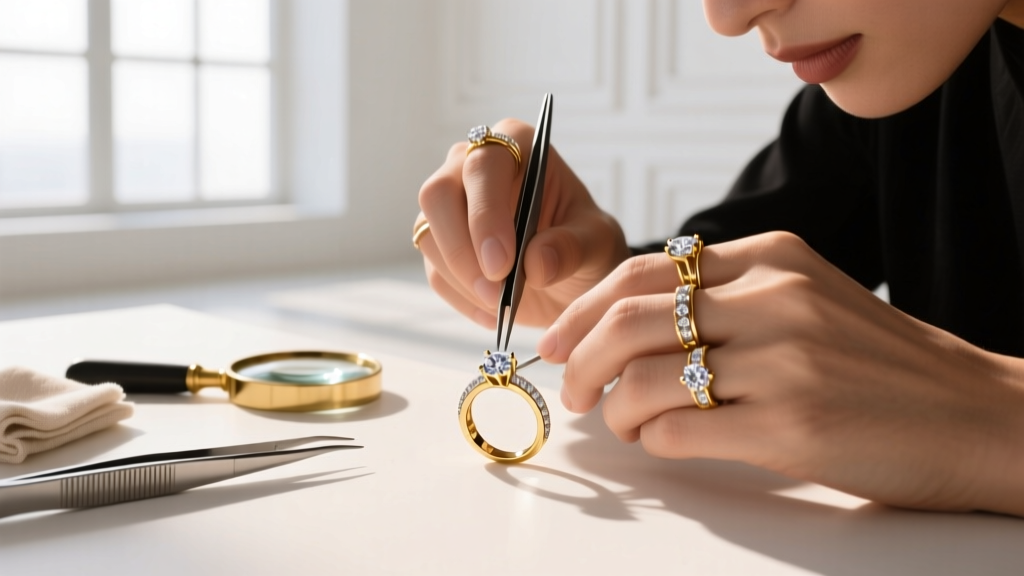
To engineer a secure connection, you must use work-hardened jump rings. When wire is drawn and coiled, it becomes brittle and hard. If a jump ring is sold "hard" or "work-hardened," it retains this structural rigidity.
- Optimal Dimensions: 4.0mm Outer Diameter (OD) with a 20-gauge (0.81mm) wire thickness.
- The Saw-Cut Advantage: Always source saw-cut jump rings rather than machine-cut. Saw-cut rings feature a perfectly flush, flat seam that closes invisibly, preventing the sharp edges of machine-cut rings from slicing through the delicate 1.2mm cable chain links over time.
For independent jewelers and serious collectors sourcing these specific hardware components, Halstead provides comprehensive metallurgical temper data on their jump ring inventory.
Clasp Engineering for Multi-Layer Stacks
Tangling at the cervical spine is the primary annoyance of layered necklaces. The standard 5mm spring ring clasp is ubiquitous in delicate jewelry, but it is a poor choice for the clairo necklace stack. Spring rings have a high failure rate due to the tiny internal tension spring corroding or breaking, and their small size makes them difficult to manipulate when three chains are bunching together.
The Solution: Upgrade the base and mid-layers to an 8mm or 10mm solid gold-filled lobster clasp. The larger surface area prevents the chains from wrapping tightly around the clasp mechanism, and the robust internal lever mechanism provides a significantly higher tensile holding force. Furthermore, adding a 2-inch extender chain with a 3mm silicone stopper bead at the terminus allows the wearer to micro-adjust the stack's drop length to perfectly suit different crewneck and scoop-neck garments.
Maintenance and Ultrasonic Cleaning Limits
Because the clairo necklace aesthetic frequently incorporates porous, raw, or wire-wrapped gemstones (such as raw quartz, moonstone, or opal), standard jewelry maintenance protocols must be adjusted. Never place this specific stack in an ultrasonic cleaner. The high-frequency acoustic cavitation will fracture raw crystals and unravel the tension of the wire-wrapping.
Instead, clean the gold-filled chains using a pH-neutral dish soap and a soft-bristled baby toothbrush. For the porous pendants, use only a dry, untreated microfiber cloth to buff away skin oils. By respecting the material science behind these delicate components, your curated indie stack will maintain its structural integrity and vintage patina for years to come.


