Expert Guide to Cleaning Vintage Avon Necklaces Safely
Learn how to safely clean, polish, and store vintage Avon necklaces. Expert tips for rhinestones, gold-tone plating, and delicate clasps.

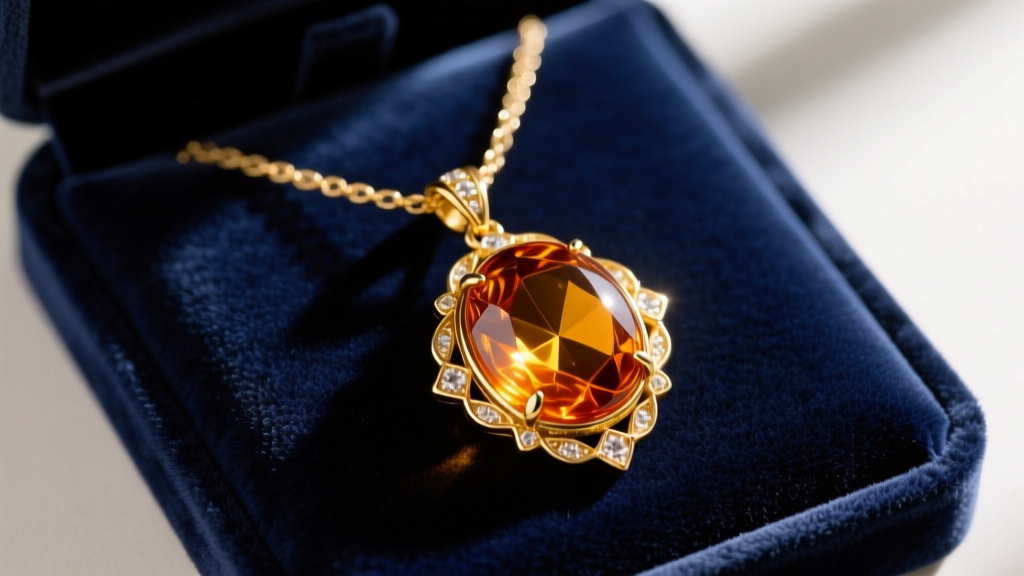
The Legacy and Materials of Vintage Avon Necklaces
Collecting vintage Avon necklaces is a journey through mid-century to late-20th-century costume jewelry history. Avon began producing its own branded jewelry in 1963, eventually collaborating with legendary designers like Trifari and creating highly sought-after lines such as the 1990s "Precious Pretenders." However, caring for these pieces requires a deep understanding of their specific material composition. Unlike fine jewelry, vintage Avon pieces typically feature a base metal (often pewter, brass, or a zinc alloy known as pot metal) that has been electroplated with gold-tone or rhodium finishes.
The gemstones are rarely genuine; instead, Avon utilized high-quality glass cabochons, Lucite, and foil-backed Aurora Borealis (AB) rhinestones. This specific combination of plated base metals and water-sensitive foil backing means that standard jewelry cleaning methods can instantly destroy a valuable vintage piece. According to conservation guidelines outlined by the Gemological Institute of America (GIA), costume jewelry requires specialized, non-abrasive care to preserve both the plating and the adhesive securing the stones.
The Golden Rules: What to Avoid at All Costs
Before you begin cleaning your vintage Avon necklaces, you must eliminate the following common household cleaning methods from your arsenal. Using these will result in irreversible damage to the gold wash and rhinestone foils.
- Ultrasonic Cleaners: The high-frequency vibrations will shatter vintage glass stones and strip the delicate metallic foil backing right off the glass.
- Ammonia and Windex: These harsh chemicals will instantly dissolve the thin layer of gold electroplating, exposing the dull gray pot metal beneath.
- Baking Soda Pastes: Baking soda is highly abrasive. Scrubbing a vintage Avon gold-tone chain with baking soda will create micro-scratches that permanently cloud the finish.
- Hot Water: Heat softens the vintage jewelry glue (often an early form of epoxy or shellac-based adhesive) used to set cabochons, causing stones to fall out.
Step-by-Step Cleaning Process for Avon Necklaces
Proper maintenance relies on gentle mechanical action and pH-neutral solutions. Follow this exact protocol to safely restore your necklace's original luster without compromising its structural integrity.
Step 1: Dry Dusting and Debris Removal
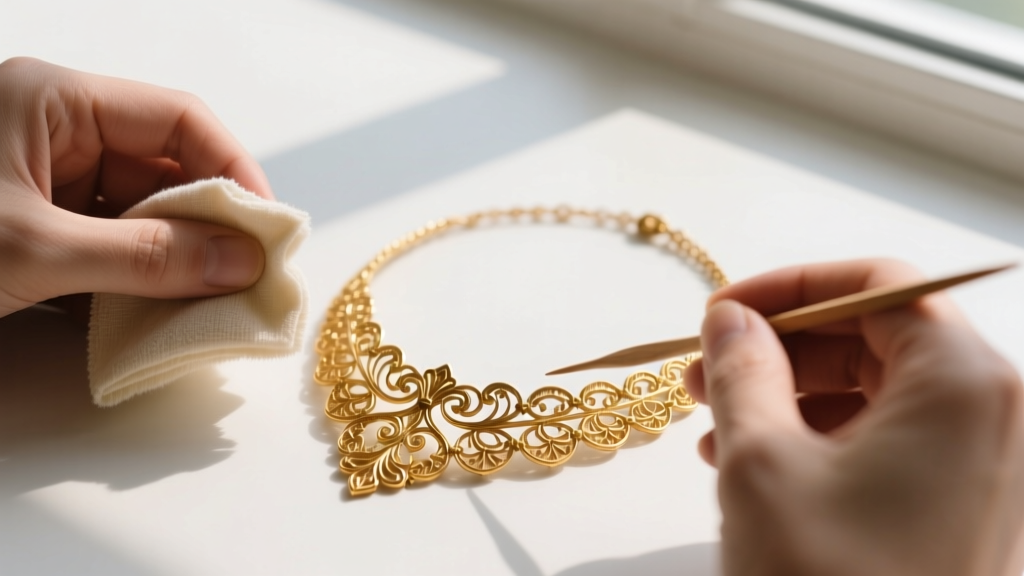
Always start dry. Use a clean, soft-bristled makeup brush or a specialized jewelry dusting brush to gently sweep away loose dirt, skin cells, and cosmetic residue from the filigree work and stone settings. This prevents you from rubbing abrasive grit into the gold plating during the wet cleaning stage.
Step 2: Targeted Spot Cleaning
For stubborn grime, create a mild solution of distilled water and a single drop of pH-neutral dish soap (such as original blue Dawn). Never submerge the necklace. Instead, dip a cotton swab or a microfiber cloth into the solution, wring it out until it is barely damp, and gently dab the soiled areas of the metal. Avoid touching the glass rhinestones with the damp swab, as moisture can seep under the bezel and ruin the foil backing.
Step 3: Immediate and Thorough Drying
Moisture is the enemy of costume jewelry. Immediately after spot cleaning, dry the metal thoroughly with a lint-free microfiber cloth. To ensure no water remains trapped in the crevices or under the stone settings, use a hairdryer on the cool, low-air setting to gently blow out hidden moisture. This step is critical for preventing the base metal from oxidizing and the stones from clouding.
Tackling Specific Issues: Verdigris and Cloudy Stones
When collecting vintage Avon necklaces, you will inevitably encounter two common issues: verdigris and cloudy rhinestones.
Removing Verdigris (Green Corrosion)
Verdigris is a toxic, crusty green copper acetate that forms when the copper content in the base metal reacts with sweat, acids, and moisture. It frequently appears on older spring-ring clasps and chain links. Do not use liquid copper cleaners, as they will strip the gold plating. Instead, use a dry, pointed wooden toothpick to gently scrape away the green crust. For stubborn buildup, lightly dip the tip of the toothpick in pure acetone (nail polish remover) and apply it only to the green spots, taking extreme care to avoid any painted details or plastic components.
Reviving Cloudy Rhinestones
If your Aurora Borealis or clear glass rhinestones look cloudy, the issue is usually dirt trapped on the surface or degraded foil on the back. If the foil is intact, you can clean the top of the stone using a cotton swab lightly dampened with isopropyl alcohol (90% or higher). Alcohol evaporates quickly and cuts through hairspray and perfume residue without using water. If the foil backing has turned black or peeled away, the stone is "dead" and must be replaced by a professional jeweler who specializes in vintage stone sourcing.
Material-Specific Cleaning Reference Chart
Use this quick-reference table to determine the safest cleaning approach based on the specific era and material of your vintage Avon necklace.
| Avon Material / Era | Safe Cleaning Agent | Unsafe Agent | Drying Method |
|---|---|---|---|
| 1970s Gold-Tone Pot Metal | Dry microfiber, mild soapy damp cloth | Ammonia, Ultrasonic | Cool air blow-dry |
| Foil-Backed AB Rhinestones | Dry brush, 90% Isopropyl Alcohol (top only) | Water, Soap, Windex | Immediate microfiber wipe |
| 1990s Precious Pretenders (CZ) | Mild soapy damp cloth, soft toothbrush | Baking soda, Toothpaste | Lint-free cloth |
| Enamel and Painted Details | Dry dusting only | Acetone, Alcohol, Water | N/A |
Proper Storage to Prevent Tarnish and Tangling
How you store your vintage Avon necklaces is just as important as how you clean them. The thin gold electroplating on vintage pieces is highly susceptible to sulfur in the air, which causes rapid tarnishing.
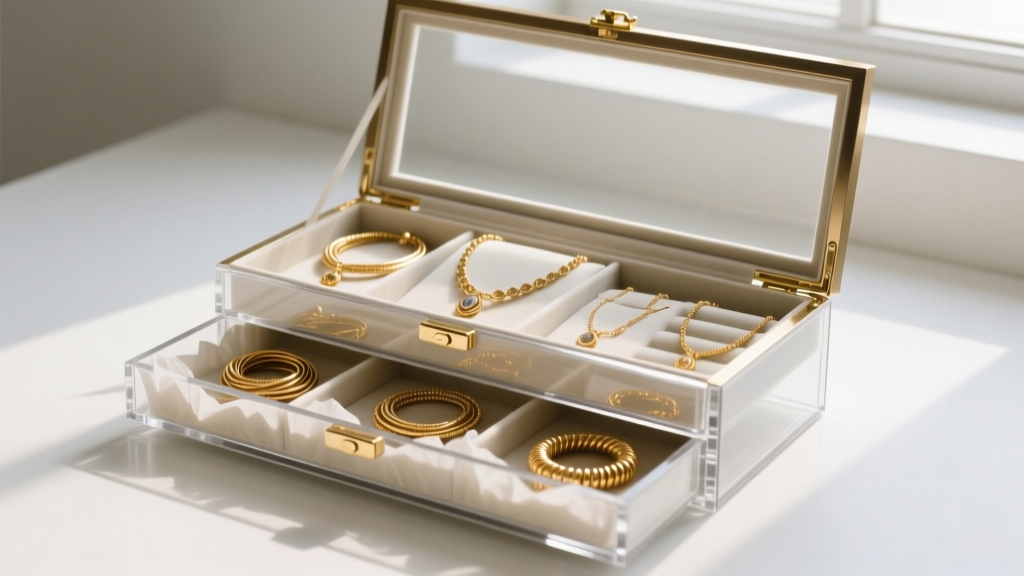
Follow these archival storage practices to maintain your collection:
- Use Anti-Tarnish Strips: Place 3M anti-tarnish tabs inside your jewelry boxes or storage bags. These strips absorb airborne sulfur and hydrogen sulfide before they can react with the base metals. Replace them every 6 to 12 months.
- Acid-Free Tissue Paper: Never wrap vintage jewelry in standard newspaper or standard tissue paper, as the acids and inks will degrade the plating. Use only unbuffered, acid-free archival tissue paper to wrap individual pieces.
- Individual Ziplock Bags: Store each necklace in its own small, airtight polyethylene ziplock bag. Squeeze out all excess air before sealing to minimize oxidation.
- Clasp Maintenance: To keep vintage spring-ring and lobster clasps functioning smoothly, apply a microscopic drop of sewing machine oil or mineral oil to the spring mechanism using a pin. Wipe away any excess immediately to prevent oil from attracting dust.
When to Seek Professional Restoration
While routine cleaning and maintenance can be done at home, certain issues require the expertise of a professional costume jewelry restorer. If your vintage Avon necklace suffers from severe plating loss (where the base metal is heavily exposed), broken solder joints on the chain links, or missing custom-cut glass cabochons, do not attempt DIY repairs. Standard bench jewelers who work primarily with fine gold and platinum often lack the specific low-heat soldering techniques and specialized adhesives required for vintage pot metal and rhinestone jewelry. Seek out a restorer affiliated with recognized vintage jewelry societies, as referenced by experts at The Spruce, to ensure your piece is handled with the historical and material respect it deserves.
By understanding the unique chemistry and construction of vintage Avon necklaces, you can safely preserve these wearable pieces of art for decades to come, maintaining their brilliance and collector value in pristine condition.


