Expert Care and Cleaning Guide for a Necklace Fatima Hand
Learn expert cleaning and maintenance tips for your necklace Fatima hand. Protect enamel, turquoise, and gold vermeil Hamsa pendants from damage.

Understanding the Anatomy and Vulnerabilities of the Fatima Hand
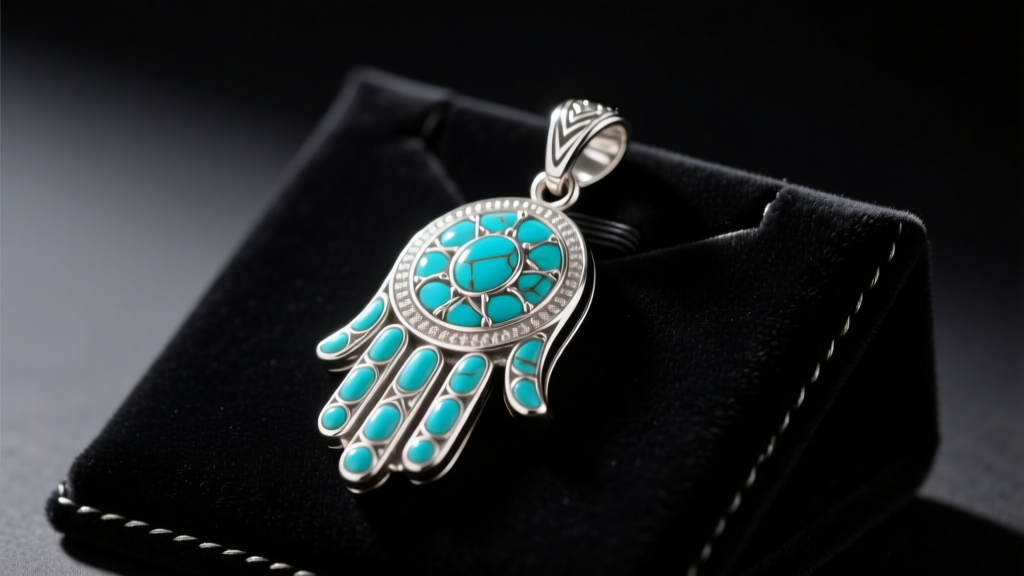
The Fatima Hand, widely recognized as the Hamsa, is a powerful symbol of protection, blessing, and strength. When worn as a necklace fatima hand pendant, it serves as both a spiritual talisman and a striking piece of mixed-media jewelry. However, the intricate anatomy of the Hamsa—featuring splayed fingers, central gemstone inlays (often an 'evil eye' motif), and mixed metalwork—makes it uniquely susceptible to damage, tarnish, and tangling.
Unlike simple geometric pendants, a necklace fatima hand often combines multiple materials in a single piece. You might find 925 sterling silver framing a porous turquoise cabochon, accented with vitreous enamel, and suspended from a delicate cable chain. Each of these materials reacts differently to environmental factors, skin oils, and commercial cleaning agents. As of 2026, jewelers emphasize that treating a mixed-media pendant as a single uniform material is the fastest way to ruin it. Below, we break down the exact protocols for maintaining your Hamsa jewelry.
Material-Specific Cleaning Protocols
To properly clean your necklace fatima hand, you must first identify the base metal and the gemstone or enamel accents. Using the wrong chemical agent can strip plating, dissolve adhesives, or fracture porous stones.
Sterling Silver and Oxidized Details
Sterling silver (92.5% silver, 7.5% copper) is prone to tarnishing when exposed to sulfur compounds in the air, forming silver sulfide. Many Hamsa designs intentionally feature oxidized (blackened) recesses to highlight the intricate fingers and palm lines.
- Do Not Use Silver Dips: Liquid silver dips contain harsh acids that will strip the intentional oxidation, leaving your pendant looking flat and overly shiny.
- The Polishing Cloth Method: Use a treated polishing cloth (like a Pacific Silver Cloth) to gently buff only the raised, high-polish areas of the silver hand. Avoid rubbing the recessed, darkened areas.
- Detail Cleaning: For dirt trapped between the silver fingers, use a soft-bristled baby toothbrush dipped in a mild solution of warm water and pH-neutral dish soap. Dry immediately with a microfiber cloth to prevent water spots.
Gold Vermeil and Plated Brass
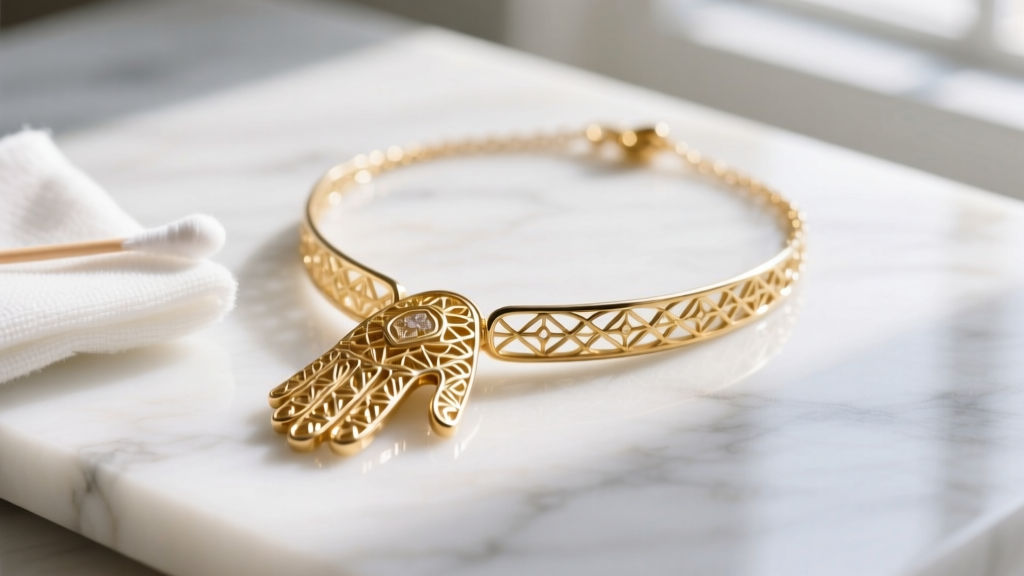
Gold vermeil consists of a thick layer of gold (legally required to be at least 2.5 microns in the US) plated over a sterling silver base. Brass pendants are often flash-plated with much thinner gold layers.
- Avoid Abrasives: Never use baking soda pastes, toothpaste, or stiff brushes on vermeil. These will scrub the gold layer right off, exposing the silver or brass beneath.
- Gentle Wash: Submerge the pendant in lukewarm water with a drop of mild castile soap for no more than two minutes. Gently agitate the water, rinse under a low-pressure stream, and pat dry.
Porous Gemstone Inlays (Turquoise, Malachite, Opal)
The central eye or palm of a necklace fatima hand is frequently set with turquoise or opal. According to the GIA Turquoise Care Guide, turquoise is a highly porous, hydrous copper aluminum phosphate with a Mohs hardness of just 5 to 6. It is routinely stabilized with resins or waxes.
Expert Warning: Never submerge turquoise, malachite, or opal in water. Chemicals, perfumes, and even prolonged exposure to skin oils can alter the stone's color matrix or degrade the stabilizing resin, causing the stone to crack or turn a dull, muddy green.
To clean these inlays, simply wipe the surface gently with a dry, untreated microfiber cloth. If the stone is heavily soiled, use a barely damp cloth and dry it instantly. For more details on delicate stones, refer to the GIA Opal Cleaning Guidelines.
Vitreous Enamel and Glass Evil Eye Accents
Enamel is essentially powdered glass fused to metal at high temperatures. While it provides brilliant, opaque colors (often the deep blues and whites of the Hamsa's eye), it is brittle. Avoid sudden temperature changes, which can cause the enamel to craze or pop off the metal backing.
The Ultrasonic Cleaner Trap: What to Avoid
Ultrasonic jewelry cleaners use high-frequency sound waves to create microscopic cavitation bubbles in a liquid solvent. While fantastic for solid diamond and platinum pieces, an ultrasonic cleaner is a death sentence for most necklace fatima hand pendants.
Why Ultrasonics Destroy Hamsa Pendants
- Shattered Enamel: The microscopic shockwaves from cavitation can easily fracture vitreous enamel and glass evil eye cabochons.
- Dislodged Gemstones: Many Hamsa pendants use bezel settings with adhesive backing for porous stones. The vibrations will soften the jeweler's epoxy, causing the turquoise or opal to fall out and rattle around in the machine's basket.
- Stripped Plating: The aggressive chemical solvents used in ultrasonic tanks, combined with the vibrations, will strip gold vermeil and rhodium plating in minutes.
Chain Maintenance and Tangle Prevention
The splayed fingers of the Fatima Hand act as natural hooks. If tossed into a jewelry box, the delicate links of a cable, box, or rope chain will inevitably wrap around the pendant's fingers, creating severe micro-tangles that can snap the chain if pulled.
The Straw Threading Technique
To prevent tangling during storage or travel, unclasp the chain and thread one end through a standard plastic drinking straw before clasping it shut. This keeps the chain rigid and prevents the links from migrating around the pendant's fingers.
Untangling Without Breaking
If your chain has already tangled around the Hamsa's fingers, do not pull. Lay the necklace flat on a hard surface. Apply a single drop of baby oil or mineral oil directly to the knot. Use two fine sewing needles to gently tease the links apart from the center of the knot outward. Once untangled, wash the chain with mild dish soap to remove the oil residue.

Storage Solutions to Prevent Tarnish and Scratching
Proper storage is 90% of jewelry maintenance. The environment inside a standard bedroom drawer fluctuates in humidity, accelerating the oxidation of copper alloys in sterling silver and brass.
- Anti-Tarnish Strips: Place 3M anti-tarnish strips inside your jewelry box. These strips absorb airborne sulfur compounds before they can react with your silver necklace fatima hand.
- Silica Gel Packets: For porous stones like turquoise and opal, moisture control is vital. Store the pendant in a sealed polyethylene bag with a small silica gel packet to maintain a dry microclimate.
- Individual Compartments: Never store your Hamsa pendant loose with other jewelry. The silver or gold fingers can easily scratch softer gemstones, or harder diamonds from other rings can scratch the Hamsa's metalwork.
Troubleshooting Common Fatima Hand Damage
| Issue | Cause | Expert Solution |
|---|---|---|
| Loose Gemstone Inlay | Adhesive degradation from water exposure or impact. | Do not use superglue (cyanoacrylate), which leaves a white residue. Use G-S Hypo Cement for a flexible, professional bond, or take it to a jeweler for ultrasonic re-setting. |
| Chipped Enamel | Impact against hard surfaces or dropping. | Enamel cannot be patched at home. The piece must be sent to a specialist enameler to be kiln-fired again. Alternatively, use a dab of clear jeweler's resin to seal the chip and prevent moisture ingress. |
| Vermeil Fading on Fingers | Friction from daily wear and skin acidity. | Once the gold wears through to the silver base, the pendant must be professionally re-plated. To delay this, remove the necklace before applying lotions or exercising. |
Final Thoughts on Hamsa Longevity
A necklace fatima hand is more than just an accessory; it is a culturally rich symbol meant to ward off negative energy and bring good fortune. By respecting the material science behind your specific pendant—whether it features delicate gold vermeil, porous turquoise, or brittle enamel—you ensure that the piece remains vibrant and intact. Commit to a gentle, dry-cleaning routine, avoid the temptation of ultrasonic machines, and store your talisman with the same care and intention with which you wear it.


