Selecting a Coin for Necklace Pendants: A Complete Buyer's Guide
Discover how to choose, authenticate, and style the perfect coin for necklace pendants. Learn about metal grades, bezels, and historical options.

The Intersection of Numismatics and Jewelry Design
Wearing history around your neck is a profound statement. As we navigate the jewelry landscape in 2026, the demand for authentic, historically significant coin jewelry has surged, moving far beyond cheap tourist souvenirs. However, selecting the right coin for necklace settings requires a careful balance of numismatic knowledge, metallurgical understanding, and jewelry design principles. Whether you are eyeing an ancient Roman bronze or a classic American silver dollar, this comprehensive buying guide will help you authenticate, mount, and style your pendant without compromising the artifact's integrity or your personal aesthetic.
Choosing Your Era: Ancient vs. Classic vs. Modern
The first step in acquiring a coin pendant is deciding which historical era resonates with you. Each category presents unique challenges regarding size, weight, and metal composition.
Ancient Coins (Greek, Roman, Byzantine)
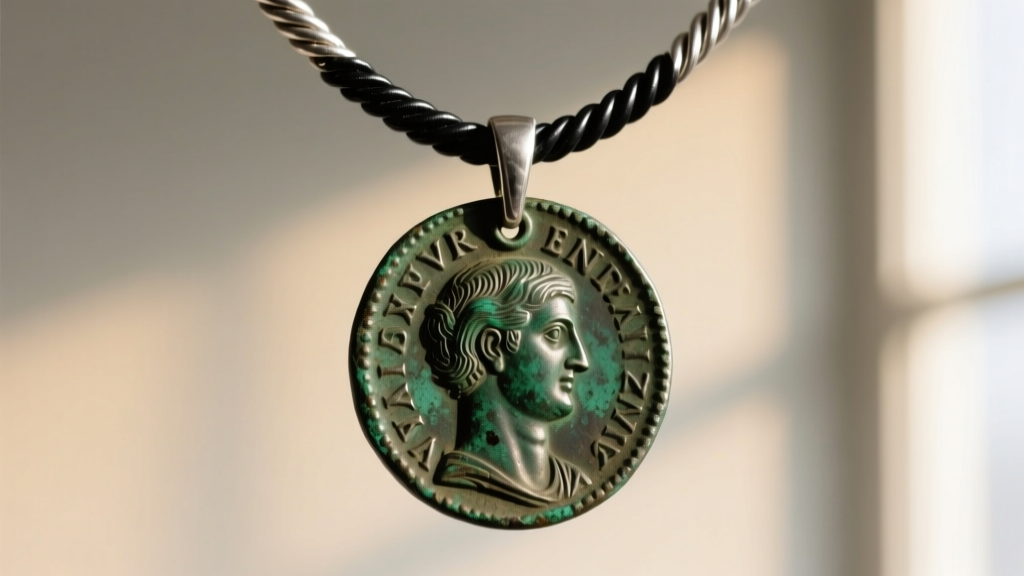
Ancient coins are incredibly popular for bespoke jewelry due to their compact size and rich patina. A typical Roman Antoninianus or Follis ranges from 18mm to 28mm in diameter and weighs between 3 and 8 grams. Because these were struck by hand on irregular flans, they offer a rugged, organic look. According to the American Numismatic Association (ANA), the market has recently shifted toward 'raw' and uncleaned ancients, as collectors and jewelers alike now appreciate the natural earthen patina over harshly polished surfaces.
Classic Silver Dollars (Morgan, Peace, Trade)
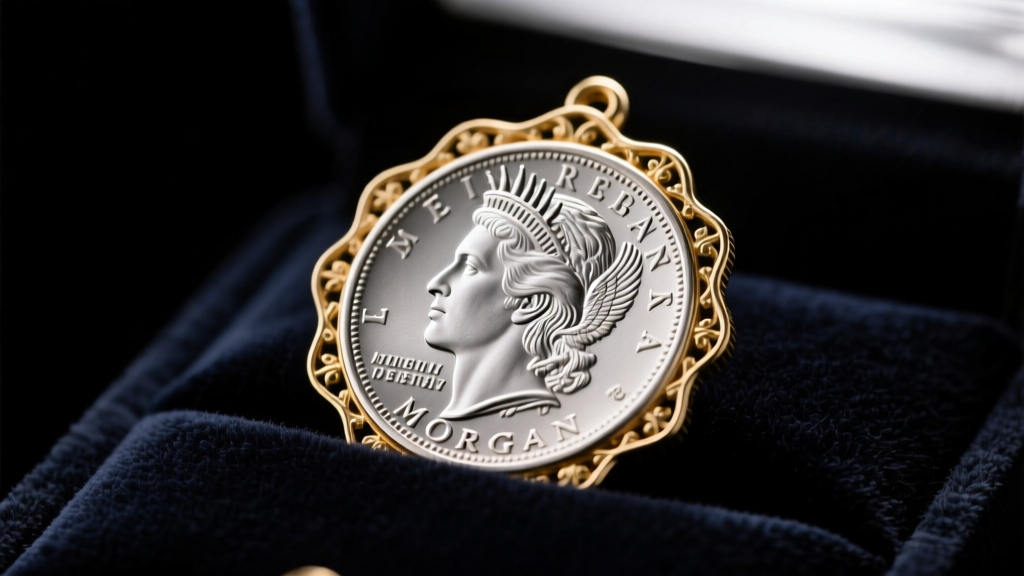
For a bold, substantial statement, classic US silver dollars are unmatched. The iconic Morgan Silver Dollar (minted 1878–1921) measures exactly 38.1mm in diameter and weighs 26.73 grams. Composed of 90% silver and 10% copper, these coins offer brilliant luster but require robust chain pairings due to their significant weight.
Modern Bullion and Commemoratives
While modern bullion coins like the Canadian Maple Leaf or American Eagle are beautiful, their high relief and strict .999 fine silver or .9999 fine gold compositions make them softer and more prone to scratching when worn as daily jewelry. If choosing modern bullion, opt for fractional sizes (e.g., 1/10 oz) to keep the pendant lightweight.
| Coin Type | Era | Avg. Weight | Metal Purity | Ideal Bezel Type |
|---|---|---|---|---|
| Roman Bronze | Ancient (1st-4th C.) | 3g - 8g | Bronze/Billon | Soldered Frame |
| Morgan Dollar | Classic (1878-1921) | 26.73g | .900 Silver | Heavy Prong Snap |
| British Sovereign | Classic (19th-20th C.) | 7.98g | 22k Gold (.916) | 14k Gold Bezel |
| Maple Leaf (1/10 oz) | Modern (1982-Present) | 3.11g | .9999 Gold | Protective Frame |
Metallurgy and Skin Chemistry: What to Watch For
Not all coin metals react well to prolonged skin contact. Understanding the metallurgical breakdown of your chosen coin for necklace wear is crucial for both maintenance and comfort.
- .900 Coin Silver: Found in classic US dollars, the 10% copper alloy provides structural hardness but makes the coin susceptible to silver sulfide tarnish when exposed to sulfur in the air and skin oils.
- Bronze and Copper: Ancient bronzes often develop a vibrant green patina (verdigris). While visually stunning, acidic skin pH can cause the copper to leach, leaving a green stain on your chest. Applying a micro-thin layer of museum-grade wax (like Renaissance Wax) to the reverse of the coin prevents this without altering the obverse design.
- 22k Gold (e.g., British Sovereigns, Krugerrands): Alloyed with copper or silver for durability, 22k gold is highly resistant to tarnish and skin reactions, making it the premier choice for heirloom-quality pendants.
Mounting Methods: Preserving the Artifact
The golden rule of numismatic jewelry is absolute: Never drill a hole in a collectible coin. Drilling instantly destroys a coin's numismatic premium and introduces structural weak points. Instead, rely on professional mounting techniques. Jewelry suppliers like Rio Grande offer specialized bezel settings designed specifically for standard coin diameters.
1. Snap Bezels (Prong Mounts)
Snap bezels feature small metal prongs that fold over the edge (lip) of the coin to hold it in place. They are cost-effective and allow the coin to be removed later. However, they can trap moisture against the coin's surface, accelerating localized tarnishing. Ensure the bezel is made of a compatible metal (e.g., a sterling silver bezel for a silver coin) to prevent galvanic corrosion.
2. Soldered Custom Bezels
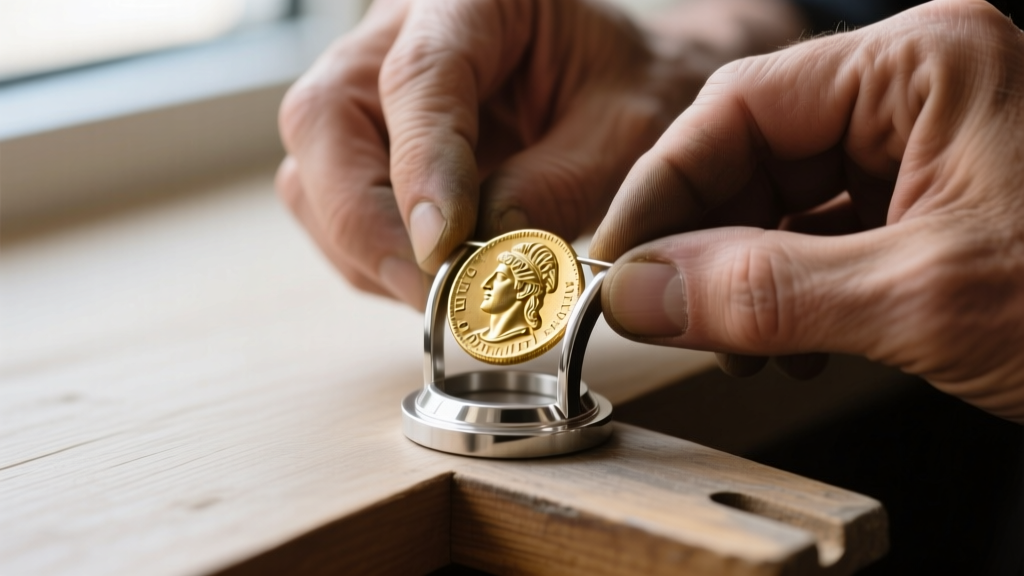
For irregular ancient coins that do not fit standard commercial snap bezels, a master jeweler will fabricate a custom soldered bezel. This involves creating a precise metal 'cup' or frame that the coin drops into, with the edges gently burnished over the coin's rim. This provides the most secure hold and a seamless, high-end aesthetic.
3. Glue-In Mounts (The Option to Avoid)
Cheap souvenir shops often use adhesive to stick coins into flat-back bezels. Over time, body heat and humidity degrade the glue, leading to lost artifacts. Avoid any pendant that relies solely on industrial adhesives for structural integrity.
Pairing the Right Chain with Your Coin Pendant
A common failure point in coin jewelry is the chain snapping under the pendulum effect of a heavy coin. The chain must be rated to support at least three times the weight of the pendant to account for kinetic stress during movement.
Chain Sizing Guidelines
When styling a heavy coin for necklace wear, such as a 26-gram Morgan Dollar, avoid delicate chains. Opt for a 2.5mm to 3.5mm Rope, Cuban, or Figaro chain in solid sterling silver or 14k gold. These interlocking link patterns distribute weight evenly and resist stretching. Conversely, a lightweight 3-gram Roman bronze requires only a 1.2mm to 1.5mm cable or box chain to maintain visual proportionality without overwhelming the small artifact.
Authentication and Sourcing Strategies
The secondary market is flooded with cast counterfeit coins, particularly high-value gold pieces and rare ancient bronzes. To protect your investment, adopt a rigorous sourcing strategy.
- Buy Slabbed Coins: For classic and modern coins, purchase pieces graded and encapsulated by the Numismatic Guaranty Company (NGC) or PCGS. Many high-end jewelers now create custom transparent bezels that house the entire tamper-evident slab, allowing you to wear a certified investment-grade asset safely.
- Request Provenance for Ancients: When buying ancient coins, reputable dealers will provide a certificate of authenticity detailing the coin's excavation history or auction provenance. This is vital not only for authenticity but to ensure the piece was not illicitly looted from protected archaeological sites.
- Beware of 'Whizzed' or Cleaned Coins: A harshly cleaned coin will have a dull, porous surface and lack original mint luster. In the numismatic community, cleaned coins are considered damaged. Always look for original toning and natural surface preservation.
Final Thoughts on Care and Maintenance
To keep your coin pendant pristine, remove it before swimming in chlorinated pools or entering hot tubs, as chlorine reacts violently with the copper alloys found in both silver and gold coins. Store the necklace in an anti-tarnish cloth pouch when not in wear, and occasionally clean the mounting hardware with a soft polishing cloth, taking care not to abrade the historical surface of the coin itself. By respecting the history and metallurgy of your chosen piece, you transform a simple accessory into a wearable museum exhibit.


