How to Clean and Maintain Your Delicate Collarbone Necklace
Discover expert tips to clean, store, and maintain your delicate collarbone necklace. Keep your 14k gold and sterling silver chains tarnish-free.

The collarbone necklace—typically measuring between 14 and 16 inches in length—is a foundational staple of modern jewelry layering and minimalist styling. Because it sits precisely on the clavicle, this specific length is subjected to constant friction, direct contact with skin oils, and heavy exposure to cosmetic products. Unlike longer pendant chains that swing freely, a collarbone necklace hugs the skin, making it uniquely vulnerable to sebum buildup, perfume degradation, and micro-tangles. Maintaining the pristine condition of these delicate chains requires a targeted approach that goes far beyond a quick wipe with a generic polishing cloth.
The Anatomy of Collarbone Necklace Wear and Tear
To properly care for your jewelry, you must first understand its physical vulnerabilities. Most high-quality collarbone necklaces are crafted from incredibly fine wire, typically ranging from 20-gauge (0.81mm) to 22-gauge (0.64mm). While these delicate dimensions provide an elegant, barely-there aesthetic, they lack the structural rigidity of heavier chains. Styles like the cable, rolo, and box chain are particularly prone to trapping dead skin cells and lotion residue within their interlocking links.
Furthermore, the hardware on a collarbone necklace is usually scaled down to match the delicate chain. A standard 5mm or 6mm spring ring clasp contains a tiny internal steel spring that is highly susceptible to corrosion if exposed to chlorine or saltwater. Understanding these mechanical and material limitations is the first step toward extending the lifespan of your favorite everyday pieces.
Step-by-Step Cleaning Protocols by Material
Different metals react uniquely to environmental factors and cleaning agents. Using the wrong chemical can strip plating or permanently damage the alloy structure. Here is how to safely clean the most common collarbone necklace materials.
Solid Gold (14k and 18k)
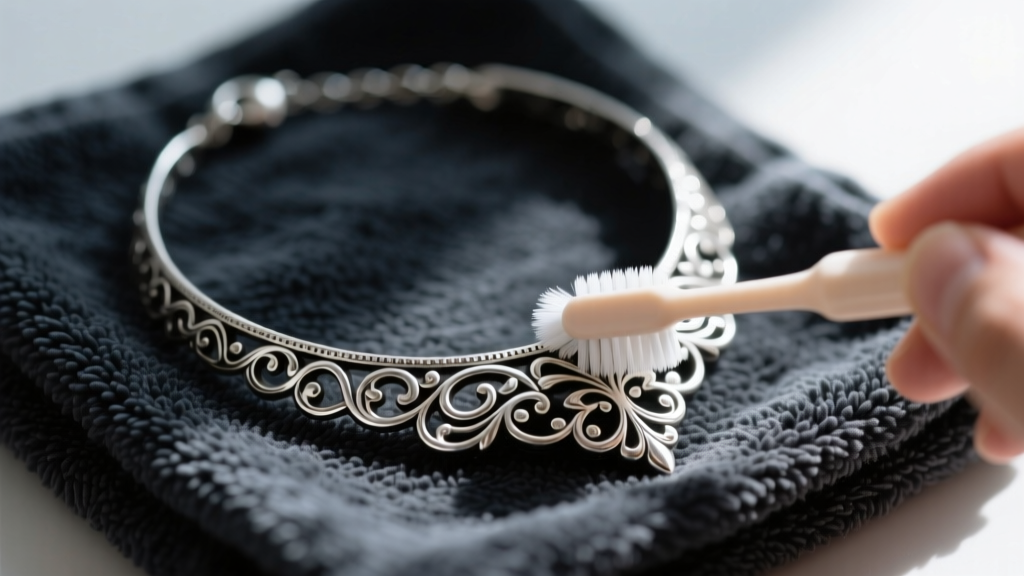
Solid gold is highly resistant to tarnish, but it easily accumulates a dulling film of soap scum and body oils. According to the Gemological Institute of America (GIA), the safest way to clean gold alloys is with a mild, phosphate-free dish soap and lukewarm water. Mix a few drops of soap into a bowl of warm water and let the necklace soak for 15 to 20 minutes. Gently agitate the chain with your fingers, then use a soft-bristled baby toothbrush to lightly sweep the clasp area and individual links. Rinse thoroughly under lukewarm running water and pat dry with a lint-free microfiber cloth.
Sterling Silver (925)
Sterling silver contains 92.5% pure silver and 7.5% copper. The copper content makes it highly reactive to sulfur compounds in the air and on the skin, resulting in silver sulfide—commonly known as tarnish. For light tarnish, use a specialized silver polishing cloth impregnated with jeweler's rouge. Never use liquid silver dips on delicate collarbone chains, as these harsh acids can strip the metal's natural patina and weaken the fine solder points at the clasp. For stubborn grime, a brief soak in warm soapy water followed by gentle brushing is recommended, provided you dry the piece immediately and completely to prevent water spots.
Gold Vermeil and Plated Pieces
Gold vermeil consists of a thick layer of gold (at least 2.5 microns) bonded over a sterling silver base. Plated pieces feature an even thinner microscopic layer of gold over brass or copper. Never use ultrasonic cleaners, liquid dips, or abrasive brushes on vermeil or plated collarbone necklaces. The friction and chemicals will strip the gold layer, exposing the base metal beneath. Instead, simply wipe the chain gently with a damp, lint-free cloth and immediately buff it dry.
Material-Specific Cleaning Matrix
Use the following reference table to ensure you are pairing the correct cleaning agent and tool with your specific necklace material.
| Material | Safe Cleaning Agent | Recommended Tool | Drying Method |
|---|---|---|---|
| 14k / 18k Solid Gold | Phosphate-free dish soap + warm water | Soft baby toothbrush | Air dry or microfiber cloth |
| 925 Sterling Silver | Silver polishing cloth or mild soap | Jeweler's rouge cloth | Immediate towel dry |
| Gold Vermeil | Lukewarm water only (no soap) | Damp lint-free cotton cloth | Immediate towel dry |
| Gold Plated (Brass Base) | Dry or barely damp cloth | Microfiber polishing cloth | Air dry |
Daily Maintenance and the 'Last On, First Off' Rule
Preventative care is vastly superior to restorative cleaning. The golden rule of jewelry maintenance is 'Last On, First Off.' Your collarbone necklace should be the very last item you put on after applying skincare, sunscreen, perfume, and makeup, and the very first item you take off when you return home. Chemical UV filters in sunscreens and the alcohol in perfumes can create a stubborn, cloudy film on gold chains and accelerate the oxidation process in sterling silver.
Additionally, always remove your collarbone necklace before swimming. Chlorine in pools and hot tubs can cause a chemical reaction with the copper and zinc alloys in 14k gold, leading to structural weakening and a phenomenon known as 'chlorine stress corrosion cracking,' which can cause your delicate chain to snap unexpectedly.
Proper Storage to Prevent Micro-Tangles
Because collarbone necklaces utilize fine-gauge chains, they are notorious for tangling when tossed loosely into a jewelry box. The interlocking links easily catch on one another, creating microscopic knots that are frustrating to undo and can permanently stretch the metal.
- Individual Polybags: Store each necklace in its own small, sealable plastic bag. Squeeze the air out before sealing to limit oxygen exposure, which slows down tarnishing.
- Anti-Tarnish Strips: Place a 3M anti-tarnish strip inside your jewelry box or storage bags. These strips absorb airborne sulfur compounds before they can react with your silver.
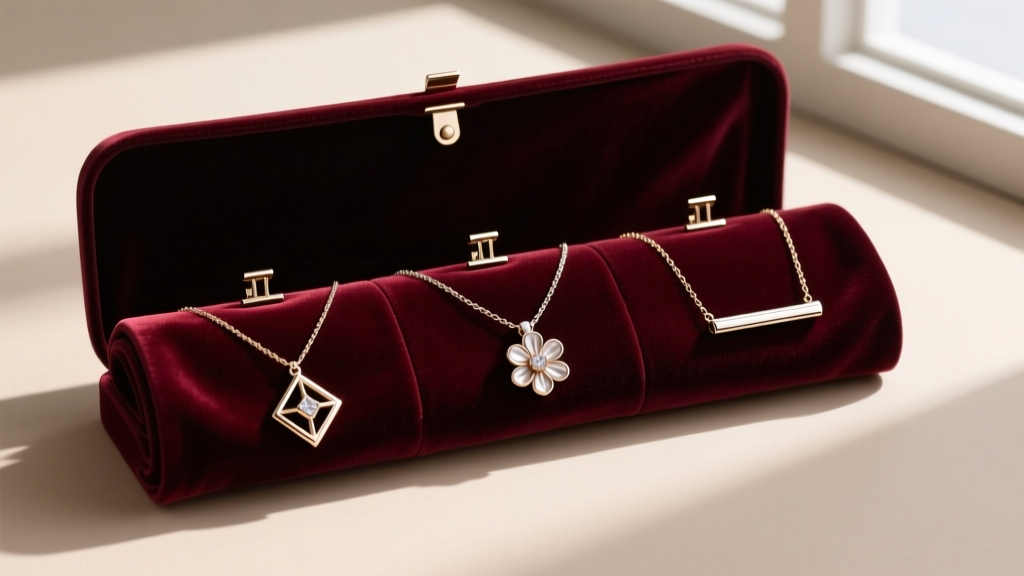
- Travel Rolls: When traveling, use a velvet jewelry roll with dedicated snap closures. Secure the clasp through the fabric loop to keep the chain taut and completely immobilized during transit.
Troubleshooting Common Collarbone Chain Issues
Even with meticulous care, fine chains present unique mechanical challenges. Here is how to troubleshoot the most common issues reported by jewelry professionals.
The Baby Powder Trick for Stubborn Knots
If your fine-gauge cable or box chain has tangled into a tight knot, do not pull at it—this will only tighten the metal and risk breaking the links. Instead, lay the necklace flat on a hard surface and sprinkle a generous amount of baby powder or cornstarch directly onto the knot. The powder acts as a dry lubricant, reducing the friction between the metal links. Use two fine sewing needles to gently tease the center of the knot outward. Once untangled, wash the chain in warm soapy water to remove the powder residue.
Combating 'Green Skin' Reactions
If your solid gold collarbone necklace leaves a green or black mark on your clavicle, it is not a sign of fake gold. It is a natural chemical reaction between the copper alloys in 14k gold and the acidic pH of your sweat, combined with environmental salts. To combat this, wipe the chain daily with a soft cloth to remove sweat buildup. If the issue persists, you can apply a microscopically thin layer of clear nail polish to the sections of the chain that touch your skin most frequently, or consider upgrading to an 18k gold or platinum chain, which contain significantly less reactive base metals.
Reviving a Stuck Spring Ring Clasp
The tiny lever on a 5mm spring ring clasp can easily become stuck due to a buildup of lotion or microscopic debris. Do not force the lever back with your fingernail, as you risk snapping the internal tension spring. Instead, place a tiny drop of mineral oil or sewing machine oil on a cotton swab and apply it directly to the seam of the clasp. Work the lever back and forth gently until the mechanism glides smoothly, then wipe away any excess oil.
Conclusion
A well-maintained collarbone necklace is an investment in timeless elegance. By understanding the specific gauge vulnerabilities, adhering to material-safe cleaning protocols, and utilizing strategic storage methods, you can ensure your delicate chains remain luminous and tangle-free for decades. Consistent, gentle care will keep your favorite clavicle-skimming pieces looking as brilliant as the day you first clasped them.


