Why The Crassula Baby Necklace Is 2026's Top Botanical Trend
Discover the crassula baby necklace trend for 2026. Explore botanical succulent pendants, baby cable chains, material grades, and styling tips.

The Botanical Shift: Why Crassula?
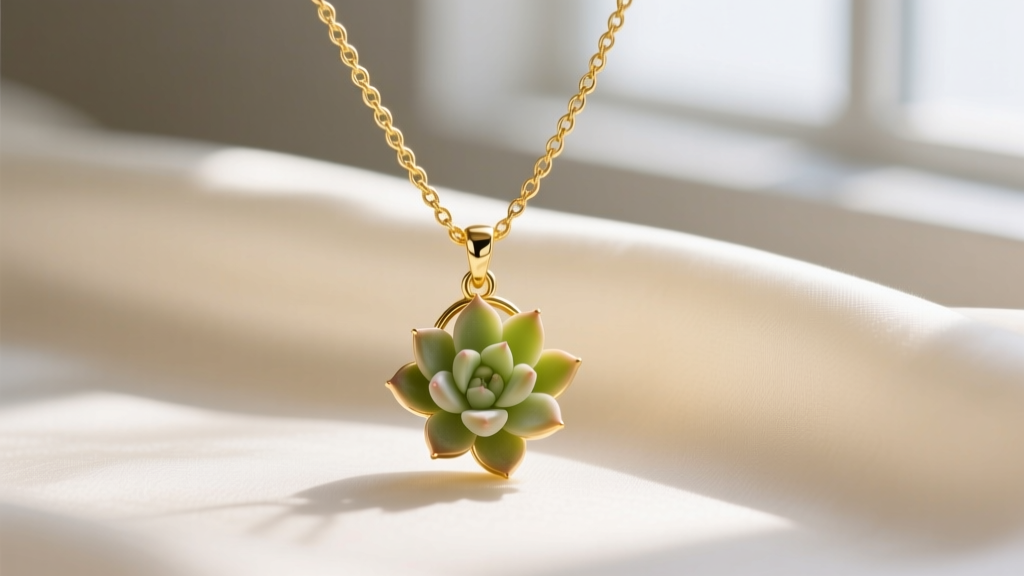
In the evolving landscape of nature-inspired jewelry, the crassula baby necklace has emerged as a defining staple of 2026's botanical trend. Moving away from the generic leaf silhouettes and daisy motifs that saturated the market in the early 2020s, contemporary jewelers are now focusing on hyper-specific, structurally complex flora. The Crassula ovata, commonly known as the Jade Plant or Money Tree, is celebrated not only for its distinct, fleshy, rounded leaves but also for its deep-rooted symbolism of prosperity, resilience, and growth. When paired with a delicate "baby" cable chain, the result is a piece that balances organic heaviness with ethereal lightness, creating a juxtaposition that resonates deeply with modern consumers seeking grounding, talismanic jewelry.
According to trend forecasts highlighted by JCK Online, botanical jewelry has shifted from mere aesthetic mimicry to emotional storytelling. The crassula baby necklace perfectly encapsulates this shift, serving as a wearable terrarium for the "plant parent" demographic and a subtle nod to sustainable, earth-conscious living.
Deconstructing the "Baby" Chain
To truly understand this trend, one must clarify the jewelry industry terminology. A "baby necklace" in this context does not refer to jewelry meant for literal infants; rather, it refers to the baby cable chain. This is a specific, ultra-fine variation of the classic cable chain, characterized by small, uniform, oval links.
Gauge, Tensile Strength, and Failure Modes
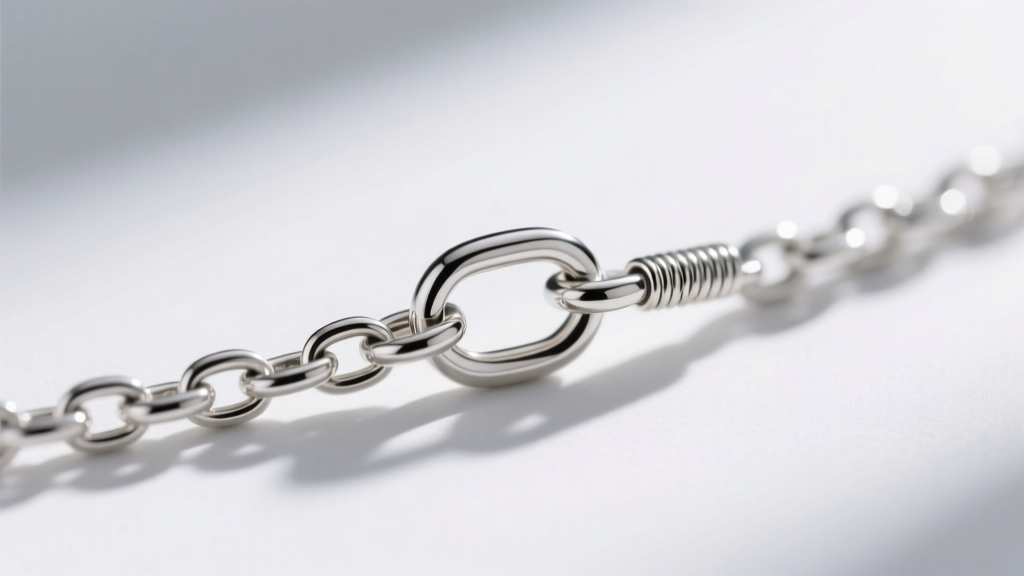
The anatomy of a high-quality baby chain requires precision engineering. Most premium crassula pendants are suspended on chains ranging from 1.0mm to 1.2mm in width, crafted from 22 to 24-gauge wire. While visually delicate, these chains must support pendants weighing between 3 to 6 grams.
- 14k Yellow Gold: The preferred metal for the chain, as its natural warmth complements the green enamel or oxidized silver of the Crassula pendant. However, 24-gauge 14k gold is susceptible to work hardening and can snap if subjected to repetitive torsion.
- 925 Sterling Silver: Offers higher tensile strength at a lower price point but requires rhodium plating to prevent tarnish, which can eventually wear off at the friction points between links.
Expert Troubleshooting: The most common failure point on a 1.1mm baby cable chain is the soldered jump ring connecting the pendant. Due to the low mass of the wire, capillary action during soldering can cause the ring to become brittle if not properly pickled and annealed. Always inspect the jump ring for smooth, flush solder joints rather than bulky, uneven blobs that indicate poor bench work.
Pendant Metallurgy and Enamel Work
Crafting a realistic Crassula pendant requires advanced metallurgy. The plump, convex nature of succulent leaves is difficult to achieve through traditional flat stamping. Instead, artisans utilize 3D CAD modeling and lost-wax casting to create the organic, asymmetrical curvature of the leaves.
Vitreous vs. Cold Enamel
To capture the vibrant, jade-green hue of the plant, jewelers rely on enameling. The choice of enamel drastically affects the necklace's longevity and price.
| Enamel Type | Process | Durability & Failure Modes | Price Tier |
|---|---|---|---|
| Vitreous (Fired) | Glass powder fused to metal at 1400°F+ | Highly scratch-resistant; will shatter or chip if dropped on hard tile. | $250 - $600+ |
| Cold (Epoxy/Resin) | Two-part resin cured at room temperature | Impact-resistant but yellows over time with UV exposure; prone to scratching. | $45 - $120 |
| Guilloché | Translucent enamel over engine-turned metal | Exceptional depth and light refraction; requires master artisan; fragile. | $800 - $1,500+ |
For everyday wear, a high-quality cold enamel set in a protective 14k gold bezel offers the best compromise between vibrant color and impact resistance.
Styling the Succulent: Layering Techniques
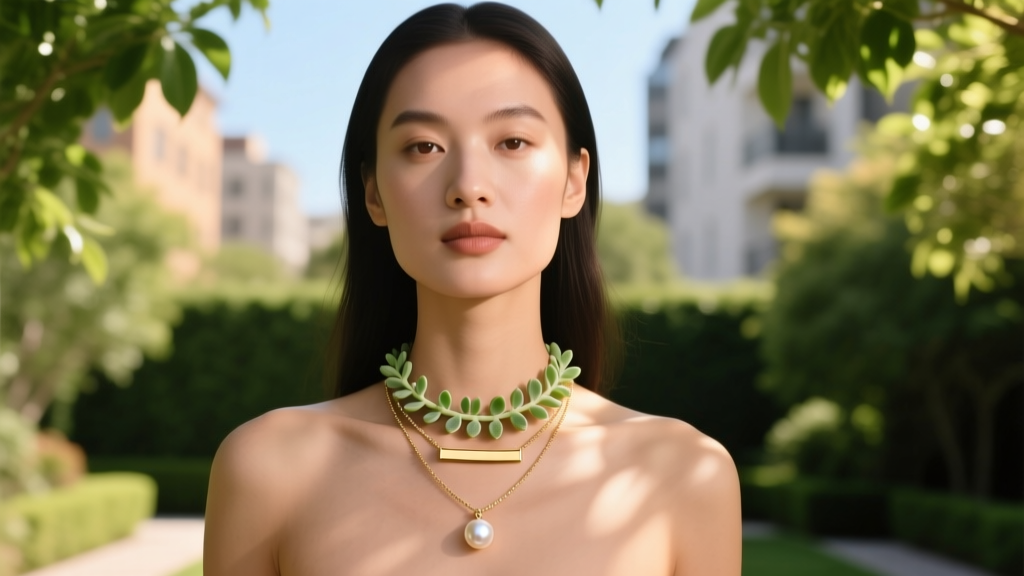
The crassula baby necklace is inherently versatile, but its true potential is unlocked through strategic layering. Because the baby chain is so fine, it acts as a "whisper" piece, allowing it to be stacked without overwhelming the neckline.
"The key to modern botanical layering is contrasting textures. Pair the organic, rounded forms of the Crassula pendant with rigid, geometric elements to prevent the look from becoming overly whimsical." — Contemporary Jewelry Styling Guidelines
The 2026 Layering Formula
- The Anchor (16 inches): A solid, 1.5mm herringbone or snake chain in 14k gold. This provides a liquid-metal base that catches the light.
- The Focal Point (18 inches): Your crassula baby necklace. The 2-inch drop ensures the succulent pendant rests perfectly in the hollow of the collarbone.
- The Accent (20 inches): A minimalist lariat or a single, bezel-set diamond solitaire (approx. 0.15 carats) on a slightly heavier 1.8mm rope chain to draw the eye downward.
Crucial Safety Distinction: Jewelry for Infants
While the term "baby necklace" in the fashion industry refers to the chain style, it is imperative to address the literal interpretation of the keyword. If you are searching for a Crassula-shaped necklace for an actual infant or toddler, standard metal baby cable chains and enamel pendants are strictly contraindicated.
According to the U.S. Consumer Product Safety Commission (CPSC), necklaces and cords pose a severe strangulation hazard to children under the age of three. Furthermore, small succulent pendants can easily detach and become choking hazards.
Safe Alternatives for Literal Babies
If the goal is to gift a botanical-themed keepsake to an infant, you must pivot away from traditional fine jewelry:
- Food-Grade Silicone: Opt for teething necklaces made from 100% food-grade, BPA-free silicone molded into succulent shapes. These must feature a breakaway clasp that snaps open under 5 pounds of pressure.
- Untreated Hardwood: Maple or beechwood beads carved into leaf shapes, strung on high-tensile paracord, are safer alternatives, though they should only be worn under direct adult supervision.
- Keepsake Boxes: The safest route for fine jewelry intended for a child is to purchase the 14k gold Crassula pendant and store it in a memory box until the child reaches an appropriate age (typically 12+ years) to wear it safely.
Final Verdict: Is It Worth the Investment?
The crassula baby necklace is more than a fleeting seasonal fad; it represents a permanent shift toward hyper-specific, meaning-driven botanical jewelry. When investing in this piece, prioritize the structural integrity of the chain's solder points and the UV-resistance of the enamel. By selecting a vitreous or high-grade epoxy enamel set in 14k gold, you ensure that your wearable symbol of growth and resilience will thrive for decades, outlasting the very plant that inspired it.


