Is Wearing a Cross Necklace a Sin? A Material & Faith Guide
Explore the question is wearing a cross necklace a sin while comparing the best tarnish-resistant metals for daily faith jewelry wear.

The Theological Context: Intent vs. Idolatry
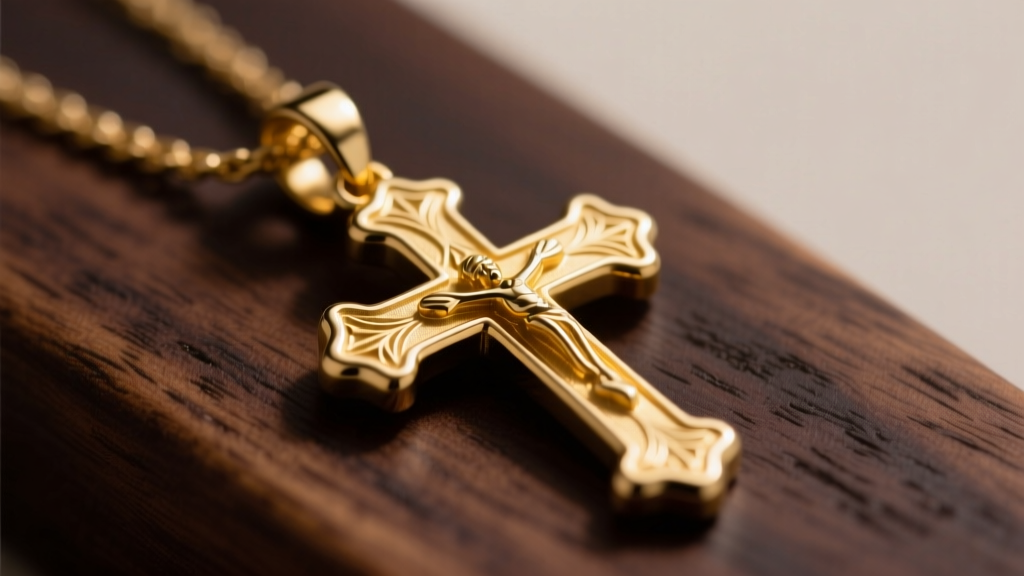
When individuals begin researching their faith and jewelry, a common and deeply personal query arises: is wearing a cross necklace a sin? The answer largely depends on theological interpretation and personal intent. Mainstream Christian denominations, including Catholicism, Eastern Orthodoxy, and most Protestant traditions, do not consider wearing a cross to be sinful. The confusion often stems from a strict interpretation of the Second Commandment (Exodus 20:4), which prohibits the creation of 'graven images' for the purpose of idol worship. However, theologians and apologetics organizations like GotQuestions clarify that a cross worn as a necklace is generally viewed as an icon or a memorial symbol—a visual reminder of Christ's sacrifice and the wearer's faith—rather than an idol possessing divine power itself.
Once the theological hurdle is cleared and the wearer decides to don a cross as a symbol of devotion, the focus shifts to the physical manifestation of that symbol. From a jeweler's perspective, how a cross necklace is crafted, the materials used, and its longevity all play a role in how the piece is respected and maintained over a lifetime of daily wear.
Material Longevity: Honoring the Symbol Through Quality
A religious pendant is often intended to be a lifelong companion, sometimes even passed down as an heirloom. Choosing a material that degrades, tarnishes heavily, or causes skin irritation can detract from the reverence of the piece. Understanding the metallurgical properties of common jewelry metals is essential for selecting a cross necklace that stands the test of time.
Sterling Silver vs. Argentium: The Tarnish Factor
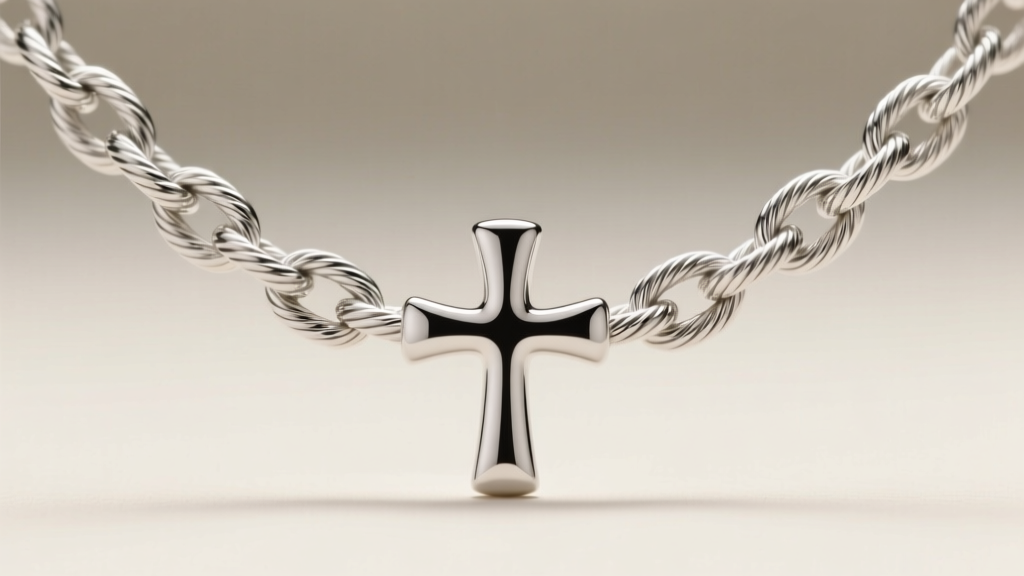
Traditional Sterling Silver (925) is an alloy consisting of 92.5% pure silver and 7.5% copper. While beautiful and historically significant, the copper content makes it highly susceptible to tarnishing. When exposed to sulfur compounds in the air, sweat, and cosmetics, the copper reacts to form silver sulfide, creating a dark, dull patina. For a daily-wear religious symbol, constant polishing can be tedious and may eventually wear down intricate filigree details on the cross.
Enter Argentium Silver. This modern alloy replaces some of the copper with germanium (typically resulting in a 93.5% or 96% silver content). The germanium forms a transparent, self-healing oxide layer on the surface that drastically slows down tarnishing. An Argentium silver cross pendant will remain bright and reflective for years with minimal maintenance, making it a superior choice for a low-maintenance, high-reverence daily wear piece.
Solid Gold Karats: 14K vs. 18K for Daily Devotion
Gold is the traditional standard for fine religious jewelry, prized for its incorruptibility—a fitting metaphor for eternal faith. However, pure 24K gold is too soft (approx. 25-30 on the Vickers hardness scale) for daily wear. According to the Gemological Institute of America (GIA), gold must be alloyed with metals like copper, silver, and zinc to increase its durability.
- 18K Gold (75% Gold): With a Vickers hardness of roughly 110-120 HV, 18K gold offers a rich, deep yellow color but is relatively soft. It is best suited for smooth, cast crosses without sharp edges or delicate prong-set gemstones, as it will scratch and dent more easily over decades of wear.
- 14K Gold (58.3% Gold): Harder and more durable (approx. 130-150 HV), 14K gold is the optimal choice for intricate, detailed cross designs, diamond-accented crucifixes, or pieces worn by individuals with active, hands-on lifestyles. It resists deformation and maintains its structural integrity far better than 18K.
Hypoallergenic Metals for Uninterrupted Wear
For many, a cross necklace is never meant to be taken off. It is worn in the shower, during exercise, and while sleeping. This constant exposure to moisture and friction requires metals that are not only corrosion-resistant but also hypoallergenic. Nickel allergies (contact dermatitis) affect roughly 10-20% of the population, making the choice of base metal critical.
Surgical Stainless Steel (316L): Unlike standard 304 stainless steel, 316L contains 2-3% molybdenum, which drastically increases its resistance to pitting corrosion from chlorides (like sweat and swimming pool water). It is highly affordable, exceptionally strong, and generally safe for sensitive skin, provided the wearer does not have a severe, specific nickel allergy.
Titanium (Grade 5 vs. Grade 2): Titanium is entirely biocompatible and hypoallergenic. While Grade 2 (Commercially Pure) titanium is softer and easier to machine, Grade 5 (Ti-6Al-4V) is an aerospace-grade alloy that is significantly harder and more scratch-resistant. A Grade 5 titanium cross pendant offers a modern, matte-grey aesthetic that will literally never tarnish, rust, or react with human skin.
Comprehensive Material Comparison Chart
To help you decide which metal best aligns with your budget, lifestyle, and maintenance preferences, review the data table below:
| Metal / Alloy | Composition | Tarnish Resistance | Durability (Hardness) | Avg. Price Range (Pendant) |
|---|---|---|---|---|
| 316L Stainless Steel | Fe, 16-18% Cr, 10-14% Ni, 2-3% Mo | Excellent | Very High (150-190 HV) | $15 - $45 |
| 925 Sterling Silver | 92.5% Ag, 7.5% Cu | Poor (Requires polishing) | Moderate (60-70 HV) | $30 - $120 |
| Argentium Silver | 93.5% Ag, Cu, Germanium | Very Good | Moderate (75-85 HV) | $60 - $180 |
| 14K Solid Gold | 58.3% Au, Cu, Ag, Zn | Excellent | High (130-150 HV) | $150 - $600+ |
| Grade 5 Titanium | Ti, 6% Al, 4% V | Perfect (Inert) | Extremely High (330-350 HV) | $40 - $150 |
Chain Gauge, Bail Mechanics, and Galvanic Corrosion
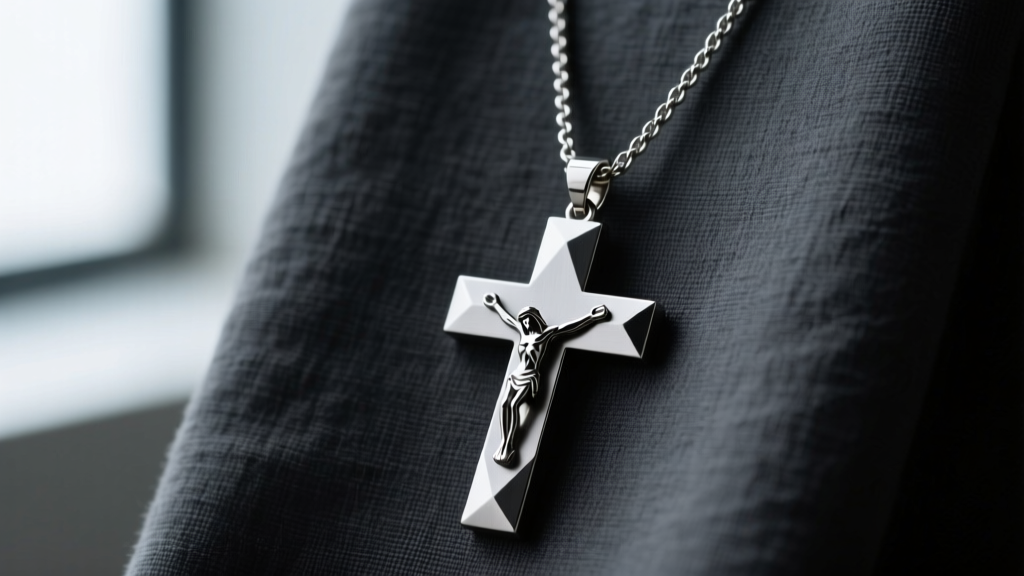
The pendant is only half the equation; the chain that suspends it is equally vital. A common failure point in religious jewelry is the bail—the loop at the top of the cross through which the chain passes. If you pair a heavy, solid 14K gold cross with a thin, hollow 1.0mm cable chain, the friction will eventually wear through the bail or snap the chain. As a rule of thumb, the chain's width should not exceed 60% of the bail's inner diameter to allow for natural movement and reduce abrasive wear.
Furthermore, jewelers must warn against galvanic corrosion. This occurs when two dissimilar metals (e.g., a sterling silver cross and a stainless steel chain) are in constant contact in the presence of an electrolyte (human sweat). The less noble metal (in this case, the silver/copper alloy) will act as an anode and corrode at an accelerated rate. To preserve the integrity of your cross necklace, always ensure the pendant and the chain are made of the exact same metal, or use a protective barrier like a small silicone o-ring inside the bail if mixing metals is unavoidable.
Clasp Security for Sentimental Pieces
Losing a deeply sentimental or religiously significant pendant is a devastating experience. Standard spring-ring clasps are notorious for failing due to weak internal springs. For any cross pendant of significant material or emotional value, upgrade to a lobster clasp or a box clasp with a figure-eight safety catch. Lobster clasps feature a solid internal spring mechanism and a thicker casting, providing a secure closure that can withstand the occasional snag on clothing.
Final Verdict: Faith, Fashion, and Metallurgy
Ultimately, the question of whether wearing a cross necklace is a sin is answered by the heart and intent of the wearer, a concept well-documented by historical and theological resources like Britannica's overview of religious symbols. Once the spiritual intent is established, the physical execution of that symbol should reflect its importance. By selecting high-quality, appropriately graded materials—whether it's the incorruptible nature of 14K gold, the modern resilience of Grade 5 titanium, or the low-maintenance brilliance of Argentium silver—you ensure that your outward expression of faith remains as enduring and steadfast as the beliefs it represents.


