The Cruel Intentions Coke Necklace: Sourcing & Repair Guide
Troubleshoot your Cruel Intentions coke necklace. Learn how to fix broken hinges, prevent powder leaks, and source high-quality apothecary lockets.

The Legacy of the Cinematic Secret Compartment
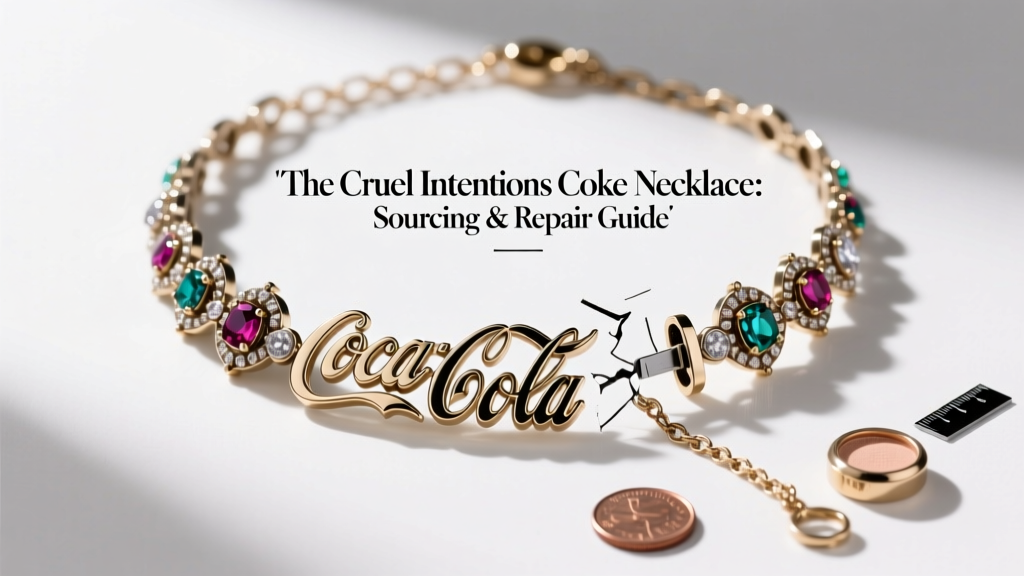
When Kathryn Merteuil casually unscrewed the top of her ornate cross pendant in the 1999 cult classic Cruel Intentions, she cemented the "secret compartment necklace" as a permanent fixture in pop-culture jewelry history. Today, the search for a cruel intentions coke necklace is rarely about the illicit contents; rather, it is driven by a fascination with Y2K cinema fashion, apothecary aesthetics, and the mechanical intrigue of hidden jewelry. However, translating a movie prop into a functional, everyday piece of jewelry presents unique engineering and sourcing challenges.
As of 2026, the resurgence of edgy, narrative-driven jewelry has flooded the market with cheap replicas that fail within weeks. Hinges snap, seals degrade, and base metals cause severe contact dermatitis. This guide serves as your definitive troubleshooting manual for sourcing, repairing, and maintaining high-quality secret compartment lockets.
Sourcing: Authentic Replicas vs. Functional Apothecary Lockets
The primary issue enthusiasts face is the delta between "costume replicas" and "functional jewelry." Most mass-produced replicas are cast from zinc alloy using rubber molds, resulting in soft, brittle hinge pins that cannot withstand the torque of daily opening and closing. To avoid this, you must pivot your search from "movie replica" to "apothecary locket" or "memento mori reliquary pendant," focusing heavily on metallurgy.
Material Matrix: What to Look For
According to the Gemological Institute of America (GIA), understanding base metals and plating is crucial for avoiding skin reactions and mechanical failure. Below is a breakdown of common materials used in compartment necklaces:
| Material | Hinge Durability | Skin Safety | Best Application |
|---|---|---|---|
| Zinc Alloy (Zamac) | Poor (Pins bend/break) | Low (Contains nickel/lead) | Display-only replicas |
| Solid Brass | Good (Machinable) | Medium (Can cause verdigris) | Vintage-style lockets |
| 316L Surgical Steel | Excellent (High tensile) | High (Hypoallergenic) | Modern, functional vials |
| Sterling Silver (925) | Fair (Soft metal, hinges wear) | High | High-end heirloom lockets |
Expert Tip: If you want the dark, oxidized look of the original movie prop without the toxicity of cheap alloys, look for 316L stainless steel treated with a PVD (Physical Vapor Deposition) black coating. PVD bonds at a molecular level, meaning it will not flake off into the hidden compartment like cheap electroplated paint.

Troubleshooting Common Mechanical Failures
Secret compartment necklaces rely on micro-mechanics. When your cruel intentions coke necklace fails, it is almost always due to one of two engineering flaws: hinge fatigue or seal degradation.
1. The Hinge Snap & Clasp Fatigue
Hinged lockets (like the traditional cross or book-style pendants) use a micro-pin to hold the two halves together. Cheap manufacturers use 0.6mm brass pins that shear under the lateral pressure of a fingernail prying the locket open.
- The Fix: If the pin pushes out but isn't broken, use a jeweler's bench block and a 1mm flat-nose punch to gently "peen" (mushroom) the ends of the pin, creating a mechanical stop.
- The Upgrade: If the pin is broken, replace it with a 1.2mm or 1.5mm 316L stainless steel wire. You can purchase pre-cut hinge pins from jewelry supply houses. Insert the new pin and use a micro-torch to slightly melt and flatten the tips, securing the hinge permanently.
- Lubrication: Never use WD-40 on jewelry hinges; it attracts dust and degrades rubber seals. Use a microscopic drop of synthetic watch oil (like Moebius 9010) applied with a fine needle.
2. Powder Leakage & Seal Degradation
For screw-top vial pendants or hinged lockets meant to hold fine powders, the internal seal is critical. Most factory pendants use cheap silicone O-rings with a low durometer (softness) rating, which flatten out and tear after a few weeks of friction.
- The Diagnosis: If your compartment is leaking fine dust onto your shirt, remove the O-ring and inspect it for flat spots or micro-tears.
- The Solution: Source replacement O-rings made from Nitrile (Buna-N) with a Shore A hardness rating of 70. This specific material is highly resistant to friction and chemical breakdown. Measure the inner diameter (ID) and cross-section (CS) of your original ring using digital calipers to order exact replacements from industrial suppliers like McMaster-Carr.
- Thread Stripping: If the screw threads on a steel vial are stripped, wrap the male threads with a single layer of PTFE (plumber's) tape. This fills the microscopic gaps, creating a friction-fit seal that prevents both leaks and accidental unscrewing.
Chain Pairing & Weight Distribution
A functional secret compartment pendant is inherently heavy. The addition of thick walls (required to hide the hollow interior) and steel hinge mechanisms often pushes the pendant weight past 25 grams. Pairing this with a delicate 1.0mm chain is a recipe for a snapped clasp and a lost pendant.
"When repairing heavy pendants, we frequently see spring-ring clasps fail because the tension spring inside is not rated for the dynamic shock of a heavy pendant swinging. Always upgrade to a soldered lobster clasp." — Jewelers Mutual Repair Guidelines
Optimal Chain Specs for Heavy Lockets:
- Style: Box chains or Wheat chains. Avoid rope chains, as the twisted grooves trap skin oils and are difficult to clean when they swing against the neck.
- Gauge/Width: 2.0mm to 3.0mm. This provides the necessary tensile strength to support a 30g+ pendant without stretching.
- Clasp: A 12mm or 14mm stainless steel lobster clasp with a soldered jump ring. Never use an open jump ring to attach the clasp to the chain; the heavy pendant will eventually pry the gap open.

Maintenance: Keeping Your Secret Compartment Pristine
Cleaning a secret compartment necklace requires a departure from standard jewelry care. The interior mechanics and seals dictate a more cautious approach.
What to Avoid
Never put a hinged or sealed compartment pendant in an ultrasonic cleaner. The high-frequency cavitation bubbles will force water and cleaning solvents past the O-ring seals and into the hidden chamber. Furthermore, the vibrations can loosen micro-screws and peened hinge pins, causing the pendant to spontaneously open while worn.
The Proper Cleaning Protocol
- Exterior Polish: Use a dry, untreated microfiber cloth for daily wiping. For PVD black steel, avoid silver polishing dips entirely, as the sulfur compounds can stain the matte finish.
- Interior Purge: To clean residue from the hidden compartment, use a cotton swab lightly dampened with 99% Isopropyl Alcohol. The 99% concentration is critical because it contains almost no water, meaning it will evaporate instantly without causing flash-rust on internal steel threads or degrading rubber O-rings.
- Seal Conditioning: Once every six months, apply a microscopic smear of pure silicone grease to the O-ring. This keeps the nitrile supple and ensures an airtight seal when the pendant is closed.
Styling the Edgy Locket for Modern Wear
The key to pulling off a cruel intentions coke necklace in 2026 without looking like you are wearing a Halloween costume is contrast and minimalism. The original movie prop was highly ornate, gothic, and worn with chaotic, maximalist Y2K styling. To modernize the aesthetic, treat the pendant as a singular focal point.
Pair a matte-black or heavily oxidized silver apothecary cross with structured, monochromatic clothing. A heavy steel vial pendant looks exceptionally striking layered over a dark, ribbed turtleneck or paired with a sharp, tailored blazer. By allowing the mechanical intrigue and heavy drape of the pendant to speak for itself, you elevate the piece from a mere movie replica to a sophisticated, conversation-starting artifact of contemporary jewelry design.