Crusader Cross Necklace: Metal Properties Compared
Discover the best metals for a crusader cross necklace. We compare sterling silver, stainless steel, and gold for durability, weight, and skin safety.

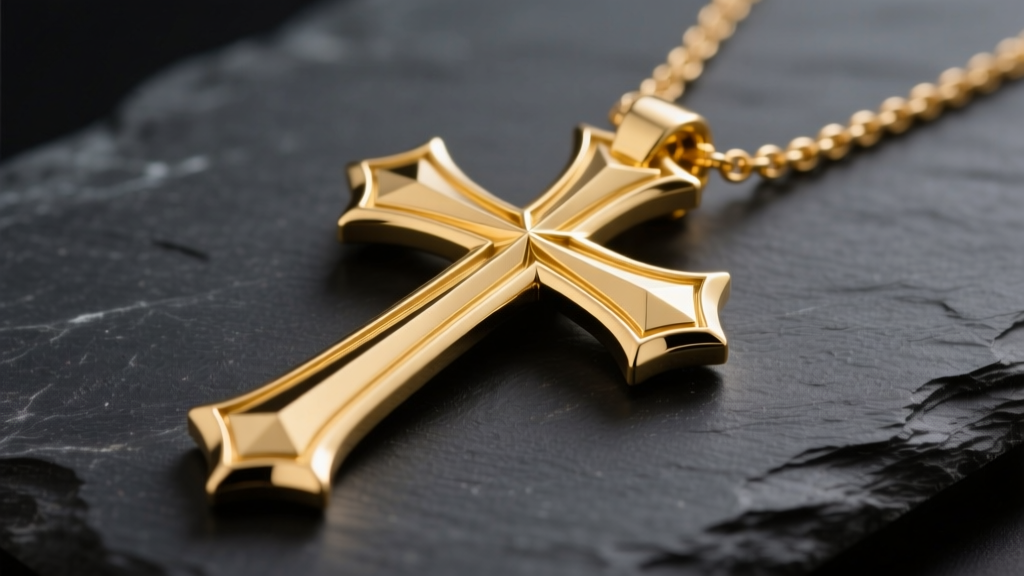
The Anatomy and Weight Distribution of a Crusader Cross
The crusader cross necklace is defined by its distinct silhouette: a shorter horizontal beam intersecting a significantly elongated vertical beam. Historically worn by knights and clergy, this design creates a unique center of gravity compared to standard Latin or Celtic crosses. Because the bulk of the metal weight sits below the intersection, the pendant exerts a continuous downward pull on the bail and the lower links of the chain. Understanding this physical property is the first step in selecting the right material, as the alloy must possess adequate tensile strength to prevent bail deformation over years of daily wear.
When evaluating materials for a crusader cross necklace, jewelers and metallurgists look beyond mere aesthetics. Factors such as Vickers hardness (HV), specific gravity (density), and galvanic corrosion resistance dictate how the piece will age, how it will feel against the sternum, and whether it will trigger contact dermatitis. Below, we break down the exact metallurgical properties of the most common alloys used in modern and heirloom cross pendants.
Metallurgical Breakdown: Silver, Steel, and Gold
925 Sterling Silver: The Traditional Standard
Sterling silver remains the most popular choice for historically inspired jewelry. By definition, 925 sterling silver consists of 92.5% pure silver and 7.5% alloying metals, almost exclusively copper. The copper is essential; pure silver (999 fine) is far too soft to hold the sharp, beveled edges characteristic of a crusader cross. However, this copper content is also the alloy's primary weakness. When exposed to atmospheric sulfur and moisture, the copper reacts to form silver sulfide, resulting in black tarnish.
To combat this, many modern manufacturers apply a micro-thin layer of rhodium plating over the silver. While this provides a brilliant, tarnish-resistant white finish, it eventually wears away on high-friction areas. From a pricing perspective, a solid 925 sterling silver crusader cross pendant typically ranges from $45 to $150, depending on the gram weight and the complexity of the casting. According to the Jewelers of America, regular polishing with a treated silver cloth is required to maintain the bare metal's luster once the rhodium layer degrades.
316L Surgical Stainless Steel: The Modern Workhorse
For buyers prioritizing extreme durability and zero maintenance, 316L stainless steel is the undisputed champion. The 'L' denotes low carbon, while the addition of 2-3% molybdenum drastically increases resistance to pitting and crevice corrosion, particularly from human sweat and environmental chlorides. Unlike silver, 316L steel develops a passive chromium oxide layer on its surface that instantly self-repairs when scratched, making it virtually impervious to tarnish.
The primary drawback of steel is its density and rigidity. A solid steel crusader cross will feel noticeably heavier than a silver equivalent of the exact same dimensions, which can cause neck fatigue if paired with an inadequate chain. Furthermore, steel's high melting point and hardness make it nearly impossible for a traditional bench jeweler to resize, solder, or repair if the bail snaps. Pricing is highly accessible, generally falling between $15 and $60 for high-quality CNC-machined or cast pieces.
Solid 14k and 18k Gold: The Heirloom Standard
Gold offers unparalleled prestige and inherent corrosion resistance, but the karatage drastically alters the physical properties of a crusader cross necklace. Pure 24k gold is far too malleable; a heavy gold cross would easily bend or scratch. Therefore, it is alloyed with metals like copper, zinc, and silver. 14k gold (58.5% pure gold) offers a Vickers hardness of approximately 130-160 HV, making it highly resistant to the daily abrasion that occurs when a pendant rests against clothing and skin. 18k gold (75% pure gold) is softer (around 110-125 HV) and more prone to surface marring, but it offers a significantly richer, deeper yellow hue that many collectors prefer for historical replicas.
The Gemological Institute of America (GIA) notes that the specific alloy mix also determines the gold's color and skin safety. White gold, for instance, is often alloyed with nickel, which can cause severe allergic reactions in sensitive individuals unless heavily rhodium-plated. For a hypoallergenic gold cross, 14k or 18k yellow or rose gold (alloyed with copper and silver) is the safest route. Expect to invest anywhere from $400 to over $2,000 for a solid gold piece, heavily dependent on the current spot price of gold and the pendant's gram weight.
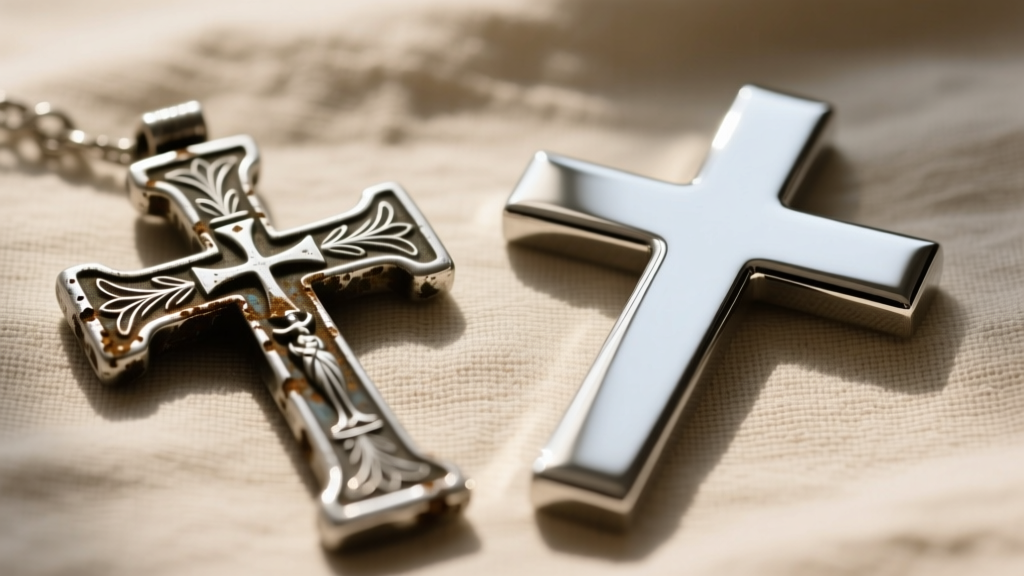
Comprehensive Metal Comparison Chart
To help you make an informed decision, we have synthesized the core material properties into a structured comparison framework. This data assumes a standard 40mm x 25mm solid cast crusader cross.
| Metal Alloy | Composition | Hardness (HV) | Tarnish Resistance | Avg. Price Range | Repairability |
|---|---|---|---|---|---|
| 925 Sterling Silver | 92.5% Ag, 7.5% Cu | 60 - 75 | Low (Requires polishing) | $45 - $150 | Excellent |
| 316L Stainless Steel | Fe, Cr, Ni, Mo | 150 - 190 | Extremely High | $15 - $60 | Poor (Cannot solder) |
| 14k Yellow Gold | 58.5% Au, Cu, Ag, Zn | 130 - 160 | Very High | $400 - $900 | Excellent |
| 18k Yellow Gold | 75% Au, Cu, Ag | 110 - 125 | Very High | $800 - $2,000+ | Excellent |
| Grade 5 Titanium | Ti-6Al-4V | 330 - 350 | Extremely High | $80 - $200 | Very Poor |
Chain Gauge and Clasp Engineering for Heavy Pendants
A common failure point in cross jewelry is not the pendant itself, but the chain and clasp assembly. Because the crusader cross is bottom-heavy, it generates kinetic momentum when the wearer moves. A delicate 1.0mm cable chain will inevitably suffer from link stretching and eventual snap failure at the solder joints.
For a standard solid-metal crusader cross weighing between 10 and 25 grams, you must select a chain with a minimum width of 2.5mm to 4.0mm. The most structurally sound chain styles for this weight distribution include:
- Figaro Chains: The alternating pattern of flattened links provides high tensile strength and resists twisting, keeping the heavy cross facing forward.
- Curb Chains: Tightly interlocking, flat links that lay flush against the chest, distributing the pendant's weight evenly across the collarbone.
- Rope Chains: Excellent for heavier 18k gold crosses, as the twisted helix structure offers immense load-bearing capacity, though they are prone to trapping skin oils and require ultrasonic cleaning.
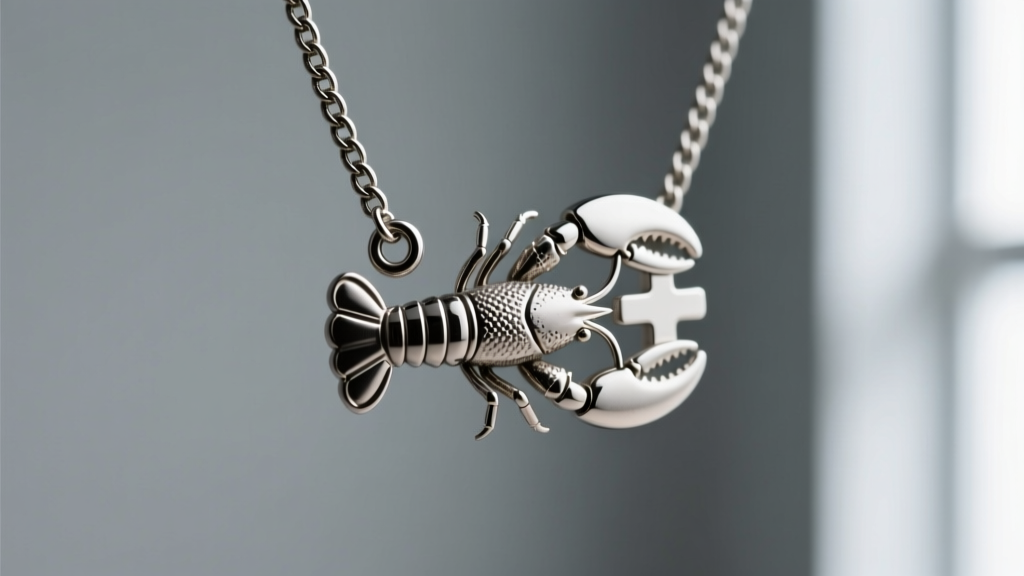
Equally critical is the clasp. Never rely on a standard spring-ring clasp for a crusader cross; the internal tension spring is not rated for dynamic loads exceeding 10 grams and will eventually fail. Instead, opt for a solid cast lobster clasp measuring at least 12mm in length, or a secure box clasp with a dual-figure-eight safety catch.
Patina, Maintenance, and Common Failure Modes
Every metal interacts with the human body's unique microbiome and chemistry. The pH level of your sweat, combined with lotions, perfumes, and environmental pollutants, will dictate how your necklace ages. Sterling silver will develop a dark patina in the recessed crevices of the cross's engraving. While some collectors appreciate this antique contrast, it can be easily removed with a specialized silver dip or a gentle baking soda and aluminum foil electrolysis bath.
Stainless steel and titanium, conversely, are biologically inert. They will not react to sweat, making them the only viable options for individuals with severe nickel allergies or those who live in highly humid, coastal environments where salt air accelerates the oxidation of lesser metals. However, steel and titanium are susceptible to micro-scratches. Over a decade of wear, a high-polish steel cross will naturally develop a brushed, satin-like finish due to microscopic abrasions from clothing fibers.
The most common mechanical failure mode across all materials is bail friction. The bail is the loop connecting the cross to the chain. Because the elongated crusader cross swings like a pendulum, the interior of the bail acts as a friction saw against the chain links. If you are wearing a soft 18k gold cross on a harder stainless steel chain, the steel will rapidly grind away the gold bail. Always ensure that the hardness of your chain matches or is slightly softer than the hardness of your pendant to prevent catastrophic wear.
Final Verdict: Selecting Your Alloy
Choosing the right material for your crusader cross necklace ultimately depends on your lifestyle, budget, and maintenance tolerance. If you seek a historically authentic, easily repairable piece with a bright, reflective luster, rhodium-plated 925 sterling silver is the optimal choice, provided you commit to bi-annual polishing.
For active individuals, tradesmen, or those who refuse to baby their jewelry, a CNC-machined 316L stainless steel cross offers indestructible peace of mind at a fraction of the cost. Finally, for those building a generational heirloom intended to be passed down, a solid 14k yellow gold pendant, suspended on a matching 3mm Figaro chain with a heavy-duty lobster clasp, represents the pinnacle of metallurgical luxury and enduring structural integrity.


