Dolphin Necklace Value Guide: Fair Market Prices for 2026
Discover the true market value of a dolphin necklace in 2026. Compare material tiers, spot overpriced brands, and assess marine jewelry craftsmanship.

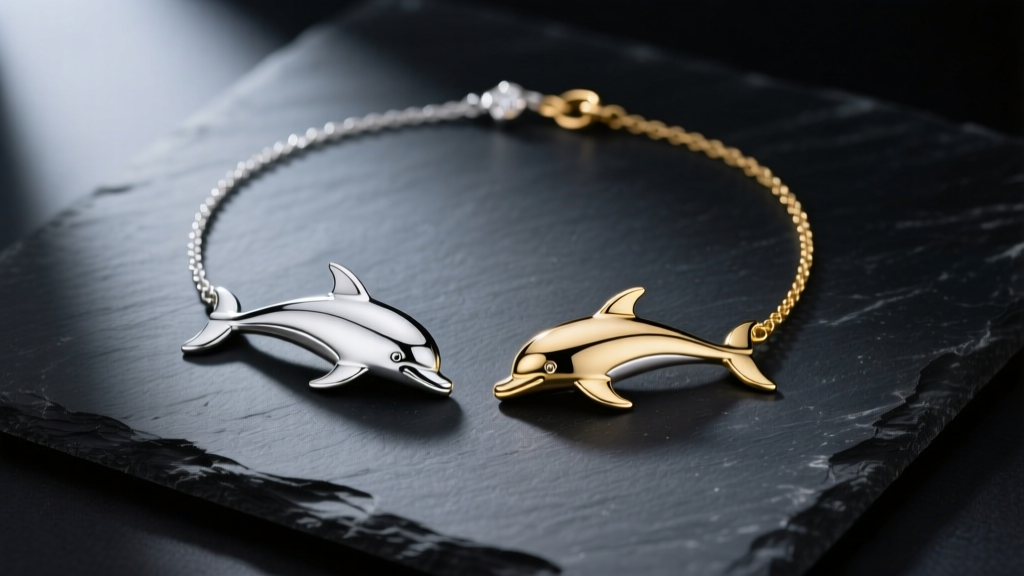
The Allure and the Markup: Why Dolphin Jewelry Varies in Price
The dolphin necklace remains a staple in marine-inspired jewelry, symbolizing freedom, intelligence, and a deep connection to the ocean. However, as of 2026, the market is flooded with everything from $15 dropshipped brass pendants to $2,500 solid platinum pieces. For the discerning buyer, the challenge is not finding a dolphin pendant, but accurately assessing its true market value. Many mainstream jewelry brands leverage the emotional resonance of marine life to apply massive markups on subpar castings. This guide strips away the marketing fluff to provide a rigorous, data-driven budget and value assessment for dolphin necklaces, helping you determine exactly what you should pay based on metallurgy, gram weight, and structural craftsmanship.
Material Tiers & Expected Price Ranges
The foundation of any jewelry value assessment is the raw material. A dolphin pendant's price should closely track its melt value plus a reasonable premium for labor and design. Below is the 2026 fair market pricing matrix for a standard 1-inch (25mm) dolphin pendant.
| Material Grade | Avg. Weight | Fair Retail Price (2026) | Durability & Tarnish Resistance | Value Retention |
|---|---|---|---|---|
| Brass / Gold Plated | 3.0 - 5.0g | $15 - $35 | Poor (plating wears off in 6-12 months) | Zero |
| Sterling Silver (925) | 1.5 - 2.5g | $40 - $75 | Good (requires occasional polishing) | Low (scrap value is minimal) |
| 10k Solid Gold | 1.2 - 2.0g | $90 - $140 | Excellent (highly durable, won't tarnish) | Moderate |
| 14k Solid Gold | 1.8 - 3.2g | $180 - $280 | Superior (ideal balance of purity/strength) | High (tracks with gold spot price) |
| Platinum (950) | 4.0 - 6.0g | $600 - $950 | Unmatched (hypoallergenic, develops patina) | Very High |
Expert Insight: If you are shopping for a 14k gold dolphin necklace and the retailer is charging upwards of $450 for a pendant weighing less than 3 grams, you are paying a 'brand tax' rather than a fair market value. Always ask the seller for the exact gram weight before purchasing.
Decoding Hallmarks: Avoiding the 'Ocean Silver' Trap
One of the most common budget pitfalls in marine jewelry is the misrepresentation of base metals. You will frequently encounter terms like 'Tibetan Silver,' 'Alpaca,' or 'Ocean Silver' in online marketplaces. According to the Federal Trade Commission's Jewelry Guides, these terms are often used to sell copper-nickel-zinc alloys that contain absolutely zero elemental silver. Worse, these alloys frequently contain high levels of nickel, which is a leading cause of contact dermatitis.
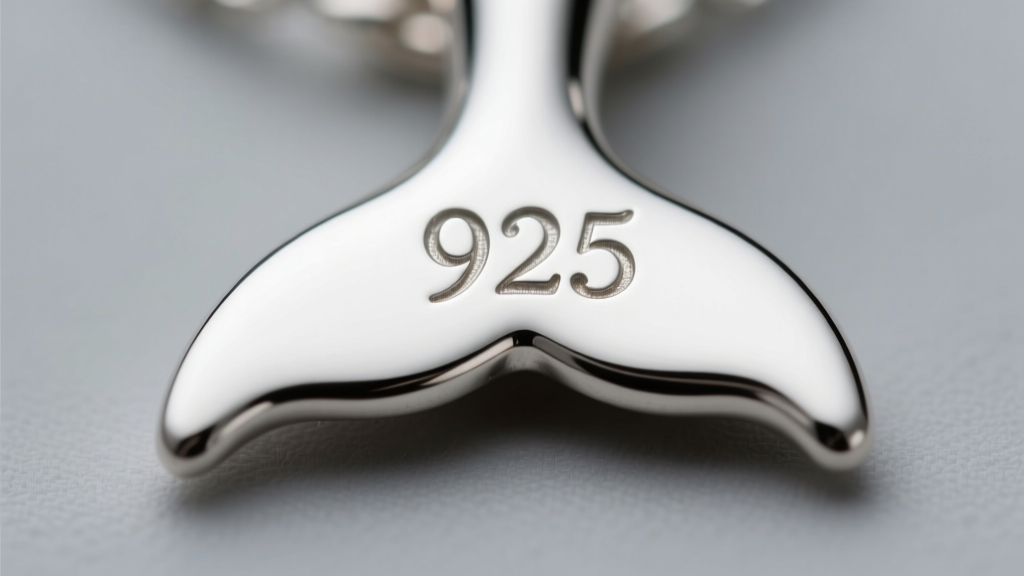
To ensure you are getting genuine value, look for legally mandated hallmarks. A legitimate sterling silver dolphin pendant must bear a '925' or 'Sterling' stamp, usually located on the flat back of the tail fluke or the bail. For gold, look for '10k', '14k', or '18k' alongside a maker's mark. The Jewelers Vigilance Committee (JVC) strictly enforces these marking laws in the US; if a piece lacks a hallmark, assume it is plated base metal and adjust your budget expectations accordingly.
Structural Integrity: Failure Modes in Marine Pendants
Value is not just about the metal; it is about the engineering. The organic, sweeping curves of a dolphin present unique challenges in the lost-wax casting process. A cheaply manufactured pendant will fail in specific, predictable ways.
The Dorsal Fin and Fluke Problem
The dorsal fin and the tail flukes are high-stress, protruding elements. In budget-friendly, mass-produced jewelry, manufacturers often skimp on the thickness of the wax mold to save on precious metal weight. This results in fins that are less than 0.8mm thick. If a 14k gold dolphin pendant has a paper-thin dorsal fin, it is highly susceptible to bending or snapping if caught on a sweater. Furthermore, thin extremities are prone to 'casting porosity'—tiny internal gas bubbles that weaken the metal structure. Always inspect the edges of the fins; if you see microscopic pitting or a rough, sandy texture, the casting temperature was poorly controlled, and the piece is structurally compromised.
Bail Construction and Friction Wear
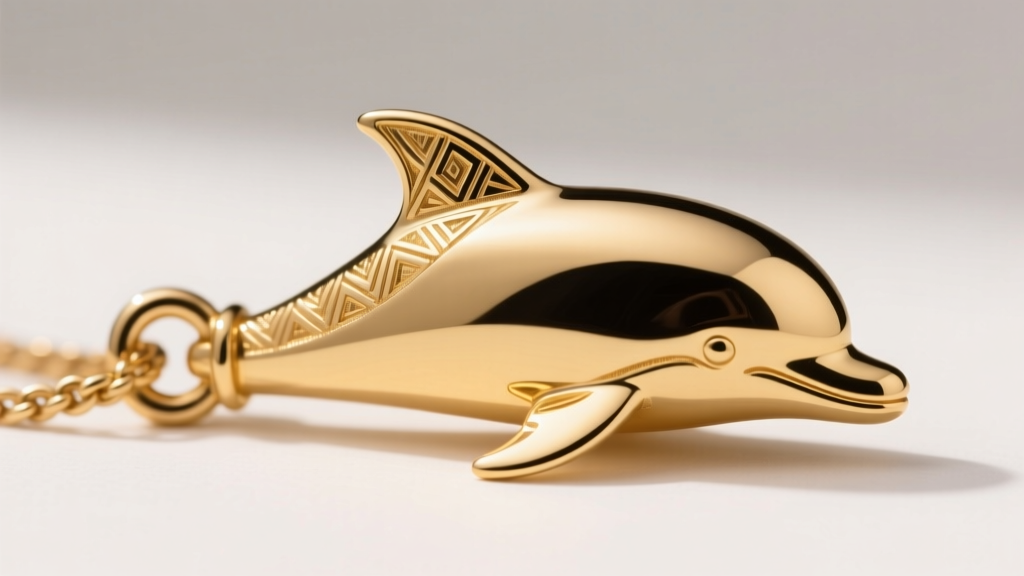
The bail is the loop that connects the dolphin pendant to the chain. There are two main types: the pinch bail (crimped onto the pendant) and the soldered loop bail (cast as one piece or soldered securely). Pinch bails are cheaper to produce but rely on friction and tension. Over time, the constant swinging motion of a dolphin pendant will cause a pinch bail to loosen and eventually snap off, resulting in the loss of the pendant. A high-value dolphin necklace will always feature a reinforced, soldered loop bail or a heavy-duty jump ring that has been laser-welded shut.
Chain Pairing: The Hidden Cost of Proportional Balance
A common mistake when budgeting for a dolphin necklace is allocating 90% of the budget to the pendant and slapping it on a flimsy, hollow chain. The structural ratio between a pendant and its chain should be roughly 1:3 to 1:5. This means if your 14k gold dolphin pendant weighs 2.5 grams, the chain should weigh a minimum of 7.5 grams. If you hang a heavy, solid-cast dolphin on a 1.0mm hollow cable chain, the pendant's momentum will act like a pendulum, creating severe friction at the clasp and the bail. This will rapidly wear through the chain links, leading to catastrophic failure. When assessing the total value of a necklace package, ensure the retailer is providing a solid, proportional chain (such as a 1.5mm solid rope or a 2.0mm solid box chain) rather than a lightweight, diamond-cut hollow chain designed purely for window-display sparkle.
Brand Premium vs. Independent Casters
Where you buy drastically impacts the value equation. Mainstream mall jewelers and recognized surf/ocean lifestyle brands often mark up their sterling silver and 10k gold dolphin necklaces by 300% to 500% to cover retail overhead and marketing campaigns. A 1.5-gram 10k gold dolphin pendant that costs $45 to manufacture might be retailed for $225. Conversely, independent jewelers and specialized marine life casters on platforms like Etsy or direct-to-consumer boutique sites often operate on a 'spot price + labor' model. You can frequently find the exact same 14k gold pendant, cast from a high-quality master mold, for 40% less simply by bypassing the brand premium. When evaluating a piece, look for detailed photos of the sprue mark (the tiny spot where the pendant was cut from the casting tree) and polished finishing. Indie jewelers who take the time to hand-polish the underbelly of the dolphin and sandblast the recessed areas for contrast are offering superior artisanal value.
Final Assessment Checklist for Buyers
Before finalizing your purchase, run the dolphin necklace through this quick E-E-A-T value checklist:
- Verify the Stamp: Is there a clear 925, 14k, or PT950 hallmark? (Reject 'Tibetan Silver').
- Request Gram Weight: Does the price align with the current spot price of the metal plus a reasonable 20-40% labor markup?
- Inspect the Fins: Are the dorsal fin and tail flukes thick enough (at least 1mm) to resist bending?
- Check the Bail: Is the bail a solid, soldered loop rather than a fragile pinch-bail?
- Evaluate the Chain: Is the chain solid (not hollow) and proportionally weighted to handle the pendant's swing?
By focusing on metallurgical reality and structural engineering rather than brand names and emotional marketing, you can secure a beautiful, heirloom-quality dolphin necklace that respects both your budget and your love for the ocean.


