Elton John Kneecap Necklace: Troubleshooting Heavy Pendants
Troubleshoot chain snaps, skin irritation, and weight issues inspired by the legendary Elton John kneecap necklace and heavy avant-garde pendants.

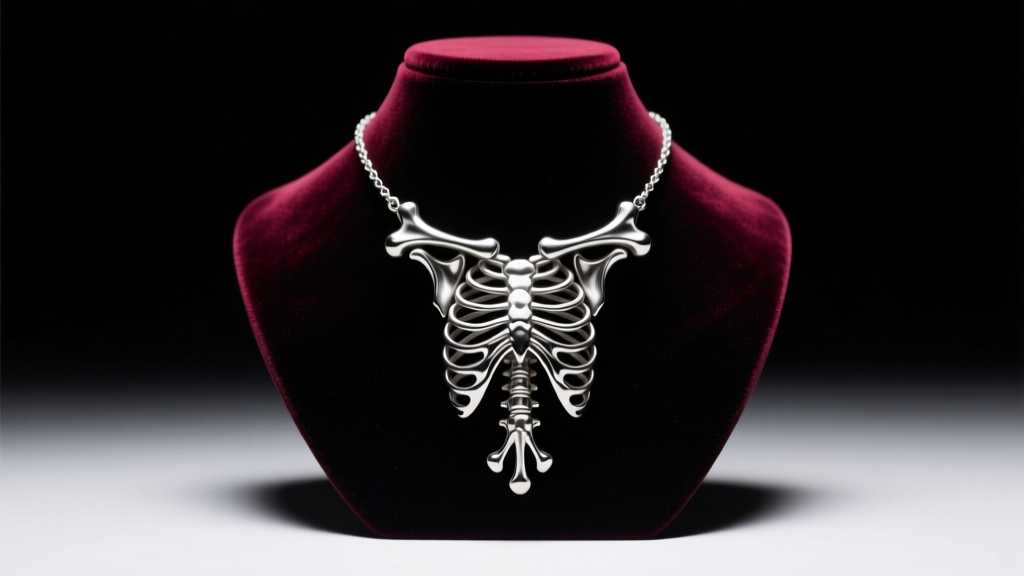
The Legend of the Elton John Kneecap Necklace
When discussing the absolute limits of avant-garde statement jewelry, the rumored 'Elton John kneecap necklace' serves as the ultimate stress-test for jewelry mechanics. Whether you are examining a rare archival anatomical piece from his legendary collaborations with designers like Shaun Leane, or a modern 3D-printed resin replica making the rounds on 2026 TikTok, wearing a pendant of this extreme scale presents unique engineering nightmares. Anatomical and massive statement pendants—often exceeding 250 grams and featuring asymmetrical, porous, or top-heavy designs—routinely destroy standard chains, cause severe cervical strain, and trigger contact dermatitis. As a domain expert in heavy metal and alternative jewelry, I have developed this troubleshooting guide to solve the mechanical and dermatological failures associated with extreme pendants.
The Physics of the Drop: Why Standard Chains Fail
The most common failure mode when wearing a heavy, asymmetrical piece like a kneecap pendant is the 'guillotine effect.' A standard 1.5mm cable chain supporting a 300-gram pendant exerts extreme localized pressure on the cervical spine. Furthermore, the kinetic energy generated when the wearer walks causes micro-shockwaves that travel up the chain, eventually exceeding the tensile yield strength of the metal at the weakest link—usually the jump ring connecting the pendant to the chain.
To troubleshoot this, you must abandon standard jewelry chains and look toward industrial-grade link patterns that distribute kinetic force across multiple planes of contact. According to Rio Grande's chain tensile specifications, the structural integrity of a chain is dictated not just by gauge, but by the interlocking geometry of the links.
Chain Gauge and Tensile Strength Matrix
| Chain Style | Gauge (mm) | Material | Yield Strength | Max Safe Pendant Weight |
|---|---|---|---|---|
| Standard Cable | 1.5mm | Sterling Silver | ~15 lbs | 45g (1.5 oz) |
| Cuban Link | 3.0mm | 316L Steel | ~65 lbs | 150g (5.2 oz) |
| Figaro | 4.0mm | Grade 5 Ti | ~90 lbs | 250g+ (8.8 oz) |
| Mariner Anchor | 5.0mm | 316L Steel | ~110 lbs | 350g+ (12.3 oz) |
Note: For a piece as dense and awkwardly shaped as an anatomical kneecap pendant, a 4.0mm Figaro or 5.0mm Mariner chain in 316L surgical steel or Grade 5 Titanium is mandatory to prevent link distortion.
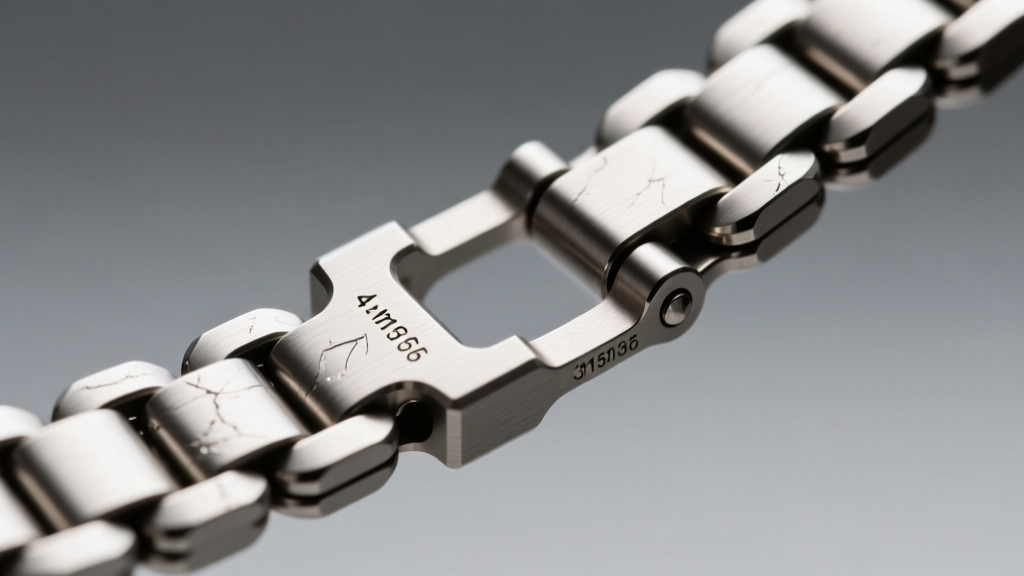
Solving the Clasp Bottleneck
If the chain doesn't snap, the clasp will. Standard lobster clasps and spring rings rely on a tiny internal steel spring that is highly susceptible to metal fatigue when subjected to the constant downward pull of a heavy pendant. Once the spring loses its tension, the clasp pops open unexpectedly, resulting in the loss of the piece.
Upgrading to Mechanical Closures
To secure a heavy avant-garde pendant, you must utilize mechanical closures that rely on friction and threading rather than spring tension:
- Bayonet Clasps: These feature a pin-and-groove mechanism that locks into place with a push-and-twist motion. Machined from solid titanium, they can withstand over 100 lbs of lateral pull without disengaging.
- Screw-Thread Barrel Clasps: These barrel-shaped clasps screw together via internal threads. While highly secure, they require two hands to fasten and can suffer from thread stripping if cross-threaded under tension.
- Magnetic Locking Clasps: Modern 2026 neodymium magnetic clasps with a secondary mechanical safety catch offer a viable alternative for solo wearers, provided the magnetic housing is CNC-milled from stainless steel rather than cast alloy.
Dermatological Troubleshooting: Sealing Porous Materials
Many extreme statement pieces, including archival bone jewelry and modern 3D-printed resin replicas, are crafted from porous materials. When worn against the sternum, these materials absorb sebum, sweat, and dead skin cells. This creates a breeding ground for bacteria, leading to severe contact dermatitis and a persistent, foul odor that is nearly impossible to wash out of raw bone or unsealed PLA resin.
As highlighted by GIA's material science guidelines on organic gemstones and porous carvings, sealing the material is non-negotiable for pieces intended for prolonged skin contact.
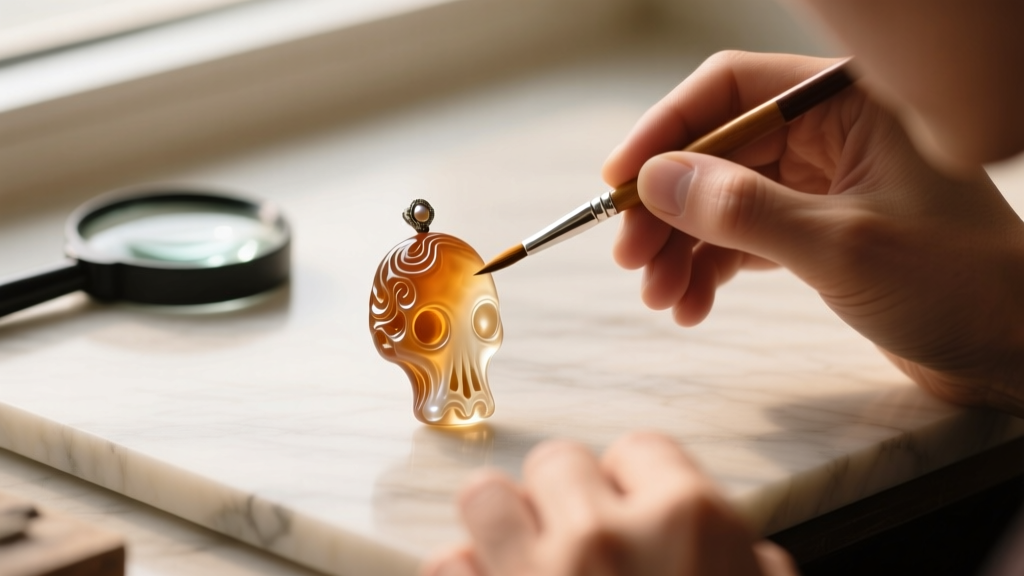
The Paraloid B-72 Protocol
Do not use standard hardware store polyurethane or nail polish, as these yellow over time and react poorly to body heat. Instead, use Paraloid B-72, an acrylic copolymer used by museum conservators to seal and stabilize delicate artifacts.
- Preparation: Clean the pendant with isopropyl alcohol and allow it to dry completely.
- Dilution: Dissolve Paraloid B-72 pellets in pure acetone to create a 10% solution by weight.
- Application: Using a soft hake brush, apply a thin, even coat to the back and edges of the pendant that will contact the skin.
- Curing: Allow the acetone to flash off in a well-ventilated area for 24 hours. The resulting barrier is microscopically thin, completely invisible, and impervious to human sweat and oils.
The Pendulum Effect: Counterweighting the Kneecap
The final major issue with asymmetrical, anatomical pendants is the 'pendulum effect.' Because a kneecap shape is wider at the top and narrower at the bottom, its center of gravity is often misaligned with the bail (the loop connecting it to the chain). This causes the pendant to constantly flip upside down or slide off-center along the necklace.
The Solution: Integrate a hidden counterweight. A skilled jeweler can drill a micro-channel into the posterior of the resin or bone pendant and embed a dense tungsten alloy slug, sealing it with UV-curing dental resin. By shifting the center of gravity directly beneath the bail, the pendant will hang perfectly plumb, regardless of the wearer's movements. For those unwilling to alter an archival piece, adding a 50-gram decorative counterweight bead to the back of the chain (resting at the nape of the neck) will create a tension balance that keeps the heavy pendant anchored to the sternum.
Conclusion
Wearing extreme, avant-garde jewelry inspired by the legendary Elton John kneecap necklace requires moving beyond standard jewelry paradigms and adopting industrial engineering and museum-grade conservation techniques. By upgrading to high-gauge Figaro chains, utilizing mechanical bayonet clasps, sealing porous materials with Paraloid B-72, and balancing the center of gravity, you can safely wear massive statement pieces without risking chain failure, skin irritation, or damage to the artifact. For more on the history of extreme stage jewelry, Vogue's archive on Elton's jewelry provides excellent visual references on how these monumental pieces drape and move in real-world conditions.


