Emerald Necklace Trail Boston: 2026 Value & Budget Guide
Discover the true value of an emerald necklace trail in Boston. Our 2026 budget guide covers gem grades, pricing, and where to buy authentic pendants.

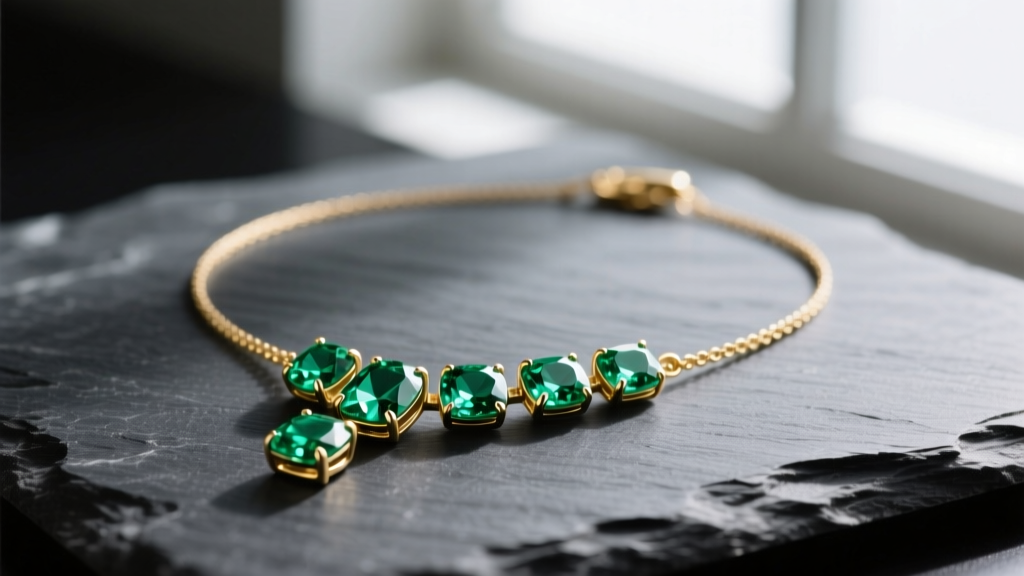
The Intersection of Gemology and Boston Heritage
In Boston, the phrase 'Emerald Necklace' famously refers to the 1,100-acre chain of parks designed by landscape architect Frederick Law Olmsted. However, in the local fine jewelry market, an emerald necklace trail refers to a highly specific and coveted style of station necklace—featuring a 'trail' of evenly spaced emeralds—often inspired by the winding, green paths of the city's historic park system. Whether you are seeking a nature-inspired artisan pendant from a Newbury Street boutique or a classic gemstone station necklace from Downtown Crossing, assessing the true value of these pieces requires a deep understanding of both gemological grading and local market dynamics.
As we move through 2026, the pricing of natural emeralds has shifted dramatically due to supply chain constraints in Zambia and Colombia. This guide provides a rigorous budget and value assessment for buyers navigating the Boston jewelry trail, ensuring you pay for genuine quality rather than brand markup or synthetic imitations.
Anatomy of an Emerald Trail Necklace
A 'trail' or station necklace typically features 5 to 9 gemstones spaced evenly along a delicate chain. When working with emeralds, the structural integrity of the setting is just as critical as the gem's visual appeal. Emeralds rank 7.5 to 8 on the Mohs hardness scale, but they are notoriously brittle due to natural inclusions.
Bezel vs. Prong Settings
For an emerald trail necklace, bezel settings are vastly superior to prong settings. Prongs exert localized pressure on the girdle of the stone, which can easily cause an included emerald to fracture during setting or daily wear. A full bezel or semi-bezel setting distributes pressure evenly and protects the vulnerable edges of the gem. When evaluating a piece in a Boston estate shop, inspect the bezel walls under a loupe; they should be smooth, flush against the stone, and at least 0.3mm thick to prevent the gold from wearing down over time.
Chain Mechanics and Soldering
The chain connecting the emerald 'trail' should ideally be a 14k or 18k gold cable or box chain, ranging from 16 to 18 inches. Look for laser-soldered jump rings at the connection points. Traditional torch soldering near an emerald can cause thermal shock, leading to internal fracturing or the boiling out of clarity-enhancing oils. High-end Boston jewelers will exclusively use laser welders for emerald station necklaces to preserve the stone's integrity.

2026 Budget & Value Assessment Matrix
The value of an emerald trail necklace is dictated by the origin of the stones, their total carat weight (TCW), and the level of clarity enhancement. Below is a realistic pricing matrix for the 2026 market, reflecting current wholesale and retail realities in the Northeast US.
| Tier | Origin & Quality | TCW & Metal | Treatment | Estimated Retail Value |
|---|---|---|---|---|
| Entry-Level | Zambian (Commercial Grade, opaque, heavy inclusions) | 1.50 - 2.00 CTW / 10k or 14k Gold | Heavy oiling or minor resin fill | $800 - $1,800 |
| Mid-Range | Zambian or Brazilian (Good transparency, moderate jardin) | 2.50 - 4.00 CTW / 14k Gold | Traditional cedar oil only | $2,500 - $5,500 |
| Investment | Colombian (Muzo/Chivor, vivid green, eye-clean) | 4.00 - 7.00 CTW / 18k Gold | Minor oil (AGL certified) | $8,000 - $22,000+ |
Note: When shopping the secondary estate market in Boston, you can often acquire Mid-Range and Investment tier pieces for 20% to 35% below retail, provided you have the pieces authenticated by an independent gemologist.
Navigating the Boston Jewelry Trail: Where to Buy
Boston offers a unique ecosystem for gemstone acquisition, blending high-end retail with historic wholesale operations. Knowing where to look is the first step in maximizing your budget.
Downtown Crossing & The Jewelers' Building
Located at 333 Washington Street, the historic Jewelers' Building is the epicenter of Boston's diamond and gemstone trade. Here, you will find independent lapidaries, wholesale gem dealers, and custom bench jewelers. Buying an emerald necklace trail from a setter in this building often eliminates the retail markup found on Newbury Street. You can source loose, AGL-certified Colombian emeralds directly from dealers on the 4th or 5th floors and commission a custom bezel-set trail necklace for a fraction of the boutique price.
Newbury Street Estate Jewelers
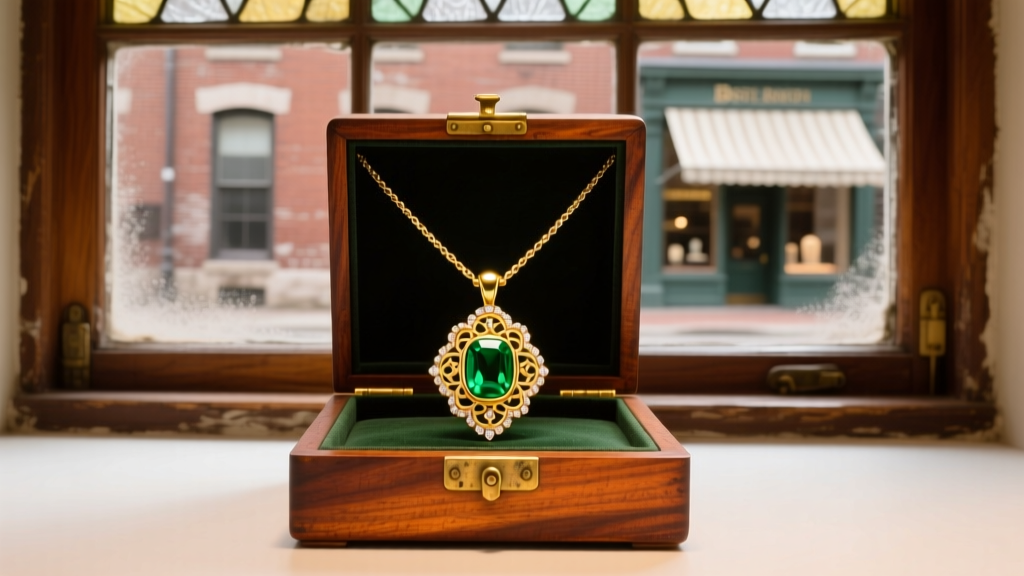
For those seeking vintage or antique emerald station necklaces, the estate shops along Newbury Street and Boylston Street are invaluable. Vintage pieces from the Art Deco or Retro periods often feature emeralds cut in unique styles (like sugarloaf cabochons or step-cuts) that are rarely seen in modern mass production. However, buyers must be vigilant: vintage emeralds may have been re-oiled or fracture-filled over the decades. Always request a condition report or an independent appraisal before purchasing estate emeralds exceeding $3,000.
Grading, Treatments, and Red Flags
According to the Gemological Institute of America (GIA), emeralds are classified as a Type III gemstone, meaning they are almost always included. The French term jardin (garden) is used to describe the moss-like inclusions that give each emerald its unique fingerprint. While inclusions are expected, the type of treatment used to manage them dictates the stone's long-term value.
The Enhancement Spectrum
- None / No Oil: Exceedingly rare (less than 1% of the market). Commands a massive premium. Only relevant for high-end investment pieces.
- Minor Traditional Oil (Cedar): The industry standard. Acceptable and stable. Does not significantly detract from the value.
- Moderate to Heavy Oil: Lowers the value. The oil can dry out over time, causing the stone to turn opaque and white-looking. Requires periodic re-oiling by a professional.
- Resin / Polymer Fill (Opticon): A massive red flag. Used to hold heavily fractured stones together. The American Gem Society warns that resin-filled emeralds are highly unstable, difficult to repair, and hold virtually no resale value.
Synthetic and Lab-Grown Alternatives
In 2026, hydrothermal and flux-grown synthetic emeralds (such as those historically produced by Chatham) are prevalent in the market. While chemically identical to natural emeralds, they lack the natural jardin and command a fraction of the price (typically $300 to $600 per carat). If a Boston retailer offers a 'flawless' 5-carat emerald trail necklace for under $2,000, you are almost certainly looking at a synthetic stone or a glass-filled imitation. Always demand a report from a reputable lab like the GIA, AGL, or GRS for natural stones.
Final Verdict: Maximizing Your Investment
Acquiring an emerald necklace trail in Boston is a rewarding pursuit if approached with gemological skepticism and an understanding of local market geography. To maximize your budget, prioritize bezel-set 14k or 18k gold settings to protect the brittle stones, and focus your search on the independent dealers within Downtown Crossing's Jewelers' Building rather than high-markup tourist corridors. By insisting on traditional cedar oil treatments and verifying origin through independent lab reports, you ensure that your emerald trail necklace remains a vibrant, enduring asset for decades to come.


