How to Clean and Maintain a Fashion Pearl Necklace Safely
Learn how to safely clean, store, and maintain your fashion pearl necklace. Discover expert tips to prevent coating peel and clasp tarnish.

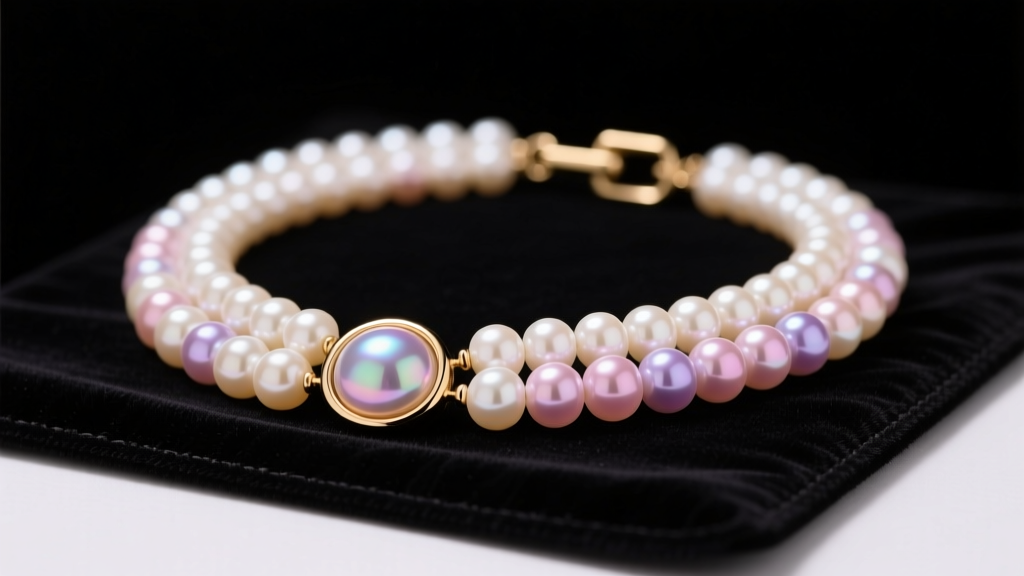
When maintaining a fashion pearl necklace, the most common and destructive mistake is treating it like an organic, cultured pearl. While natural and cultured pearls are porous, organic gems that require moisture and specific pH balances, fashion pearls—also known as simulated pearls—are entirely synthetic constructs. Whether your piece features a high-end crystal core or a lightweight resin base, the pearlescent coating is an applied layer of interference pigments that demands a highly specific, chemistry-conscious approach to cleaning and storage.
In this comprehensive 2026 care guide, we break down the exact material science behind simulated pearls, provide a step-by-step cleaning protocol, and outline the specific failure modes that ruin fashion jewelry. According to the Gemological Institute of America (GIA), simulated pearls possess a surface luster created by synthetic or natural interference pigments, requiring entirely different chemical care than porous nacre.
The Anatomy of a Fashion Pearl: Why Care Protocols Differ
To properly clean your necklace, you must first identify the core material and the coating type. The market is dominated by three distinct tiers of fashion pearls, each with unique vulnerabilities:
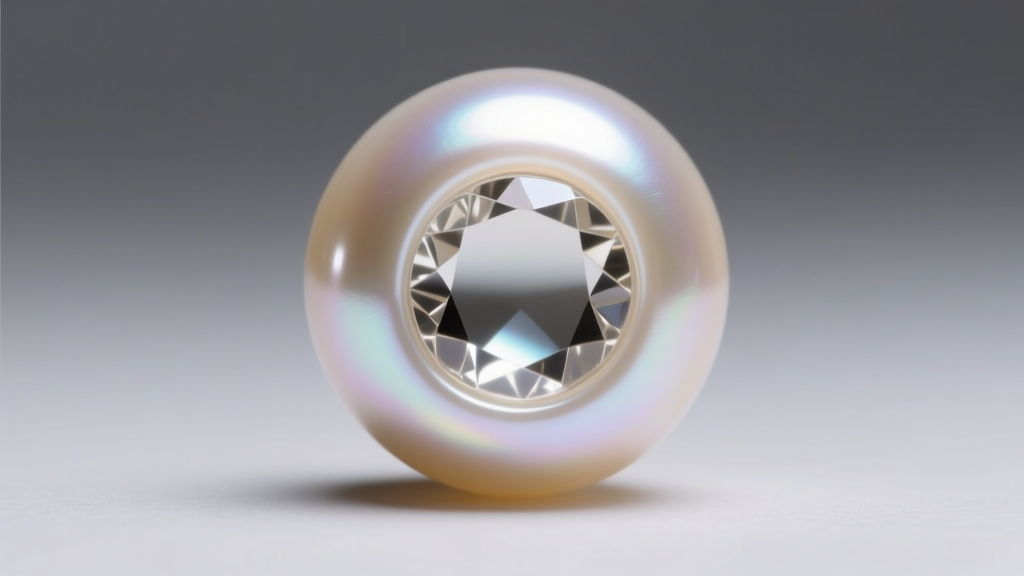
- Crystal-Core Simulants (e.g., Swarovski): Priced between $150 and $400, these feature a dense, lead-free advanced crystal core. The coating is chemically bonded to the crystal, offering high durability but extreme susceptibility to thermal shock and harsh solvents that can cloud the crystal beneath if the coating chips.
- Glass-Core Coated Pearls (e.g., Majorica): Ranging from $40 to $120, these utilize a solid glass bead dipped in multiple layers of 'essence d'orient' (guanine crystals) or modern titanium dioxide/mica equivalents. They are heavy and durable but prone to delamination if exposed to acidic sweat over prolonged periods.
- Plastic/Resin-Core Pearls (Fast Fashion): Typically priced under $30, these are lightweight ABS plastic or resin beads sprayed with a pearlescent lacquer. They are highly vulnerable to heat warping, UV yellowing, and chemical melting.
The Step-by-Step Cleaning Protocol
Unlike organic pearls, which can benefit from gentle, specialized soaking, a fashion pearl necklace should never be submerged in water. Submersion allows liquid to seep into the drill holes, which can degrade the internal stringing material, trap moisture against the core, and cause the coating to lift from the inside out.
Required Materials
- Distilled water (tap water contains minerals that leave micro-abrasive hard water spots on high-gloss coatings)
- Ultra-mild, phosphate-free dish soap (pH neutral)
- Lint-free microfiber polishing cloth
- Soft-bristled makeup blending brush (for cleaning around the clasp)
The 'Damp Wipe' Technique
- Prepare the Solution: Mix 1 cup of distilled water with exactly one drop of pH-neutral dish soap in a glass bowl. Agitate until light suds form.
- Dampen the Cloth: Dip a corner of your microfiber cloth into the suds (not the water) and wring it out completely. The cloth should be barely damp.
- Wipe Each Bead Individually: Gently cradle each pearl and wipe the surface. Do not pull or tug on the stringing material.
- Detail the Clasp: Use the dry, soft-bristled makeup brush to gently sweep dust and skin cells out of the crevices of the clasp mechanism. Avoid getting the metal wet, as fashion jewelry clasps are often plated zinc or brass alloys prone to galvanic corrosion.
- Buff Dry: Immediately follow with the dry side of the microfiber cloth to buff the titanium dioxide coating to a high shine.
Chemical Compatibility Chart for Simulant Coatings
The pearlescent finish on a fashion pearl necklace is achieved through microscopic layers of mica or titanium dioxide. These layers create light interference, resulting in the 'pearl' glow. Harsh chemicals destroy these layers. Jewelers of America consistently warns against using ultrasonic cleaners and commercial jewelry dips on any coated or porous surface.
| Cleaning Agent | Chemical Base | Effect on Simulant Coating | Verdict |
|---|---|---|---|
| Ultrasonic Cleaners | High-frequency cavitation | Vibrations shatter the microscopic coating layers, causing instant, irreversible flaking. | NEVER USE |
| Rubbing Alcohol | Isopropyl Alcohol | Dissolves the lacquer binders holding the mica powder to plastic or glass cores. | NEVER USE |
| Ammonia Dips | Ammonium Hydroxide | Strips the high-gloss topcoat, leaving the pearl with a dull, chalky, matte finish. | NEVER USE |
| Mild Soap & Distilled Water | Neutral Surfactants | Safely lifts sebum and cosmetic residue without attacking the chemical binders. | SAFE |
Stringing Material Considerations
The longevity of your necklace is heavily dependent on the internal stringing. High-end glass and crystal fashion pearls are typically strung on 0.6mm to 0.8mm braided nylon wire or coated stainless steel beading wire. Fast-fashion variants often use elastic cord or cheap cotton thread. If your necklace feels 'sticky' or stretches when pulled, the internal elastomer is degrading. Never apply oils or conditioners to a fashion pearl necklace to 'restore' the string, as these oils will seep into the drill holes and dissolve the pearlescent lacquer from the inside.
Long-Term Storage and Environmental Threats
Proper storage is just as critical as the cleaning process. Simulated pearls are highly reactive to their environment, particularly UV radiation and ambient humidity.
Combating UV Degradation and Heat Warping
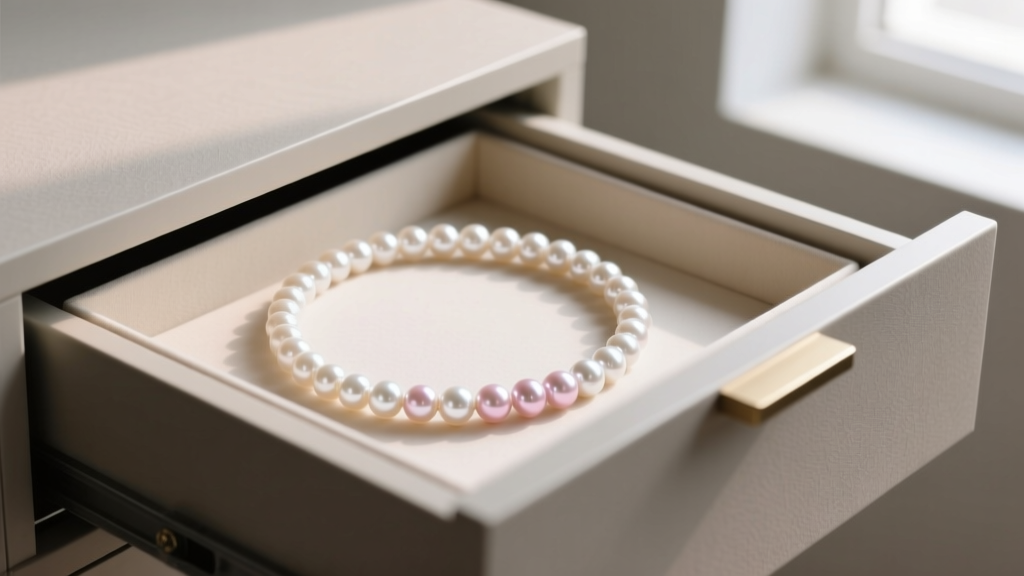
If your fashion pearls feature an ABS plastic or resin core, prolonged exposure to direct sunlight or high heat (such as being left on a vanity table near a window or in a hot car) will cause the plastic core to expand. Because the pearlescent coating is rigid, this thermal expansion results in micro-cracking and a 'crazed' appearance on the surface. Always store your necklace in a closed, climate-controlled jewelry box.
Preventing Clasp Corrosion
Fashion pearl necklaces frequently utilize base metals plated with a micro-thin layer of rhodium, gold, or silver. Human sweat contains lactic acid and sodium chloride, which rapidly accelerate galvanic corrosion when trapped in the clasp mechanism. After every wear, wipe the clasp and the jump rings with a dry, untreated polishing cloth to remove invisible salt deposits before storing. Store the necklace flat or hung on a padded hook to prevent the metal clasp from resting against the pearl coating, which can cause mechanical scratching over time.
Troubleshooting Common Fashion Pearl Failures
Even with meticulous care, simulated pearls have a finite lifespan. Here is how to diagnose and address the most common failure modes:
- Coating Delamination (Peeling): If you notice the 'pearl' layer flaking off near the drill holes, this is usually caused by friction from the stringing wire or sebum degradation. Solution: There is no DIY fix for delamination. The necklace must be professionally restrung, and the damaged beads replaced.
- Yellowing of the Core: Common in older plastic-core pearls. The UV stabilizers in the resin break down over time. Solution: This is an irreversible chemical change within the plastic matrix. The necklace cannot be restored.
- Cloudy or Streaky Finish: Usually the result of hard water spots or hairspray buildup. Solution: Dampen a cloth with a 50/50 mix of distilled water and white vinegar, wipe the bead quickly, and immediately buff dry with a clean microfiber cloth. Do not let the vinegar sit on the surface.
- Stiff or Sticky Clasp: Caused by oxidized base metal or trapped cosmetic powders. Solution: Use a wooden toothpick to gently pick debris out of the spring-ring or lobster claw mechanism. Apply a microscopic drop of synthetic watch oil to the hinge pin only, wiping away any excess immediately.
By understanding the synthetic nature of your fashion pearl necklace and adhering to these strict, chemistry-based maintenance protocols, you can preserve the flawless luster and structural integrity of your jewelry for years to come.


