How to Fix, Clean, and Authenticate an Onyx and Gold Necklace
Learn how to troubleshoot common issues with your onyx and gold necklace. Expert tips on cleaning dyed stones, tightening bezels, and spotting fakes.

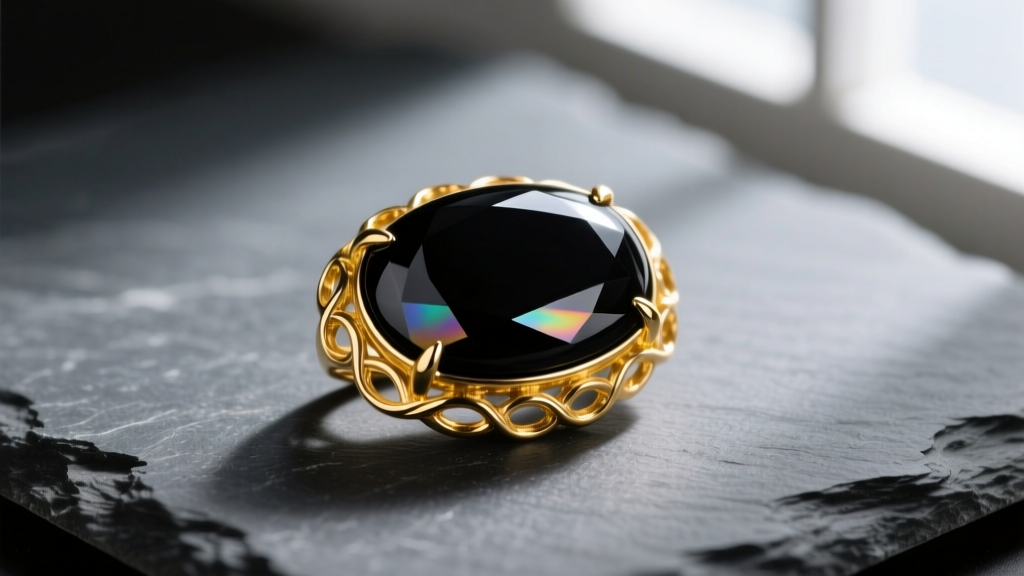
The contrast of deep, midnight-black stone against warm, reflective metal makes the onyx and gold necklace a timeless staple in fine jewelry. However, the very material properties that make this combination so striking also create unique vulnerabilities. As of 2026, the market is saturated with both high-quality artisan pieces and mass-produced imitations, making proper maintenance, repair, and authentication more critical than ever.
Unlike diamonds or sapphires, onyx requires a highly specific, gentle approach to care. Furthermore, the gold settings that house these stones are subject to mechanical wear. This comprehensive troubleshooting guide will walk you through the exact material science of your jewelry, providing actionable frameworks to clean, repair, and verify your pieces without causing irreversible damage.
The Material Science: Why Onyx and Gold Require Special Care
To troubleshoot effectively, you must first understand what you are actually wearing. True, naturally occurring black onyx is exceptionally rare. According to the Gemological Institute of America (GIA), the vast majority of black onyx on the market is actually gray or white chalcedony (a type of agate) that has been artificially dyed.
This dyeing process involves soaking the porous agate in a sugar solution, followed by sulfuric acid, which carbonizes the sugar and turns the stone black. While this creates a stunning, uniform color, it leaves the stone's internal crystalline structure compromised and highly sensitive to heat, chemicals, and ultrasonic vibrations. When paired with gold—typically 14k (58.5% pure) for chains and 18k (75% pure) for bezels due to its malleability—you are managing a composite piece where the stone is fragile and the metal is relatively soft.
Troubleshooting Dullness: Cleaning Without Ruining the Stone
The most common issue owners face is a cloudy or dull appearance. This is rarely a scratch on the stone itself; rather, it is usually a buildup of skin oils, lotions, and environmental dust trapped in the microscopic pores of the dyed agate or along the gold bezel wall.
The Dyed Onyx Dilemma: What to Avoid
Never use ultrasonic or steam cleaners on an onyx and gold necklace. Ultrasonic cleaners use high-frequency sound waves to create microscopic bubbles that implode (a process called cavitation). This shockwave can easily shatter the internal crystalline structure of dyed agate or cause the carbonized dye to leach out, leaving you with a patchy, gray stone. Steam cleaners introduce intense heat, which can melt the wax or resin often used to seal the pores of dyed stones, resulting in immediate discoloration.
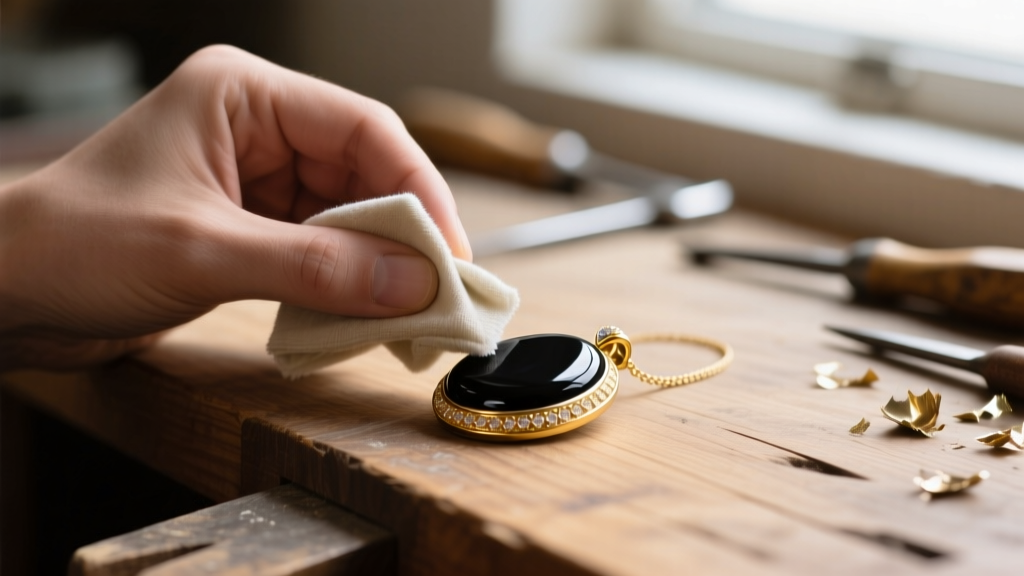
The Safe Cleaning Protocol
- Prepare a Mild Solution: Mix a few drops of pH-neutral dish soap (avoid harsh degreasers) into a bowl of lukewarm distilled water. Tap water contains minerals that can leave microscopic calcium deposits on the stone.
- Targeted Agitation: Dip a baby-soft toothbrush into the solution. Gently brush only the gold settings and the back of the stone where dirt accumulates. Avoid aggressive scrubbing on the face of the onyx.
- Rinse and Dry: Rinse briefly under a slow stream of distilled water. Immediately pat dry with a lint-free microfiber cloth. Do not let the piece air dry, as water spots will form on the gold.
Fixing Loose Stones: Bezel and Prong Failures
If your onyx cabochon rattles when you tap the setting, the metal holding it has deformed. Gold is a malleable metal, and daily impacts against desks, doorframes, and steering wheels will slowly push the bezel wall away from the stone's edge.
Expert Warning: Never attempt to tighten a bezel over an onyx stone using standard steel pliers. The localized pressure will instantly crack the chalcedony. Professional jewelers use a bezel roller or a highly polished burnisher to slowly and evenly push the gold wall over the stone's edge.
| Setting Type | Common Failure Mode | DIY Fixable? | Professional Repair Cost (Est.) |
|---|---|---|---|
| Full Bezel (18k Gold) | Gold wall pulls away from stone edge | No (Requires burnishing) | $45 - $85 |
| Prong Setting (14k Gold) | Prongs snag and bend outward | No (Risk of cracking stone) | $35 - $60 per prong |
| Bezel with Epoxy | Adhesive degrades, stone falls out | Yes (With jeweler's epoxy) | $25 - $50 (if done by pro) |
Authenticity Checks: Is Your Onyx Real or Glass?
With the rise of sophisticated glass and synthetic spinel imitations in 2026, verifying the authenticity of your onyx and gold necklace is a crucial troubleshooting step, especially for vintage or estate purchases.
Three Non-Destructive Authentication Tests
- The Thermal Conductivity Test: Glass and synthetic spinel are thermal insulators and will feel room-temperature to the touch. Genuine chalcedony (onyx) has higher thermal conductivity and will feel distinctly cold when first pressed against your lip or the inside of your wrist, taking several seconds to warm up to your body temperature.
- The Loupe Inspection (Dye Concentration): Using a 10x jeweler's loupe, examine the edges of the stone where it meets the gold. If the stone is dyed agate, you will often see microscopic, spider-web-like fractures where the black dye has concentrated more heavily. Glass will be perfectly uniform or contain perfectly spherical microscopic bubbles.
- The Weight Assessment: Onyx has a specific gravity of roughly 2.60 to 2.65. Glass imitations often feel noticeably lighter, while synthetic spinel (SG 3.60) will feel suspiciously heavy for its size. Compare the heft of your pendant to a known quartz or agate specimen of similar volume.
Gold Chain and Clasp Troubleshooting
The pendant is only half the equation; the gold chain and clasp are the mechanical failure points of any necklace. The most frequent issue is a lobster clasp that fails to snap shut or feels spongy. This is almost always caused by the internal steel spring corroding due to exposure to acidic sweat, lotions, or perfume. Because the spring is steel and the clasp body is gold, galvanic corrosion occurs rapidly. The only solution is a complete clasp replacement by a jeweler, which typically costs between $40 and $90 depending on the gold weight.
Additionally, if you are wearing a delicate 14k or 18k cable chain, inspect the links near the clasp. These links endure the most friction and will eventually thin out and snap. Catching a thinning link early with a 10x loupe can save you from losing your onyx pendant entirely.
Preventative Maintenance Framework
To ensure the longevity of your jewelry, adopt a strict maintenance protocol. Always put your onyx and gold necklace on after applying cosmetics, perfumes, and hairsprays. Store the piece in a soft, anti-tarnish flannel pouch separate from harder gemstones like diamonds or sapphires, which can easily scratch the 18k gold bezel and the polished surface of the onyx. Finally, schedule a professional bezel-tightening and ultrasonic cleaning (for the gold chain only, with the stone removed if possible) with a certified bench jeweler every 18 to 24 months. For more general care guidelines, you can consult the Jewelers of America maintenance resources.
By understanding the specific vulnerabilities of dyed agate and gold alloys, you can troubleshoot issues confidently, preserving the deep, midnight elegance of your necklace for decades to come.


