Abalone Heart Necklace Care: Fixing Scratches, Dullness & Tarnish
Learn how to troubleshoot common issues with your abalone heart necklace. Expert tips on fixing scratches, removing tarnish, and restoring shell luster.

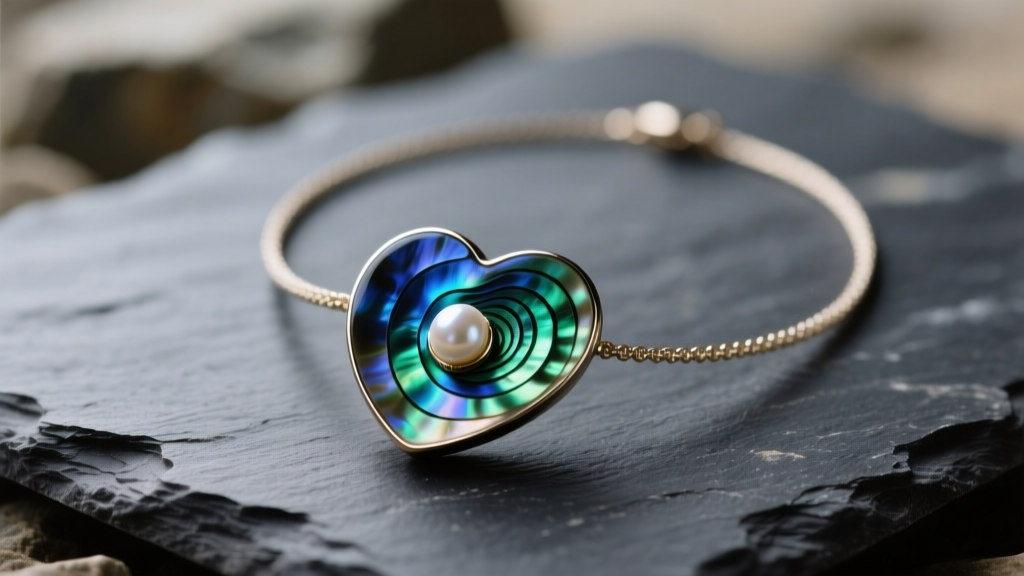
The Unique Chemistry of Abalone Shell Jewelry
An abalone heart necklace is a stunning statement piece, celebrated for its hypnotic play-of-color and organic origins. However, from a gemological perspective, abalone is not a traditional stone; it is a biomineralized shell composed primarily of calcium carbonate (in the form of aragonite and calcite) bound together by an organic protein called conchiolin. This unique microstructure gives the shell its iridescent luster but also makes it highly susceptible to environmental damage.
On the Mohs hardness scale, abalone ranks between 2.5 and 4.0. To put that in perspective, it is softer than a copper penny and vastly softer than the quartz dust found in everyday household environments. Furthermore, calcium carbonate is highly reactive to acids. Everyday exposures like perfume, hairspray, chlorine, and even the natural pH of human sweat can chemically etch the surface of your pendant, leading to irreversible dullness if left untreated. According to the Gemological Institute of America (GIA), organic gems like abalone and pearl require a completely different troubleshooting approach than crystalline gemstones like sapphires or diamonds.
Diagnosing the Damage: Why Your Abalone Heart Looks Dull
Before attempting any repairs, you must accurately diagnose the surface issue. Misidentifying acid etching as simple dirt can lead to aggressive cleaning methods that permanently ruin the shell. Use this diagnostic framework to identify your necklace's specific problem.
| Symptom | Root Cause | Actionable Fix |
|---|---|---|
| Cloudy, white film over the iridescence | Soap scum, hard water minerals, or lotion buildup | Gentle wipe with distilled water and a microfiber cloth |
| Chalky, matte patches that won't wipe off | Acid etching from sweat, citrus, or cosmetics | Professional lapidary polishing (cannot be cleaned off) |
| Fine, overlapping micro-scratches | Abrasion from quartz dust or improper storage | Mineral oil buffing or wet-sanding with 4000-grit paper |
| Peeling or flaking layers (Delamination) | Water intrusion in backed/dyed abalone or ultrasonic damage | Stop wearing immediately; consult a jeweler for resin stabilization |
The Heart Shape: Navigating Structural Vulnerabilities
The heart silhouette is iconic, but it presents two major structural vulnerabilities for a relatively soft material like abalone. Understanding these high-risk zones is critical for long-term preservation.
1. The Inner Cleft (The Top Dip)
The deep V-shaped cleft at the top of the heart is a magnet for debris. Skin oils, dead skin cells, and cosmetic residues pool in this crevice, slowly breaking down the conchiolin protein over time. Never use a standard nylon toothbrush to clean this area. Nylon bristles can trap microscopic quartz particles from your environment, effectively turning your toothbrush into sandpaper. Instead, use a soft horsehair detailing brush or a cotton swab lightly dampened with distilled water to gently dislodge buildup from the cleft.
2. The Bottom Point
The bottom tip of the heart is the most frequent point of impact. If dropped on a tile or hardwood floor, the calcium carbonate layers are highly likely to chip or fracture. If your pendant has suffered a minor chip at the bottom point, a skilled lapidary can sometimes reshape and repolish the tip, though this will slightly alter the symmetry of the heart. For severe chips, consider having a jeweler add a protective gold or silver bezel cap to the bottom point to prevent further degradation.
The Silver Chain Dilemma: Removing Tarnish Safely
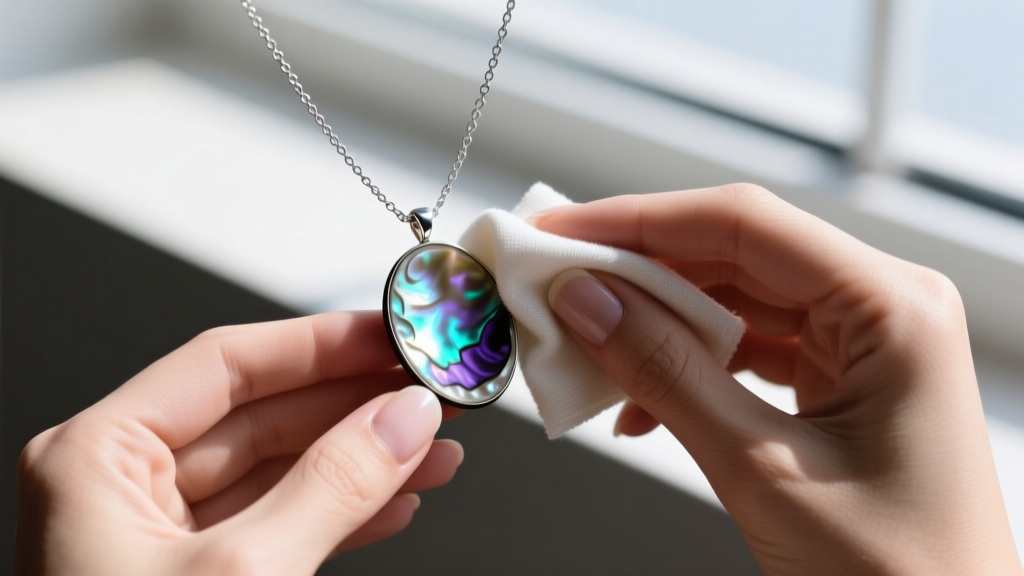
Most abalone heart pendants are suspended on sterling silver (925) chains. Silver naturally oxidizes and tarnishes when exposed to sulfur in the air. The most common mistake jewelry owners make is using commercial liquid "silver dips" to clean the chain while the pendant is still attached.
Critical Warning: Commercial silver dips rely on thiourea, a highly toxic and corrosive chemical that will instantly and permanently etch the calcium carbonate in your abalone pendant. The Jewelers of America strongly advises against using harsh chemical dips on any jewelry featuring organic or porous gems.
The Safe Electrochemical Cleaning Method
To clean the silver chain without harming the abalone heart, you must separate the two. If the pendant cannot be unclasped, use the following targeted method:
- Isolate the Pendant: Wrap the abalone heart securely in a dry, soft microfiber towel and secure it with a rubber band so no moisture can reach it.
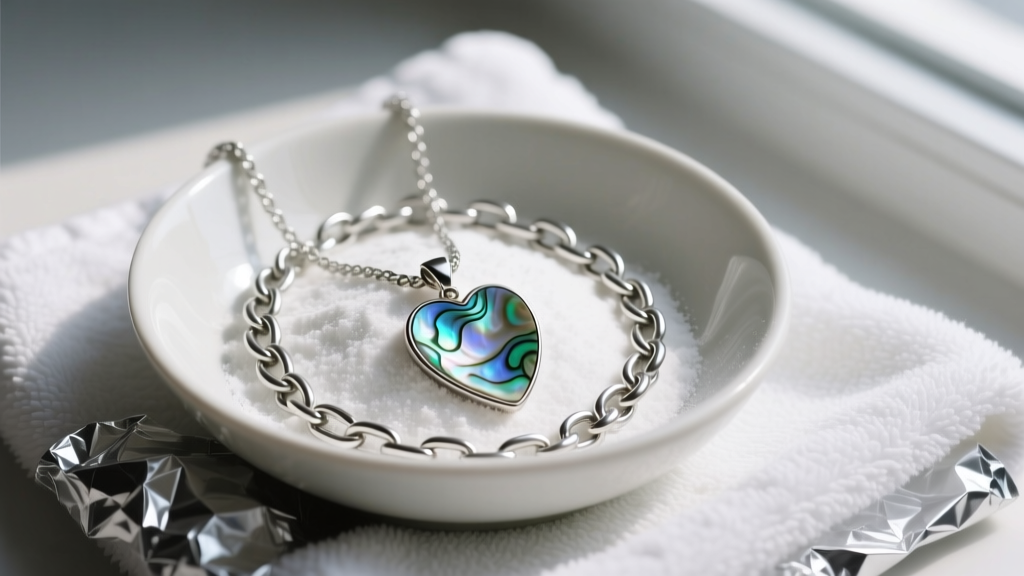
- Prepare the Bath: Line a glass bowl with aluminum foil (shiny side up). Add 1 tablespoon of baking soda and 1 tablespoon of sea salt.
- Activate: Pour boiling water into the bowl. The mixture will fizz as it creates an electrochemical reaction that transfers silver sulfide (tarnish) from the chain to the aluminum foil.
- Submerge ONLY the Chain: Drape the silver chain into the solution, ensuring the wrapped abalone pendant hangs safely outside the bowl.
- Rinse and Dry: After 3 minutes, remove the chain, rinse it thoroughly with distilled water, and pat dry. Unwrap your perfectly safe abalone heart.
Troubleshooting Scratches: At-Home vs. Professional Repair
If your abalone heart has lost its mirror-like finish due to micro-scratches, you have two paths for restoration depending on the severity of the damage.
The At-Home Mineral Oil Trick (For Mild Hazing)
If the scratches are superficial and the shell simply looks "dry" or hazy, you can temporarily restore the luster using food-grade mineral oil. Apply a single drop of mineral oil to a soft lint-free cloth and buff the surface of the abalone in tight, circular motions. The oil fills the microscopic scratches, altering the light refraction and temporarily bringing back the vibrant blues and greens. Note that this is a cosmetic fix and will need to be repeated every few months as the oil naturally degrades.
Professional Lapidary Polishing (For Deep Scratches and Etching)
For deep scratches or acid etching, the surface layer of the shell must be physically removed. A professional lapidary will use a series of wet-sanding pads, progressing from 1200 grit up to 8000 grit, followed by a final polish using cerium oxide or tin oxide powder on a felt wheel. Never attempt to use a rotary tool (like a Dremel) at home. The high RPMs generate friction heat, which will boil the moisture inside the conchiolin layers, causing the shell to delaminate, crack, or outright shatter.
Preventative Storage and Daily Wear Rules
Troubleshooting is reactive; proper care is proactive. To ensure your abalone heart necklace survives for decades, adhere to these strict wearing parameters:
- The "Last On, First Off" Rule: Always put your abalone necklace on after applying perfume, hairspray, and lotions. Remove it immediately upon returning home, before changing clothes or doing dishes.
- Isolated Storage: Never store your abalone necklace in a communal jewelry box. Diamonds, sapphires, and even quartz-based gemstones will easily scratch the abalone. Store it in a dedicated, soft flannel pouch or a tarnish-resistant ziplock bag.
- Avoid Ultrasonic Cleaners: The high-frequency acoustic waves in ultrasonic jewelry cleaners will shake the microscopic aragonite plates loose from their conchiolin matrix, causing internal fracturing that manifests as a cloudy, dead spot in the center of the heart.
By understanding the organic nature of your jewelry and respecting its chemical boundaries, your abalone heart necklace will maintain its mesmerizing oceanic fire for a lifetime. For more information on the mineralogical properties of calcium carbonate structures, refer to the Mindat.org mineral database.


