Station Diamond Necklace Troubleshooting: Fix Snags & Slips
Is your station diamond necklace tangling or snagging? Discover expert troubleshooting tips to fix slipping clasps, bezel snags, and chain kinks.

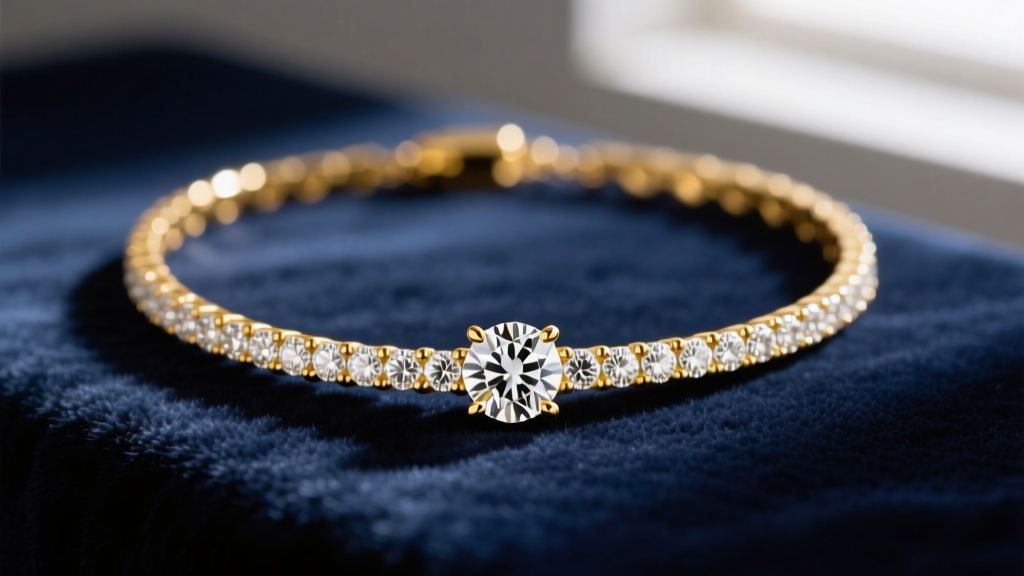
Station diamond necklaces are a staple of modern fine jewelry, offering a minimalist yet brilliant aesthetic. Whether you are wearing a classic Messika Move style or a custom Anita Ko design, these pieces feature small diamonds (typically melee sizes ranging from 0.03ct to 0.15ct) spaced evenly along a delicate chain. However, their delicate nature makes them highly susceptible to specific mechanical failures. From chronic tangling and clasp migration to snagging bezels and kinked links, owning a station diamond necklace requires proactive maintenance. In this comprehensive troubleshooting guide, we break down the exact failure modes of station necklaces and provide actionable, jeweler-approved solutions to restore your piece to perfect condition.
The Anatomy of a Station Diamond Necklace (and Why It Fails)
To troubleshoot effectively, you must understand the structural compromises of a station necklace. Unlike a standard pendant necklace where the weight is concentrated at the bottom of a V-shape, a station necklace distributes weight evenly across the collarbone. This requires exceptionally fine chains—usually between 0.6mm and 0.9mm in gauge—to maintain a "barely there" elegance.
The most common chain types used are cable, box, and rope chains. Cable chains are prone to complex knotting, while box chains are notorious for irreversible kinking when crushed. Furthermore, the soldered jump rings that secure each diamond station act as rigid pivot points, creating tension spots that can lead to metal fatigue and chain snapping over time.
Troubleshooting 1: The Dreaded Chain Tangling and Knotting
The Mineral Oil Method (Skip the Baby Powder)
A pervasive myth in jewelry care is that baby powder or talcum powder helps untangle fine chains. While it reduces friction temporarily, the powder leaves behind a gritty, abrasive residue that lodges inside the microscopic gaps of 0.8mm chain links, accelerating metal wear.
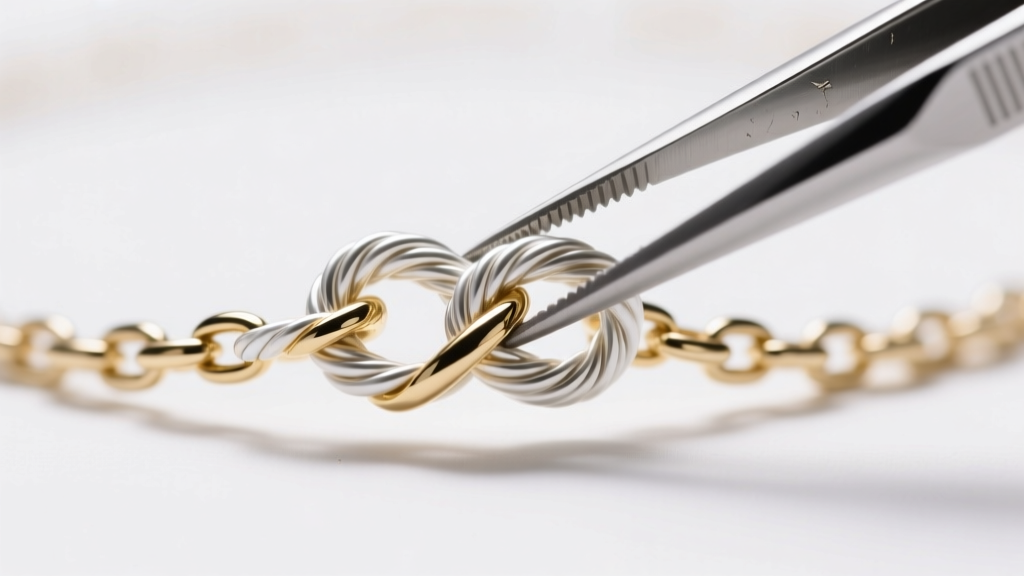
The Professional Fix: Lay the tangled station necklace flat on a smooth, non-porous surface like a glass pane or ceramic tile. Apply a single drop of mineral oil or specialized jewelry lubricant directly to the knot. Using two 0.3mm beading needles or fine-tipped titanium tweezers, gently tease the center of the knot outward. The mineral oil provides frictionless glide without leaving abrasive particulates. Once untangled, clean the chain with a few drops of mild dish soap (like Dawn) and warm water to remove the oil.
Prevention: Clasp Weight and Chain Gauge
Tangling often occurs in storage due to the clasp slipping through the chain. Always store your station necklace either laid perfectly flat in a jewelry box with anti-tarnish strips or hanging vertically from a padded hook. Never toss a station necklace into a travel pouch without threading the clasp through a drinking straw to keep the chain rigid.
Troubleshooting 2: Bezel Snagging and Prong Catching
Station diamonds are typically set in either bezel or prong settings. While bezels are marketed as "snag-free," a poorly finished bezel lip can act like a microscopic hook, catching on silk blouses and fine knitwear. Prong settings, particularly those with 3 or 4 delicate prongs holding melee diamonds, are even more prone to lifting and catching.
| Setting Type | Snag Risk Level | Common Failure Mode | Jeweler's Solution |
|---|---|---|---|
| Full Bezel | Low | Rough or over-burnished metal lip catching fabric. | Polishing and burnishing the bezel edge flush against the diamond girdle. |
| 4-Prong Melee | High | Prongs lifting due to impact or catching on hair. | Re-tipping worn prongs with matching karat gold solder. |
| Half-Bezel | Medium | Exposed diamond girdle chipping; side prongs snagging. | Adding a protective gallery wire beneath the stone. |
If your bezel-set stations are catching, do not attempt to file them down with an emery board. Take the piece to a jeweler to have the bezel edge "burnished"—a process where a hardened steel tool is rubbed firmly against the gold to smooth and flatten the metal lip perfectly against the diamond.
Troubleshooting 3: Slipping Clasps and Chain Stretching
One of the most annoying quirks of a station diamond necklace is "clasp migration"—the clasp continually slides around to the front of your neck. This is a physics issue related to the center of gravity. If the clasp (especially a bulky lobster clasp) is heavier than the chain and the diamond stations combined, gravity will naturally pull it to the lowest point, which is the front of your décolletage.
Expert Insight: Spring ring clasps are lightweight but notoriously difficult to operate and prone to internal spring failure. A lightweight 5mm lobster clasp is ideal, but if migration persists, a jeweler can solder a tiny "counterweight" jump ring or a small decorative gold tag directly opposite the clasp to balance the necklace's weight distribution.
Regarding chain stretching: Platinum and 18k yellow gold are relatively soft metals. If you frequently pull or tug on your station necklace, the 0.7mm links can slowly elongate, causing the chain to look permanently warped. According to the Jewelers of America, once a fine box or cable chain stretches beyond 10% of its original link density, it cannot be compressed back and must be replaced.
Troubleshooting 4: Dull or Loose Station Diamonds
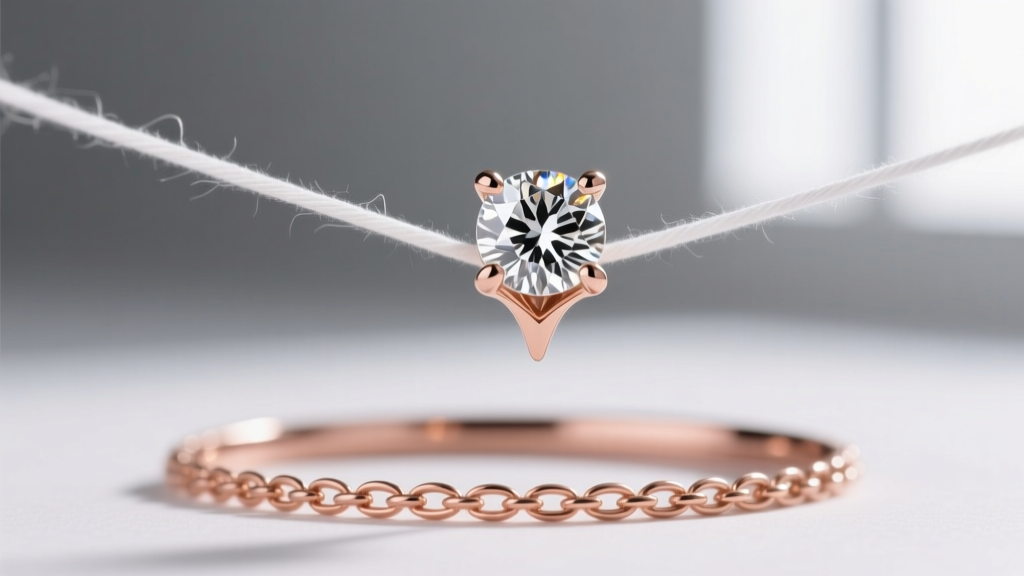
Because station diamonds sit flat against the skin, they are constantly exposed to body oils, lotions, and perfumes. This creates a film on the pavilion (the bottom of the diamond), drastically reducing light return and making the stones look dull or gray.
DIY Cleaning vs. Professional Ultrasonic Risks
While ultrasonic cleaners are excellent for heavy grime, they pose a severe risk to station necklaces. The high-frequency vibrations can easily shake small melee diamonds out of their settings, especially if the bezel or prongs are already slightly worn. The Gemological Institute of America (GIA) recommends avoiding ultrasonics for jewelry with fracture-filled diamonds or fragile tension settings, and this caution extends to delicate melee stations.
The Safe Cleaning Protocol:
- Mix a solution of warm water and a few drops of ammonia-free dish soap.
- Soak the necklace for 15 minutes to break down sebum and lotion.
- Use an extra-soft baby toothbrush to gently sweep the underside of each diamond station, where grease accumulates.
- Rinse under lukewarm running water (always over a plugged sink!) and pat dry with a lint-free microfiber cloth.
When to Take Your Necklace to a Professional Jeweler
While DIY maintenance can resolve tangles and dullness, mechanical damage requires professional intervention. You should seek a master jeweler if you notice any of the following:
- Box Chain Kinks: If a box chain link is crushed or kinked, a jeweler can sometimes flatten it using a leather mallet and a steel block, though laser welding (typically costing between $45 and $120) may be required to fuse weakened links.
- Visible Gaps in Bezels: If you can slide a piece of printer paper between the diamond and the metal bezel, the stone is at imminent risk of falling out.
- Clasp Tension Loss: If the lever on your lobster clasp no longer snaps back with a firm, audible click, the internal spring is compromised and the clasp must be replaced immediately to prevent loss.
By understanding the specific mechanical vulnerabilities of your station diamond necklace, you can transition from reactive repairs to proactive care, ensuring your delicate diamond stations remain brilliant and secure for decades.


