Gold Amethyst Necklace Value Guide: What to Pay in 2026
Discover the true value of a gold amethyst necklace in 2026. Learn pricing tiers, gold purity impacts, and how to assess gemstone quality before buying.

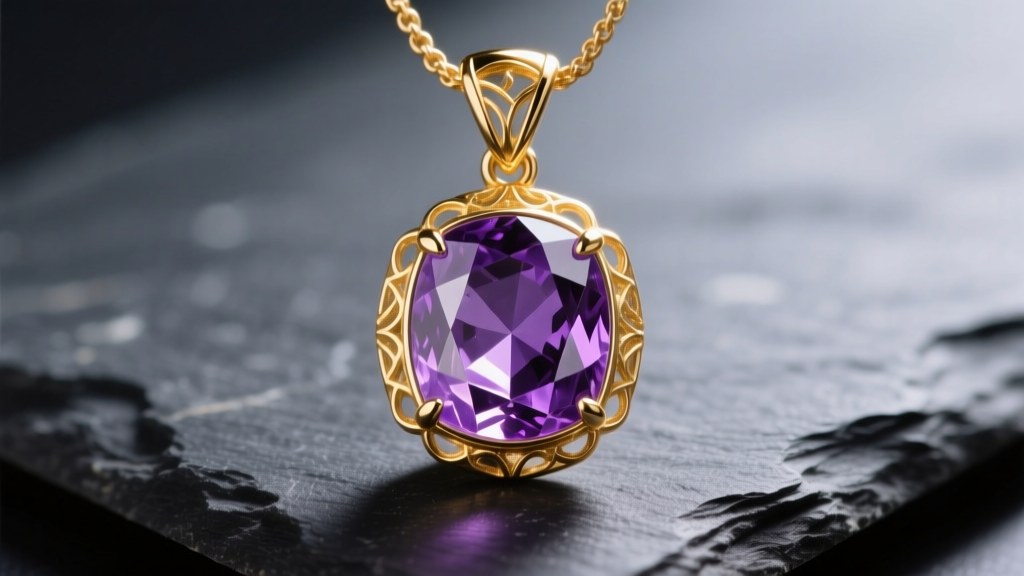
The Real Cost of a Gold Amethyst Necklace: Breaking Down the Price
When assessing the budget and true market value of a gold amethyst necklace, consumers often fall into the trap of paying for brand prestige rather than intrinsic material worth. In 2026, the pricing landscape for colored gemstone jewelry has shifted due to fluctuations in precious metal markets and the increasing sophistication of synthetic stone production. A commercial-grade amethyst set in 10-karat gold might retail for as little as $85, while a precision-cut, top-color "Siberian" amethyst in an 18-karat gold setting can easily command $1,500 or more. To avoid overpaying, you must deconstruct the necklace into its core components: the gold alloy, the gemstone quality, and the craftsmanship.
Gold Purity: 10K vs. 14K vs. 18K Price Impact
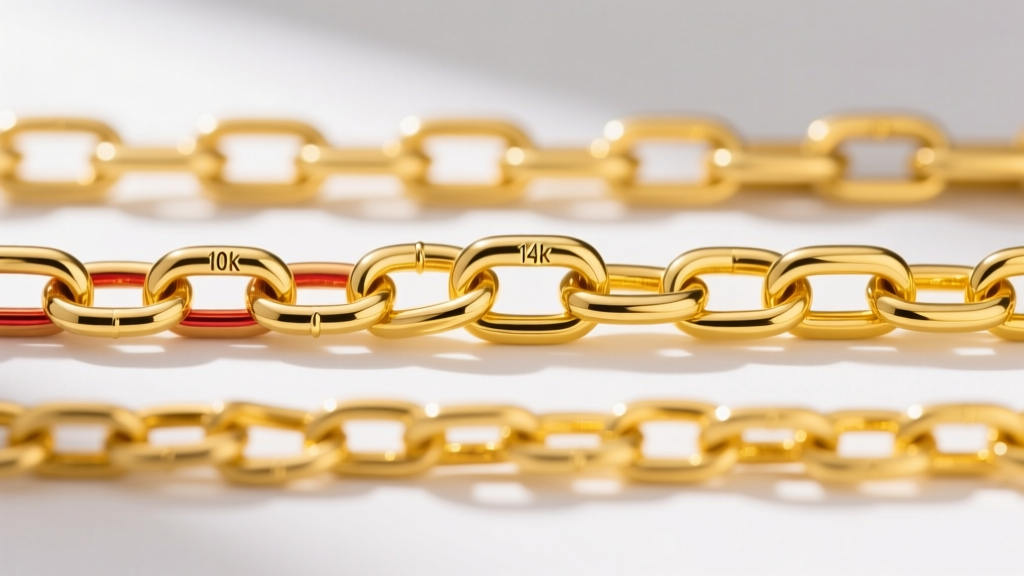
The foundation of your necklace's baseline value is its gold content. Gold purity is measured in karats, which directly dictates both the price and the physical durability of the piece. According to the Federal Trade Commission Jewelry Guides, gold must be accurately stamped with its karatage, but understanding what that stamp means for your wallet is critical.
- 10K Gold (41.7% pure): The most budget-friendly and durable option. It contains less than half pure gold, making it highly resistant to scratching and bending. However, it lacks the rich, warm hue of higher karats and holds minimal intrinsic scrap value. Expect to pay $60–$150 for a standard 10K chain and setting.
- 14K Gold (58.3% pure): The industry standard for fine jewelry in the United States. It offers the perfect compromise between the luxurious color of pure gold and the structural integrity needed to hold a gemstone securely. A 5-gram 14K gold pendant setting carries a raw material value of roughly $150–$180, before retail markups.
- 18K Gold (75.0% pure): Prized for its deep, saturated yellow color and hypoallergenic properties. It is softer than 14K, meaning prongs may require more frequent maintenance. The premium for 18K gold is substantial; you will pay a 40% to 60% markup over 14K equivalents purely for the metal content.
Amethyst Grading: Why Color Saturation Dictates Value
Amethyst is a variety of macrocrystalline quartz, boasting a Mohs hardness of 7 and a refractive index of 1.544–1.553. Because amethyst is relatively abundant in nature, its value is not driven by rarity, but almost entirely by color saturation and distribution. The Gemological Institute of America (GIA) notes that the most valuable amethyst exhibits a strong reddish-purple or deep purple hue with no visible color zoning.
The "Siberian" Premium
Historically, the finest amethyst came from Siberia, characterized by a deep purple body color with secondary red and blue flashes under incandescent light. Today, "Siberian" is used as a trade term for this specific color profile, regardless of origin (with Zambian and Uruguayan mines now producing similar grades). A true Siberian-color amethyst will cost 3 to 5 times more per carat than a light, washed-out lilac stone of the exact same size and clarity.
Pricing Matrix: Gold Karat vs. Amethyst Grade
The following table provides a realistic 2026 retail pricing framework for a standard 2-carat to 3-carat amethyst pendant on an 18-inch cable chain. Prices reflect independent jeweler and direct-to-consumer online retail, excluding luxury mall-brand markups.
| Amethyst Grade | Color Profile | 10K Gold Setting | 14K Gold Setting | 18K Gold Setting |
|---|---|---|---|---|
| Commercial | Light, washed-out lilac; visible inclusions | $75 - $140 | $130 - $220 | $250 - $380 |
| Fine | Medium-dark purple, even saturation, eye-clean | $160 - $280 | $280 - $450 | $450 - $750 |
| Extra Fine (Siberian) | Deep purple with distinct red/blue flashes | $350 - $600 | $600 - $950 | $1,000 - $1,800+ |
Red Flags: Overpaying for Treated or Synthetic Stones
When budgeting for a gold amethyst necklace, the greatest threat to value is paying natural gemstone prices for synthetic or heavily treated material. According to the GIA Amethyst Overview, synthetic amethyst produced via hydrothermal or flux-growth methods is chemically and optically identical to natural quartz. However, it costs roughly 90% less to produce.
Spotting Dyed Quartz
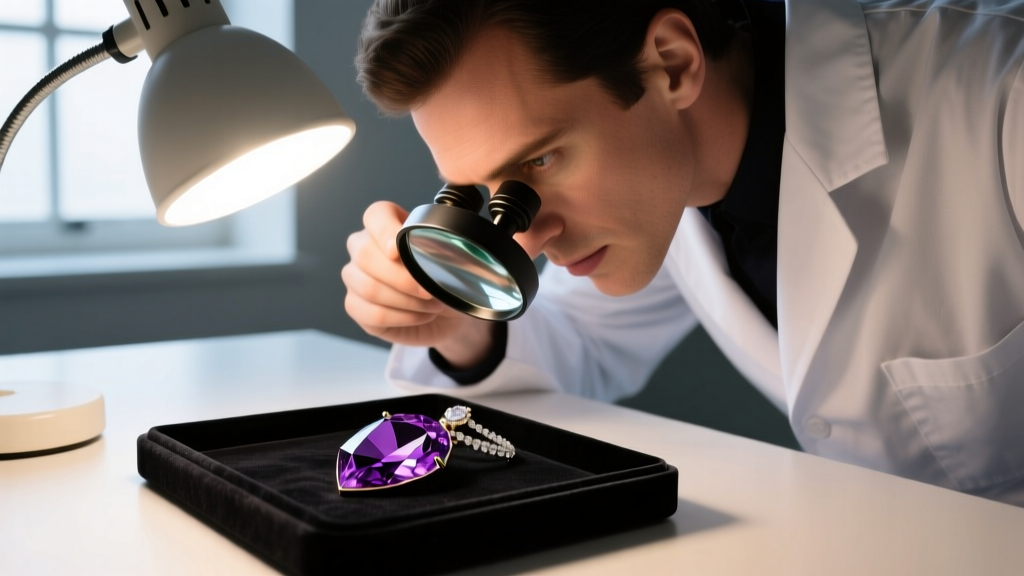
A common deception in the lower-tier market involves taking pale, low-value quartz, fracturing it via thermal shock, and immersing it in purple dye. To identify this, use a 10x jeweler's loupe to examine the stone's surface. If you see concentrated purple dye pooling in microscopic fractures or spiderweb-like patterns along the girdle, you are looking at dyed quartz, not natural amethyst. This material has virtually zero resale value and the dye can fade with prolonged UV exposure.
Heat Treatment Acceptability
It is important to note that routine heat treatment to remove brownish or yellowish modifiers is a standard, stable, and universally accepted practice in the gem trade. Heating amethyst to roughly 400°C–500°C enhances the purple hue permanently. Unlike dyed stones, heat-treated amethyst does not suffer a penalty in market value, provided it is disclosed. You should not pay a premium for "unheated" amethyst unless accompanied by a reputable lab report, as the visual difference is often imperceptible to the naked eye.
Chain Weight and Craftsmanship Variables
Budget assessments often ignore the chain, yet it accounts for up to 60% of the total gold weight in a necklace. A delicate 0.8mm cable chain might weigh only 1.5 grams, while a solid 2.0mm box chain of the same length can weigh over 6 grams. When evaluating value, calculate the melt value of the chain based on current gold spot prices. If a retailer is charging $400 for a 14K gold necklace that weighs 2 grams total (approx. $60 in raw gold), you are paying a 500% markup for the brand name. For the best value, prioritize the gram weight of the gold and the cut quality of the amethyst over the logo on the clasp.
Final Verdict: What Should You Actually Spend?
For a high-quality, everyday gold amethyst necklace that balances durability, aesthetic appeal, and fair market value, target the 14K gold and "Fine" grade amethyst tier. Expect to spend between $280 and $450. This budget secures a solid, eye-clean gemstone with rich purple saturation, set in a durable alloy that will withstand decades of daily wear without requiring excessive prong maintenance. Avoid mall jewelers where markups routinely exceed 300%, and instead seek out independent lapidaries or direct-to-consumer fine jewelers who provide transparent carat weights, exact gold gram measurements, and full disclosure of any gemstone treatments.


