Why A Heritage In Bloom Necklace Dominates 2026 Trends
Discover why a heritage in bloom necklace is 2026's top jewelry trend. Explore authentication, pricing, and styling for antique floral pendants.

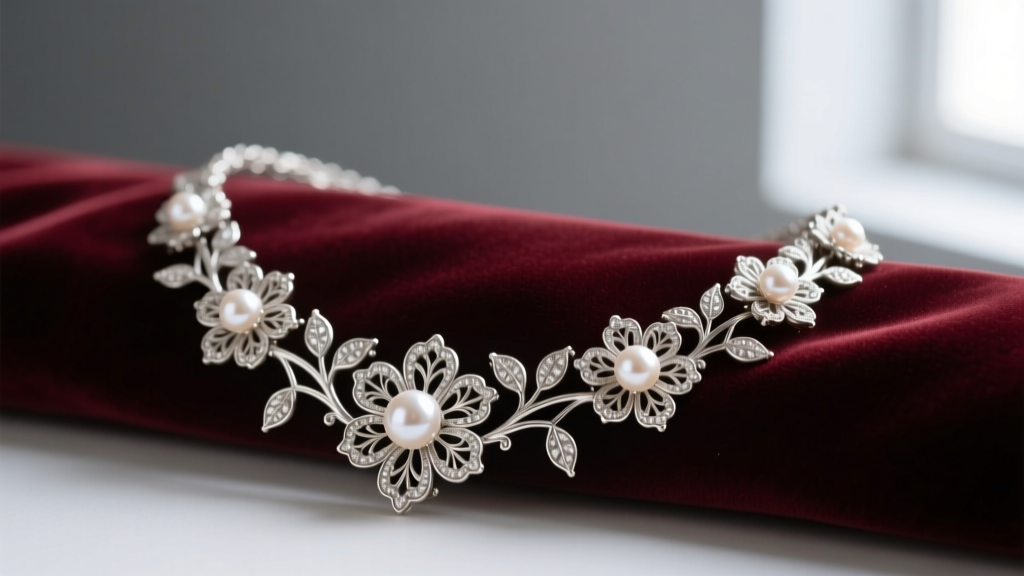
The jewelry landscape of 2026 has decisively pivoted away from the ultra-minimalist, mass-produced aesthetics of the early 2020s, embracing a profound appreciation for narrative-driven, historical adornments. At the forefront of this shift is the revival of botanical estate jewelry. When serious collectors, archivists, and stylists refer to a heritage in bloom necklace, they are describing an antique or vintage botanical pendant, festoon, or lavaliere that carries verifiable historical provenance, exceptional hand-craftsmanship, and intricate floral motifs. These pieces are no longer relegated to dusty vaults; they are being integrated into modern, high-fashion wardrobes as statement anchors.
This comprehensive guide deconstructs the anatomy, authentication, and styling protocols of antique floral necklaces, providing you with the expert framework needed to navigate the estate jewelry market with confidence and precision.
The Anatomy of Botanical Estate Jewelry
A true heritage floral necklace is defined by its manufacturing techniques, which are largely impossible to replicate with modern CAD/CAM casting. The botanical motifs—ranging from weeping willows and ferns to highly stylized roses and lilies of the valley—were historically brought to life through labor-intensive methods.
Master Craftsmanship Techniques
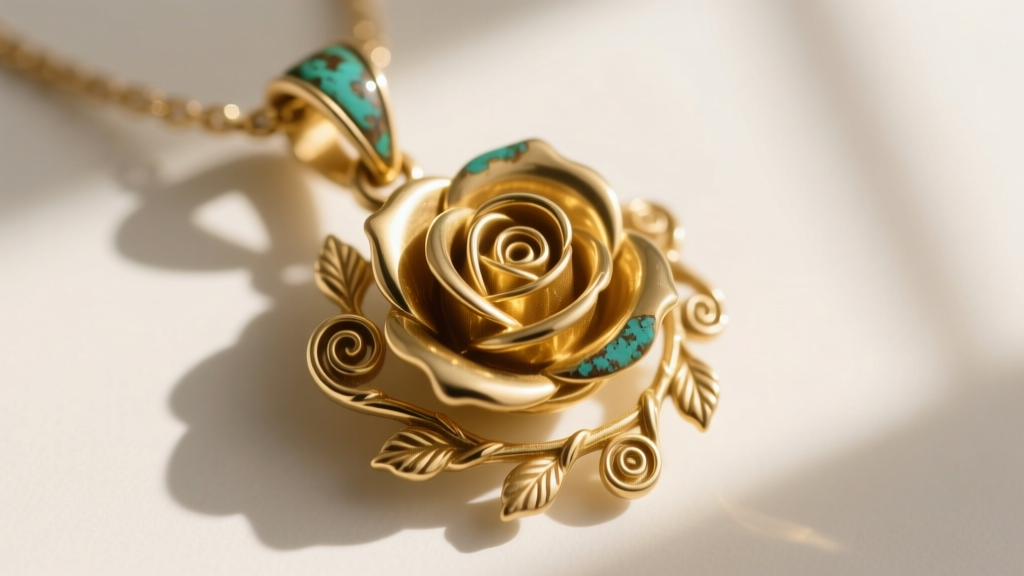
- Repoussé and Chasing: Predominantly seen in Victorian-era gold work, this technique involves hammering the metal from the reverse side to create a raised, three-dimensional floral relief on the front, followed by refining the details on the obverse side with fine chisels.
- Milgrain and Piercing: The hallmark of Edwardian jewelry. Artisans used fine platinum wire and early piercing saws to create delicate, lace-like openwork backgrounds that allowed the floral elements to appear as though they were floating on the skin.
- Plique-à-jour Enamel: A master-level technique popularized during the Art Nouveau period. Translucent enamel is suspended within the gold or silver framework of a flower petal or leaf without a metal backing, creating a stained-glass effect that captures and transmits light brilliantly.
Era-Specific Floral Motifs and Gemology
Understanding the distinct gemological and stylistic signatures of different eras is critical when evaluating a heritage in bloom necklace. According to the Victoria and Albert Museum Jewellery Collection, the symbolism and material choices of botanical jewelry shifted dramatically between 1837 and 1930.
The Victorian Era (1837–1901): Sentiment and Symbolism
Victorian floral jewelry was deeply rooted in the 'Language of Flowers' (floriography). Pansies symbolized 'thinking of you,' while ivy represented fidelity. These pieces were predominantly crafted in 15k or 18k yellow gold, or silver-topped gold. Gemstones were typically cabochon turquoise, seed pearls (representing tears or purity), and old mine cut diamonds. The rose cut diamond, with its flat base and domed, triangular faceted top, was heavily utilized in floral clusters to mimic the dew-kissed petals of a rose.
The Edwardian Era (1901–1915): Platinum and Elegance
The advent of the oxyacetylene torch allowed jewelers to work with platinum, a metal with immense tensile strength. Edwardian floral necklaces, particularly the 'garland' style festoons, feature impossibly thin platinum wires woven into bows, ribbons, and floral swags. The diamonds used transitioned from old mine cuts to early old European cuts, offering more scintillation. As noted by the Gemological Institute of America (GIA), the transition in diamond cutting during this era drastically altered how light interacted with antique floral clusters.
Art Nouveau (1890–1910): Organic Rebellion
Rejecting the rigid symmetry of the Victorian and Edwardian periods, Art Nouveau jewelers like René Lalique crafted asymmetrical, hyper-realistic, and sometimes macabre botanicals. Orchids, thistles, and decaying leaves were common. Materials shifted away from precious diamonds toward opals, moonstones, demantoid garnets, and horn, prioritizing artistic expression over intrinsic gemstone value.
Authentication Framework and Market Valuation
The secondary market for antique jewelry is fraught with high-quality reproductions. Authenticating a heritage floral piece requires forensic attention to its findings, hallmarks, and wear patterns. Sotheby's Jewelry Department consistently emphasizes that the 'findings' (clasps, hinges, and catches) are the most reliable indicators of age.
Clasp and Finding Forensics
If a floral pendant or chain features a modern lobster claw or a standard spring-ring clasp, it is either a reproduction or has been heavily altered, significantly diminishing its collector value. Authentic pre-1930s pieces will feature:
- The C-Clasp: A simple 'C' shaped hook without a rolling safety catch, common on Victorian brooches and pendants.
- The Trombone Clasp: A push-pull tubular mechanism frequently used in European jewelry from the late 19th to mid-20th century.
- Early Safety Catches: Figure-eight wire loops soldered over the pin stem, introduced in the early 1900s to secure C-clasps.
Hallmarking and Metal Verification
French hallmarks are among the most reliable. Look for the 'Eagle Head' (Tête d'Aigle) for 18k gold (post-1838) or the 'Dog Head' (Tête de Chien) for platinum (post-1912). English pieces may feature the Crown and number (e.g., 18 and Crown for 18k gold) or the orb mark for platinum.
| Era / Style | Primary Materials | Estimated Price Range (USD) | Key Value Drivers |
|---|---|---|---|
| Victorian Silver/Gilt Floral | Silver, 9k/15k Gold, Seed Pearls | $400 – $1,200 | Condition of gilt, pearl luster |
| Edwardian Platinum Festoon | Platinum, Old European Diamonds | $3,500 – $12,000 | Lace-like piercing, diamond clarity |
| Art Nouveau Enamel Pendant | 18k Gold, Plique-à-jour Enamel | $5,000 – $25,000+ | Enamel condition, maker's signature |
| Mid-Century Botanical Spray | 18k Yellow Gold, Rubies, Diamonds | $2,000 – $8,000 | Three-dimensional repoussé work |
2026 Styling Protocols: Integrating Antique Florals
The modern approach to styling a heritage in bloom necklace relies on deliberate contrast. The goal is to prevent the piece from looking like a costume or a museum replica by grounding it in contemporary, structured tailoring.
Neckline Pairings
Victorian and Edwardian floral pieces are inherently ornate. They require negative space to breathe. The most flattering modern necklines include:
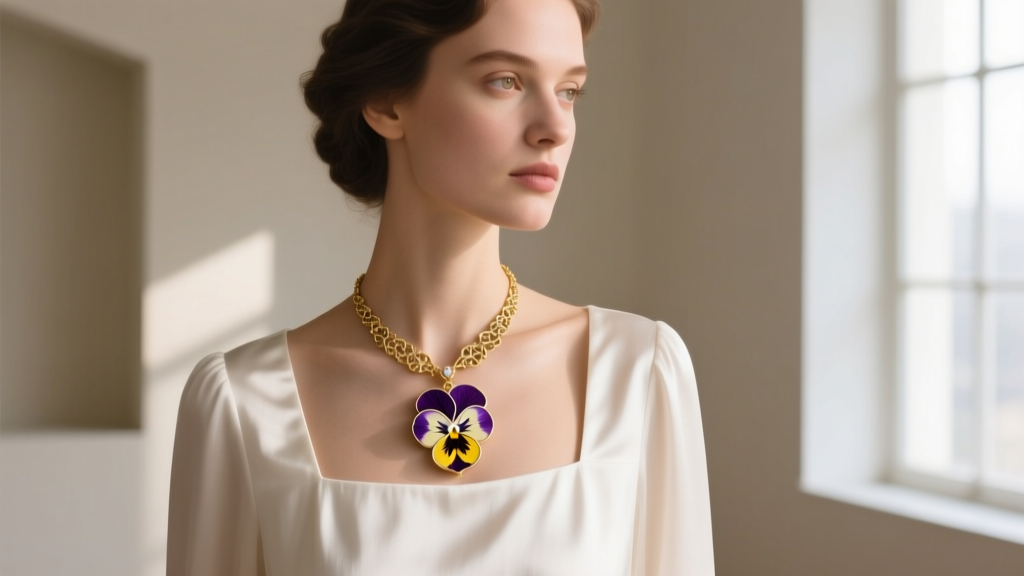
- The Square Neck: A structured square-neck silk blouse or wool crepe dress provides a geometric frame that contrasts beautifully with the organic, sweeping lines of a floral festoon.
- The Deep V-Neck: Ideal for single, heavy pendants (such as an Art Nouveau orchid or a Victorian locket). The V-shape naturally draws the eye down to the botanical motif.
- The Sweetheart Neckline: Echoes the romanticism of the jewelry, particularly effective with seed pearl and rose-cut diamond lavaliere pendants.
Strategic Layering
While purists may advise against layering delicate antiques, the 2026 trend of 'curated decolletage' allows for careful integration. Pair a 16-inch Edwardian platinum floral pendant with a modern, ultra-minimalist 18-inch 1.2mm 18k yellow gold cable chain. The contrast between the cool, antique platinum and the warm, modern gold creates a dynamic, lived-in aesthetic that feels highly personal and contemporary.
Preservation and Archival Care
Owning a piece of jewelry history comes with strict preservation responsibilities. Antique botanical necklaces are particularly vulnerable due to their intricate crevices and historical materials.
- Never Use Ultrasonic Cleaners: The high-frequency vibrations can shatter rose-cut diamonds (which are often foil-backed), crack guilloché or plique-à-jour enamel, and dislodge seed pearls that were set with organic glues rather than metal prongs.
- Avoid Chemical Dips: Silver dips and commercial gold polishing cloths will strip the natural patina that antique collectors value, and can permanently cloud soft stones like turquoise, opals, and moonstones.
- Proper Storage: Store the necklace flat in an acid-free, unbleached cotton pouch. Hanging heavy Victorian festoons can stress the antique solder joints, leading to chain failure. Include a silica gel packet to prevent moisture-induced oxidation of any silver components.
"A heritage floral necklace is not merely an accessory; it is a wearable archive of botanical art and metallurgical history. Treating it with the respect of a museum artifact ensures its survival for the next century."
As the demand for sustainable, emotionally resonant luxury continues to define the 2026 jewelry market, the heritage botanical necklace stands as a testament to enduring craftsmanship. By understanding the forensic details of authentication and the nuances of modern styling, you can confidently acquire and wear these blooming heirlooms with the expertise of a seasoned archivist.


