Holly Necklace Value Guide: Pricing & Market Worth
Assess the true value of a holly necklace. We break down pricing tiers, material grades, and vintage vs. modern market rates to guide your next purchase.

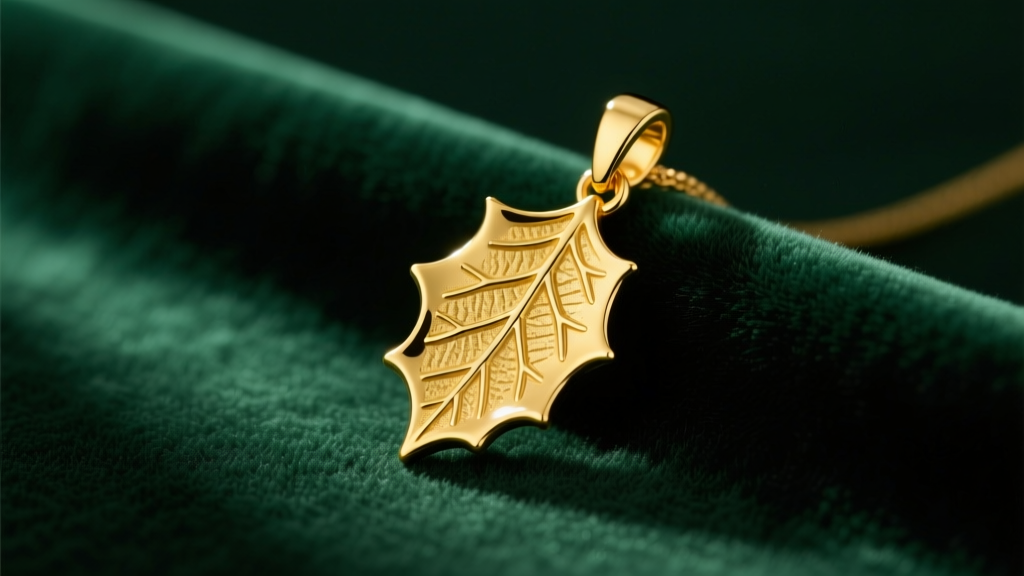
When evaluating a holly necklace, buyers often encounter a massive price disparity that can be confusing to navigate. Ranging from $30 fast-fashion pendants to $3,000+ antique estate pieces, the botanical holly leaf motif (Ilex aquifolium) is a staple in jewelry design. But how do you determine if you are paying a fair market price or overpaying for a brand name? In this comprehensive value assessment, we break down the exact material grades, weight metrics, and market tiers you need to know before investing in a holly necklace in 2026.
The Allure and History of the Holly Motif
The holly leaf has been a prominent symbol in jewelry since the Victorian era, representing protection, foresight, and domestic happiness. Unlike fleeting seasonal trends, the holly necklace remains a perennial favorite in botanical jewelry collections. Its distinct serrated edges and deep veins offer jewelers a complex canvas for metalworking, making it an excellent benchmark for assessing craftsmanship quality. Whether set with diamonds in a contemporary fine jewelry collection or crafted in intricate cannetille work for an antique piece, the value of a holly pendant is deeply tied to its execution and material integrity.
Decoding the Price Tiers: What Should You Pay?
To accurately assess the budget and value of a holly necklace, we must segment the market into four distinct categories. With gold spot prices stabilizing at historic highs in 2026, the baseline melt value of precious metals heavily influences retail pricing.
| Category | Base Material & Plating | Typical Pendant Weight | Fair Market Price Range |
|---|---|---|---|
| Costume / Fashion | Brass/Zinc with flash plating (<0.5 microns) | 10g - 15g (heavy base metal) | $25 - $75 |
| Demi-Fine / Vermeil | 925 Sterling Silver with 2.5+ micron gold vermeil | 3g - 6g | $95 - $280 |
| Modern Fine Jewelry | Solid 14k or 18k Gold, natural/lab diamonds | 2.5g - 5g | $450 - $1,400 |
| Antique / Estate | 15k/18k Gold, enamel, seed pearls, historical provenance | 4g - 12g (often includes chain) | $600 - $3,500+ |
If a retailer is charging $400 for a vermeil holly pendant, you are overpaying by at least 40%. Conversely, if a 'solid gold' holly necklace is listed for $150, it is likely hollowed out, under-karated, or mislabeled.
Material Grades and Longevity: A Value Analysis
The longevity of your holly necklace dictates its true cost-per-wear. Let us examine the specific material grades you will encounter and how they impact long-term value.
Base Metals vs. Vermeil vs. Solid Gold
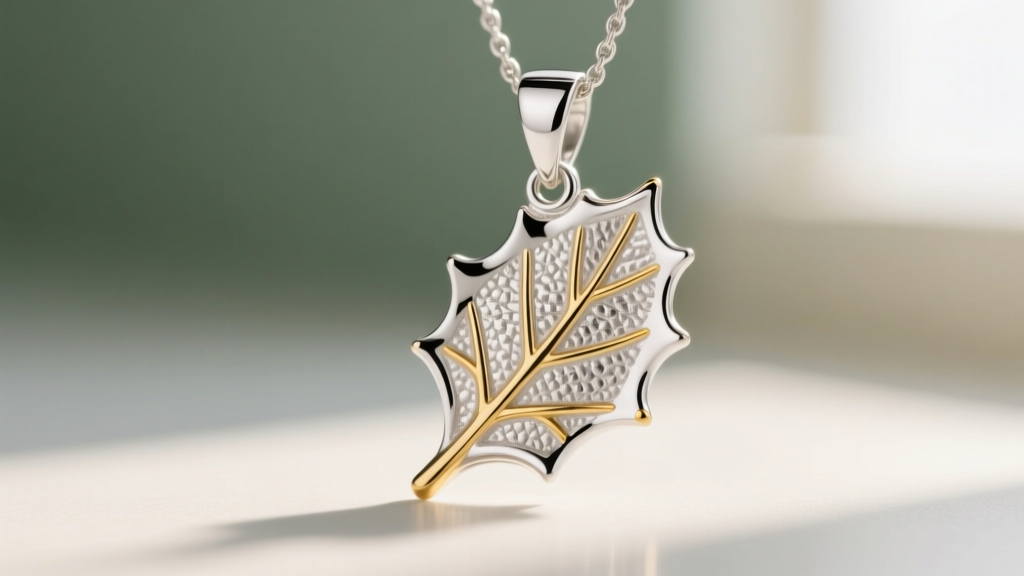
For everyday wear, solid 14k gold is the undisputed champion of value retention. A standard 1-inch solid 14k gold holly pendant should weigh between 3 and 4.5 grams. At current market rates, the raw gold melt value alone sits around $200 to $300. When you factor in CAD modeling, casting, and hand-polishing the intricate leaf veins, a fair retail price lands between $500 and $800.
If your budget restricts you to the demi-fine tier, you must verify the vermeil thickness. According to the Federal Trade Commission Jewelry Guides, a piece can only be legally marketed as 'vermeil' if it features a sterling silver base coated in at least 2.5 microns of gold. Anything less is considered 'gold electroplate' and will wear off within months, exposing the silver underneath to rapid tarnishing.
Gemstone Accents: Enamel, CZ, and Natural Diamonds
Many holly necklaces incorporate accent stones to mimic the iconic red holly berries. Cubic Zirconia (CZ) and synthetic red spinel are common in the sub-$200 tier and offer excellent initial brilliance, though CZ will eventually scratch and cloud. For fine jewelry collectors, natural rubies or ethically sourced red sapphires provide superior hardness (9 on the Mohs scale) and retain secondary market value.
Vintage Estate vs. Contemporary Botanical Collections
One of the most fascinating aspects of the holly necklace market is the divide between antique estate pieces and modern botanical lines.
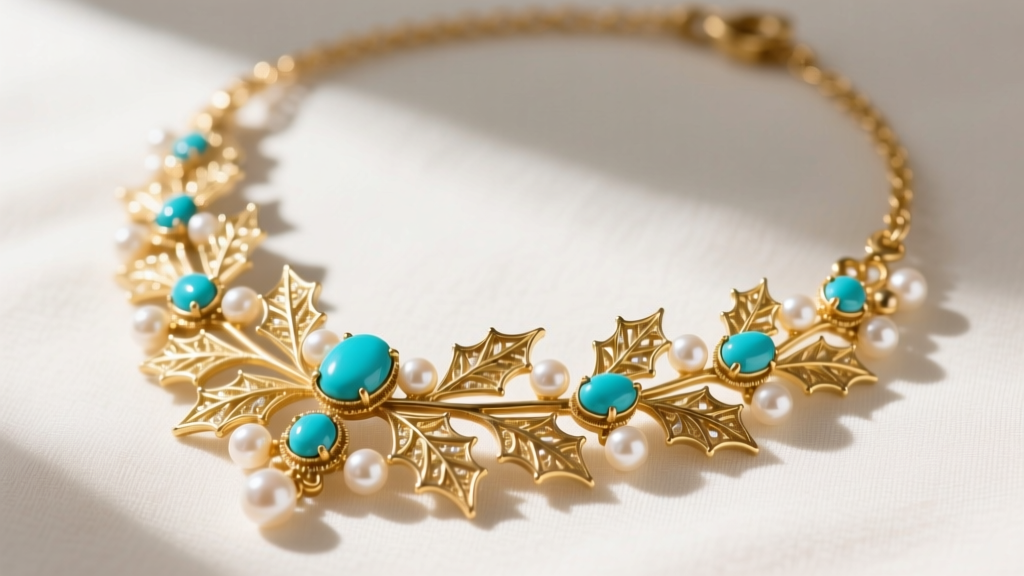
Victorian and Art Nouveau holly necklaces are highly sought after by collectors. As documented in the GIA Gem Encyclopedia, natural turquoise cabochons and seed pearls were the dominant accent stones in 19th-century botanical jewelry, chosen for their striking color contrast against 15k yellow gold. These antique pieces often feature 'cannetille' work—a technique involving tightly coiled gold wires that create a lace-like, three-dimensional effect. Because this labor-intensive technique is rarely practiced today, an authentic Victorian holly necklace in good condition commands a premium, often starting at $1,200 at reputable estate dealers.
Contemporary collections, on the other hand, rely on CAD precision and high-polish finishes. While they lack the historical romance of estate pieces, modern solid gold holly pendants offer superior structural integrity, secure prong settings for diamond accents, and standardized chain clasps that are less prone to failure.
Red Flags: Overpaying for a Holly Necklace
Protect your budget by watching out for these common retail traps when shopping for botanical pendants:
- The 'Hollow-Back' Deception: Some manufacturers cast 14k gold holly leaves with a deeply scooped, hollowed-out back to save on gold weight. These pendants feel unnaturally light (under 1.5 grams) and are highly susceptible to denting if pressed against the collarbone.
- Vague Plating Terminology: Terms like 'gold dipped,' 'gold toned,' or '18k gold plated over brass' indicate a microscopic layer of gold that will degrade rapidly with exposure to skin oils and perfumes.
- Over-Branded Pricing: Many mid-tier fashion brands charge $300+ for sterling silver holly necklaces simply because of a logo engraving on the bail. Always check the metal stamp; if it reads '925' without a vermeil guarantee, the intrinsic value is under $40.
Final Verdict: Is It Worth the Investment?
The value of a holly necklace is entirely dependent on your purchasing intent. If you are looking for a seasonal accessory or a trend-driven layering piece, a high-quality vermeil option ($120–$180) offers the best balance of aesthetics and budget. However, if you view jewelry as a long-term wardrobe staple or an heirloom, investing $600+ in a solid 14k or 18k gold holly pendant with natural gemstone accents is a financially sound decision. By prioritizing metal weight, verifying plating micron thickness, and understanding the historical premium of estate pieces, you can confidently navigate the market and secure a piece that holds its worth for decades.


