How to Open Necklace Clasps: Metal Properties & Fixes
Learn how to open necklace clasps safely by understanding metal properties, tarnish, galling, and alloy-specific mechanical fixes.

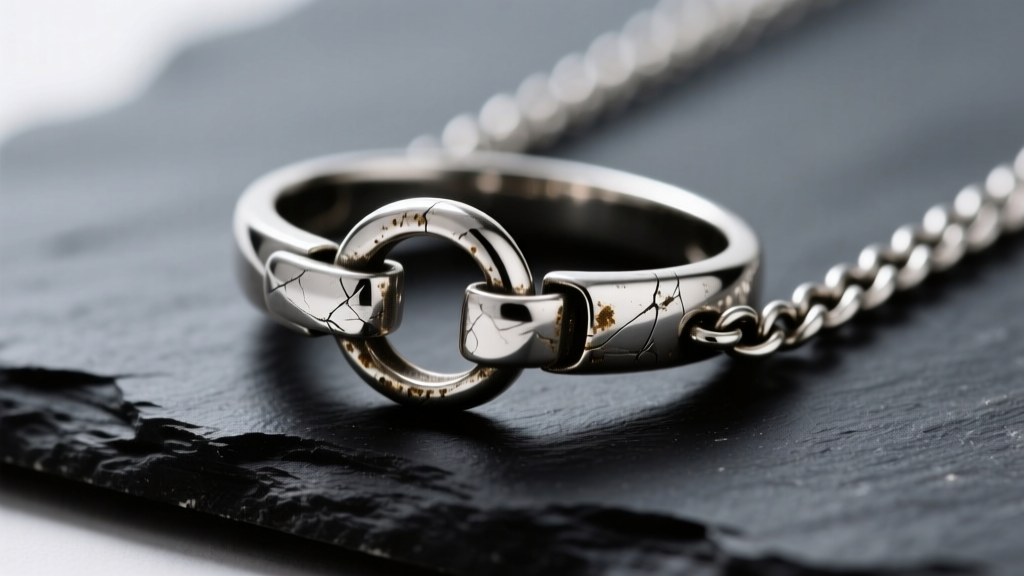
When a necklace clasp jams, the immediate instinct is often to pull harder or use brute force. However, forcing a stuck mechanism is the fastest way to snap a chain or permanently deform a delicate lever. Understanding how to open necklace hardware safely requires a basic grasp of metallurgy and material science. The failure of a clasp is rarely just a mechanical accident; it is usually a symptom of material degradation, galvanic corrosion, or alloy-specific wear. By identifying the metal composition of your necklace, you can apply the correct chemical or mechanical solution to free the clasp without causing catastrophic damage to your jewelry.
The Anatomy of a Clasp and Material Friction
To troubleshoot a stuck clasp, you must first understand its internal architecture. A standard spring ring or lobster claw clasp consists of an outer casing (usually matching the necklace metal) and an internal coil spring. According to the Gemological Institute of America (GIA), the internal spring is almost always made of a base metal alloy, such as stainless steel or a nickel-based superalloy, because precious metals like pure gold or silver lack the elastic memory required to bounce back after repeated compression.
When you ask how to open necklace mechanisms that refuse to budge, you are usually dealing with friction caused by one of three material interactions: chemical tarnish binding the moving parts, mechanical deformation of the outer casing, or microscopic metal galling. Each precious metal reacts differently to environmental stressors, meaning the unjamming technique for a sterling silver chain will differ vastly from that of an 18k gold or platinum piece.
Material Comparison: Clasp Failure Modes by Metal
Different alloys possess unique hardness ratings (measured on the Vickers scale) and chemical reactivity profiles. The table below outlines how common jewelry metals interact with clasp mechanics over time.
| Metal Alloy | Hardness (Vickers) | Common Clasp Type | Primary Failure Mode | Recommended Unjamming Agent |
|---|---|---|---|---|
| Sterling Silver (925) | 65-75 HV | Spring Ring | Silver sulfide grit buildup | Mild silver dip or ultrasonic |
| 14k Yellow Gold | 130-150 HV | Lobster Claw | Lever misalignment / bending | Nylon-jaw pliers |
| 18k Yellow Gold | 110-125 HV | Box Clasp / Lobster | Casing deformation | Mandrel reshaping |
| Platinum (950) | 110-130 HV | Hidden Box / Foldover | Friction galling (cold welding) | Dry graphite powder |
| Titanium (Grade 2) | 150-200 HV | Magnetic / Bayonet | Thread cross-galling | PTFE (Teflon) spray |
Sterling Silver and the Sulfide Jam
Sterling silver is highly susceptible to tarnishing when exposed to sulfur compounds in the air and human sweat. This reaction creates silver sulfide ($Ag_2S$), a hard, gritty black compound. In a spring ring clasp, this microscopic grit accumulates inside the tiny track where the lever slides. When you try to pull the lever back, the sulfide grit acts like sandpaper, wedging the mechanism tight. To open a silver necklace clasp jammed by tarnish, do not use oil-based lubricants like WD-40, as they will trap the grit. Instead, submerge the clasp in a specialized silver dip or an aluminum foil and baking soda bath for exactly 60 seconds to chemically reverse the sulfide reaction, then flush with distilled water.
Gold Alloys and Mechanical Wear
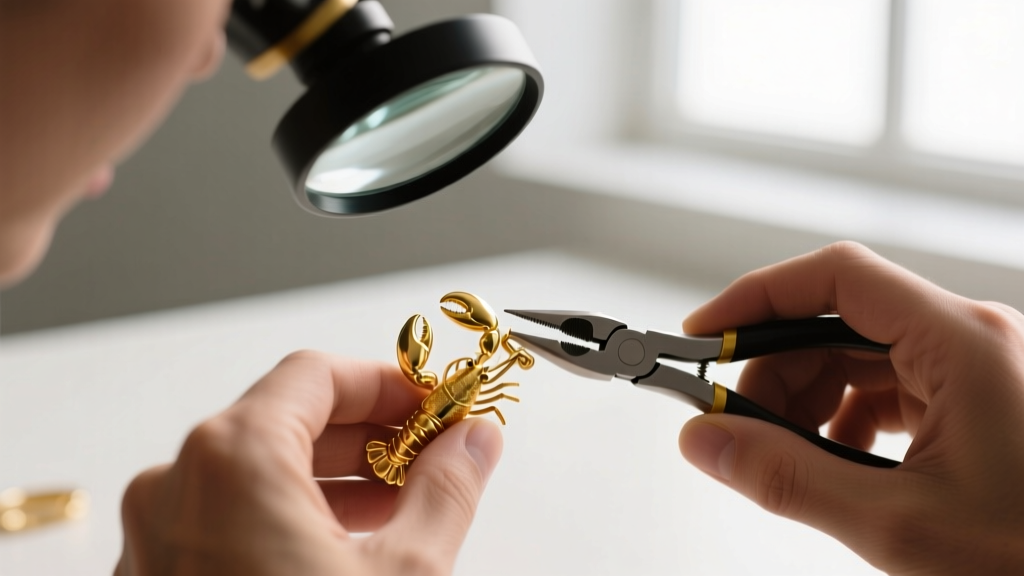
Gold is alloyed with metals like copper, zinc, and silver to increase its durability. However, 18k gold (75% pure gold) is significantly softer than 14k gold (58.5% pure gold). According to MatWeb Material Property Data, the lower Vickers hardness of 18k gold makes lobster claw levers prone to bending. If the lever bends outward even by a fraction of a millimeter, it will no longer align with the catch groove, making the clasp feel permanently stuck. The solution is not chemical but mechanical: use nylon-jaw jewelry pliers to gently squeeze the lever back into its original factory alignment. Never use steel pliers, as they will mar the high-polish finish of the gold.
Platinum, Titanium, and the Danger of Galling
Platinum and titanium are incredibly durable, but they suffer from a metallurgical phenomenon known as galling, or cold welding. When two pieces of these metals rub together under pressure (such as the hinge of a platinum foldover clasp or the screw threads of a titanium bayonet clasp), microscopic high points tear away and fuse together. If your platinum clasp is stuck, it is likely galled. Applying liquid lubricants will not break this metallic bond. Instead, apply a tiny amount of dry graphite powder to the hinge seam using a micro-brush. The graphite acts as a dry lubricant, penetrating the microscopic fissures and breaking the galling friction.
The Hidden Threat: Galvanic Corrosion in Mixed Metals
One of the most complex reasons a necklace clasp seizes is galvanic corrosion. Because precious metals are too soft to act as internal springs, a gold or silver necklace will often house a stainless steel or brass spring inside the clasp casing. When sweat, perfume, or saltwater enters the clasp, it acts as an electrolyte, creating a tiny galvanic cell (a battery) between the noble outer metal and the base inner spring.
Expert Insight: Galvanic corrosion causes the base metal spring to rapidly oxidize and expand. As the rust expands, it fills the hollow cavity of the precious metal casing, locking the mechanism from the inside out. If the clasp feels completely solid with zero 'give' when you press the lever, the internal spring has likely corroded and expanded. In this scenario, chemical unjamming agents will fail, and the clasp must be cut off and replaced by a professional jeweler.

Step-by-Step Framework: How to Open Necklace Clasps Safely
Follow this diagnostic sequence before applying force to any stuck necklace hardware. This framework is endorsed by repair guidelines from Jewelers of America to prevent consumer damage.
- Visual Inspection: Use a 10x jeweler's loupe or your smartphone's macro camera lens to look inside the clasp seam. Identify if the blockage is black (sulfide tarnish), green (copper/brass galvanic corrosion), or metallic (galling).
- The Tension Test: Gently press the lever. If it moves slightly but springs back sluggishly, the issue is internal friction (tarnish or dirt). If it does not move at all, suspect mechanical bending or internal rust expansion.
- Chemical Flush (For Tarnish/Dirt): Apply a single drop of mild dish soap and warm distilled water to the seam. Use a soft-bristled baby toothbrush to agitate the seam gently. Rinse and dry completely.
- Dry Lubrication (For Galling/Stiffness): If water fails, apply a microscopic amount of dry graphite or PTFE powder to the hinge. Work the lever back and forth gently to distribute the powder.
- Mechanical Realignment (For Bent Levers): If the lever is visibly bent away from the body of the clasp, use nylon-jaw pliers to apply gentle, even pressure to bend it back flush with the casing.
Preventative Care: Maintaining Clasp Integrity
Preventing a jammed clasp is far easier than learning how to open necklace mechanisms after they have seized. The primary enemy of clasp longevity is the accumulation of cosmetic products. Lotions, sunscreens, and hairsprays contain emulsifiers and polymers that dry into a hard, glue-like resin inside the tiny crevices of a lobster claw or spring ring.
- Weekly Flushing: Once a week, run your necklace clasp under warm running water while repeatedly clicking the lever open and closed. This flushes out microscopic lotion and skin cell buildup before it can harden.
- Ultrasonic Cleaning: For diamond or sapphire pendants attached to gold or platinum chains, an ultrasonic jewelry cleaner is highly effective at vibrating debris out of the clasp spring. However, never use ultrasonic cleaners for necklaces featuring emeralds, opals, or pearls, as the high-frequency waves will fracture these porous gemstones.
- Proper Storage: Always store necklaces unclasped and laid flat or hung vertically. Storing a necklace clasped in a tangled pile puts lateral pressure on the delicate lever, encouraging mechanical bending over time.
When to Replace the Clasp Entirely
Sometimes, material fatigue makes unjamming impossible or unsafe. If the internal spring has lost its elastic memory (meaning the clasp closes but doesn't 'snap' shut securely), the metal has undergone plastic deformation and must be replaced. Similarly, if the gold casing is cracked or the silver ring is warped out of a perfect circle, the structural integrity is compromised.
Replacing a standard spring ring or lobster claw clasp typically costs between $35 and $85 at a reputable jeweler, depending on the karat weight of the gold and the complexity of the soldering required. For specialized mechanisms like hidden box clasps with figure-eight safety catches, expect to pay between $120 and $200 for a custom-fabricated replacement. Never attempt to solder a clasp yourself with a hardware store torch; the precise temperature control required to melt solder without melting the delicate internal spring demands a professional jeweler's laser welder or micro-torch setup.


